
Legendary Soviet folk dance companies in PHOTOS

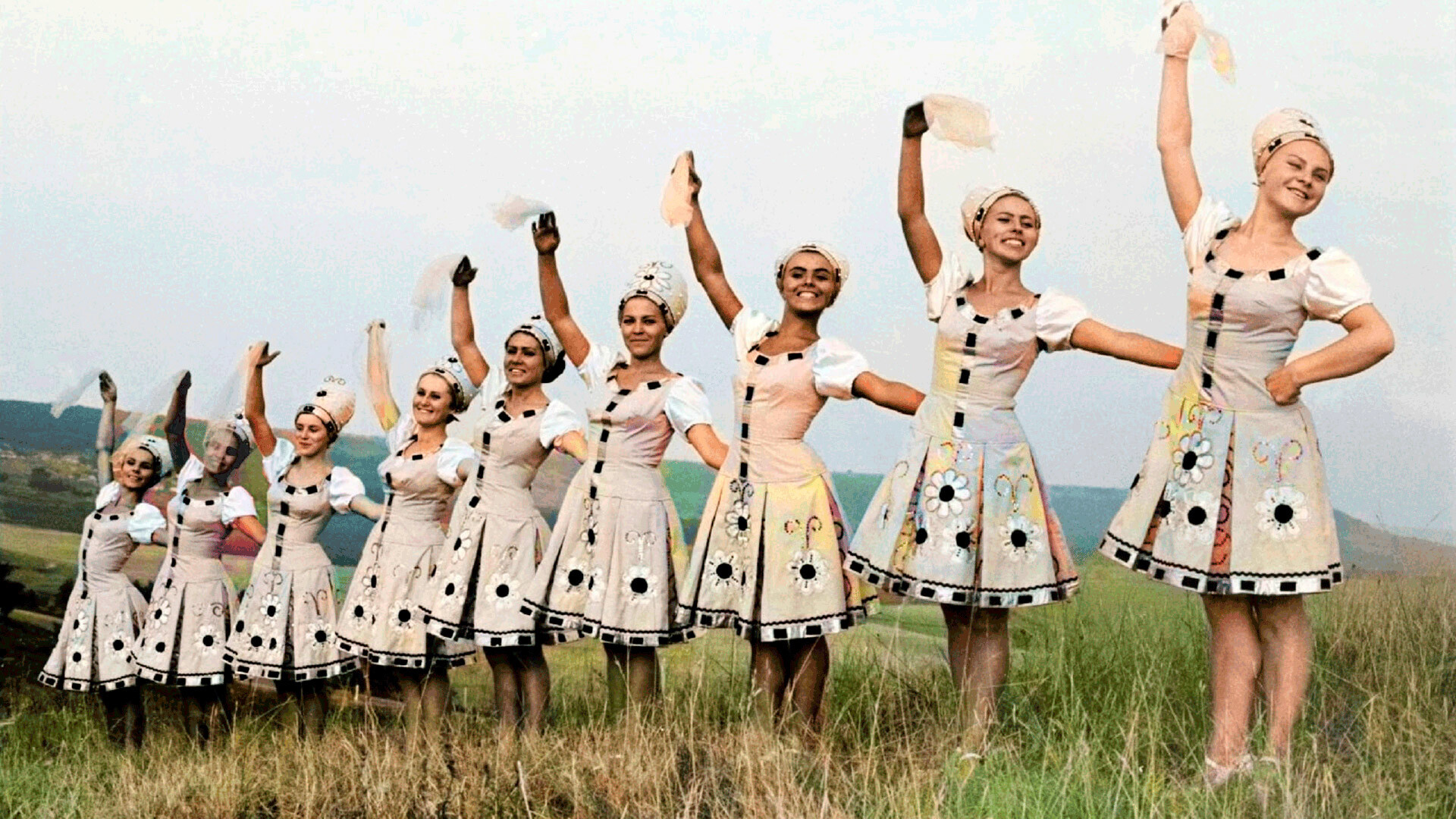
For the USSR, performances of traditional dances of different nations were as popular as ballet and were in a big demand as an export art.

Patriotic Russian “folk” dance began to develop on the big stage after the 1812 war with Napoleonic France. And, up to the late 19th century, there was a trend of turning back to Russian roots and all things Russian became incredibly popular (including traditional architecture, costumes and handicrafts).

In the 1910s, the Bolshoi theater staged ‘The dances of the nations’ and the performance was sold out for a long time.

Soviet authorities supported folk dances as one of the methods of uniting nations of the multi-ethnic country, showing its diversity.

And the Soviet era gave birth to a brand new phenomenon, the ‘Folk Stage Dance’, which was a symbiosis of professional choreography and folk dance.

In the Soviet Union, there were about 20 professional ensembles of folk dance and hundreds of amateur collectives, which many schools, universities and houses of culture arranged on the wave of the mass popularity of amateur art performance.

In the 1930s, an ‘All-Union festival of folk dances’ was created, represented by almost all the nationalities of the USSR.

Not a single major holiday was without a folk dance group performance.

Keeping in mind a great positive effect on the cultural and national policy that folk dance development had, the Soviet authorities initiated the foundation of the State Academic Folk Dance Ensemble, which was headed by the Bolshoi’s choreographer Igor Moiseyev.

The ‘Igor Moiseyev Ballet’ (‘The Igor Moiseyev State Ensemble of Folk Dance’) still tours around the world. It is also very famous in Russia as well and frequently performs on the stage of the Bolshoi.

There were about 200 “dances of the peoples of the USSR”, if not more, in Igor Moiseev’s company.


In 1948, another still popular ensemble was founded, a female Berezka collective, dancing primarily Russian and Slavic compositions.

Folk dance became so famous that most choreographic schools opened specific departments to teach and train them.

Below are just a few of the folk dances widely performed in the USSR.