

Digital ruble: 4 questions about the new form of Russia’s national currency

What is it, where to get it, how to pay with it and what to spend it on.
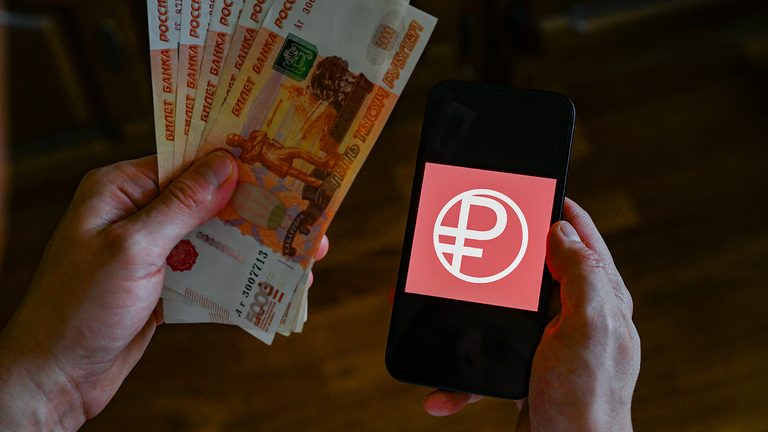
As of September 1, 2026, it has officially become possible to pay with digital rubles in Russia. What does this mean for ordinary people and for businesses? We’ve compiled all the key points.
1. What is the digital ruble?
The digital ruble is the third form of the national currency (alongside cash and non‑cash payments). The main difference is that every digital ruble has its own identification number and all transactions involving that ruble can be tracked.
“For example, a company receives funds from the state budget for a specific contract – and then it becomes possible to track whether the company actually paid the subcontractor, paid salaries or purchased materials,” explains Evgeniya Obukhova, economics editor at ‘Monocle’ magazine.
Unlike non‑cash payments, digital rubles are issued not by commercial banks, but by the Central Bank of Russia. The Central Bank emphasises that this is specifically a means of payment. And therefore – at least for now – digital rubles cannot be used to open deposit accounts, receive cashback or take out loans. All of these functions remain within the purview of commercial banks.
2. Why is the digital ruble needed?
“For the state, it is a tool for controlling budget funds,” says Evgeniya. “And for the average person, it’s simply another way to pay for goods.”
“The digital ruble will improve the efficiency and control of budget expenditures at all levels, including the distribution of funds along the entire chain of contractors all the way down to the end consumer,” asserts Anatoly Aksakov, Chairman of the Russian State Duma Committee on the Financial Market.
“Digital currencies have been a global trend in recent years,” notes Evgeniya. “Such experience exists in Nigeria, the Bahamas and China. European and American countries are also moving in this direction.”
3. How do you use digital rubles?
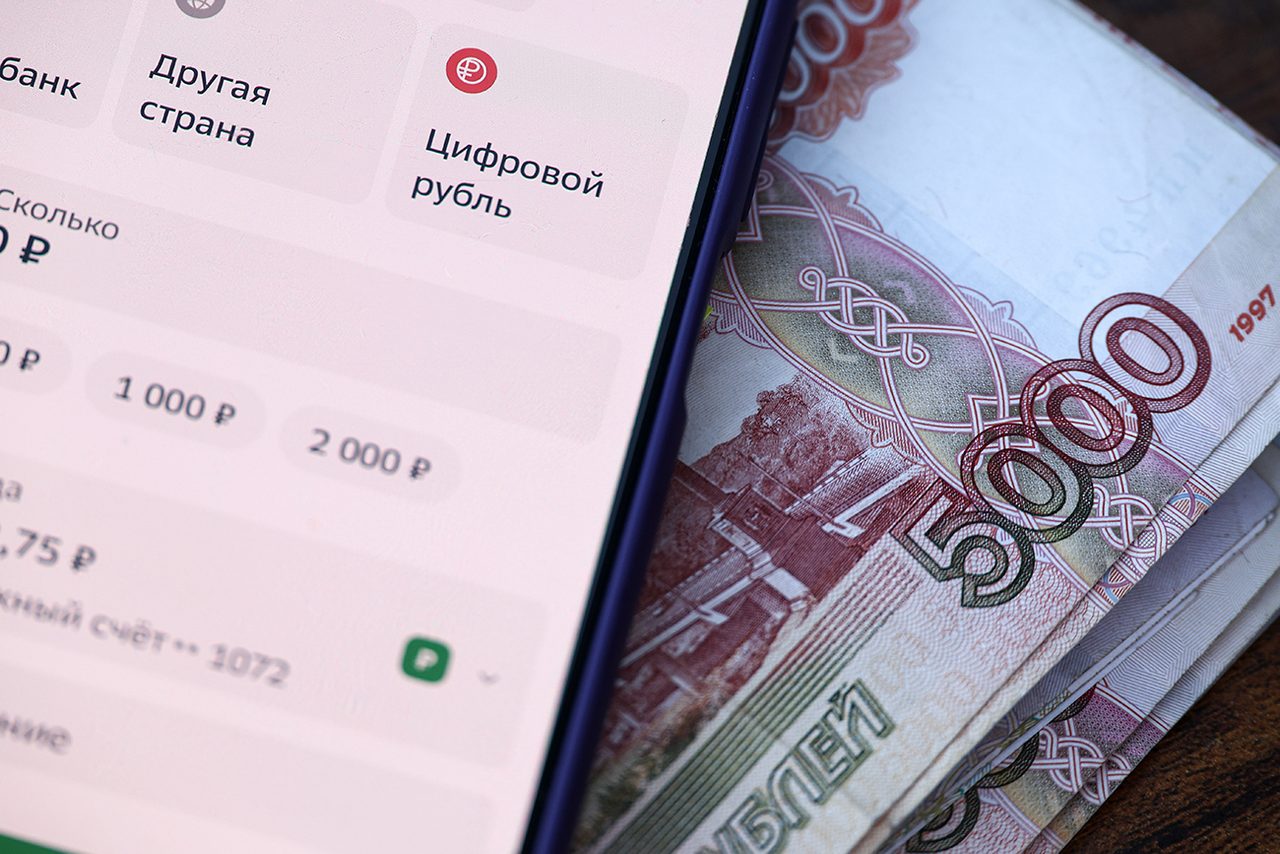
Currently, only adult Russian citizens with a verified account on the ‘Gosuslugi’ platform can open a digital wallet on the Bank of Russia’s platform. You can open a digital wallet through the app of any Russian bank participating in the program.
Externally, a digital ruble account looks like a regular one, except that it’s not tied to a specific bank. Transactions with digital rubles are the same as those with non‑cash rubles.
Currently, you can add up to 300,000 rubles per month (approx. $3,500) to your digital wallet. For legal entities, there are no limits.
If you need cash, you’ll first need to transfer the digital rubles back to your non‑cash bank account and then withdraw the money from an ATM.
Transfers between individuals are free: you can send money to yourself, friends or family. There are no limits on transfers. In stores, you can pay with digital rubles using a QR code: your banking app will offer you the option to pay either via the Faster Payments System (SBP) or with digital rubles.
For businesses, there are no transaction fees until the end of 2026. Afterwards, as the Bank of Russia promises, the fees will be among the lowest on the modern payments market.
4. How secure is the digital ruble?
The digital wallet is protected by additional safety measures and a password. Although users access the digital wallet through a commercial bank’s app, these funds are not tied to that bank. This means that even if fraudsters gain access to your bank account, the digital wallet remains safe and secure.
Moreover, using digital rubles in fraudulent schemes is essentially pointless: every transaction can be tracked at any time.
Also, if a commercial bank goes bankrupt, the digital wallet will remain intact – you will be able to access it through any other bank.