
Spelled as it sounds? How a Russian language reform failed in the USSR

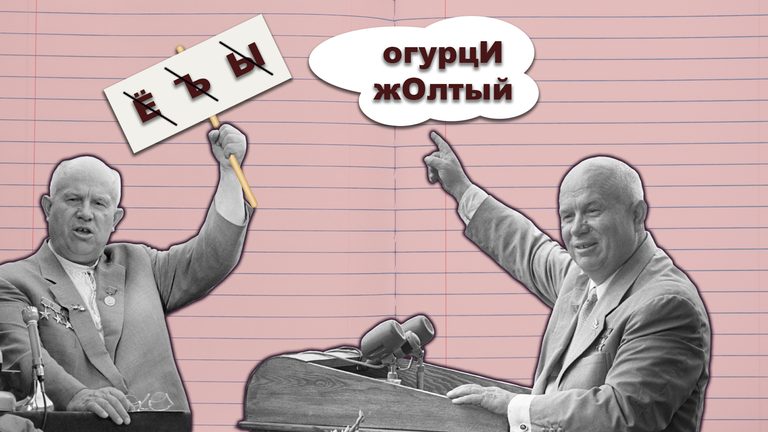
In the 1960s, linguists proposed removing the hard sign (‘Ъ’), as well as cancelling some complex spelling rules. Why did they want this and why didn't it work?
In 1918, the Bolsheviks, after seizing power, carried out another “revolution”, this time in the Russian language and issued new spelling rules, abolishing several “tsarist” letters and simplifying some rules (read more about this reform here).
What is known about the new reform?
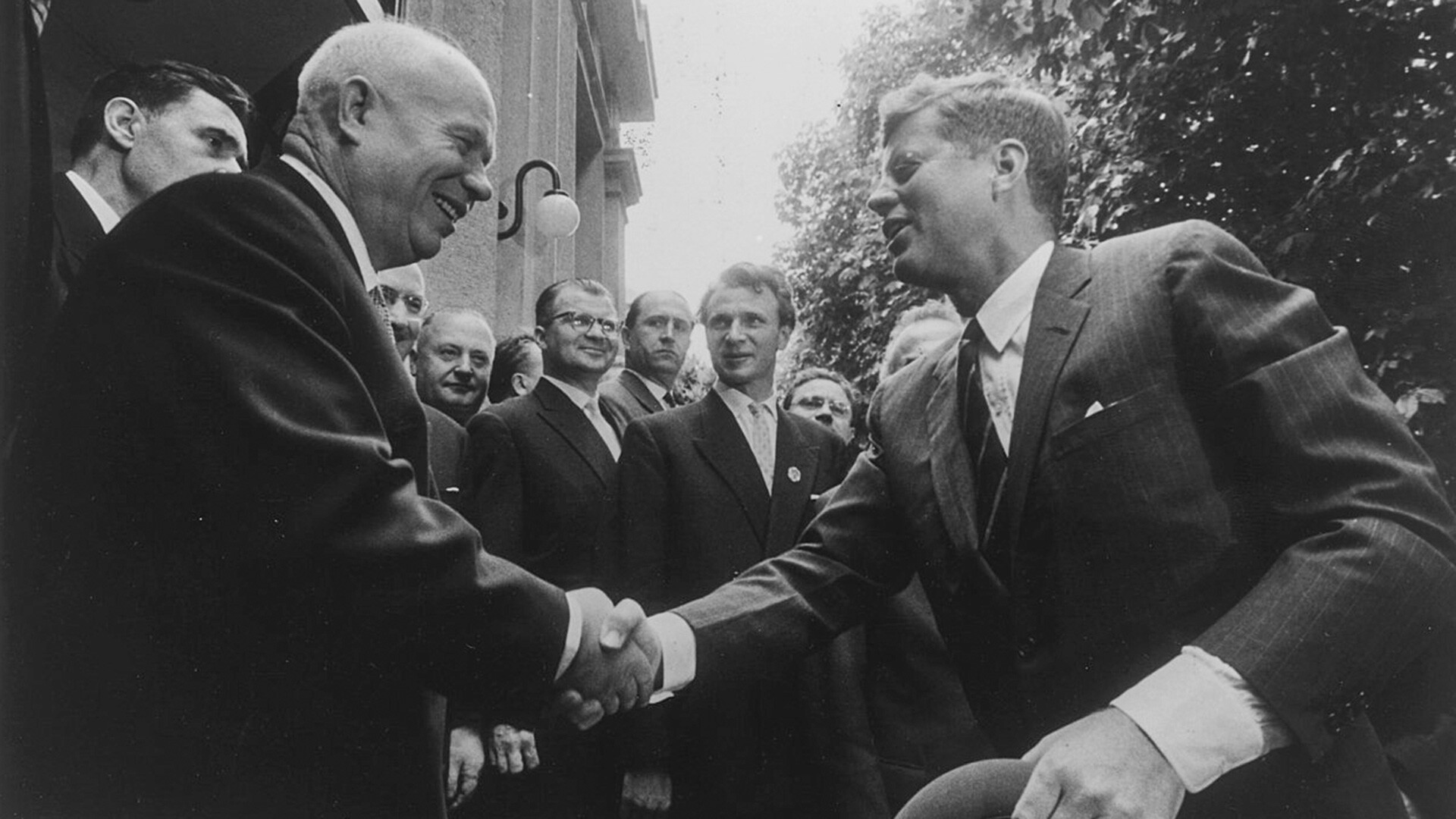
The ‘Khrushchev Thaw’ period after the Stalin reign and the freedom-loving 1960s, with their literature-centric public consciousness, were also a time of change, so a new language reform began to be discussed in the highest circles.
Khrushchev was fond of changes and simplifications even more. In architecture, he had already ordered the removal of ‘excesses’ and almost any decoration. Art, in his opinion, had to be as simple and understandable as possible. And so did the language.
A commission of the Academy of Sciences was assembled for discussion, headed by Academician Viktor Vinogradov. Well-known writers were also included, for example, Korney Chukovsky, who supported the reform.
According to rumors, one of the reform’s initiators was Alexei Adzhubei, Khrushchev's son-in-law, journalist and editor-in-chief of the ‘Izvestia’ newspaper. And, in 1964, ‘Izvestia’ published a large article (in Russian) outlining the proposed changes.
What did they want to change in the language?
Many changes were proposed, below are just a few:
- Leave only one separating sign – the soft sign (‘Ь’). At the same time, completely abolish the hard sign (‘Ъ’).
- Always write ‘И’ after ‘Ц’ (not ‘огурцы’ but ‘огурци’) and, for example, after ‘Ж’, ‘Ч’, ‘Ш’, ‘Щ’, ‘Ц’, write ‘О’ under stress and ‘Е’ without stress. That is, not ‘жёлтый’, but ‘жолтый’. By the way, they proposed removing the letter ‘Ё’ in many instances.
- Simplify the double ‘НН’ in participles.
- Remove hyphens before particles ‘-то’, ‘-либо’ and ‘-нибудь’.
- Cancel alternations in roots like ‘раст-рос’ (e.g., растение/рост).
Why didn't the reform go through?
Most of the changes were aimed at making written speech as close as possible to how words are pronounced. And also to get rid of a large number of exceptions to the rules. And also to correct the imperfections of the last set of rules set in 1956.
However, some cases were perceived as comical (for example, it was proposed to write not ‘заяц’ but ‘заец’). As a result, the public and many writers began to ridicule the proposals.
They were published in September 1964, but, in October that same year, Khrushchev resigned and his Russian language reform never went ahead. The official main reason cited was the economic impracticality of the reform and its subsequent costs.