

How are WEEKDAYS named in Russian & why?

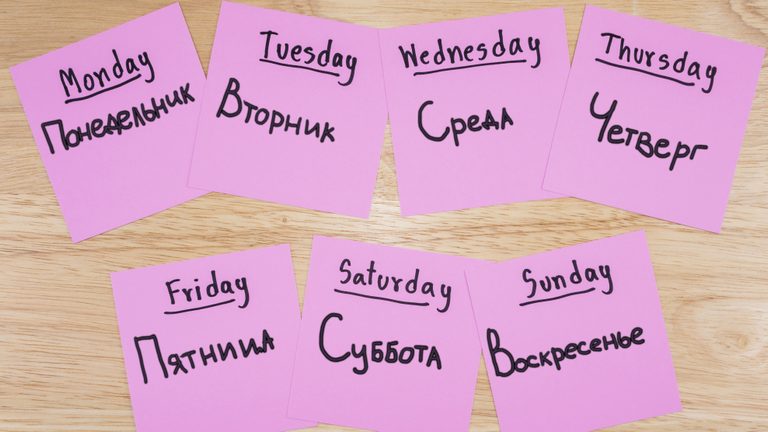
In Russian, the names of the days of the week are very different from other non-Slavic languages and are connected with church tradition.
The word ‘неделя’ (nedelya) in Russian now means ‘week’, i.e. the period of seven days (that occurs 52 times a year!), but, earlier, this word meant ‘Sunday’. It originally came from the words ‘не делать’ (‘ne delat’, which means ‘not do’), because Sunday is a day off when you shouldn’t be doing anything according to church tradition.
Понедельник (Ponedelnik) – Monday
Literally, this word means ‘after the week’ – ‘после недели’.
Вторник (Vtornik) — Tuesday
Means ‘второй’ or the second day of the week.
Среда (Sreda) — Wednesday
This is ‘середина’ or the middle of the week (if counting the five-day work week).
Четверг (Chetverg) — Thursday
This came from ‘четвертый’, the fourth day of the week.
Пятница (Pyatnitsa) — Friday
‘Пятый’, or the ‘fifth’ day of the week.
Суббота (Subbota) — Saturday
This word has roots in Hebrew and is connected with the word ‘Shabbat’, the biblical day of rest.
Воскресенье (Voskresen'ye) — Sunday
This day is named in honor of the ‘Resurrection of Christ’ (‘Воскресение Христово’).
If you want to learn how to use the days of the week in conversation, try out our FREE online Russian language course!