

How AI is developing in Russia

Russia is one of the few countries in the world developing not only applied AI solutions, but also its own fundamental models.
More than 60 countries have adopted national Artificial Intelligence development strategies, including Russia. It draws on international experience, while also taking into account national specifics and the challenges of technological sovereignty.
According to the strategy, by 2030, AI's contribution to Russia's GDP could reach approximately 11.2 trillion rubles (in 2022, this figure was just 0.2 trillion). The share of economic sectors ready for AI implementation should reach up to 95% (four years ago, the share was 12%) and investment in AI technologies should grow from 123 billion rubles to 850 billion. The annual volume of services related to the development and implementation of AI solutions should grow from 12 billion to at least 60 billion within four years.

An increase in human resources is also expected: the number of university graduates with specialized AI education will increase to 15,500 people annually (from just over 3,000 today), while the share of employees using AI in their work is expected to reach 80%.
"Since its first version was approved in 2019, the National AI Strategy has included key development drivers – personnel, regulation, promotion, strategy, etc." says Kirill Solntsev, Executive Director, Department for the AI/ML Development, ‘Sberbank’.
Practical Application

Like the rest of the world, Russia is currently experiencing a boom in the use of AI technologies. Russian companies are developing world-class AI solutions: from image generation to specialized tools in medicine, biology and genetics.
In Russia, AI has already begun to be used in public administration and the social sphere, says Solntsev. "The spread of fundamental AI models, which allow not only working on specialized tasks, but also creating and acting, has particularly accelerated the implementation. Moreover, Russia is one of the few countries in the world developing its own fundamental AI models. For example, the ‘GigaChat’ model by ‘Sberbank’," the expert notes.
‘Sberbank’ is implementing solutions based on its own model in all business processes and creating fundamentally new products and solutions based on it. The company has several hundred agents in development, dozens of which have already been launched. "‘GigaChat’-based agents can already help prepare and process documents, synthesize knowledge, assist employees in real time, respond to requests, provide decision-making recommendations and program. This has implications for all areas of work – from sales and project management to training and development," says Solntsev.
Analysts at ‘Kaspersky Lab’, a major Russian cybersecurity company, believe that 2026 will be marked by accessible AI agents capable of constructing and executing a chain of actions at the user's command. The most in-demand capability will be the ability to perform specific actions, such as adding products to a customer's shopping cart based on a specific search query.
At ‘VK’, one of Russia’s tech giants, large-scale language models (LLMs) are used to build recommendation, search and advertising technologies. "At ‘VK’, LLMs are used both for engineering tasks and to improve the user experience in the group's products. For example, in the ‘Mail’ email service, generative models are used to summarize emails and write texts, in ‘VK Video’ to generate subtitles and in ‘VK Advertising’ to create advertisements," explains Dmitry Kondrashkin, Director of AI at ‘VK’.
AI is also used to process some support requests: they’re resolved using pre-defined scenarios or using RAG (Retrieval-Augmented Generation) technologies, where AI searches and uses knowledge bases to generate a response. AI agents – specialized programs that independently perform user tasks – are also used. "This significantly reduces the workload on operators and makes assistance more predictive," says Kondrashkin.

Pavel Kaplya, head of product development for ‘Alice’ (aka ‘Алиса’ or ‘Alisa’, an AI service by Russian tech giant ‘Yandex’), notes that LLM-based AI assistants take on users' daily routines: shopping, booking, planning and solving everyday problems. Specifically, Alice AI is being developed as a personal AI agent. "A person doesn't need to learn new interfaces or change their usual behavior: they simply formulate a task using voice or text and the agent takes care of clarifying the details, breaking the task down into steps and interacting with various services," says Kaplya.
The model not only solves the problem by providing an answer based on its own knowledge and internet search results, but also identifies intermediate steps that allow for a better understanding of the task's context and the execution.
According to the expert, Alice AI is deeply oriented toward local context and is developed with the Russian language, cultural patterns, and user habits in mind and is tightly integrated with the Yandex ecosystem. When processing a request, the neural network generates a cascade of requests to Search, Maps, and other services, which, to a certain extent, reflect real life in Russia.
"With the launch of the Alice AI family of models, we also announced our first proprietary AI agents. Several hundred thousand users have already accessed some of them, including 'Find Cheaper' and 'Explore' mode, after signing up for the network's new capabilities. All users will have access very soon," says Kaplya.
Beyond consumer products, delegating routine operations to AI agents is also used internally – more than half of ‘Yandex’ engineers use AI agents to solve a wide range of tasks, from writing and reviewing code to deep searches of corporate data and optimizing testing processes. As a result, tens of thousands of hours are saved daily, allowing teams to focus on more complex and strategic tasks.
Overall, AI is used in Russia for a wide range of tasks: from predicting field yields to creating economic models and managing various production processes. Successful AI implementation cases from Russia and other BRICS+ countries can be found here, on one of the AI Alliance's portals aimed at an international audience.
Ethics & Regulation

Many countries are developing their own models for regulating AI, taking into account national legal systems and cultural characteristics. This process is also actively developing in Russia.
In 2021, ‘UNESCO’ adopted the world's first ‘Recommendation on the Ethics of Artificial Intelligence’, which was supported by more than 190 countries, including Russia. That same year, Russia developed a national ‘Code of Ethics in AI’.
The document was prepared by members of the ‘Russian Artificial Intelligence Alliance’, an association of leading technology companies and research organizations established in 2019. Its main objectives are the research, development and dissemination of domestic technologies in Russia and abroad, the development of a legislative framework for this industry, investment attraction and personnel training.
Today, the alliance includes more than 20 full members and over 140 industry participants, collaborating on the development, evaluation and responsible use of AI.
More than 1,200 signatories from various countries have already joined the ‘Code’. It enshrines key principles:
- The priority of AI development is human well-being
- Responsibility in the development and use of AI
- Human responsibility for the consequences of technology use
- Transparency of information about the capabilities and risks of AI
- The interests of AI technology development outweigh competition
- The use of AI where it brings real benefit to society
The ‘Code’ serves as a guide for discussions on complex issues, from the use of AI in education to the ethics of autonomous systems and the impact of technology on the labor market.
Along with the ‘Code’, similar documents have been adopted by the world's largest tech companies, including Russia's ‘Sber’ and ‘Yandex’.
Education & Science
Russian universities offer over 100 educational programs in artificial intelligence. Hackathons, competitions and practical courses are regularly held for schoolchildren and students. In 2022-2023, approximately 40,000 schoolchildren participated in such educational initiatives.
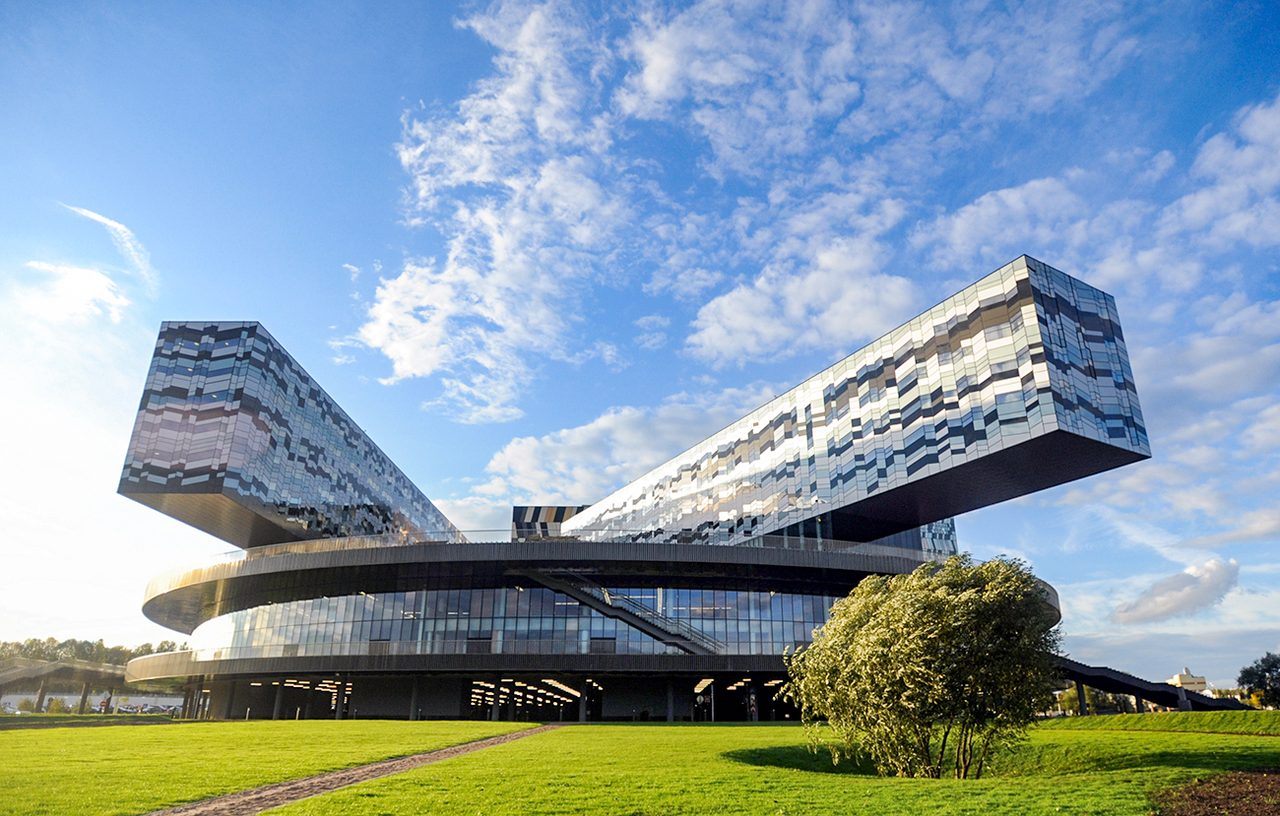
Research in AI is also being conducted at a number of scientific and technological centers, from ‘Skolkovo’ and ‘Innopolis’ to ‘ITMO’.
Further Development
Data from the alliance's Russian research project on what AI will be like in 10 years, prepared under the auspices of the ‘International AI Alliance’, suggests that the future lies with hybrid AI models that utilize both machine learning, symbolic reasoning and scientific knowledge. Such models will be able, in particular, to process and create data in different media – simultaneously understanding text, images, video and audio. Great hopes are also pinned on the creation of models that can understand the physics and geometry of the world – their emergence will impact the entire spectrum of functions and tasks delegated to AI.
According to Kirill Solntsev, in the near future, artificial intelligence will develop new cognitive skills, such as multi-level reasoning, the ability to work in multimodal environments and autonomous planning and action. Dmitry Kondrashkin of ‘VK’ believes that AI in recommendations will develop along three main tracks: multimodal models that analyze content, graph neural networks (GNNs) that predict user roles at a given moment and agent-based AI systems that perform multiple actions simultaneously.

In the very near future, AI agents will become more context-aware and autonomous, according to Pavel Kaplya from ‘Yandex’. They will learn to more effectively remember user preferences, adapt to their lifestyle and complete multi-step tasks without constant human intervention. Simultaneously, wearable devices and voice control will be developed. In the long term, such intelligent models will become part of the digital experience, freeing users from routine tasks and allowing them to focus on what truly matters!