

What’s going on in these paired paintings by Vladimir Makovsky?
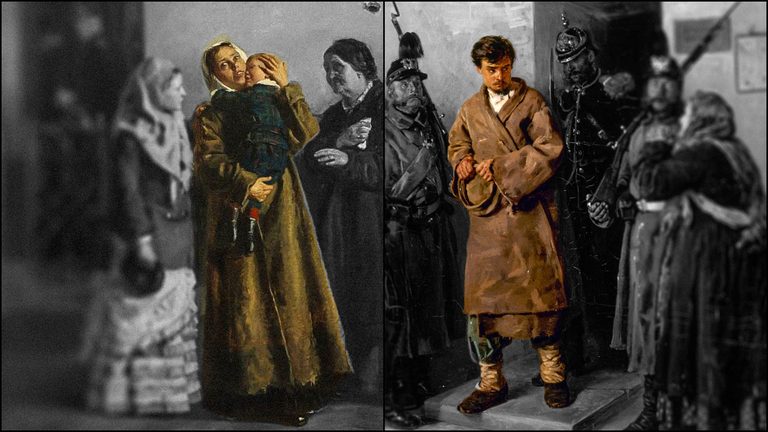
These works evoked a storm of emotions: viewers cried at one and sighed with relief at the other.
Trial Inspires
In the 1870s, high-profile trials of revolutionary ‘Narodniks’ took place in Russia. They were closely followed by all of Russia: poems were dedicated to the young idealists and famous writers Mikhail Saltykov-Shchedrin and Nikolai Nekrasov wrote about them in articles.
One of these trials was the ‘Trial of Fifty’, which began in the Winter 1877 in St. Petersburg. Fifty-three people found themselves in the dock, accused of creating a secret society and plotting a coup. Its participants, all very young, were hired at factories and plants and spoke with the workers about their unenviable situation and the possibility of participating in an armed uprising. All were exiled to SIberia and sentenced to hard labor for terms ranging from three to 10 years.
Among those who attended the court hearings was artist Vladimir Makovsky. He captured his impressions in the paired paintings ‘The Condemned’ and ‘The Acquitted’.
The Last Meeting with His Son
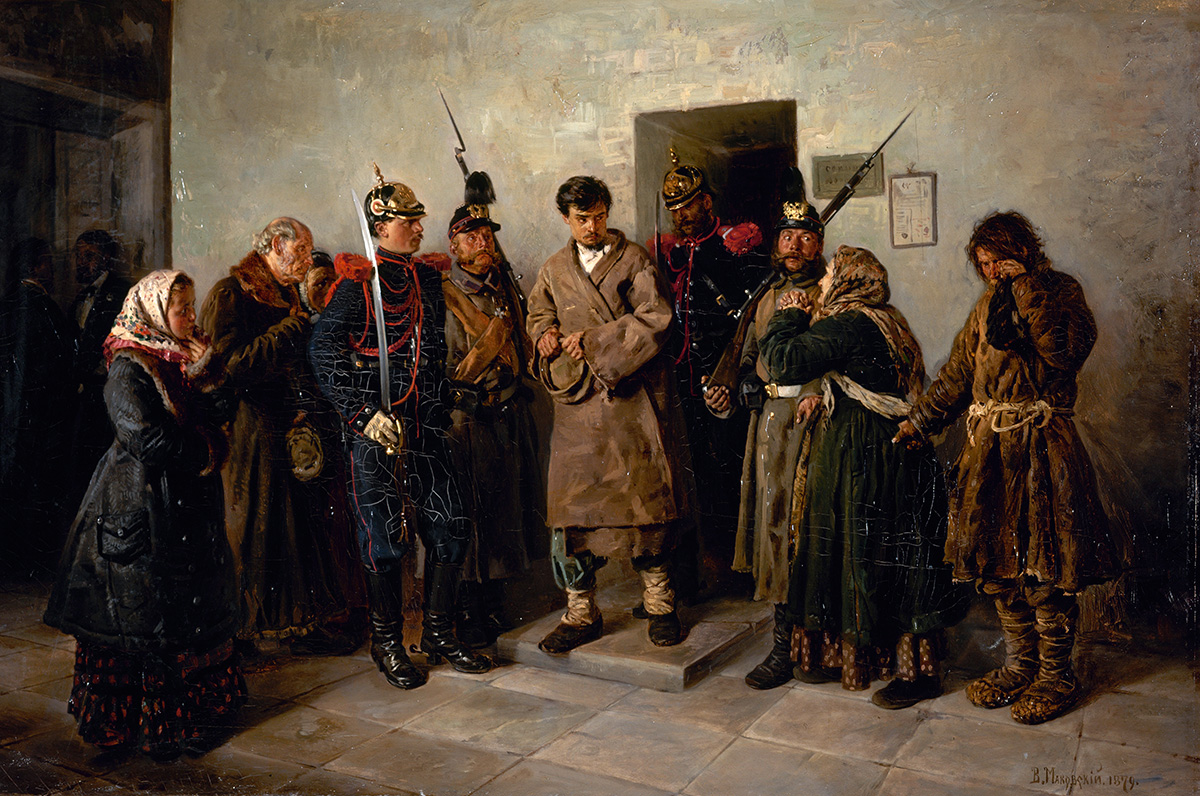
"People weep in front of Makovsky's painting," wrote artist Ivan Kramskoy of ‘The Condemned Man’. And with good reason. The subject of the painting – a young man in a prison uniform is being led out by guards with sabers, who are pushing aside his relatives. Apparently, this was their last meeting before the convict was to be sent to hard labor. The gravity of his situation can be judged by the tight grip of his cap. One of the guards is turning, clearly displeased, to look at the mother, who seems to be clasping her hands in prayer. Behind her, a young man, still wearing an old sheepskin coat tied with a rope, weeps; perhaps this is the prisoner's brother. To the left, over the gendarme's shoulder, an elderly man, presumably the prisoner's father, was visible. Oblivious to the tragedy unfolding before their eyes, two lawyers continue their conversation. The "authors" of these overly harsh sentences show no interest in the consequences of the trial.
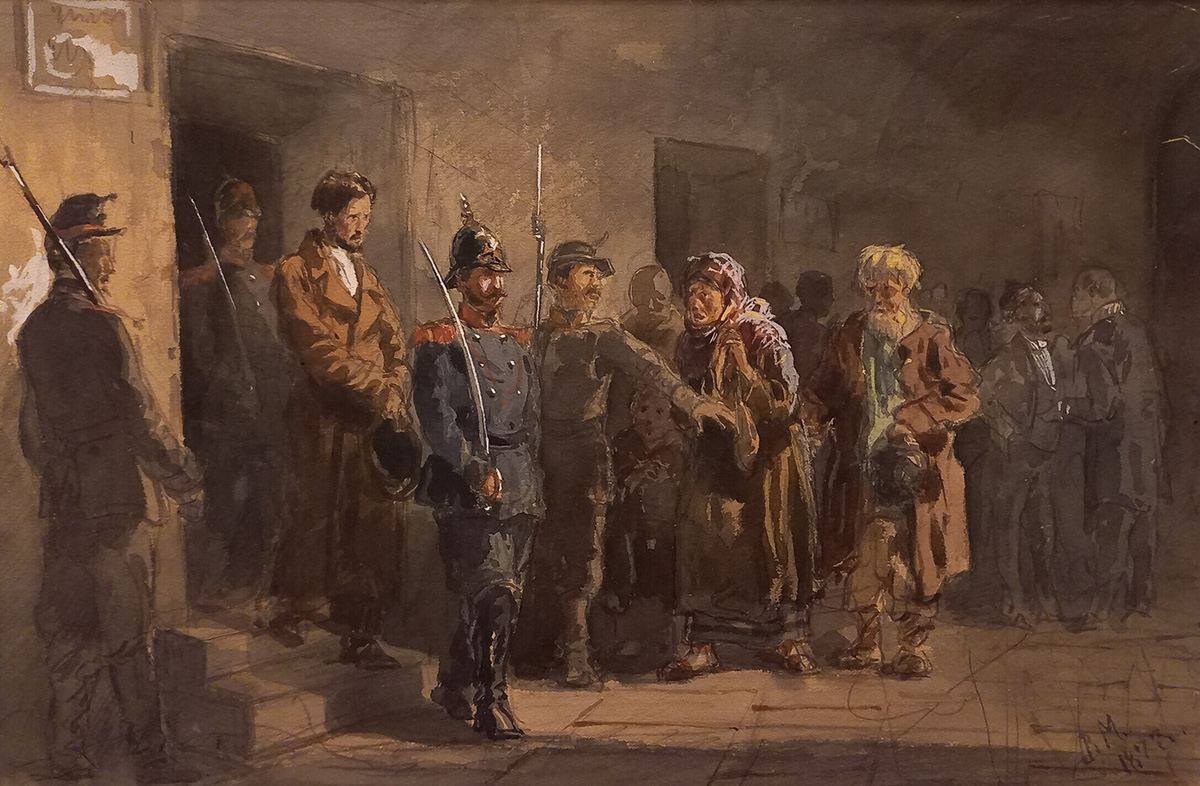
The artist painted two versions of the painting: the first depicted the hero as a peasant, the second as an intellectual. Many were outraged by the choice of subject and characters, believing that Makovsky had disturbed their peace with his daring idea.
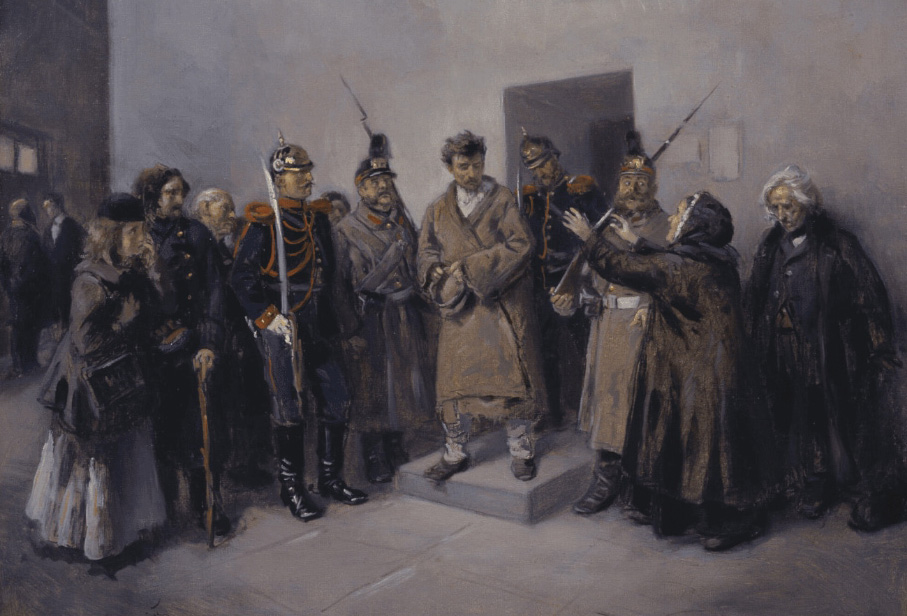
However, there were also those who supported the tragic theme. “Everything is in order here, everything is proceeding beautifully, only a few human lives and personalities are torn and shattered,” wrote Vladimir Stasov, a renowned critic of the time.
The Return of the Daughter
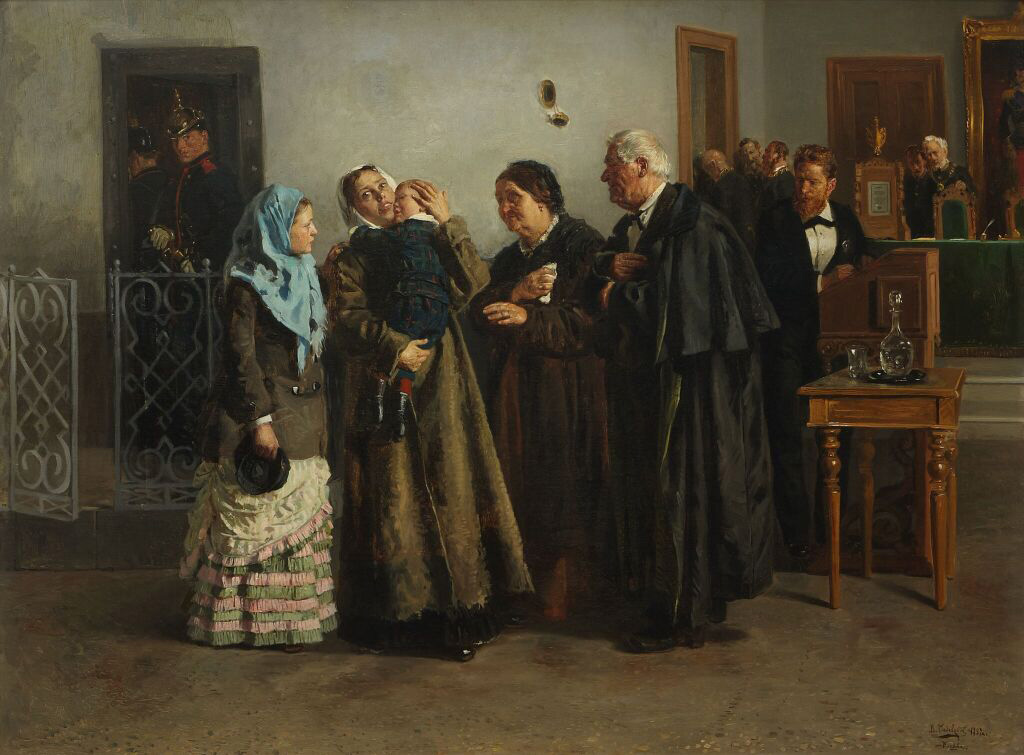
There were also young women in the dock at the time. That's why Makovsky painted ‘The Acquitted’ three years later, as a companion to ‘The Condemned’. Its action unfolds in a courtroom: the trial has concluded and the heroine has fortunately escaped imprisonment. Overjoyed parents with their youngest daughter rush to embrace her. And the heroine herself clasps her child to her: they will not be separated, after all, as she feared.
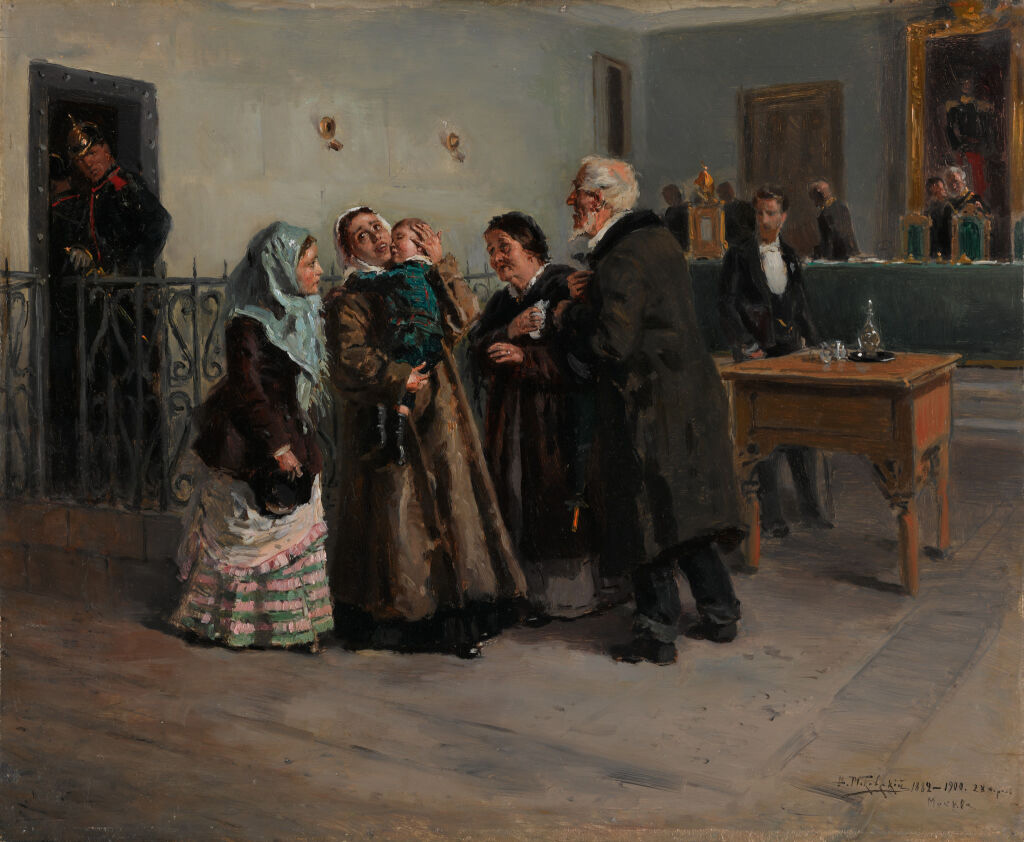
The courtroom empties: the judge and jurors leave, the gendarme casts a sour glance at the group of rejoicing relatives, while the lawyer looks on. The woman was, indeed, lucky: In the 1870s and 1880s, more than 100 women were convicted of political crimes.
The artist, dissatisfied with the painting's overly serene tone, painted another version of ‘The Acquitted’ in 1900. The outlines of people leaving the courtroom have been blurred, while the wrought-iron fence fencing the defendants' area is taller and more massive. A portrait of Emperor Alexander II, meanwhile, can be seen in the background – it was during his reign that trial by jury was instituted.