

How Lyudmila Verbitskaya taught the whole world speaking Russian


A woman with a difficult fate, she was the daughter of an “enemy of the people” and survived World War II and the Siege of Leningrad, yet went on to achieve incredible heights in science and she was known as the world's leading expert on Russian studies. Why?
In 2000, an asteroid was named after Lyudmila Verbitskaya. What did this woman do to deserve such an honor? It’s all about her priceless contribution to the spread of the Russian language in the world and to the development of science, in general. Verbitskaya was not just a linguist and Doctor of Philology, but also the first woman in history to become rector of St. Petersburg University.
From an intelligent family to a juvenile detention colony
Lyudmila Bubnova (her maiden last name) was born on June 17, 1936, in Leningrad (now St. Petersburg). She and her family personally experienced all the hardships of World War II, the tragedy of the Siege of Leningrad and the difficult post-war years.
Lyudmila's father was the secretary of the Leningrad City Executive Committee. In 1949, he and several other city Soviet officials were arrested as part of the ‘Leningrad Affair’ (under suspicion of sabotage) and were executed a year later as “enemies of the people”. Lyudmila's mother was also arrested and sent to labor camps.
Lyudmila herself was grabbed directly during a school class and taken to a children's colony in the city of Lvov, Ukrainian SSR. Essentially, a girl from an intelligent Leningrad family ended up in a colony for juvenile delinquents. But, she stood out so much among them that she was allowed to leave the colony to attend regular school classes, after which she managed to enroll in the Lvov University.
As the daughter of an “enemy of the people”, the path to studying foreign languages was closed to her, so she joined the Russian language department at the philology faculty – and this ended up playing a decisive role in her life.
Leningrad University as the main turning point of her fate
In 1954, after the death of Joseph Stalin, Lyudmila's father was posthumously rehabilitated. The young lady was able to return to her native Leningrad and transfer to the philology faculty at Leningrad University.
During her student years, she met her future husband, physicist Vsevolod Verbitsky, whose father, by some twisted fate, had also been executed in the ‘Leningrad Affair’.
After graduating, Lyudmila Verbitskaya remained at the university and spent a total of 64 years there, rising from laboratory assistant to head of the university. She became the first woman rector in the 300-year history of St. Petersburg University. At the same time, she was the first rector from the philology field, winning elections against two renowned physics scholars.
Later, Verbitskaya also became president of the Russian Academy of Education – and held many other prestigious positions and accolades, including the ‘Order of Merit for the Fatherland’.
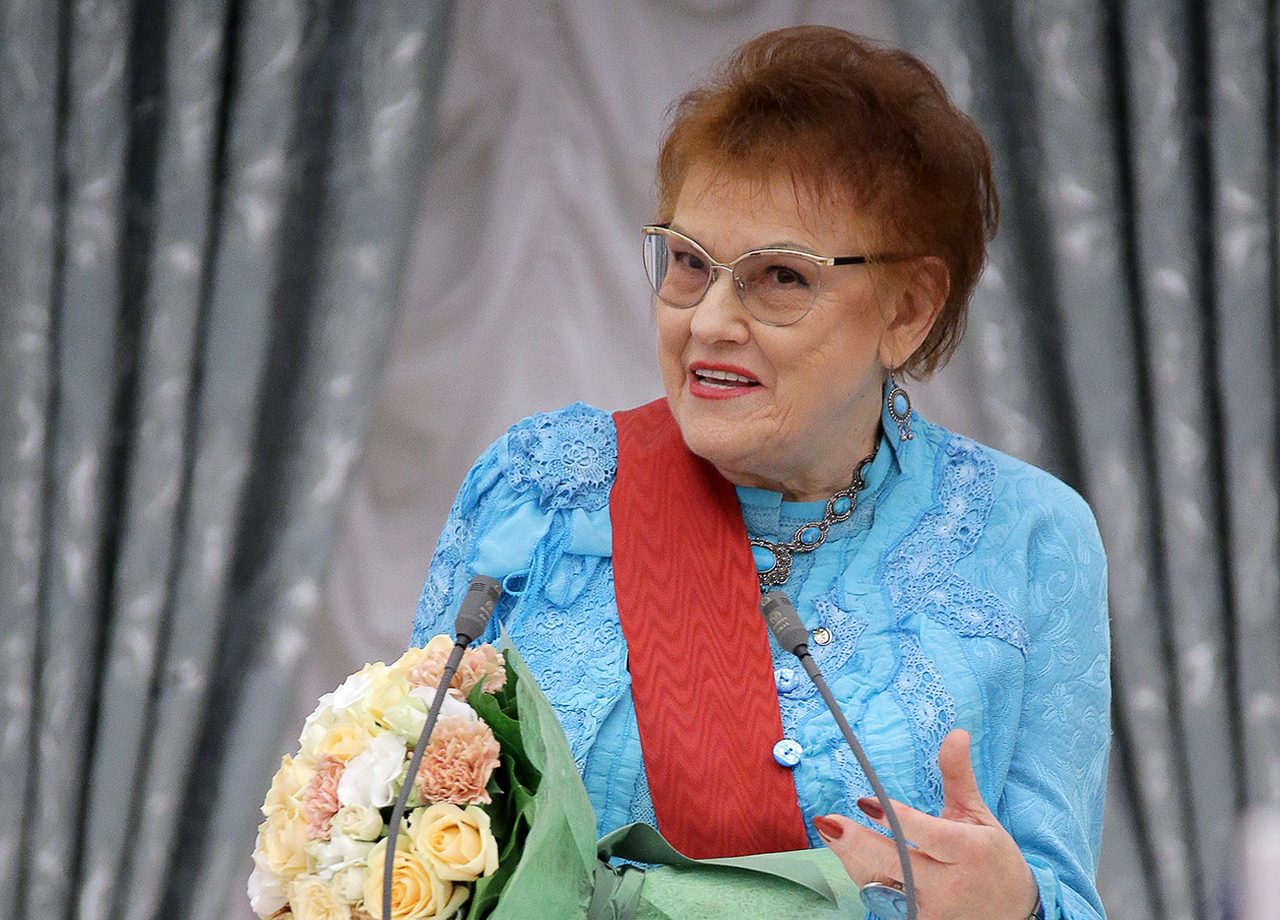 Lyudmila Verbitskaya during the ‘Order of Merit for the Fatherland’ award ceremony
Verbitskaya had to lead the university during the rather difficult, turbulent 1990s, after the collapse of the USSR. It was a time of the lowest salaries for scientists and teachers, a time of instability and contradictions.
“Thanks to her charm, sincerity and energy, she was able to carry this difficult period for university life on her shoulders,” said Dmitry Medvedev, a graduate of St. Petersburg State University and former President of Russia (2008–2012), in a documentary about Lyudmila.
In 1994, Queen Elizabeth II of Great Britain visited St. Petersburg and honored St. Petersburg State University with a visit, where she and Lyudmila Verbitskaya had an informal conversation, even discussing their grandchildren.
She became a symbol of literacy
As a scholar, Verbitskaya specialized in phonetics, studying correct pronunciation and, on a national scale, introduced a fashion for speaking correctly.
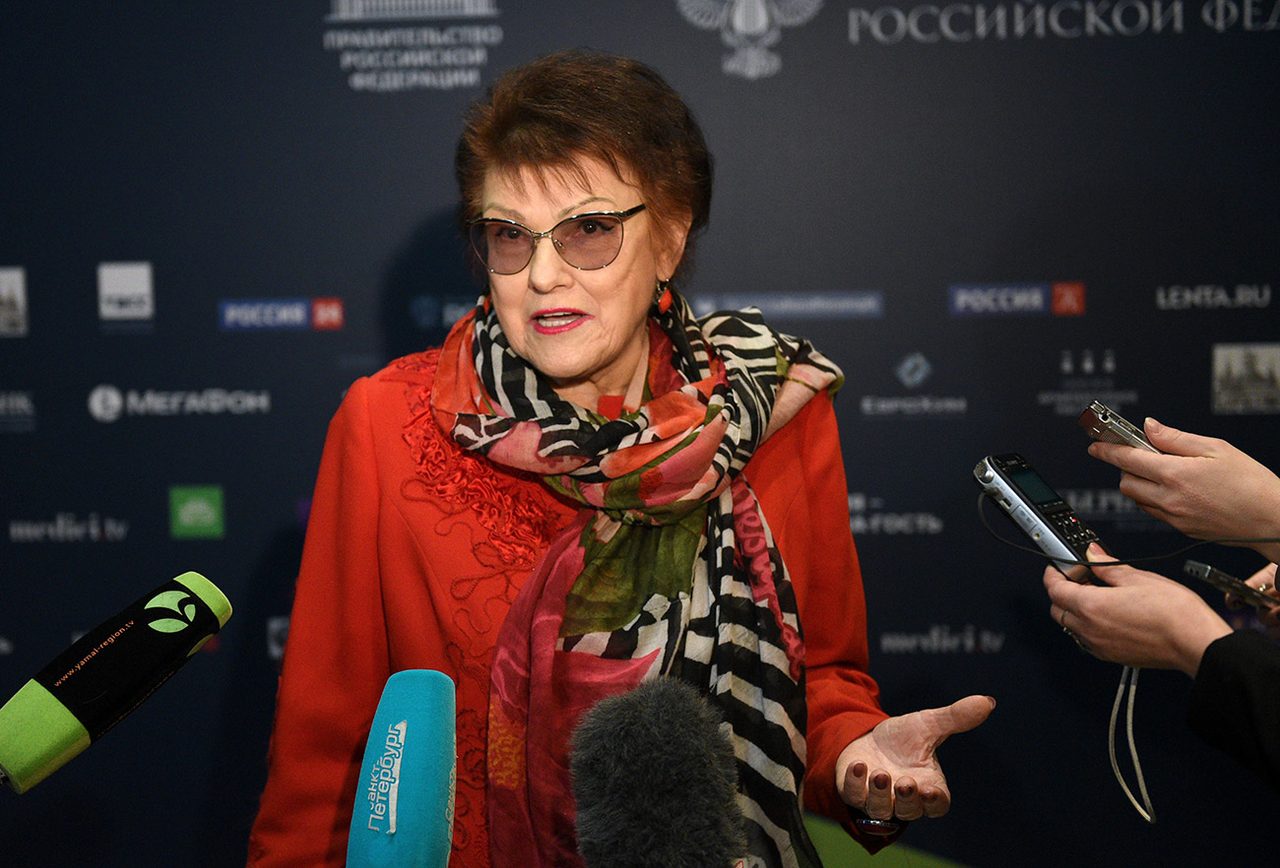 Lyudmila Verbitskaya at the V St. Petersburg International Cultural Forum, 2016
On her initiative, the dictionary ‘Let's Speak Correctly’ was published, as well as the campaign ‘Let's Speak Like Petersburgers’, when posters featuring Verbitskaya's portrait and examples of correct word stress were put up in the subway, on information boards and at bus stops throughout the city.
The philologist said she sought “to infect her students and, if possible, the whole society with the conviction that speaking correctly is prestigious".
Verbitskaya also developed a system for teaching foreigners correct Russian pronunciation and how to lose their accent.
In everything related to the Russian language and science, in general, she was trusted unconditionally. She even served on various government and presidential advisory councils. Even Vladimir Putin once admitted that he often personally asked Lyudmila Verbitskaya for consultation on Russian language matters.
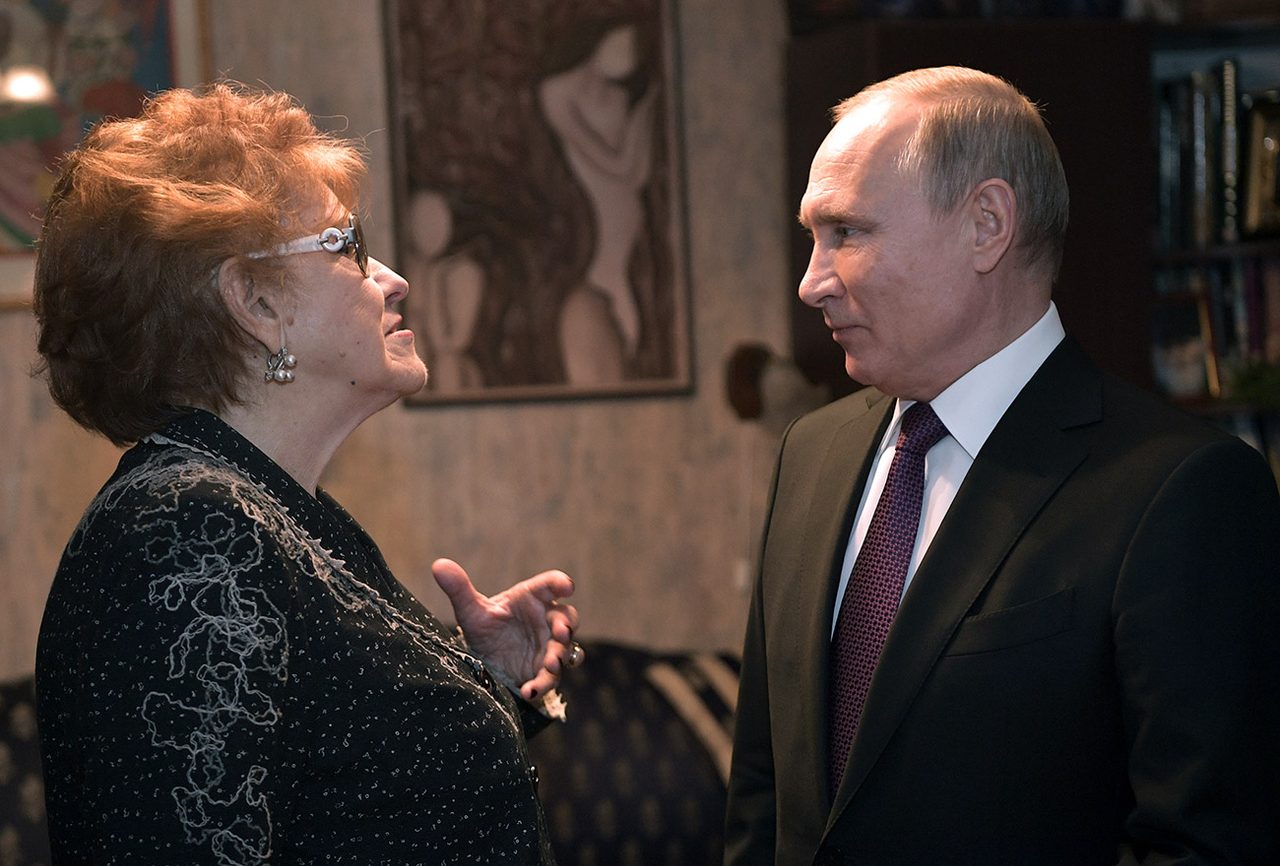 Lyudmila Verbitskaya during a meeting with Vladimir Putin.
“There were cases when I called her right from the plane before an event, when my colleagues and I couldn't agree on how to say something correctly,” Putin said. And Verbitskaya always had the right answer instantly.
‘The main Russianist of the planet’
Verbitskaya thought on a grand scale, she wanted to bring the Russian language to the global stage. “The planet must start speaking Russian,” she said. For nearly 20 years, Verbitskaya headed the International Association of Teachers of Russian Language and Literature, organizing congresses and uniting Russists from all countries.
In 2007, Lyudmila Verbitskaya proposed creating the ‘Russkiy Mir’ (Russian World) foundation to promote the Russian language worldwide – and Vladimir Putin supported the idea.
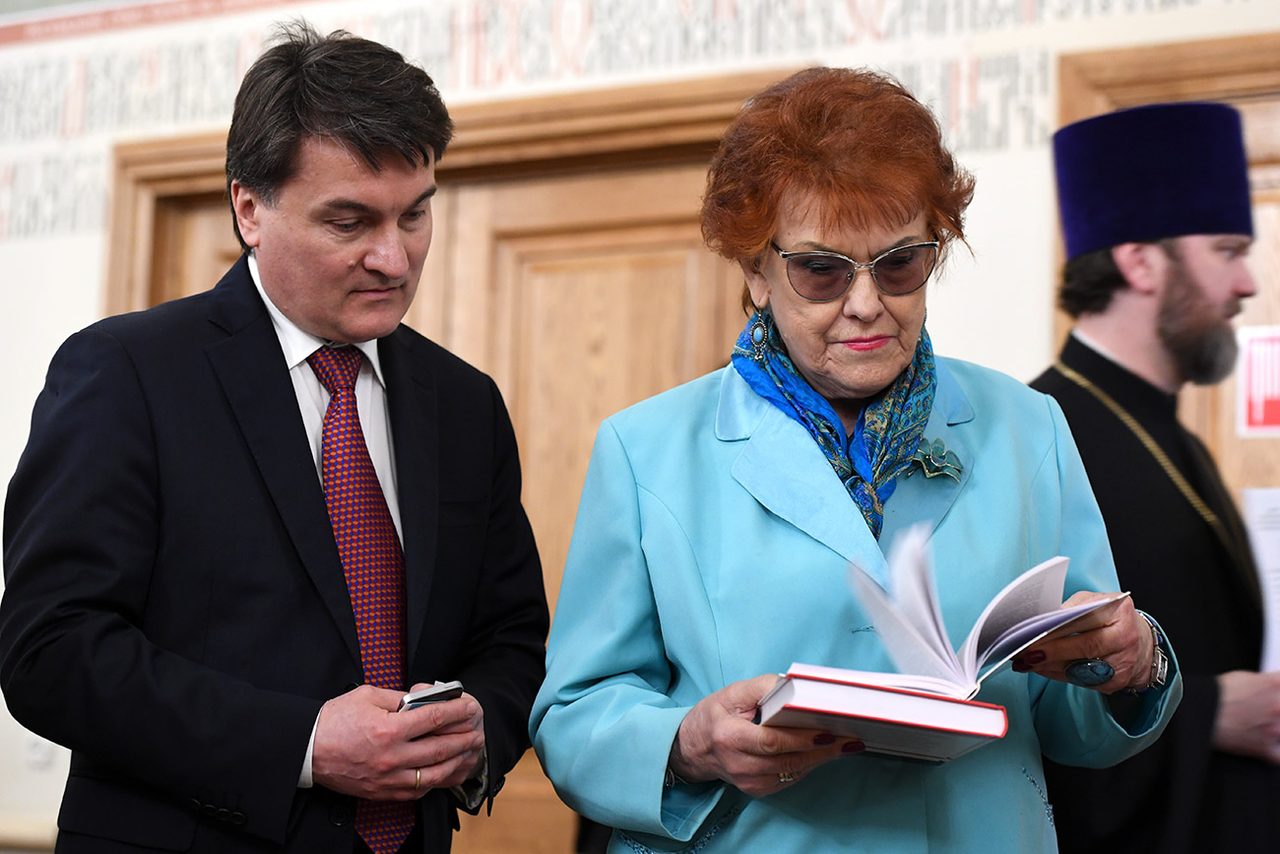 Lyudmila Verbitskaya at the presentation of the 'Large Dictionary of the Church Slavonic Language of Modern Times' in the Cathedral of Christ the Savior.
Thanks to Verbitskaya, Russian language centers where people could study for free began opening around the world. International conferences of Russian studies were held (and continue to be held), and grants were awarded for the study and promotion of the Russian language.
Lyudmila passed away in 2019. In 2026, to mark the 90th anniversary of her birth, a scholarship in Verbitskaya's name for talented Russian language teachers abroad was announced to be established.