

How a descendant of Germans & Danes became the MAIN collector of Russian words
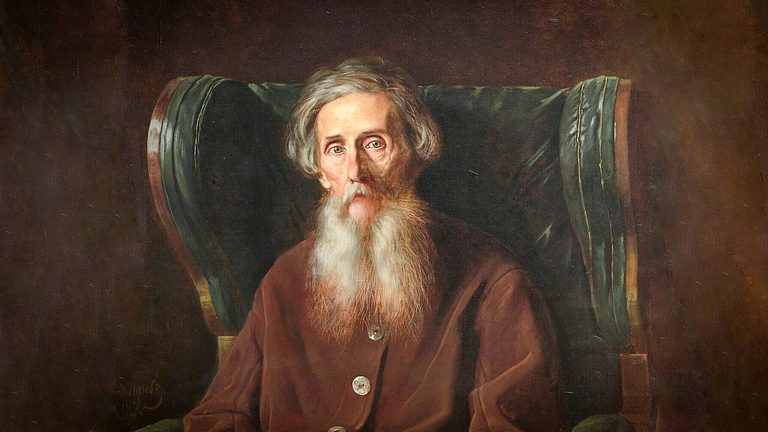
Vladimir Dahl (1801–1872) studied naval science and medicine, but went down in history as the author of the ‘Explanatory Dictionary of the Living Great Russian Language’ and one of the first foreign collectors of Russian folklore.
Feats of youth
Vladimir Dahl was born in 1801 in Lugan (present-day Luhansk), where his father, Johann Christian Dahl, a russified Dane, worked as a doctor. Vladimir's father knew eight languages, while his mother, Marie Freitag, coming from a family of russified Germans and French Huguenots, spoke five languages fluently. From his parents, the boy inherited a feeling for words, curiosity, as well as a wide range of interests.
In 1814, the then 13-year-old Vladimir and his brother Karl were sent to St. Petersburg to study at the Naval Cadet Corps. Dahl later wrote that he “killed time” there and “all that remained in his memory were the birch rods”.
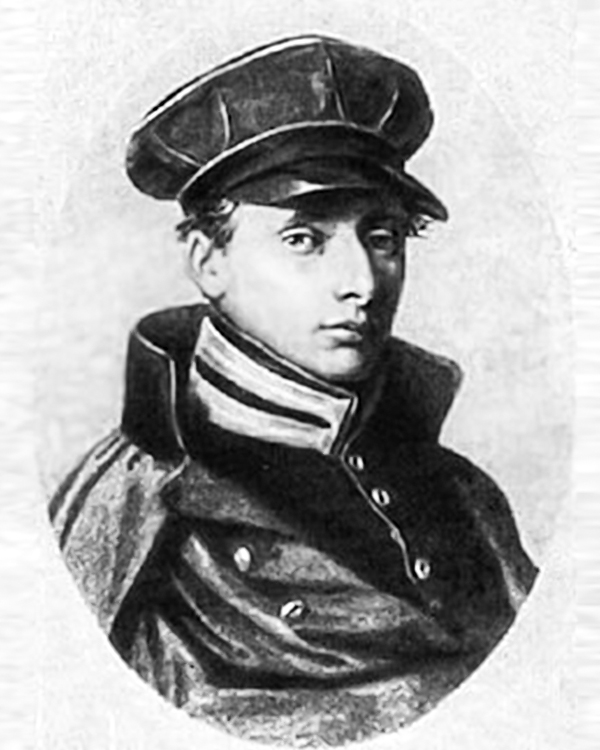 Dahl in youth
In 1819, Midshipman Dahl was assigned to the Black Sea Fleet. On the way to his new posting, he heard and recorded an unfamiliar word ‘замолаживать’ (‘zamolazhivat’) with a note: “In Novgorod Province, it means 'to be overcast with clouds' or 'to be turning toward bad weather'…” Thus began the dictionary of the living spoken language.
In 1825, Dahl left the navy and entered the medical faculty of the University of Dorpat. During the Russo-Turkish War of 1828–1829, Vladimir was called up to the active army and, before departing, he defended his dissertation for a degree of Doctor of Medicine ahead of schedule.
It was in the army that his notebook of the living language was actively being filled. A soldier stumbled, swore in frustration, shouting: “Чертова лужа!” (‘chertova luzha’, which means ‘damn puddle’) and another soldier confirmed: “Калуга!” (‘Kaluga’). It turned out that a puddle was occasionally known like that in the Kostroma region. But, an artilleryman from Tver will disagree: For him ‘калуга’ is a swamp, a bog. And a Siberian, meanwhile, will laugh: For him ‘калуга’ is a red fish, like a beluga or a sturgeon.
In 1832, Dahl published under a pseudonym a book stylized in the folk manner titled ‘Russian Fairy Tales’. This was how the broad reading public first became acquainted with him. Great Russian poet Alexander Pushkin also recognized his talent and suggested a direction: “Your collection is not a simple undertaking, not a hobby. It’s a completely new thing among us. You can be envied – you have a goal. To accumulate treasures for years and suddenly open the chests before astonished contemporaries and descendants!”
Special assignments official
In 1833, Dahl changed occupations again, becoming a popular eye surgeon in the capital and also a writer. He then left for Orenburg as an official for special assignments under the governor. That same year, he accompanied Pushkin on a trip through the Southern Urals. The materials they collected went into Pushkin's non-fiction work ‘History of the Pugachev Rebellion’ (‘History of Pugachev’) and his novel ‘The Captain's Daughter’.
Dahl and Pushkin met for the last time a little over three years later. Dahl, who was in St. Petersburg at the time, came to Pushkin, who had been mortally wounded in a duel. Dahl stayed with him until the end. His notes on the poet's final hours are medically precise and detailed.
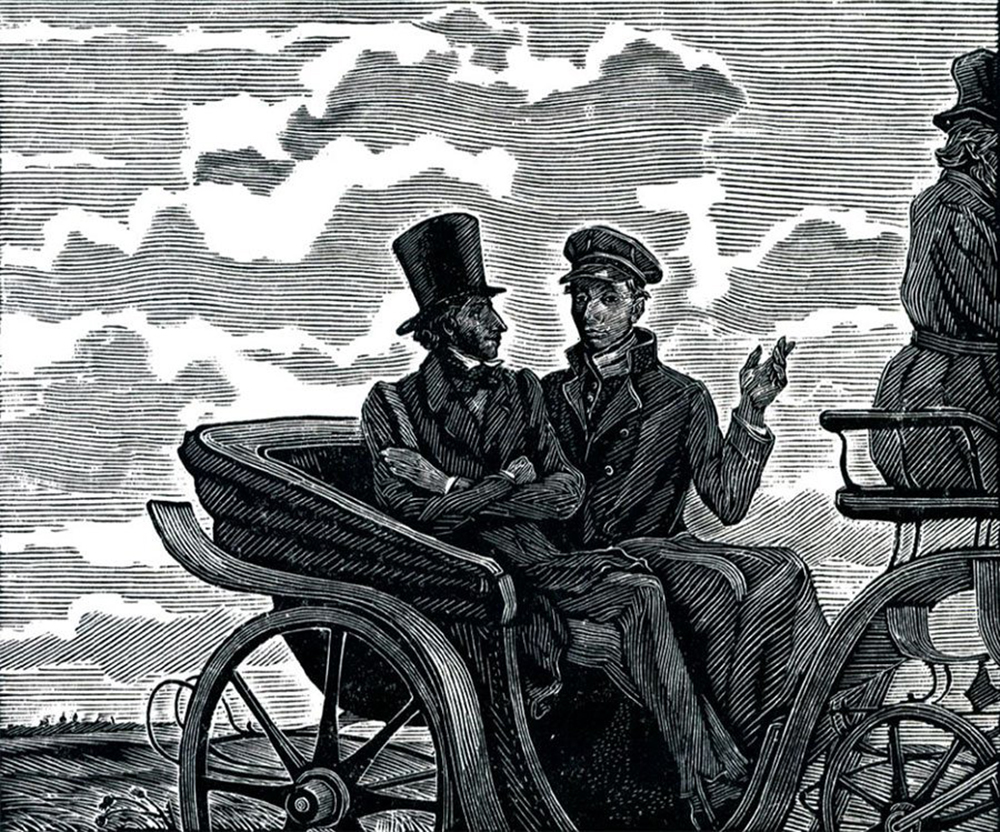 Andrey Presnov. Alexander Pushkin and Vladimir Dahl in an open carriage (fragment). 1987
During his service in Orenburg, Vladimir Dahl constantly traveled across the vast territory inhabited by Cossacks, Tatars, Bashkirs, Kazakhs, Kalmyks and Cheremis. He was one of the first to record Kazakh, Bashkir and Kalmyk fairy tales, proverbs and sayings and he described the customs of the nomadic peoples.
In Orenburg, he founded and headed one of the first provincial museums in Russia. During the Khiva campaign of 1839–1840, in addition to his main duties under the governor, Dahl collected geographical and ethnographic information about Central Asia, treated the wounded and even invented a hanging cot for transporting the sick on camels. For his articles on medicine, especially on homeopathy, which interested Dahl, he was elected a corresponding member of the Academy of Sciences in 1838.
In 1849, Dahl, of his own volition, moved from the high post of “the minister's right hand” to managing the appanage office and moved to Nizhny Novgorod. Daily work with thousands of state peasants made him feel his own usefulness to society again.
All his life, Dahl was on the move and he once wrote: “Sitting in one place, in the capital, you cannot learn Russian and sitting in St. Petersburg, even less so. It’s an impossible thing. Our writers need to air themselves out in the provinces, from time to time, and listen attentively to the right and to the left.”
The dictionary of the living great Russian language
In 1859, Dahl retired and settled with his family in Moscow. Having finally found time to work on the dictionary, Dahl planned to prepare it for publication for another ten years, but things turned out differently. In 1860, at a meeting of the Society of Lovers of Russian Literature, of which Dahl was a member, voices were raised in support of the immediate publication of the priceless materials, although, at that point, only half of the proposed dictionary was ready for publication.
The dictionary began to appear in parts in 1861. It was organized on an alphabetical-nest principle: finding a word by its first letter, the reader could immediately become acquainted with words of the same root, their definitions and examples of usage. A huge layer of the dictionary consisted of proverbs and sayings – previously they had been banned from being printed as a separate edition (it was considered that there was too much sedition in them). In total, the work included about 200,000 words and 30,000 proverbs, which give an idea of the life and everyday way of the Russian people in the 19th century.
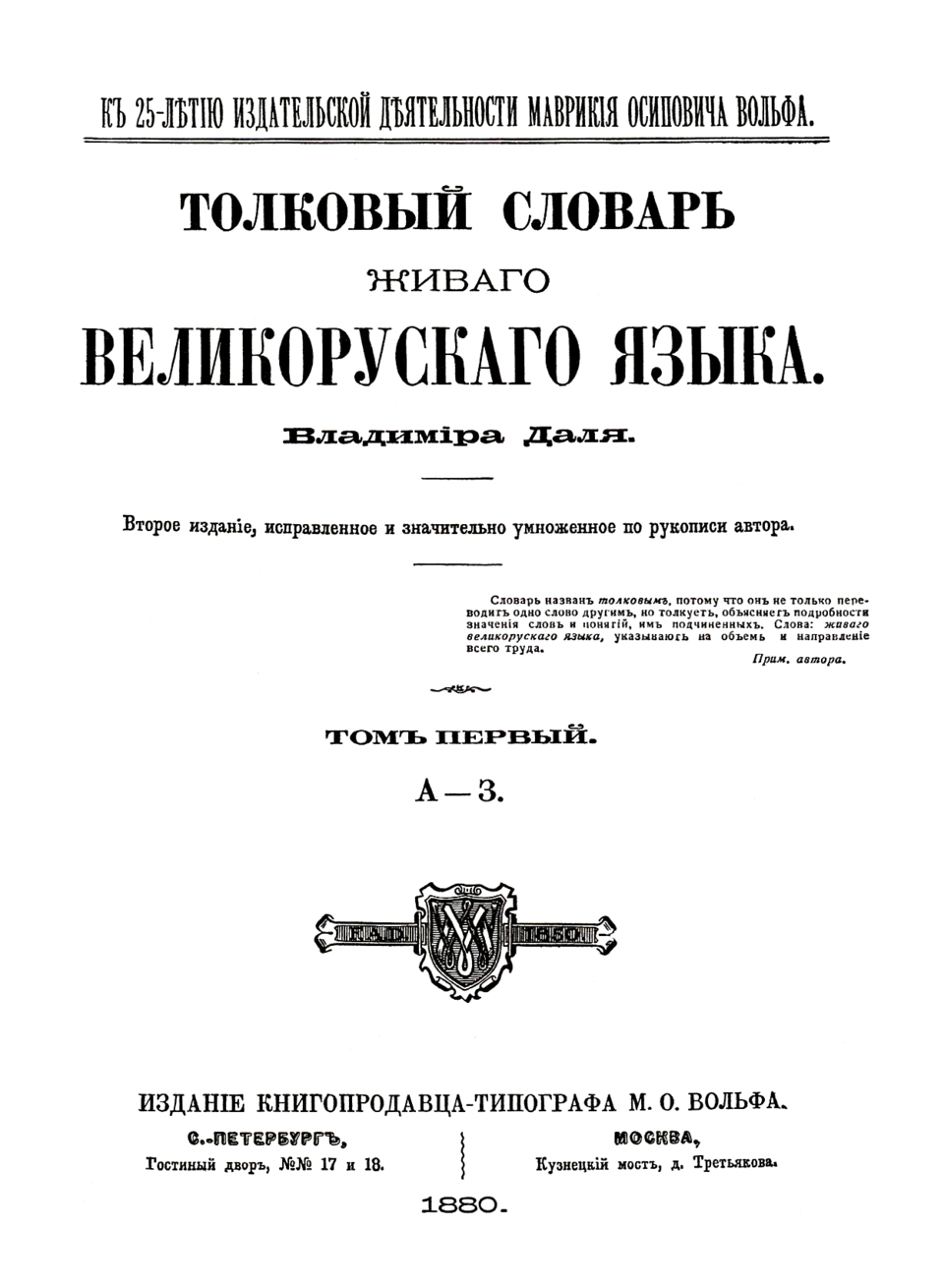 The dictionary of the living great Russian language
Dahl handed over folk tales to folklorist Alexander Afanasyev, songs to collector Pyotr Kireyevsky and the largest collection of lubok pictures in Russia to the Imperial Public Library. All this wealth was eventually published.
Vladimir Dahl died on October 4, 1872. Until his last days, he kept editing his dictionary and recording new words.
A full version of this article can be found (in Russian) on the Culture.ru portal.