How foreigners popularize the Russian language abroad

What motivates people from China, Argentina, India and other countries not only to learn Russian, but also to teach it to others?
"No ridiculous sanctions are scary for the Russian language, because the Russian people, Russian culture and you, dear teachers, stand behind it!" said Academician Vitaly Kostomarov, creator of the Pushkin Institute of Russian Language and the first person to scientifically address the teaching of Russian as a foreign language back in 2017.
He not only wasn't worried about the fate of the Russian language, but believed that the Russian language was needed by the whole world! And he was absolutely right. Despite the ongoing difficult political situation, Russian is still learned and loved and interest in it is steadily growing in many countries.
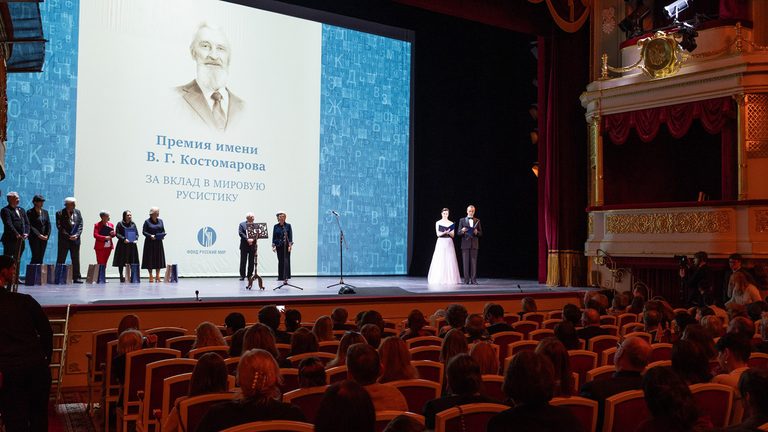
On November 18, at the Maly Theater in Moscow, the Kostomarov Prize ‘For Contribution to World Russian Studies’, established by the ‘Russky Mir Foundation’, was awarded for the first time. The laureates were eight Russian studies scholars from China, India, Vietnam, Argentina, Serbia, Hungary, Kazakhstan and Transnistria.
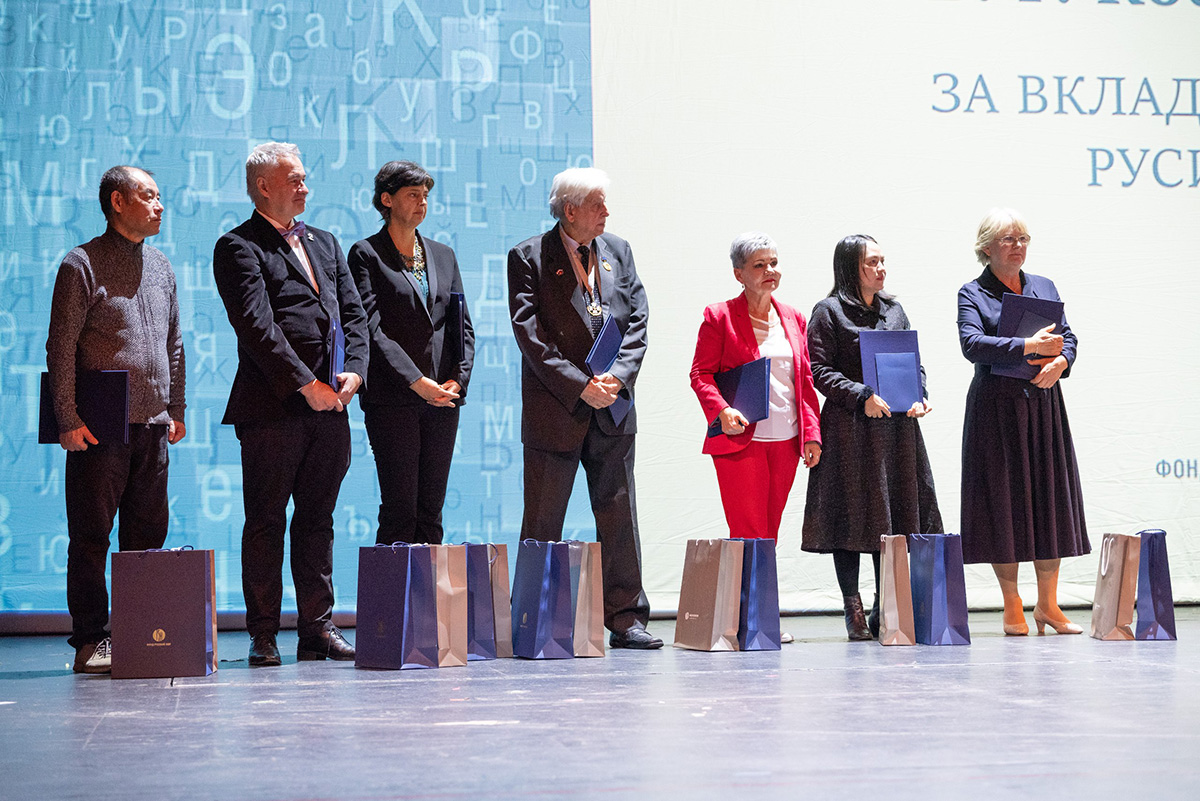 The Kostomarov Prize winners
These are professors, deans of faculties studying Russian studies, translators, researchers and secondary school teachers. These people are not only deeply passionate about the Russian language themselves, but also inspire their students to learn the language and read great Russian literature. Many of them felt genuine happiness simply from gathering in Moscow and seeing how many like-minded people surround them.
“As the person who is responsible for the state language policy, I literally monitor every week what is happening on the world agenda with the Russian language. And I can see the numbers that the interest in Russian studies is growing and new centers and classrooms are constantly being opened and more and more people are going there," says Elena Yampolskaya, Adviser to the President of the Russian Federation and head of the Supervisory Board of the ‘Russkiy Mir Foundation’.
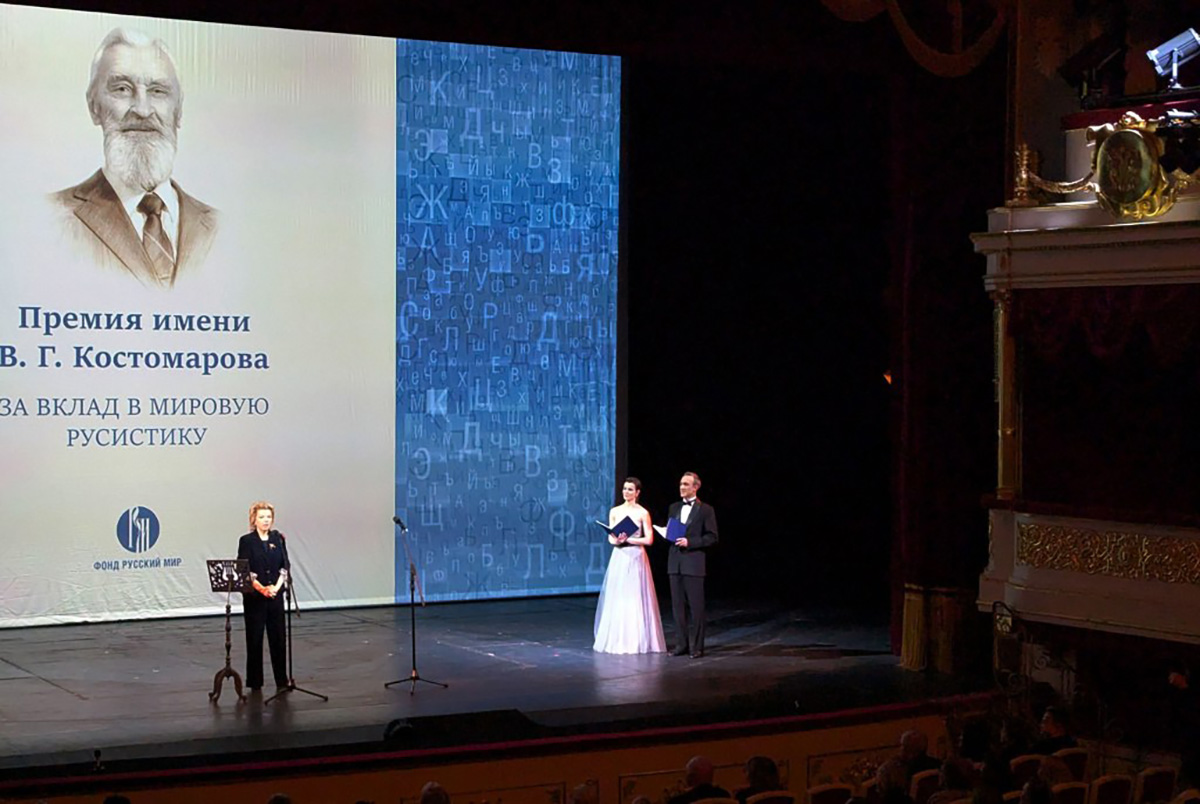 Greeting words from Yelena Yampolskaya
According to her, in many countries, Russian studies scholars are now facing many difficulties, so the Kostomarov Prize is an important step in supporting people who are engaged in teaching, translation and research and who provide incredible assistance in promoting the Russian language in the world.
Teaching Russian as a vocation
“Interest among Chinese people in the Russian language has been constantly growing in recent years,” says Professor Liu Wenfei from China, one of the prize laureates.
“Currently, more than 180 universities in China have Russian language departments; up to 40,000 students study Russian annually and, in many secondary schools across China, quite a few students also choose to study Russian.”
Liu Wenfei is an honorary and visiting professor at 18 Chinese universities. He has written 200 scholarly articles and 20 monographs devoted to problems of Russian literature, the history of Russian culture and social thought. His works are used in training Russian studies specialists at universities in China. In addition, he has translated into Chinese the works of more than 20 Russian writers and poets of the 19th–21st centuries.
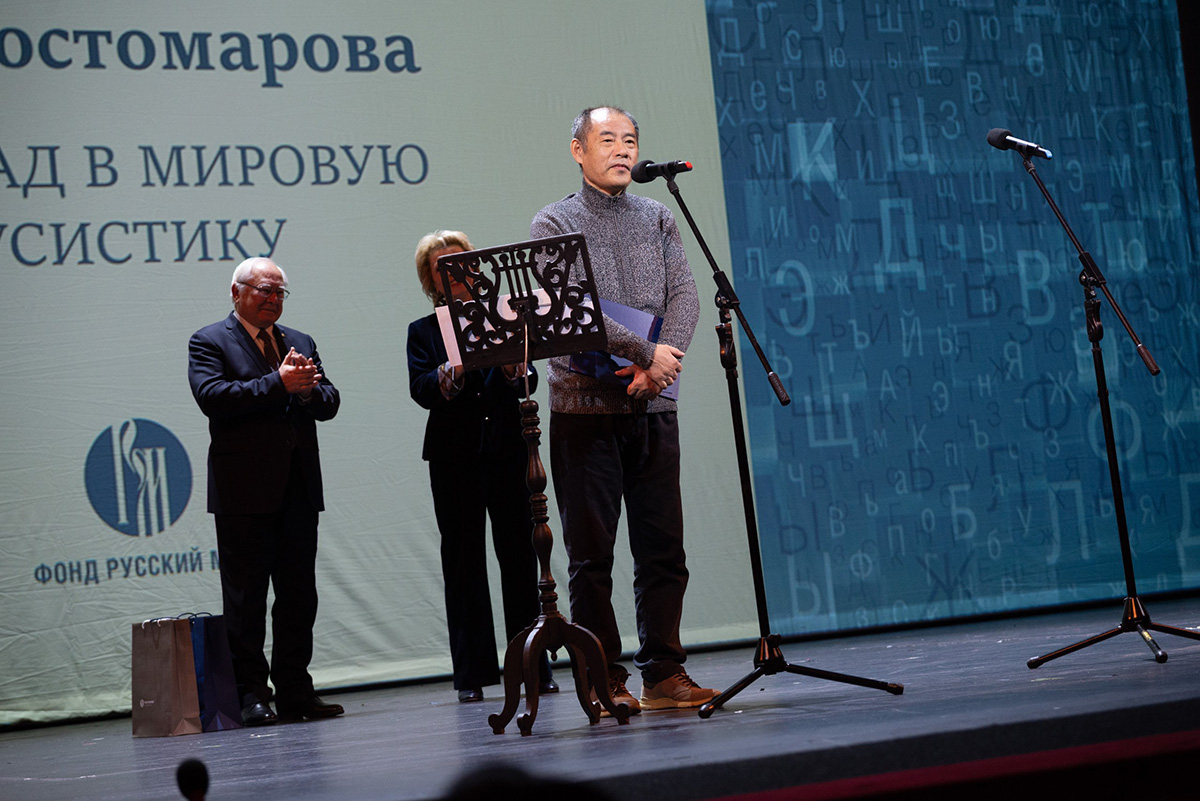 Liu Wenfei from China
Professor Wenfei began learning Russian in 1978 when he enrolled at Anhui Pedagogical University in the Russian Language and Russian Literature program.
Initially, studying Russian was not his choice: “At the exams, they found that I was quite young and would probably find it easier to master a new language, so I was assigned to the Russian language program.”
After his studies, Wenfei became a research fellow at the Academy of Social Sciences for a long time. But, in 2015, he moved to Capital Normal University in China and began working as a teacher in the Russian language department. “My parents were teachers, the university where I studied was a pedagogical one and the place where I work now is also a pedagogical university. It seems that being a teacher is truly my destiny and my vocation!”
Russian culture as identity
A consistently high interest in Russian literature and culture is also noted in his country by Omar Lobos, a laureate from Argentina. He began learning Russian in 1993 at the House of Russia in Buenos Aires. Since then, he has spent over 20 years teaching Russian literature at the University of Buenos Aires, having been there since the day the Department of Slavic Literature opened.
“In Argentina, there has always been, is and will be great interest in Russian culture, literature and politics! It seems that Russia is a distant country, but we have already had six waves of Russian emigration, so we have close ties.”
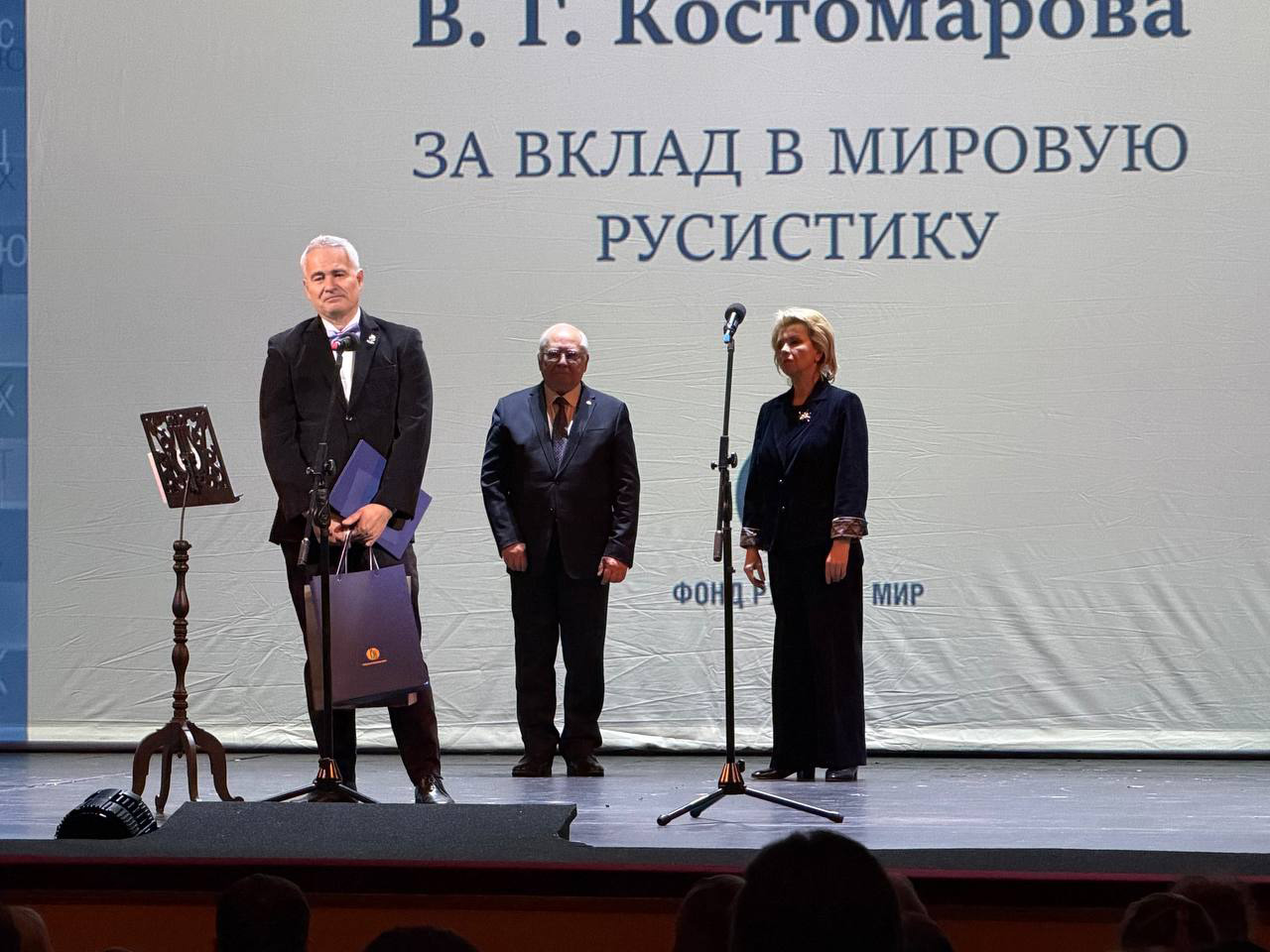 Omar Lobos from Argentina
Besides teaching, Dr. Lobos is actively engaged in translating Russian literature: works by Dostoevsky, Chekhov and Platonov. He has also translated a great deal of poetry: Pushkin, Mayakovsky, his beloved Yesenin and Akhmatova. He also has an as-yet-unpublished translation of an ancient text – ‘The Life of Archpriest Avvakum’. It was a real challenge, but Lobos came to love Avvakum and was pleased with the work.
“I no longer remember what I was like before I started studying Russian language and Russian culture. It has all entered my life so densely – I love Russian music, the romances of Rachmaninoff, Tchaikovsky, I love Mussorgsky. The Russian world became an unexpected discovery and a true wealth for me. It has all become mine, inseparable from me. Now, it is also my identity,” admits the Argentine.