
How to learn Russian phonetics with the help of AI


A teacher of Russian in Italy summarized the main pronunciation problems her students face and created an AI model for daily practice.
Imagine you want to say: "Жду тебя в метро" ("I'm waiting for you in the subway"), but the Russian letter ‘В’ comes out like ‘W’. And the listener hears "… у метро" – something completely different! Or, at the doctor's office, you complain about your ‘суп’ (soup) instead of a ‘зуб’ (tooth). Because of one wrong sound, a conversation sometimes just doesn't come together – especially if the student is a native speaker of a completely different phonetic system.
"In Chinese, consonants are distinguished by aspiration, not voicing; in Arabic, there is no ‘P’or ‘V’; in Italian and Spanish, there is no ‘Ы’ and no reduction of unstressed vowels. A student hears two Russian sounds as one and can't tell them apart," says Marina Lelyavina, a translator and teacher of Russian as a Foreign Language (RFL) in Italy.
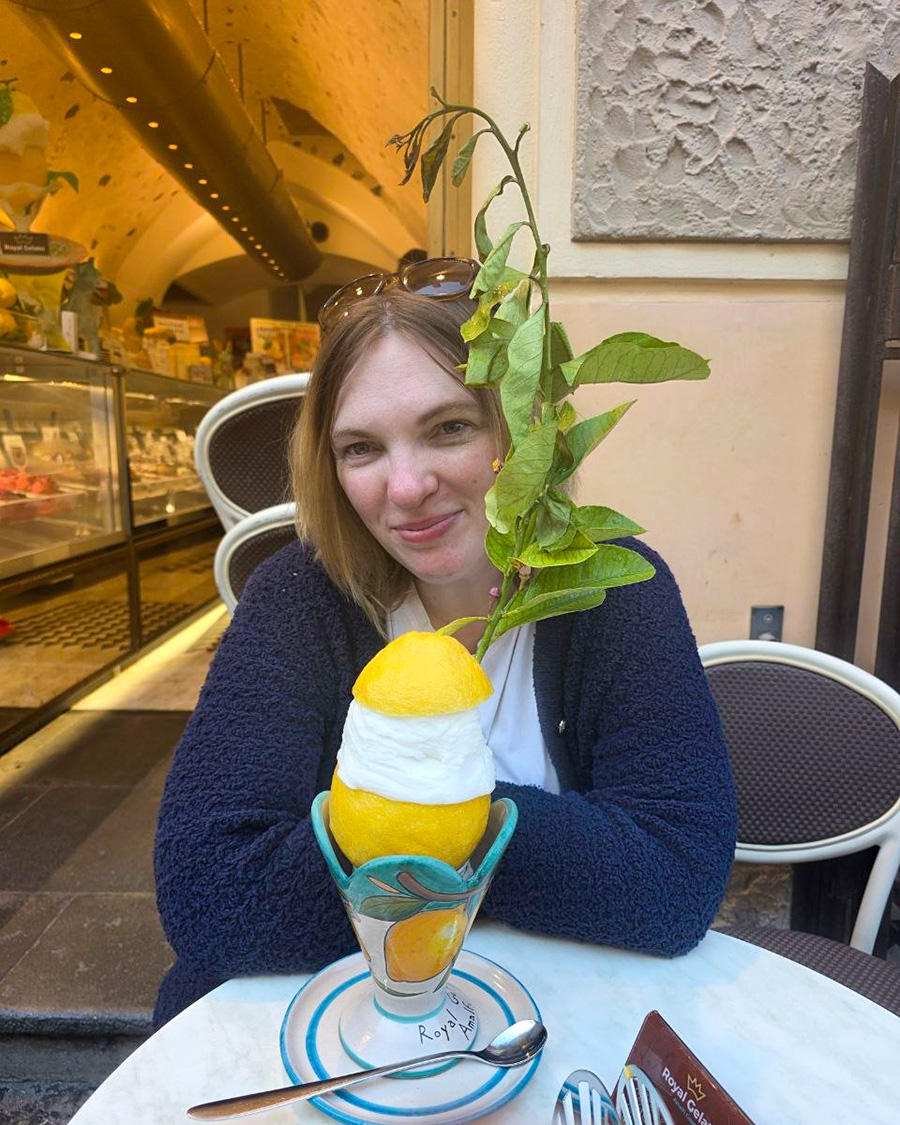
In 2026, she became one of the winners of the IV International Digital Championship for Teaching Foreign Languages and Russian as a Foreign Language (RFL).* The final task was to design a project on the theme ‘Teaching Phonetics with Digital Technologies’.
Marina Lelyavina proposed a kind of ‘Phonetic Subway’ – a system of phonetic exercises for students. Students are offered a daily 12-minute online "ride".
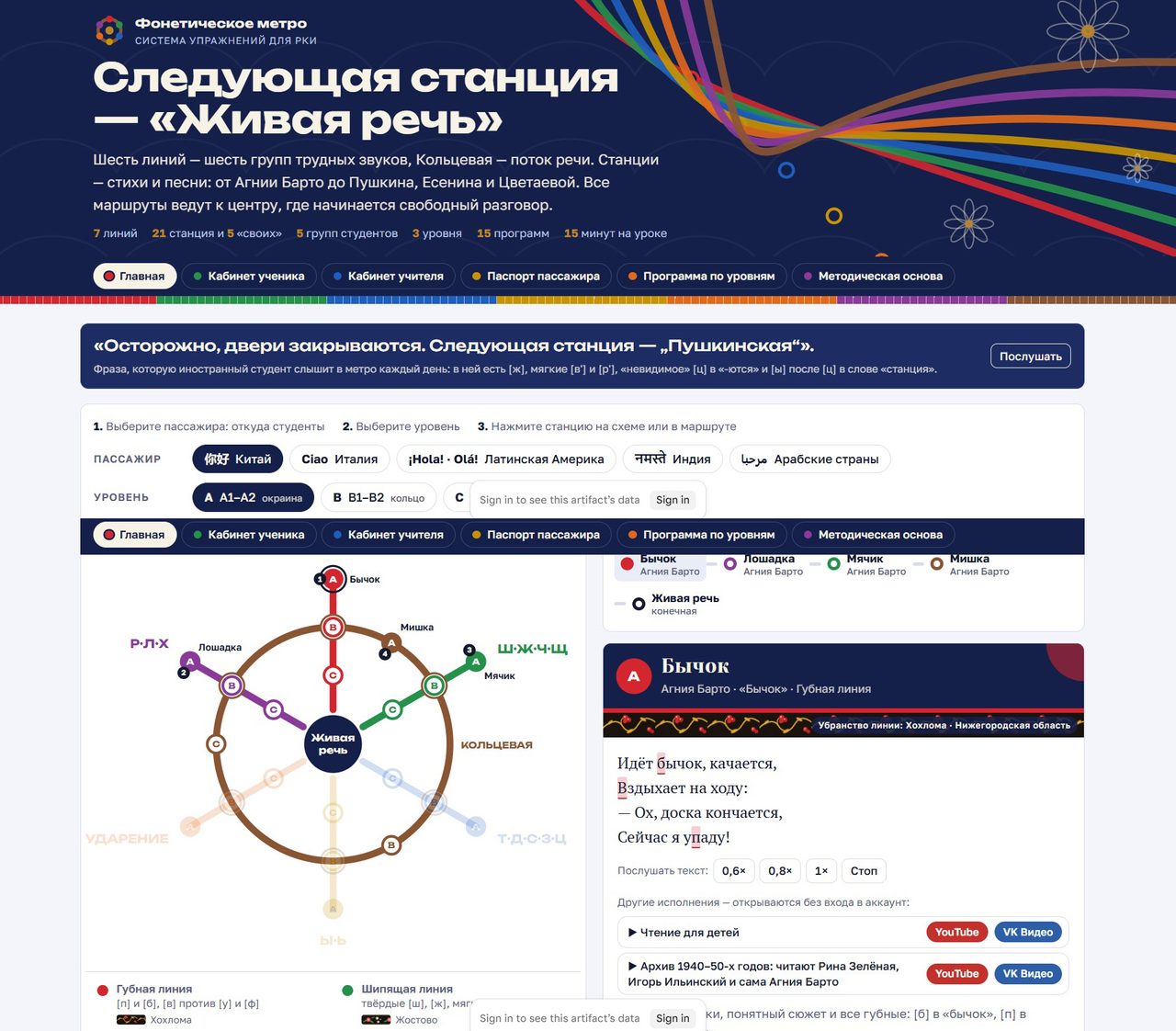
The trainer has seven lines – each dedicated to a separate group of difficult sounds. The student moves from simple to complex levels and a well-known Russian poem or song can help train pronunciation (which also helps introduce the student to Russian culture). For example, the pronunciation of the letters ‘П’ and ‘Б’can be practiced with Agnia Barto's poem ‘Bychok’ (The Little Bull) or the song ‘Katyusha’. And for the sibilant consonants ‘Ш’, ‘Ж’, ‘Ч’ and ‘Щ’, Pushkin's ‘Eugene Onegin’ comes to the rescue.
Marina Lelyavina draws an analogy: the subway is a system of communications and connections in a city, just as phonetics enables a person to speak correctly and achieve a communicative goal.
"Besides, the subway is an everyday reality for every foreign student in Russia. And the phrase 'осторожно, двери закрываются…' ('caution, the doors are closing…') is already a ready-made phonetic trainer — it has (the letter) ‘Ж’, soft consonants and the 'invisible' ‘Ц’ in the word 'закрываются'," says the teacher.
Phonetics is the main problem for many students
Marina Lelyavina is originally from Luhansk; by education she is a translator, philologist and foreign language teacher. In 2018, she moved to Italy, got married and found a new homeland. But, she always wanted to be connected to her native language and to Russian culture.
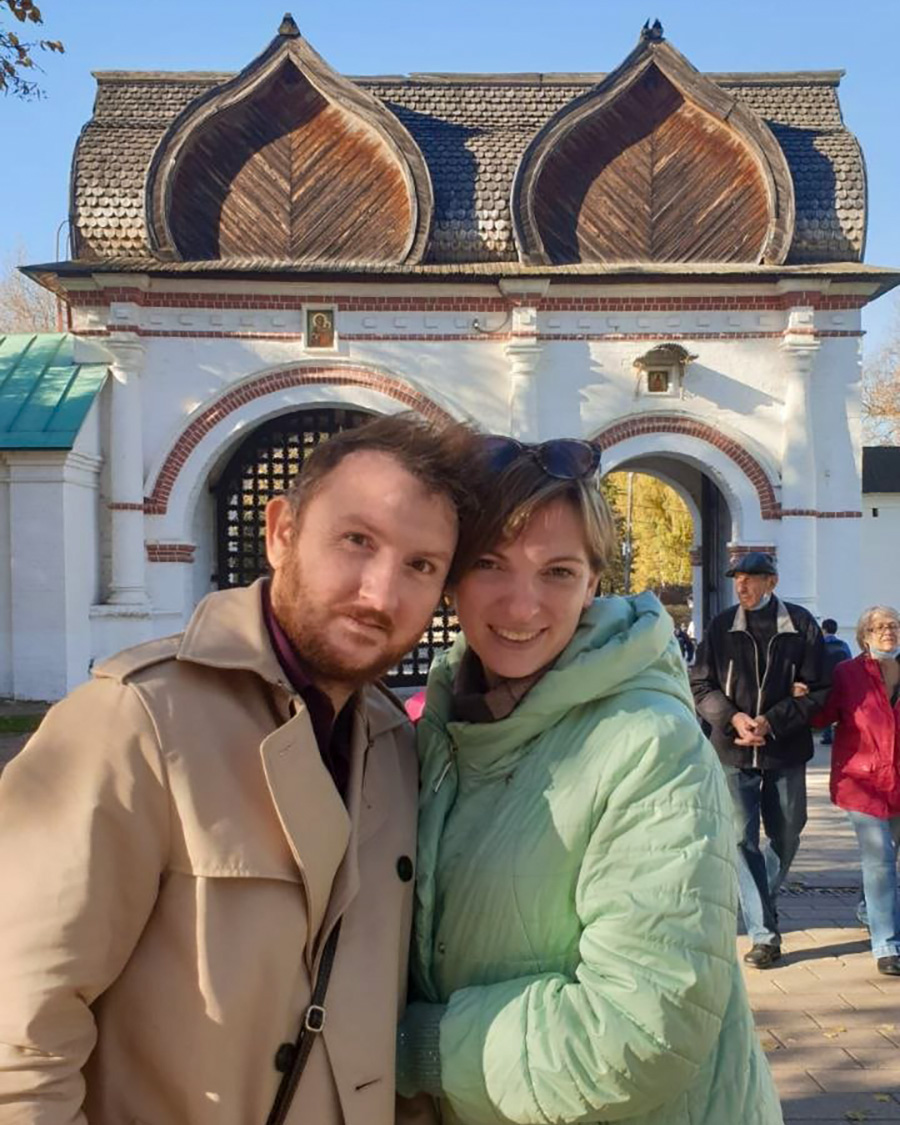
All the Italians she interacted with – and above all her husband – were very interested in Russia and the Russian language. Marina gradually began to gather students, first in a conversation club, telling them about Russia. Then, she took a distance course in teaching RFL at Moscow State University, got a certificate and started teaching language students. She’s currently taking another, more thorough RFL course at the Institute of Russian Studies.
"For Italians, the hardest thing is our vowels. In Italian they sound clear, but, in Russian, vowels are sometimes lost (we write 'молоко' but say 'малако'). They also struggle with the letter ‘Ы’, which doesn't exist in Italian – so even saying 'мы' ('we') is hard for them! Also, 'быть' ('to be') they may pronounce as 'бить' ('to beat') and 'мыло' ('soap') as 'мило' ('nice')," says Marina, sharing some of her observations.
Italians also find soft consonants difficult – ‘полька’ (Polish woman, type of dance) and ‘полка’ (shelf) are the same word to them and it's impossible to explain the difference. The letter ‘Х’ is also challenging; they often say ‘корошо’ instead of ‘хорошо’ (good).
"And, of course, the stress – Russian has a very flexible stress, which can completely change the meaning of a word."
But, according to Marina, Italians have advantages, too – they have a well-placed ‘Р’, they pronounce double consonants clearly and the soft letter ‘Ч’ helps them master phonetic rules faster than students from other countries.
"I want phonetics to stop being a boring warm-up at the start of a lesson and become a road that's interesting to travel – a road to living conversation," says Marina.

In the future, she hopes to create something like a club for lovers of Russian language and culture in Italy. "Italy and Russia are closer than they seem – Italian architects built the Moscow Kremlin and Gogol wrote 'Dead Souls' in Rome. And the melody of 'Katyusha' is known here as an Italian partisan song!"
*The International Digital Championship for Teaching Foreign Languages and RFL is organized jointly by the Institute of Russian Studies and the Association of RFL Teachers. In 2026, 782 participants from 52 countries competed in the championship. Among the participants were school and university teachers, students, tutors and anyone interested in language teaching and Russian as a foreign language in particular. The championship was held entirely online.