
What’s going on in this painting by Léon Bakst?
"Vive la Russie! Vive la France!" is how the townspeople greeted the Russian sailors who arrived in Paris in Fall 1893.
"The reception of the squadron in Toulon is truly brilliant and enthusiastic… The welcome given to our sailors in Paris defies description… Admiral Avellan is magnificent. A great personal success," wrote Baron Arthur Mohrenheim, the then Russian ambassador to France, describing the celebrations surrounding the arrival of the Russian squadron – festivities that lasted for several weeks.
Two years prior to these events, the French Northern Squadron, under the command of Rear Admiral Alfred Albert Gervais, had arrived in Kronstadt. This visit by the warships was more than just a polite gesture; it marked the beginning of the Franco-Russian Alliance, which would later form the foundation of the Entente – a military and political coalition between the Russian Empire, France and Great Britain.
In Kronstadt, the Northern Squadron was welcomed by both government officials and the general public. Tsar Alexander III visited each of the squadron’s ships and stood bareheaded while ‘La Marseillaise’ was played. The French sailors visited St. Petersburg and then traveled to Moscow, where they were received with equal grandeur. Two weeks later, they returned to France.
Meanwhile, in St. Petersburg, preparations began for a return visit. In October 1893, a squadron of ships from the Baltic Fleet, commanded by Rear Admiral Fyodor Avellan, arrived in the port town of Toulon. From there, the Russian sailors set off for Paris; the journey took four days, during which they were welcomed in every town along their route. The warmest reception, however, awaited them in Paris, where they were greeted by Sadi Carnot, President of the Republic.
The guests from Russia were also showered with gifts: Admiral Avellan received a silver model of Jules Coutan’s statue ‘Peace on the Brink of War’; each officer, meanwhile, was presented with personalized commemorative medals and tokens; and the sailors received albums featuring views of the French capital. For two weeks, balls, parades and banquets were held in their honor. President Carnot even traveled to Toulon to see the squadron off and bid farewell to his distinguished guests.
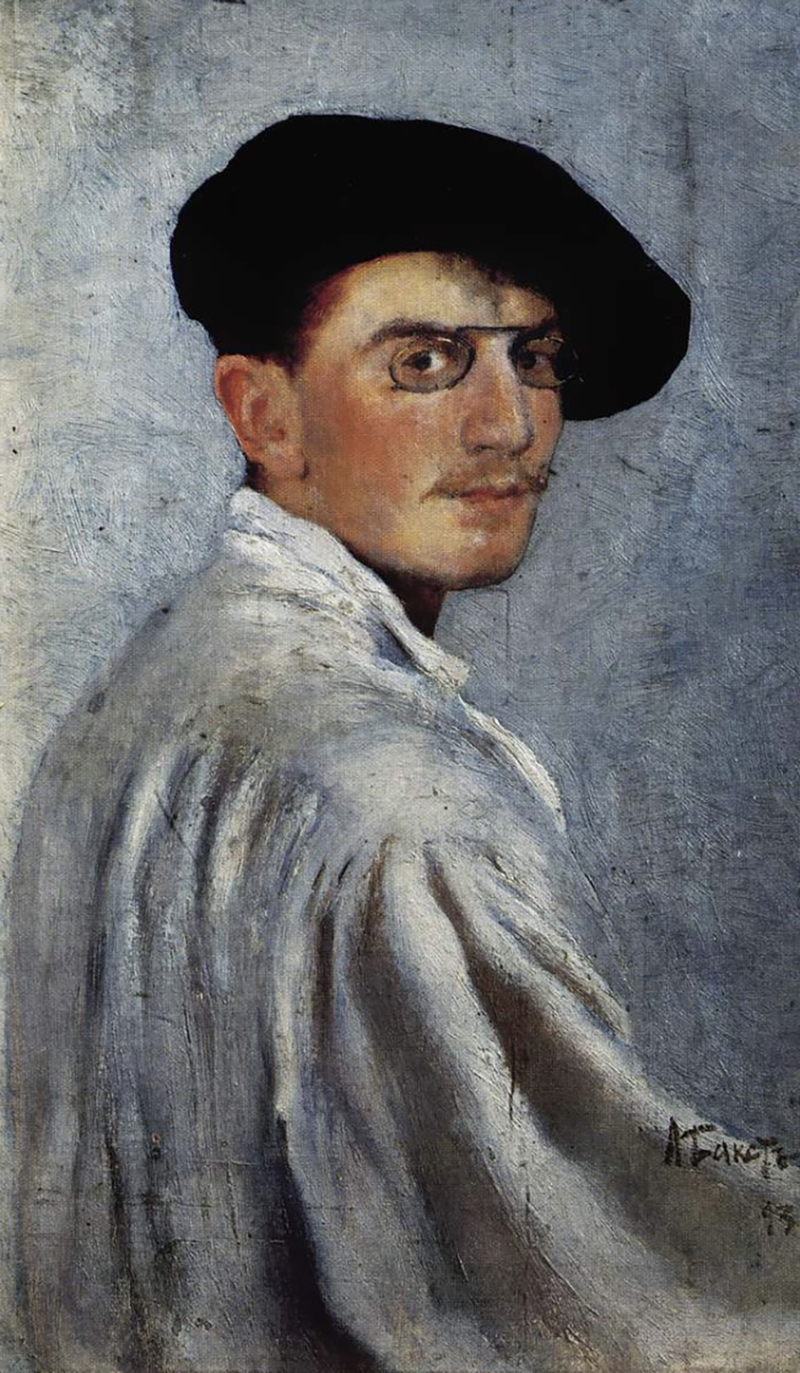
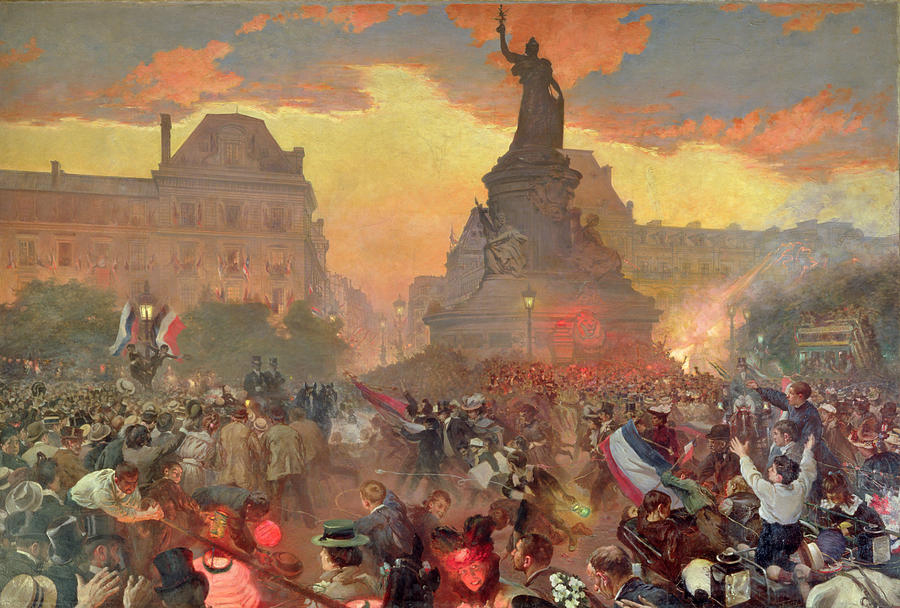
The moment of their arrival in the French capital is captured in the painting ‘Carnival on the streets of Paris in honor of the arrival of Russian sailors, October 5, 1893’. Grand Duke Alexei Alexandrovich, head of the Naval Department, commissioned young artist Léon Bakst to create this large-scale canvas. Bakst moved to France and the work took six years to complete – a period during which he made occasional trips back to St. Petersburg. At the same time, Bakst studied in the studios of Jean-Léon Gérôme and Albert Edelfelt, as well as at the Académie Julian.
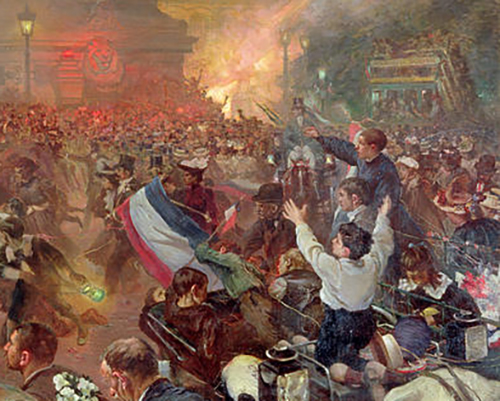
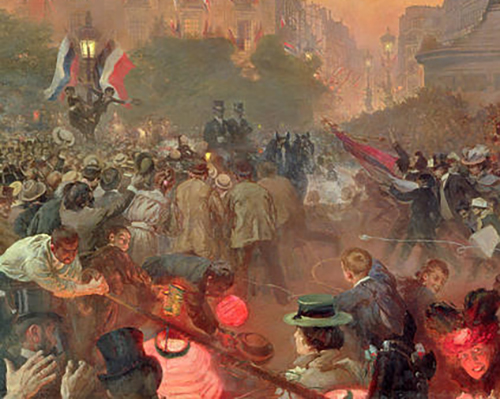
Finally, the painting was finished: it depicts a procession of Russian sailors moving across the Place de la République, surrounded by a crowd of Parisians. Men, women and children welcome the guests, holding flowers and colorful lanterns. Some have settled comfortably into carriages, while others – less fortunate – stand amidst the throng, straining to catch a glimpse of the carriages carrying the Russians. The most agile and nimble among the crowd have even climbed up a lamppost. Russian and French flags are flying everywhere.
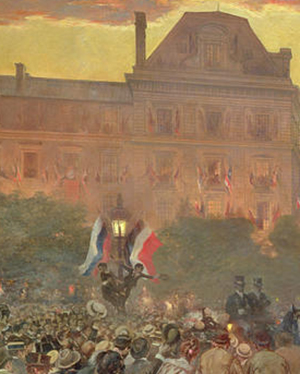
In 1900, Bakst’s painting was placed in the Naval Museum in St. Petersburg (now the Central Naval Museum). There, in the Hall of the Glory of the Russian Navy, it remains on display to this day.