

8 horse-related expressions for all occasions
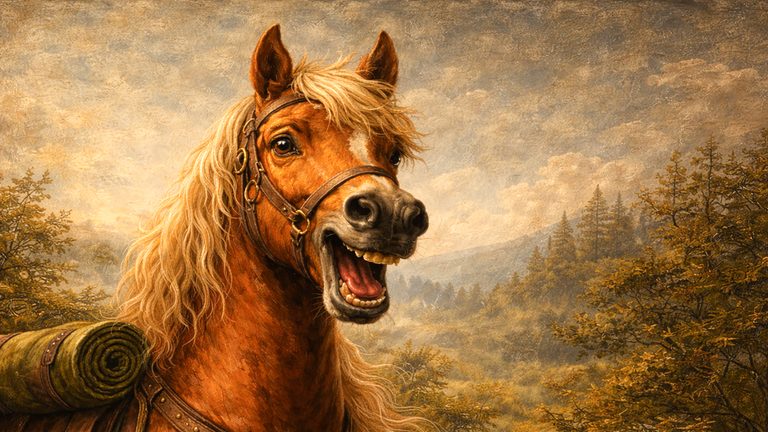
The symbol of the coming year in the Eastern calendar will be the ‘Red Fire Horse’. The image of a horse appears quite frequently in Russian proverbs and sayings and for almost any occasion – we've selected some of the more striking ones below.
Horse-related comparisons have become firmly entrenched in the Russian language. Excessively high prices are disapprovingly referred to as "horse prices”. Large portions of anything are called "horse-like doses". A person who loves to eat will be sneered at and remarked upon: "Yes, he has a horse-like appetite." And someone who unexpectedly makes a breakthrough will be remarked upon: "He's a dark horse!"
1. We wrote about why nonsense uttered by someone is called «Бред сивой кобылы» (“Bred sivoi kobyly”) here.
2. And about something completely inappropriate, they might say: «Не пришей кобыле хвост» (“Ne prishei kobyle khvost”). And here's why.
3. Finally, when referring to a task that hasn't even been started yet, they say: «Конь не валялся» (“Kon’ ne valyalsya”). You can read about the meaning of this phrase here.
4. «Баба с возу – кобыле легче» (“Baba s vozu – kobyle legche”)
"A woman less on the cart — the mare is better off."
As soon as the source of the problem disappears, things immediately become easier. In the old days, horses were the main (and, for the most part, only) form of transport for peasants; they were used to carry goods, travel to the city and plow the fields. Horses were cherished, understanding that losing one was akin to losing an arm. Therefore, wherever possible, they tried to make their life easier. For example, when a horse was climbing a hill with a heavy load, a woman would dismount and walk alongside it. This is how this expression came about.
5. «Старый конь борозды не испортит» (“Staryy kon' borozdy ne isportit”)
"An old horse won't spoil a furrow."
Life experience is more valuable than youthful enthusiasm. However, the full version of this proverb is: «Старый конь борозды не испортит, да и глубоко не вспашет» ("An old horse won't spoil a furrow, nor will it plow deeply”). Everyone chooses for themselves: a proven result or boundless energy, the effect of which is unpredictable.
6. «От работы кони дохнут» (“Ot raboty koni dohnut”)
"Horses die from overwork."
This part of the proverb implies that excessive work is harmful. But, the full version is: «От работы кони дохнут, а люди крепнут» ("Horses die from overwork, but humans become stronger”). In other words, livestock should be treated with care and one should not shirk one's own work.
7. «Пахать как лошадь» (“Pahat kak loshad”)
"Plow like a horse."
To work tirelessly, without a break or rest.
8. «Ржать как лошадь» (“Rzhat kak loshad”)
"Laugh like a horse."
Laughing very loudly, even deliberately. In such situations, people also say, «хохочет как сумасшедший!» ("laughing like crazy/a madman”).