
What was happening in Russia while the Wars of the Roses were raging in England?
While the British Isles were being torn apart by civil strife, the Russian state was growing stronger and expanding its territory.
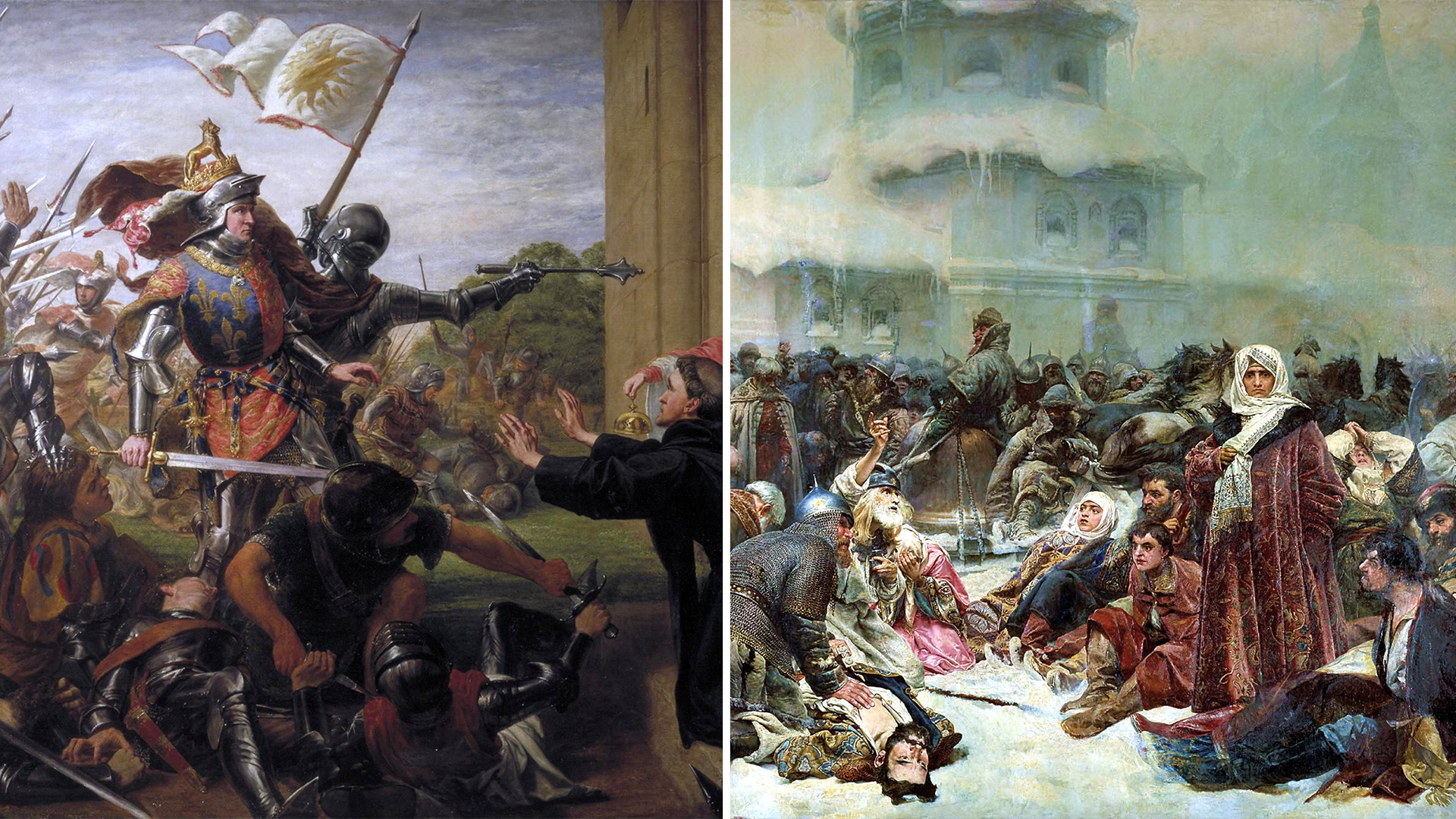
In 1455, a series of armed conflicts began in England that lasted over 30 years. Two branches of the Plantagenet royal dynasty – the Houses of Lancaster and York – were fighting for power. The former adopted the red rose as their symbol, while the latter adopted the white rose.
The two houses were reconciled by Henry Tudor, a distant relative of the Lancasters, who ascended the throne in 1485. He married Princess Elizabeth of York and chose the double red and white rose as his heraldic symbol.
The Wars of the Roses ended in 1487, when Tudor defeated his last opponents at the Battle of Stoke Field.
At this time, in eastern Europe, the Grand Duchy of Moscow was growing and gaining strength. In 1478, it annexed its main geopolitical rival to the north – the vast Novgorod Republic.
Two years later, Grand Duke Ivan III succeeded in defeating Akhmat, Khan of the Great Horde, in an armed confrontation on the Ugra River. The Great Horde considered itself the successor to the disintegrated Mongol Empire and demanded tribute from the Russian lands. But, Ivan III's triumph marked the end of the Tatar-Mongol yoke in Old Russia.
A significant cultural event was the journey of a Tver merchant named Afanasy Nikitin to India from 1468 to 1474. He became one of the first Europeans to visit the region in the Middle Ages. Nikitin described his impressions in his work ‘Journey Beyond Three Seas’.
In 1479, construction of the Assumption Cathedral was completed on the Moscow Kremlin grounds. The church served as Russia's main cathedral until the 1917 Bolshevik Revolution and became the burial place for many patriarchs.
In the year of the Battle of Stoke Field, Russian troops captured Kazan for the first time. Moscow established a protectorate over the Kazan Khanate, but only fully annexed it 65 years later.