
What was going on in Russia during the Indian Rebellion of 1857?
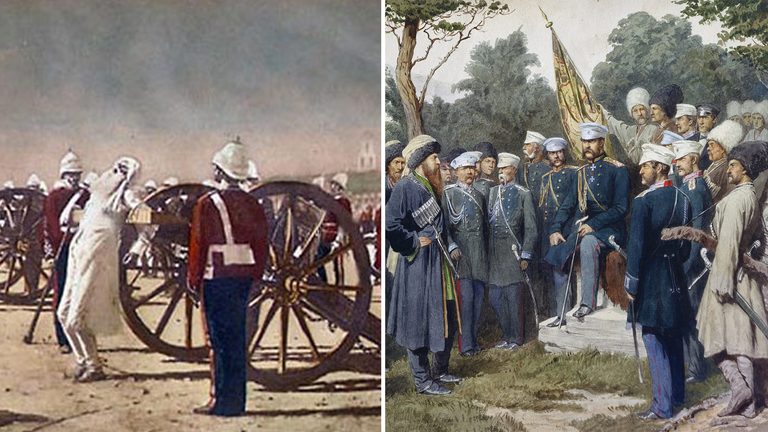
While the British were attempting to pacify their Indian possessions, the Russians were engaged in reforms and conquering the Caucasus.
In 1857, the Sepoys, mercenary soldiers from the local population in British service, revolted in India. The cause was the colonialists' complete disregard for their faith and customs.
Some of the peasantry supported the rebels and only two years later did the British succeed in suppressing the resistance. To prevent a recurrence, London drastically softened its methods of governing the region.
At this time, Russia was recovering from the brutal Crimean War of 1853-1856, in which it confronted a coalition of Western powers, as well as the Ottoman Empire. The defeat demonstrated the need for large-scale reforms.
The most important of these was the abolition of serfdom. It began with the establishment of the Secret Committee for Peasant Affairs by Emperor Alexander II in January 1857, while the abolition itself took place four years later.
In 1857, a railway boom began in the country, associated with the creation of the Main Society of Russian Railways. Meanwhile, in December of that year, the first postage stamp was introduced.
And, on May 28, 1858, Russia and China signed the Treaty of Aigun, which established the border between the two countries along the Amur River. On June 11, the ceremonial consecration of St. Isaac's Cathedral, the city's largest Orthodox church, took place in St. Petersburg.
Then, on August 25, 1859, Russian troops captured Imam Shamil, the leader of the rebellious highlanders, and completed the conquest of the Eastern Caucasus. Hostilities in the Western Caucasus dwindled down and ended five years later.