
The life of Peter the Great in paintings
He carried the French king in his arms, condemned his own son to death and saved entire ships during bad weather… See how Russian and foreign artists depicted the most important events in the life of Russia’s first emperor.
1. Nikolai Dmitriev-Orenburgsky. ‘The Streltsy uprising’, 1862
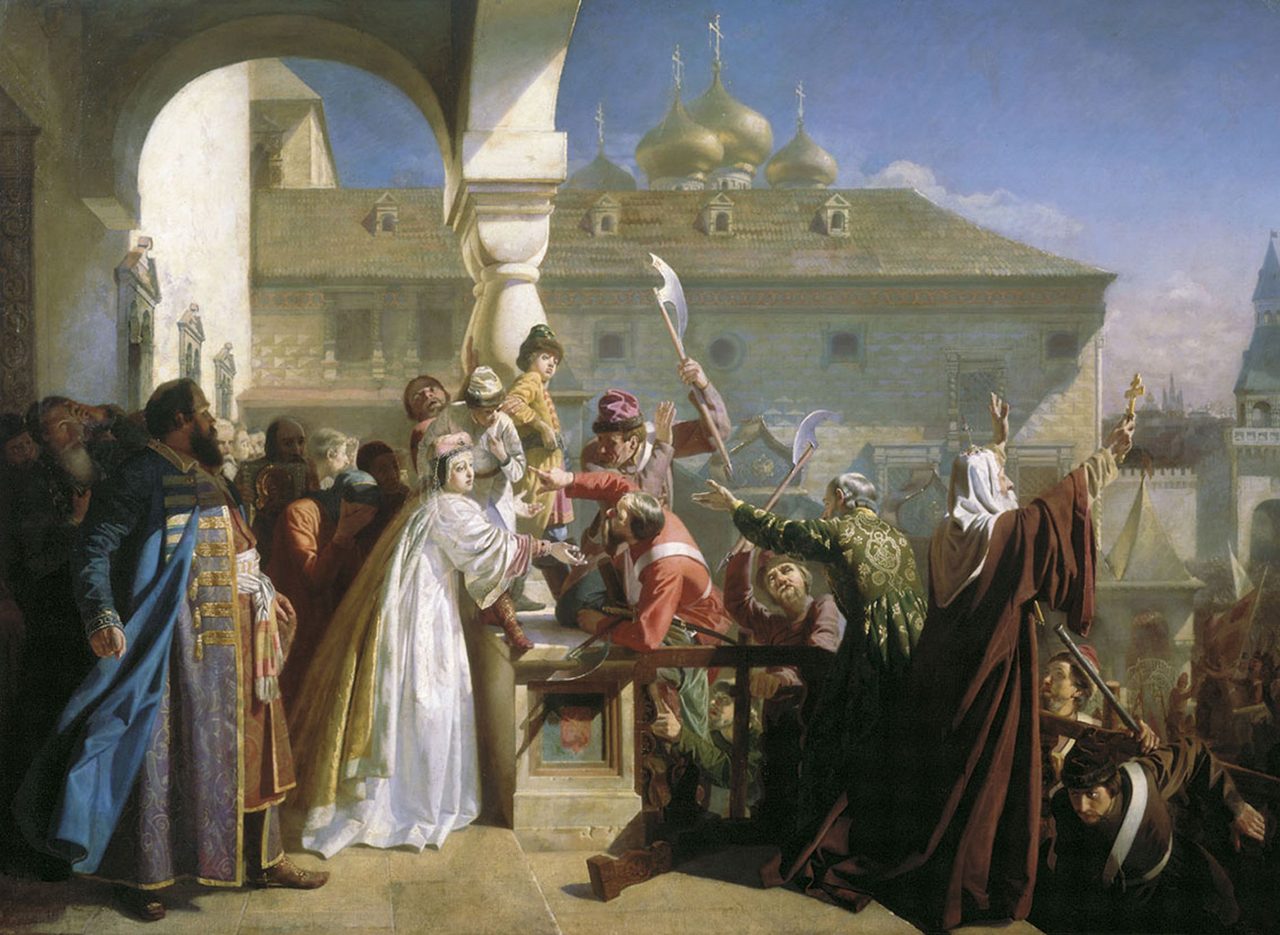
In 1682, the ‘Streltsy’, who made up the regular army, revolted in Moscow. They demanded that their wages be paid on time and that the command stop its arbitrary actions.
The Streltsy quickly realized their power and became involved in politics. They limited the power of the then 10-year-old Peter, who had just ascended the throne. They made his brother Ivan co-regent and his older sister Sophia regent and, in effect, ruler of the state.
The Streltsy brutally murdered many of Peter's loved ones before his eyes and the future emperor harbored a lifelong hatred for them.
2. Yuri Kushevsky. ‘Construction of a flotilla in Voronezh for Peter I's second Azov campaign in 1696’, 2009
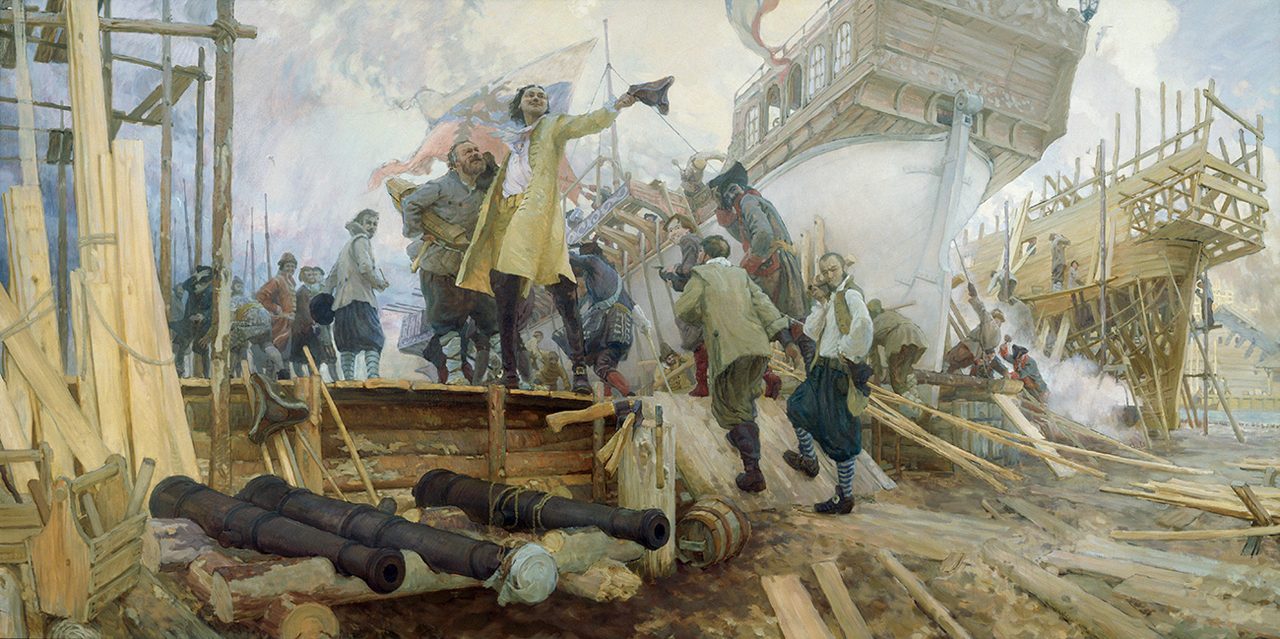
In 1696, Peter I prepared for another military campaign against the Turks and began building a naval fleet. He chose Voronezh as the center of shipbuilding, as it was possible to reach the Sea of Azov via the rivers from there. The city effectively became the cradle of the Russian regular navy.
3. Daniel Maclise. ‘Peter the Great at Deptford dockyard’, 1857
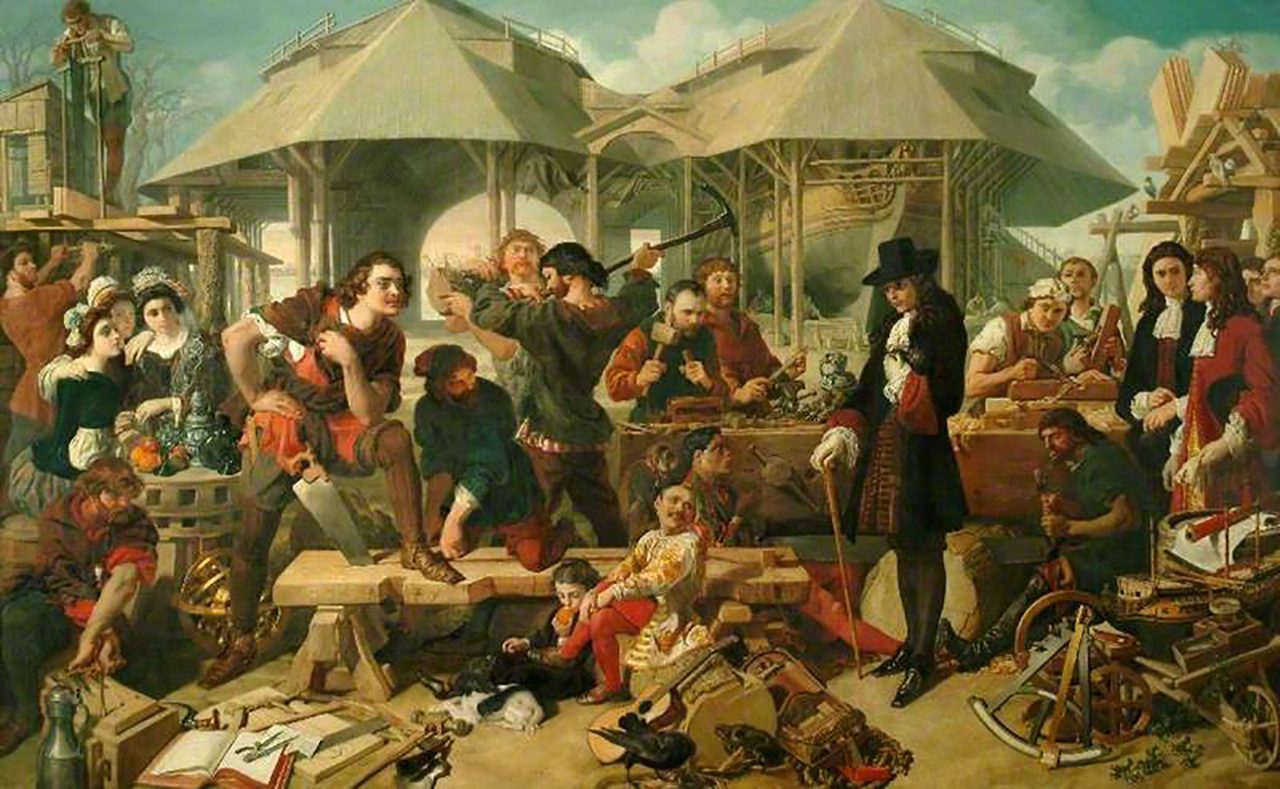
In 1697-1698, the tsar undertook a tour of European countries that went down as the ‘Grand Embassy’. He established contacts with local monarchs, learned about science and technology and recruited a variety of skilled craftsmen into Russian service.
4. Vasily Surikov. ‘Morning of the Streltsy execution’, 1881
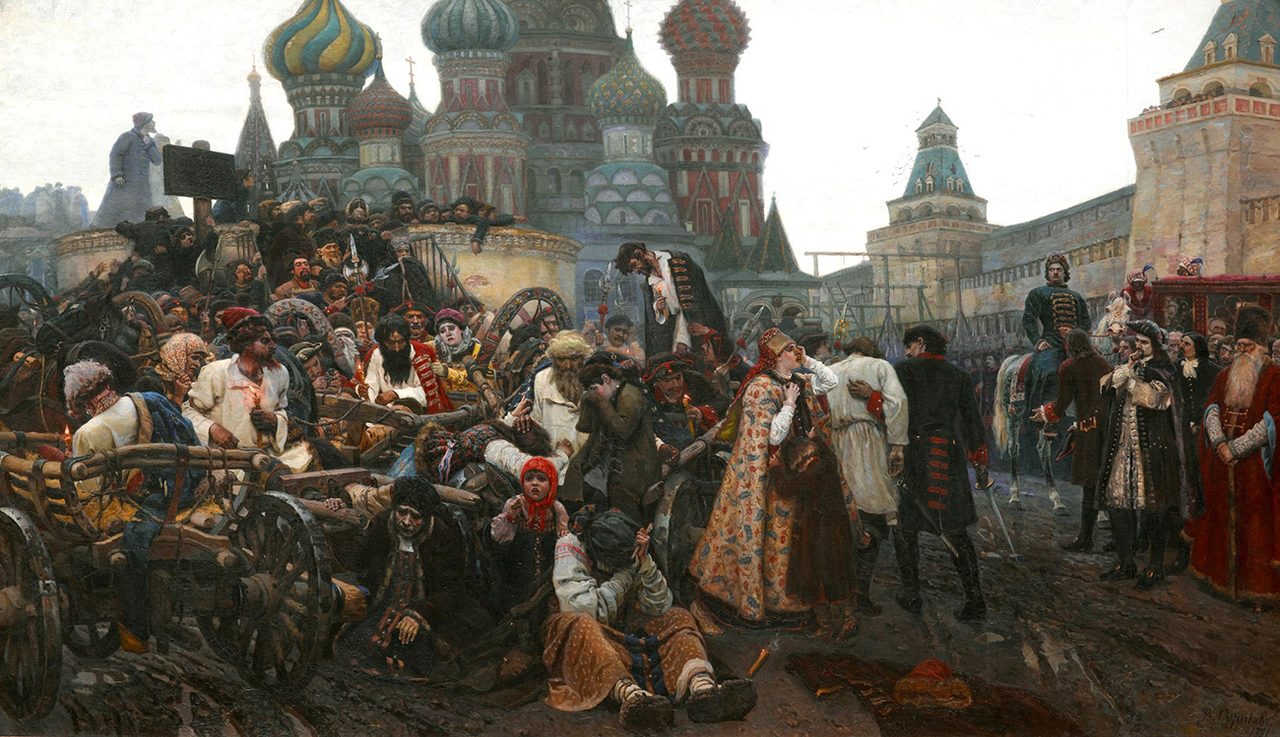
In 1698, Peter once again faced the insubordination of the Streltsy, whom he detested – they rebelled while he was in Europe. The causes were insufficient pay and the dominance of foreign officers. It’s believed that they also wanted to place Sophia on the throne, whom the now-mature Peter had removed from power in 1689..
The uprising was brutally suppressed. More than 1,000 Streltsy were executed and 600 were flogged and exiled. Peter personally beheaded five of the condemned.
5. Alexei Venetsianov. ‘Peter the Great. The founding of St. Petersburg’, 1838
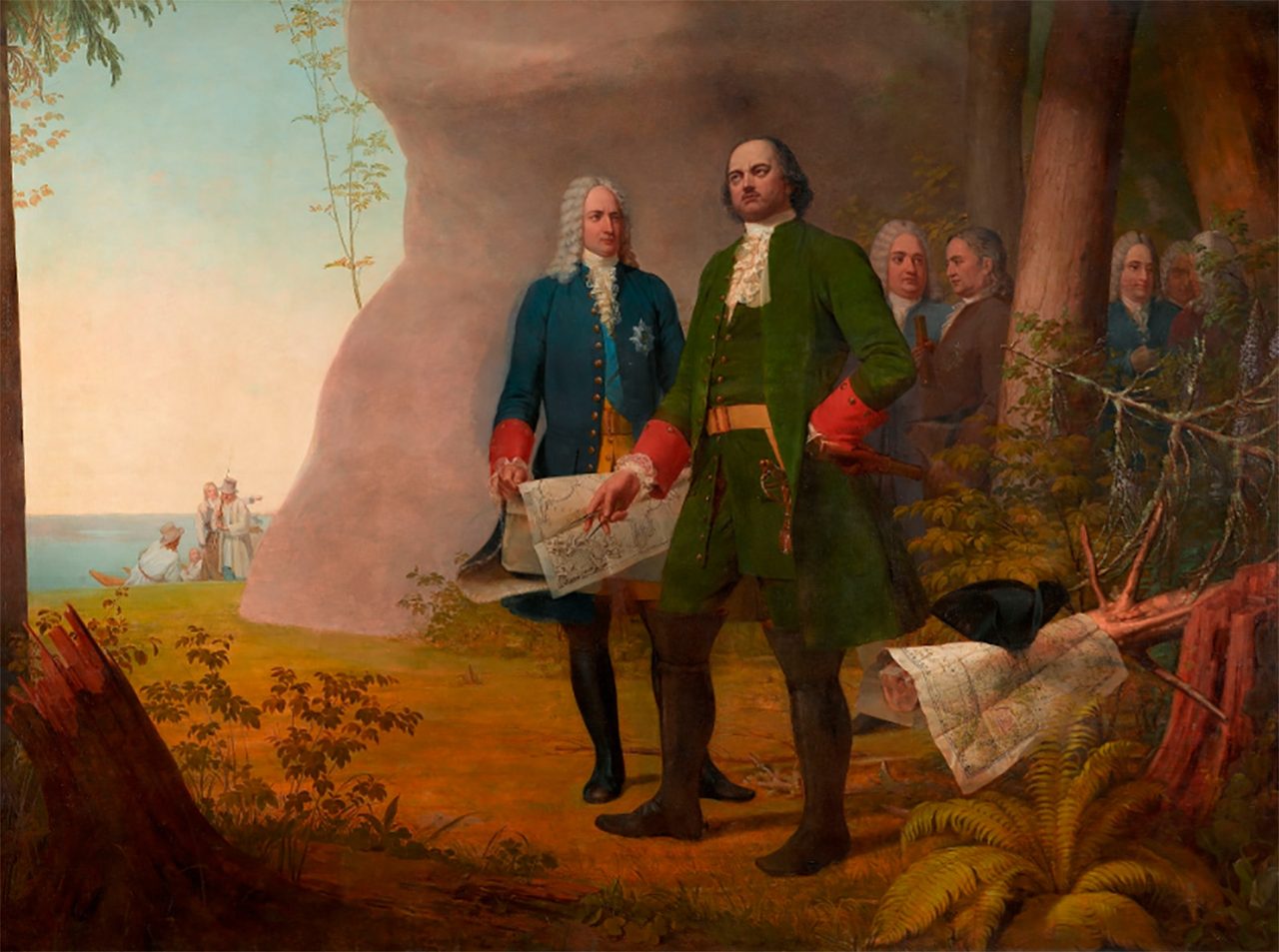
In 1700, the ‘Great Northern War’ began, pitting Russia and its allies against powerful Sweden. Three years later, in Ingria, which had been recaptured from the enemy, the tsar founded a fortress named after Apostle Peter. St. Petersburg withstood several Swedish attacks and, in 1712, Peter I moved the capital of the state there.
6. Alexander Kotzebue. ‘Victory at Poltava, June 27, 1709’, 1864
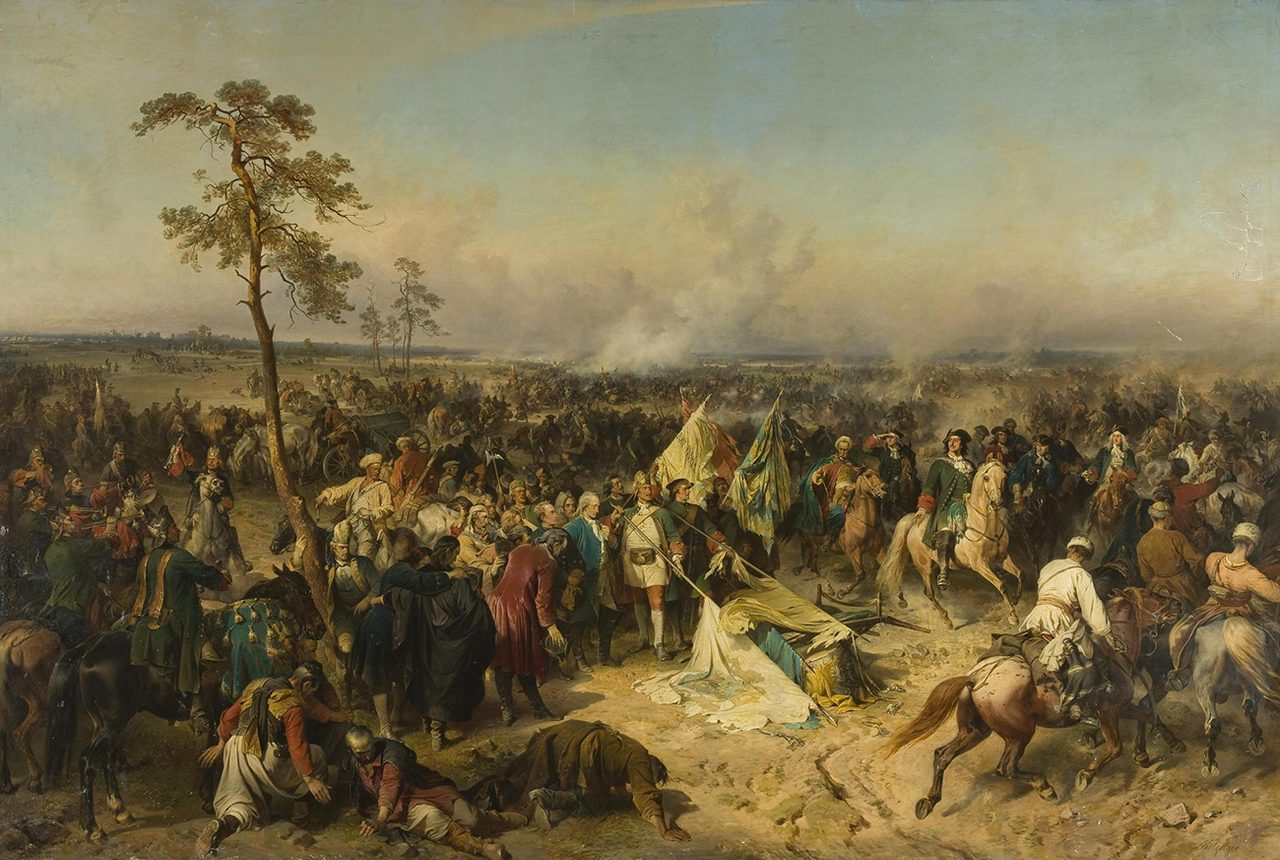
The ‘Battle of Poltava’ on July 8 (Gregorian calendar), 1709, marked the culmination of the ‘Great Northern War’. King Charles XII’s army suffered a crushing defeat and he himself fled to the Ottoman Empire. The balance of power in the conflict shifted in Russia's favor, although the fighting continued for another 12 years.
7. Ivan Aivazovsky. ‘Peter I at Krasnaya Gorka, lighting a fire on the shore as a signal to his sinking ships’, 1846
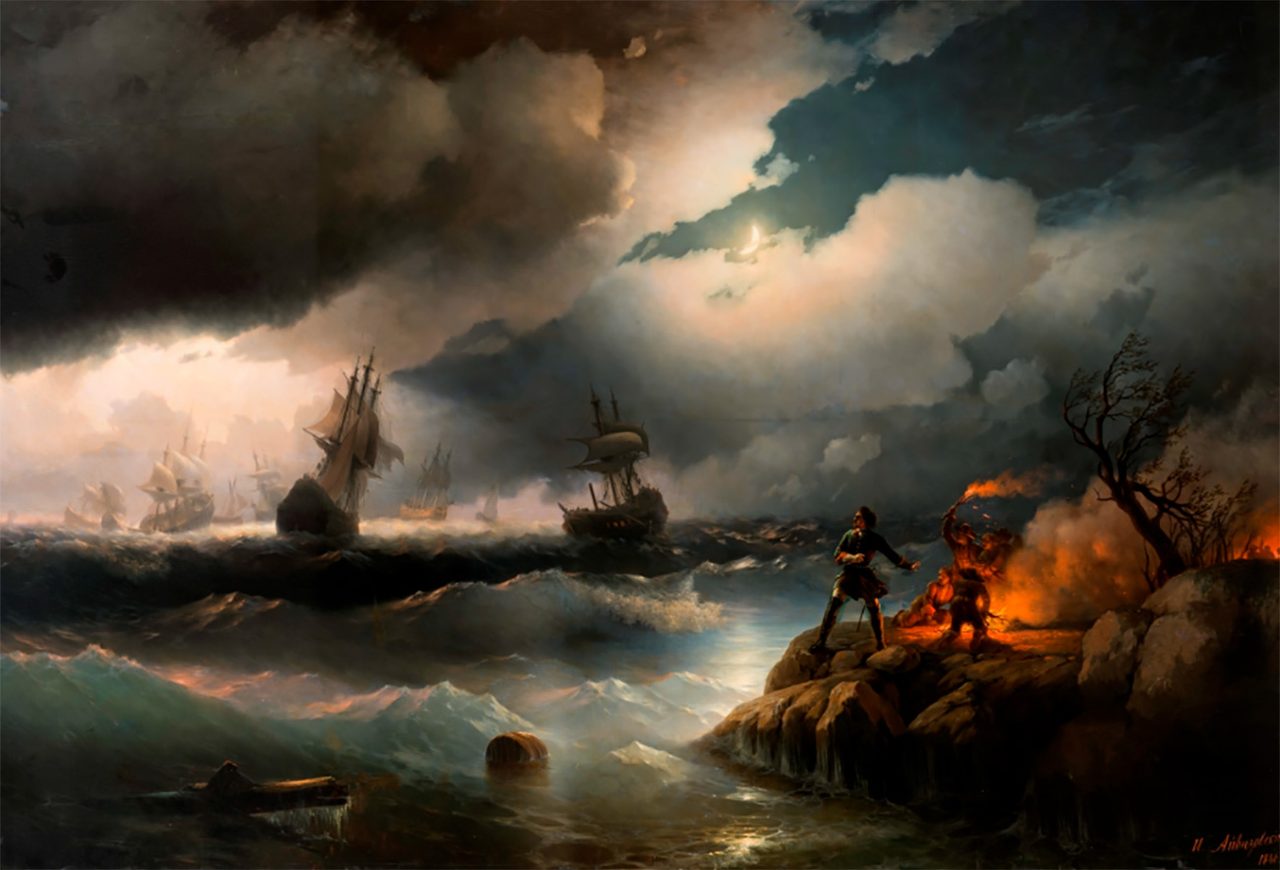
In 1710, during a storm in the Gulf of Finland, the Russian squadron was driven out to sea. Risking his life, Peter reached the shore in a small yacht and lit a fire, indicating the direction of the ships to a safe harbor.
8. Louis Hersan ‘Peter I and Louis XV’, 1850
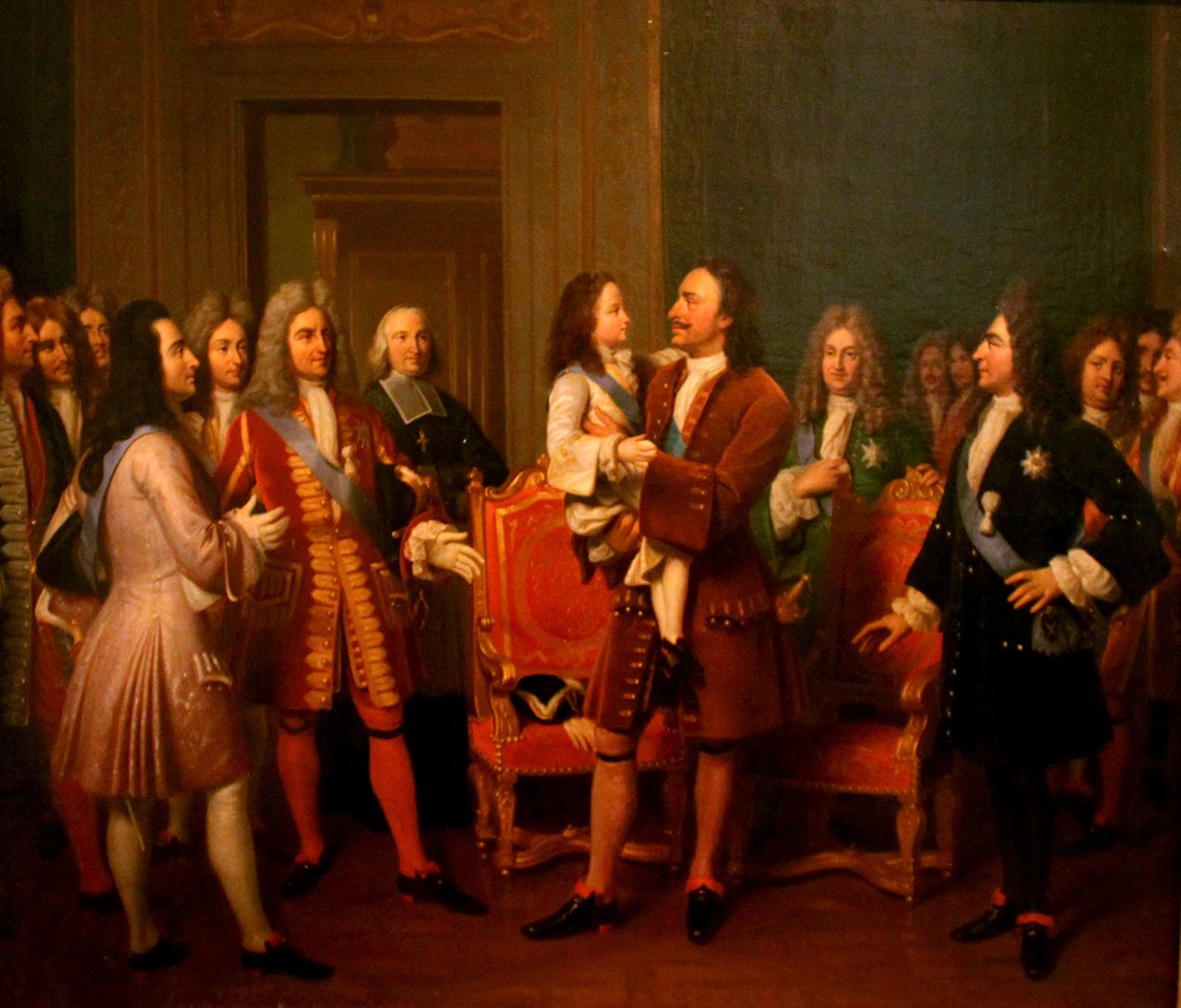
In 1716, Peter again set out on a journey through Europe. In Paris, during a meeting with seven-year-old Louis XV, the tsar suddenly broke with the established protocol. He lifted the French monarch up and held him in his arms, kissed him several times and said: "All of France is in my hands!" The boy was not at all frightened and no scandal ensued.
9. Nikolai Ge. ‘Peter I interrogates tsarevich Alexei Petrovich in Peterhof’, 1871
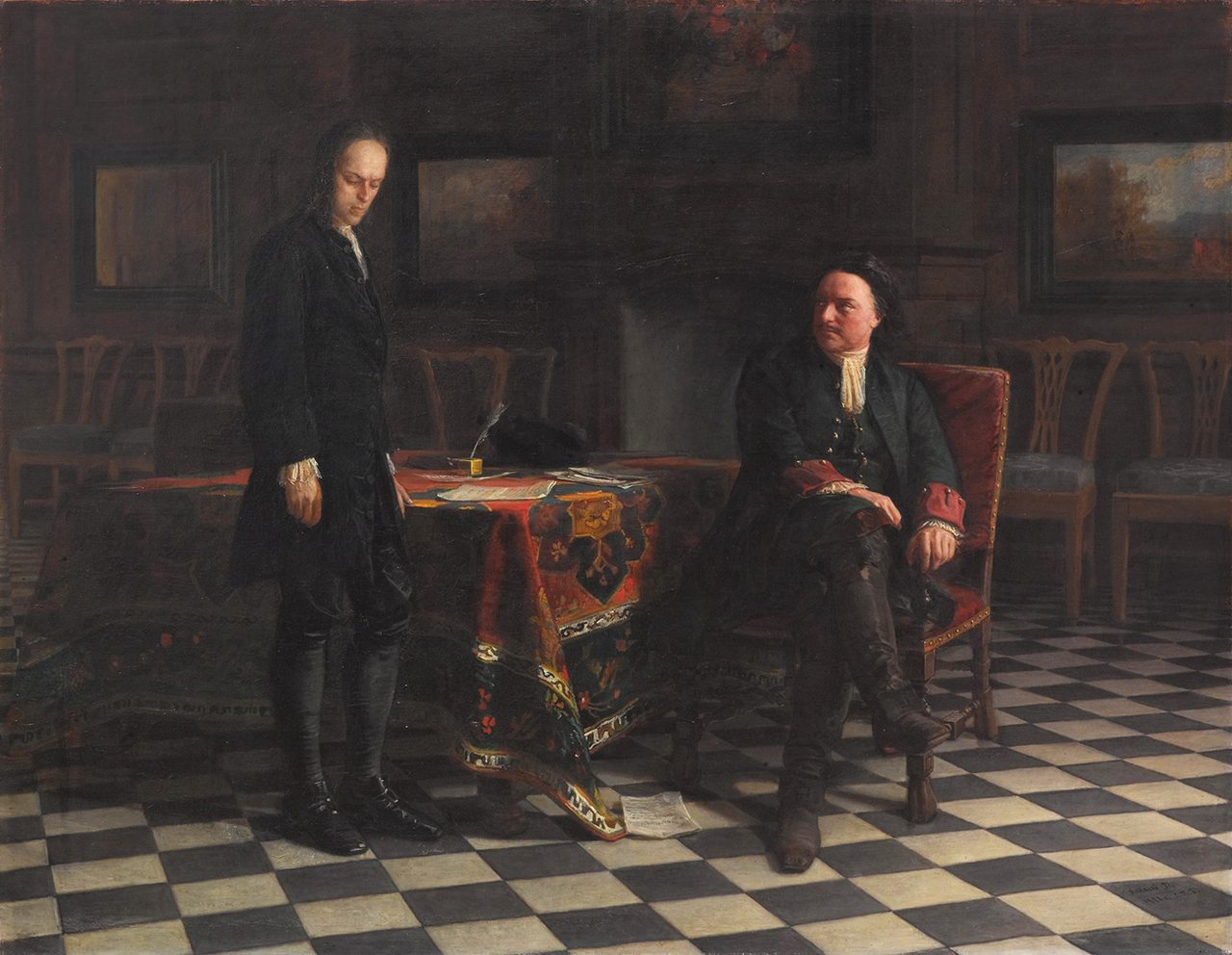
Peter I had a very strained relationship with his eldest son, Alexei. He did not see him as a supporter or successor to his large-scale government reforms and was, therefore, inclined to pass the throne to his younger son or even grandson.
The tsar strongly suggested that Alexei take monastic vows, after which he fled to Vienna, where he began to weave political intrigues against his father. Having failed to gain the support of the Austrians, he yielded to the persuasion of the tsar's diplomats to return home.
Peter forced his son to renounce his claim to the throne and pardoned him, but changed his mind when he learned of his attempts to contact Charles XII. On July 5, 1718, Alexei was sentenced to death as a traitor and, two days later, the tortured tsarevich died in prison under unclear circumstances.
10. Ivan Nikitin. ‘Peter I on his Deathbed’, 1725
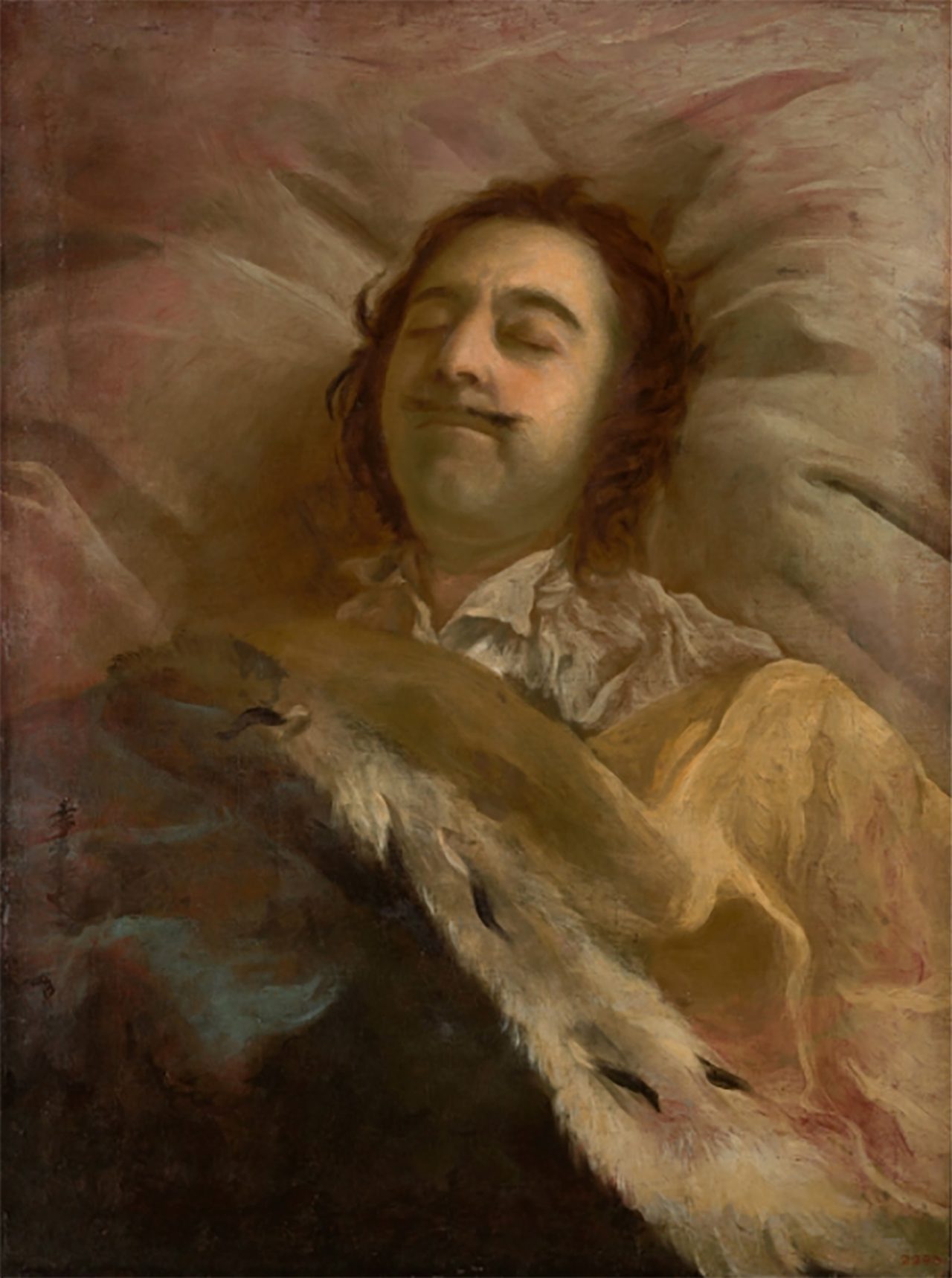
The emperor died on February 8, 1725, at the age of just 52. The cause of death was variously attributed to urolithiasis caused by syphilis and alcoholism, a "boil near the bladder", cirrhosis of the liver or cancer. Some believed that the tsar was poisoned, either on the orders of his unfaithful wife Catherine or by Peter's thievish associate, His Serene Highness Prince Alexander Menshikov.