Why do Russians need a ‘talking clock’?
For nearly 90 years, the phone number ‘1-0-0’ has been telling Muscovites the exact time.
Imagine a service that is older than most of its users, requires no internet, doesn’t collect data and yet remains in demand, despite the rise of digital technology. This is Moscow’s automated telephone time announcement service. If you dial ‘1-0-0’, a pleasant female voice answers and announces the current time – accurate to the second – after a short beep. The service operates 24 hours a day and is free of charge from both landlines and mobile phones.
From telephone operators to automation
The history of the service began long before automation arrived. Starting in 1931, telephone operators at exchanges in Leningrad (now St. Petersburg) would tell callers the time by checking their own wristwatches. This initiative established the habit of "asking for the time over the phone".
On November 7, 1937, the first automated service – the very "talking clock" itself – went live in Moscow. It was a gift from telecommunications workers to the public on the anniversary of the October Revolution. The device was mechanical: it used the principles of sound-on-film technology, with the voice recorded onto photographic paper. The machine featured two drums – one recording the hours and the other the minutes.
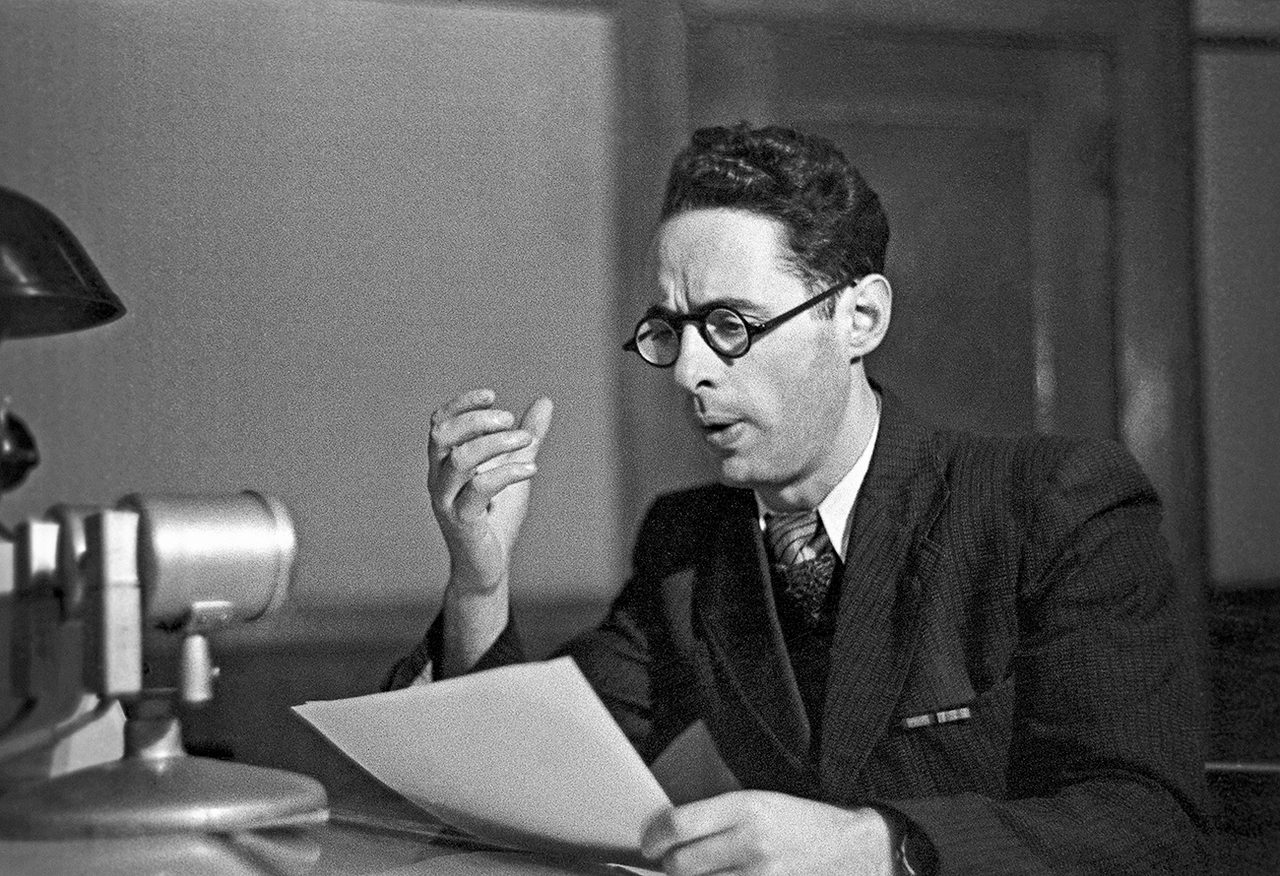 Yuri Levitan, an announcer for All-Union Radio under the State Committee of the Council of Ministers of the USSR for Radio Broadcasting, reads a report from the Soviet Information Bureau (Sovinformburo)
The familiar number ‘1-0-0’ did not appear until 1970, following Moscow's switch to a seven-digit numbering system. Before that, each telephone exchange had its own number and callers sometimes even had to say the code word ‘vremya’ (‘time’) to connect. In 1993, the equipment was upgraded to a digital system; this not only allowed for a new voice, but also enabled the service to announce the time down to the second (previously, it was only accurate to the minute).
Voices of Time
The service has its own "stars". Famous announcers Emmanuil Tobiash and Yuri Levitan were invited to provide the voices for the original "talking clock". After test recordings, Tobiash was chosen. Since then, Muscovites began to joke: "Let's ask Tobiash for the time!" However, just a year later, the clock began speaking with a female voice. Until 1970, the voice of Moscow’s precise time service was Olga Vysotskaya; from 1970, it was Olga Friderson; and, from 1993 to the present day, it has been announcer Lyudmila Veselova. Her recording, made in 1973, sat on the shelf for 20 years before finally being put into use in 1993.
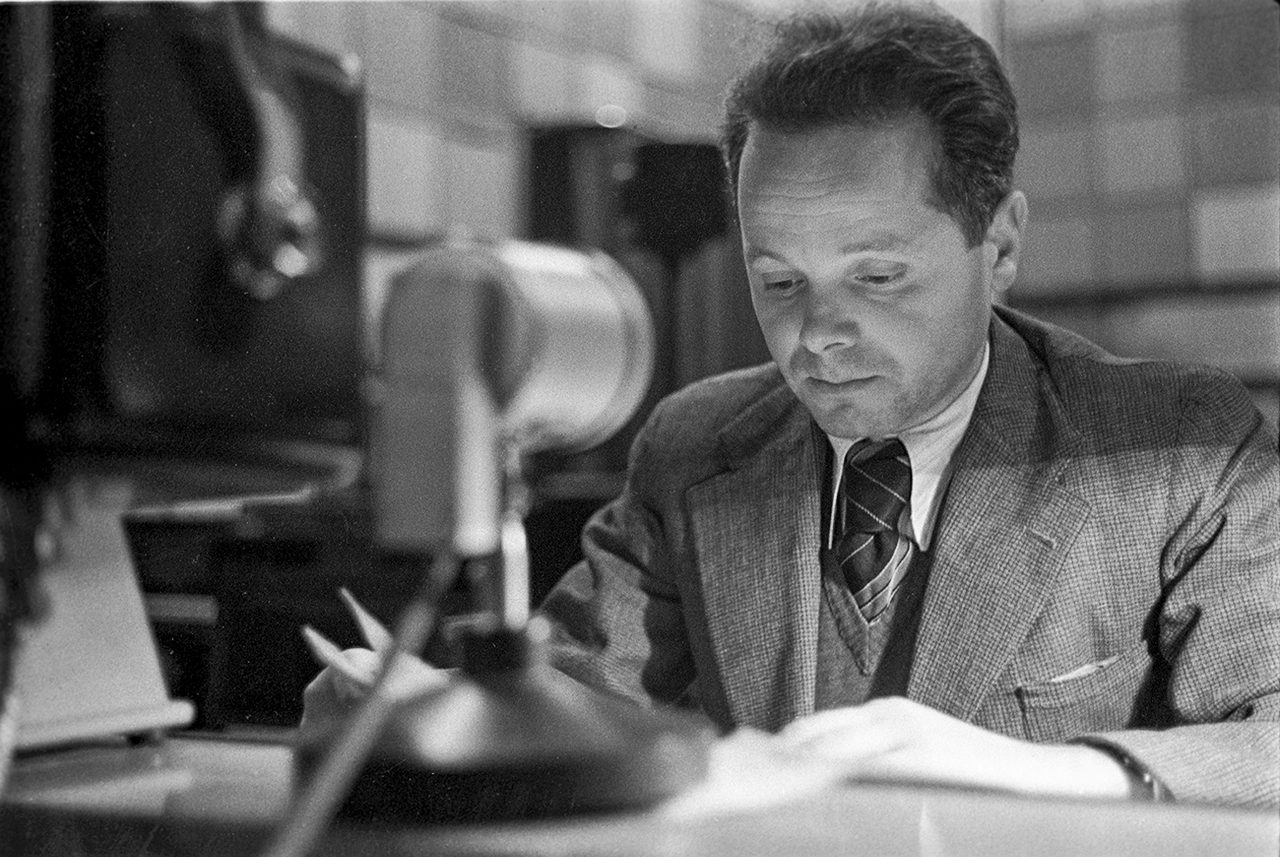 All-Union Radio announcer Emmanuil Tobiash during a radio broadcast recording
Why is it still in operation?
Even though there are countless other ways to find out the exact time today, the ‘1-0-0’ service remains important for several reasons. First, it is an official time source synchronized with the master standard – the time signal is transmitted via wire to the ‘1-0-0’ service from the Institute of Precise Time. Second, there is the matter of accessibility: the service is free and requires no internet connection, which is particularly important for older adults and people with disabilities (for example, for the visually impaired, who cannot look at a smartphone screen). Third, it’s a matter of tradition – part of the cultural fabric. For many Russians, calling ‘1-0-0’ is a familiar ritual, a way to "check their watches" in both the literal and figurative sense!