
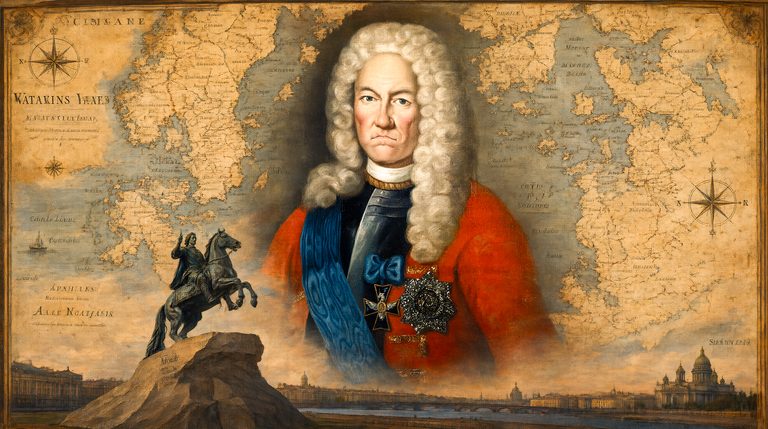
Why was Peter I’s confidant considered a sorcerer?
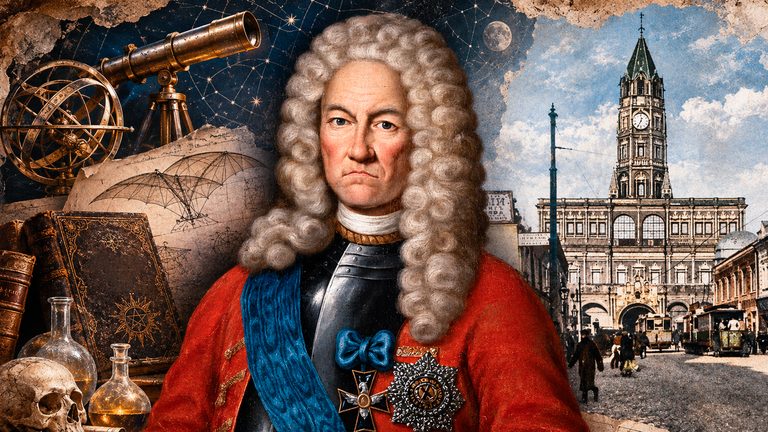
Jacob Bruce allegedly flew over the city on an iron bird, turned lead into gold and brought the dead back to life using a magical elixir.
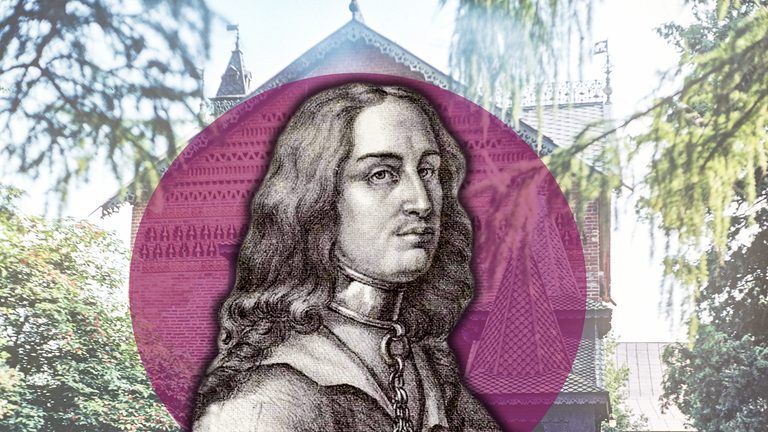
A military commander, inventor, diplomat, polyglot, the "father of Russian artillery" and one of the most educated men of his era – these are all titles and descriptions that apply to Scotsman Jacob (James) Bruce, a close associate and confidant of Peter the Great. Yet, the common people remembered him as something else entirely: a sorcerer and a warlock.
These rumors are directly linked to the Sukharev Tower, which stood on the outskirts of Moscow in those days. It housed the School of Mathematics and Navigation and, at its summit, Bruce had set up an observatory for studying the stars. Uneducated and superstitious townspeople, seeing strange telescopes protruding from the windows, concocted the most incredible legends about this mysterious foreigner. They believed he was practicing sorcery there, turning lead into gold and developing an elixir of youth.
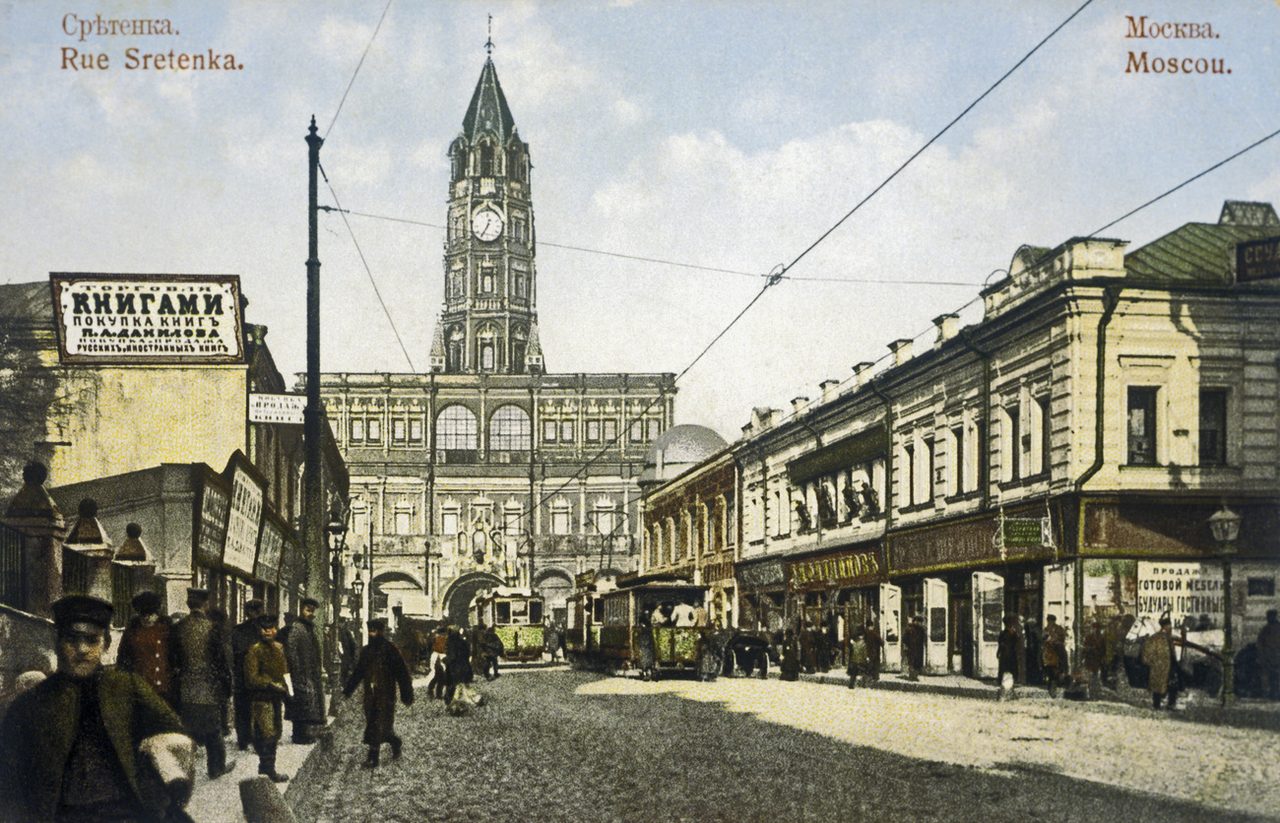 The Sukharev Tower in 1907.
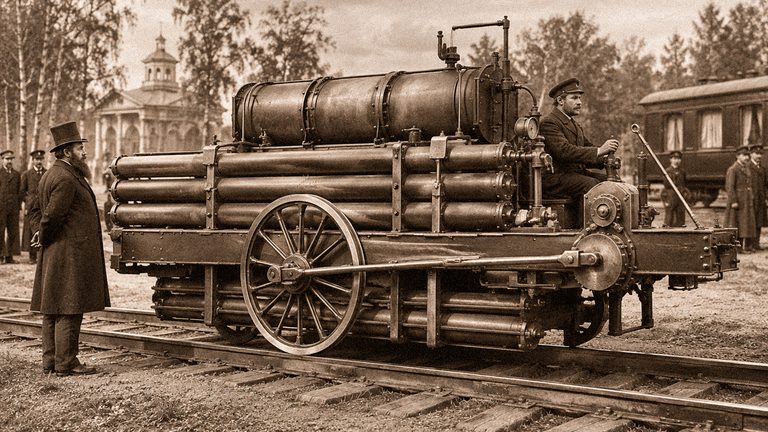
Many claimed to have seen the Scotsman fly out of the tower at night aboard an iron bird and circle above the city. However, this tall tale may have had a basis in reality; some historians suggest that Bruce was, indeed, working on a prototype of a flying machine, though it never actually took flight.
Another truly wild story revolved around his invention of "living water", which was said to bring the dead back to life. According to legend, he once killed his own valet as an experiment, cut his body into pieces and sprinkled them with this miraculous liquid – whereupon the body knit itself back together and the dead man came back to life.
Bruce owned an impressive library of 1,500 books. Many believed that among them was a so-called ‘Black Book’, supposedly written by the Prince of Darkness himself. It was said to reveal all the secrets of the world to its owner, allowing them to discern anyone’s fate and locate anything that had been hidden or lost.
Paradoxically, Bruce was a true skeptic who did not believe in the supernatural. When the awestruck tsar showed him the incorrupt relics of saints in a Novgorod church, Bruce explained the "miracle" by citing "the climate, the properties of the soil in which they were originally buried, the embalming of the bodies and a life of abstinence".
The Sukharev Tower was demolished in 1934. According to legend, Soviet authorities ordered it to be taken apart carefully, brick by brick, in a search for the all-powerful ‘Black Book’. The search, of course, proved fruitless.
Artifacts associated with the life of this remarkable Scotsman can be seen in the ‘James Bruce: The Scottish Genius of the Petrine Era’ exhibition, hosted by the Moscow Kremlin Museums until February 28, 2027.