
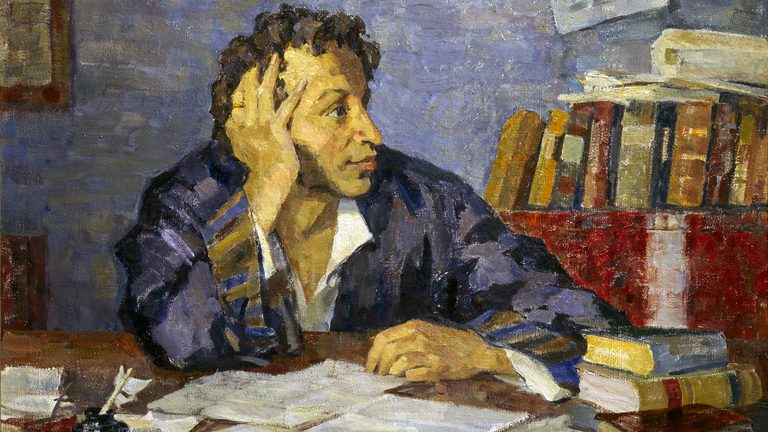
Why only ONE COPY remains of the first Russian illustrated Bible

The controversial illustrations it contains led to persecution of the book and its author.
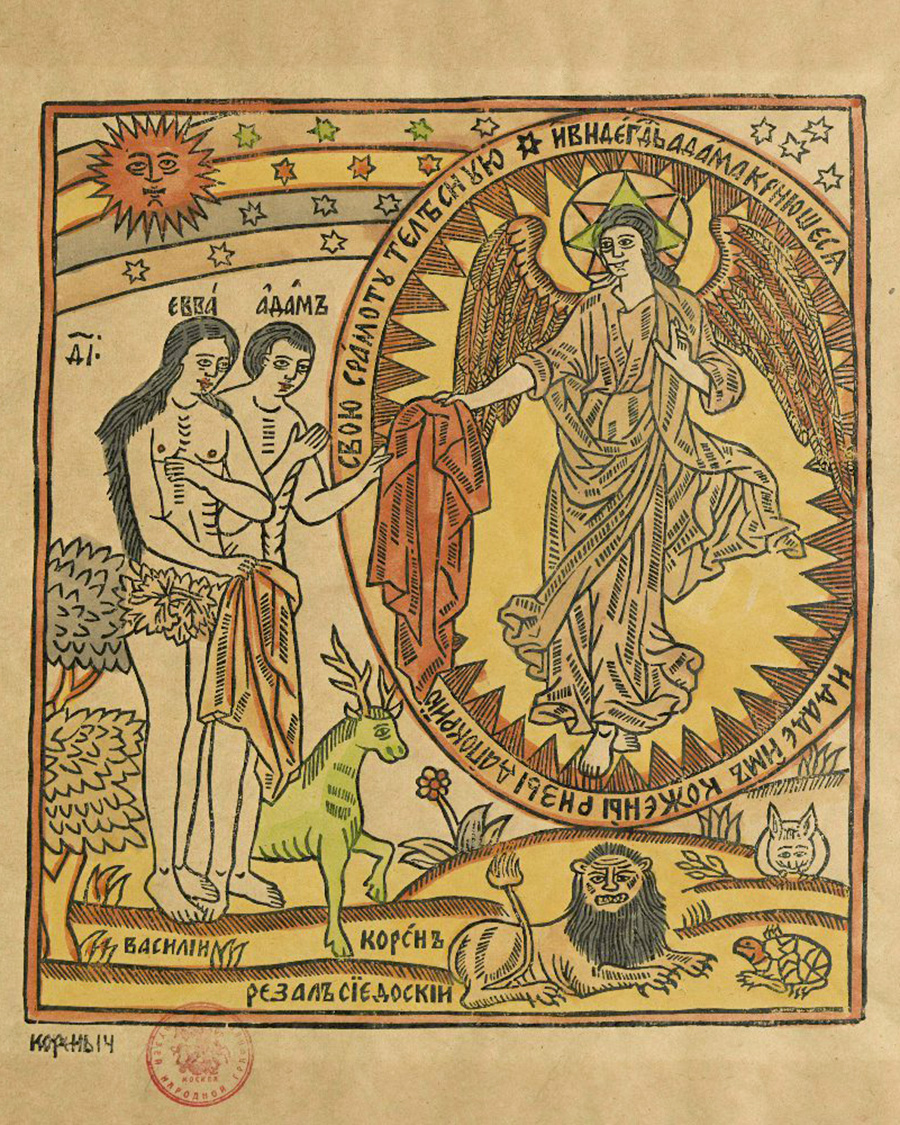 Adam and Eve. Illustration from the first Russian engraved Bible.
At the end of the 17th century, a master of wood engraving named Vasily Koren created a completely unique book. It was his own version of the Bible, which consisted of 20 sheets from the Book of Genesis and 16 sheets from the Apocalypse.
The pictures, made using the technique of xylography (woodcut), were accompanied by short captions and resembled the illustrations of the European ‘Biblia Pauperum’ (‘Paupers' Bible’ or ‘Bible of the Poor’), which had been published for the barely literate as early as the 15th century.
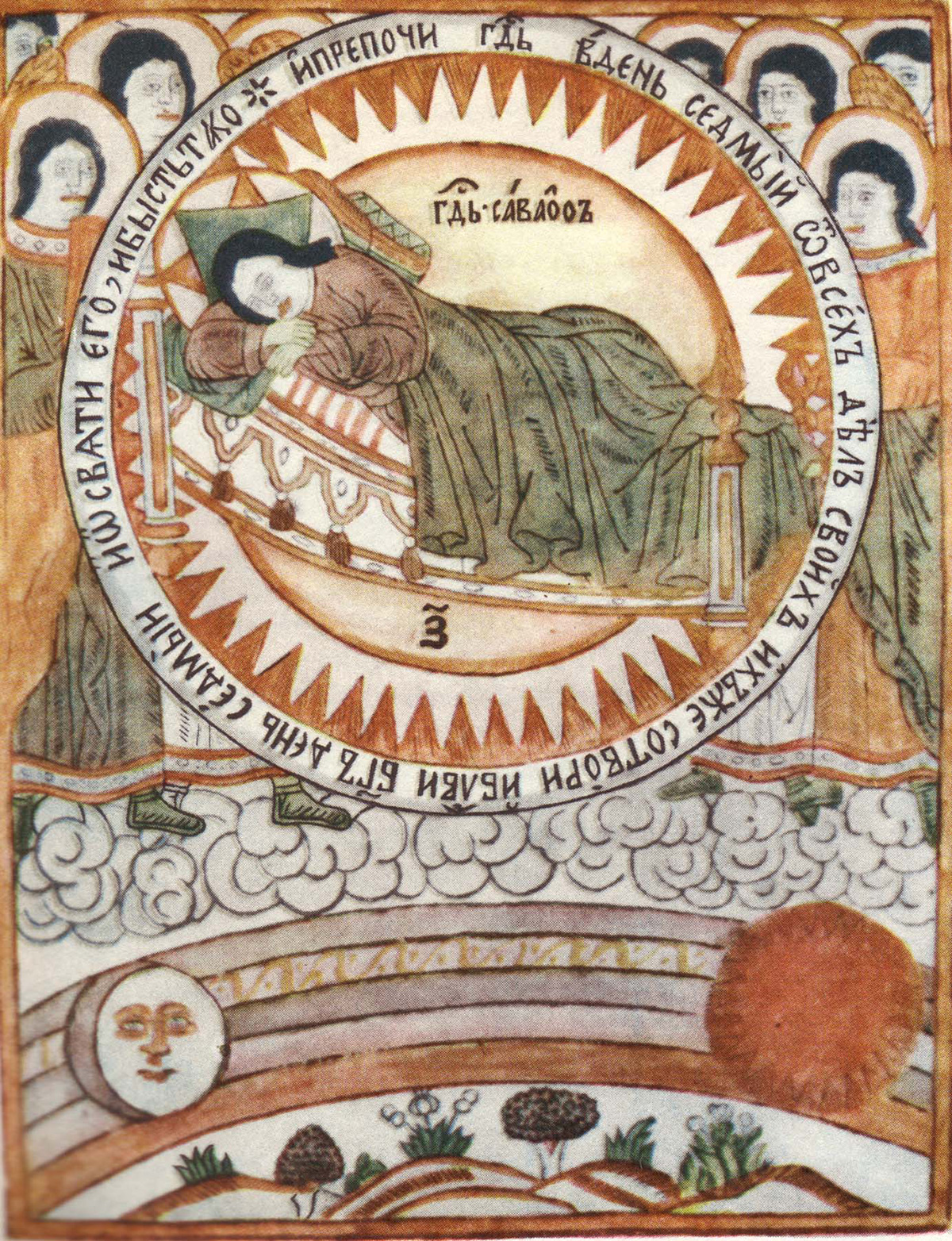 God reposing on Sabbath day
Koren was probably familiar with it and with religious art, because he grew up in a village in the territory of then Polish–Lithuanian Commonwealth. During the Russo-Polish War, he moved to Russia, where he began working at the Moscow Printing House.
According to experts from the Russian National Library in St. Petersburg, Koren created his engravings in the last decade of the 15th century. And because the turn of the century was close, believers were expecting the coming of the Antichrist and the end of the world. That is why the scenes – from the Creation of the world to the Last Judgment – turned out incredibly vivid and emotional.
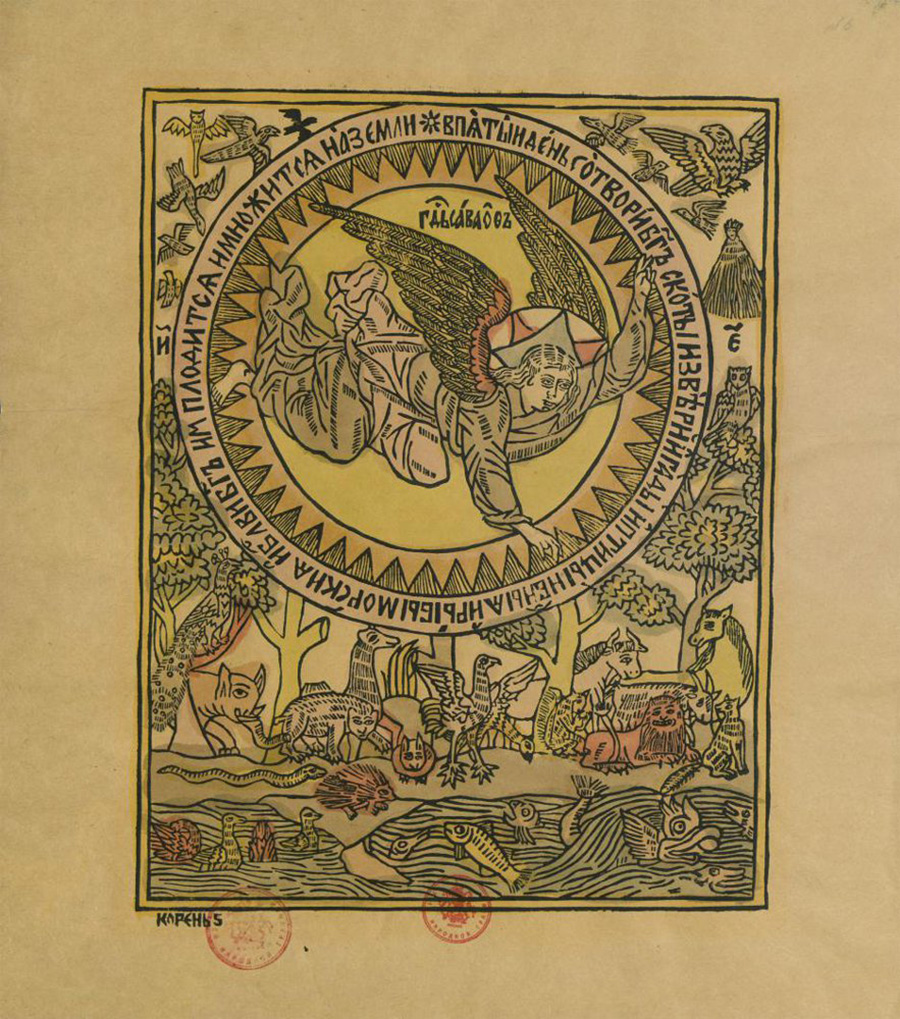 The fifth day of Сreation
The problem was that they were made outside the traditions of Russian Orthodox icon painting. Church censorship deemed the free interpretation of biblical subjects and the non-canonical depiction of God and saints dangerous and even heretical. The book was banned and the entire print run (about 1,000 copies) was confiscated and destroyed.
The only surviving copy from 1692 is now held in the Rare Books Department of the Russian National Library (and even then, not in its complete form).
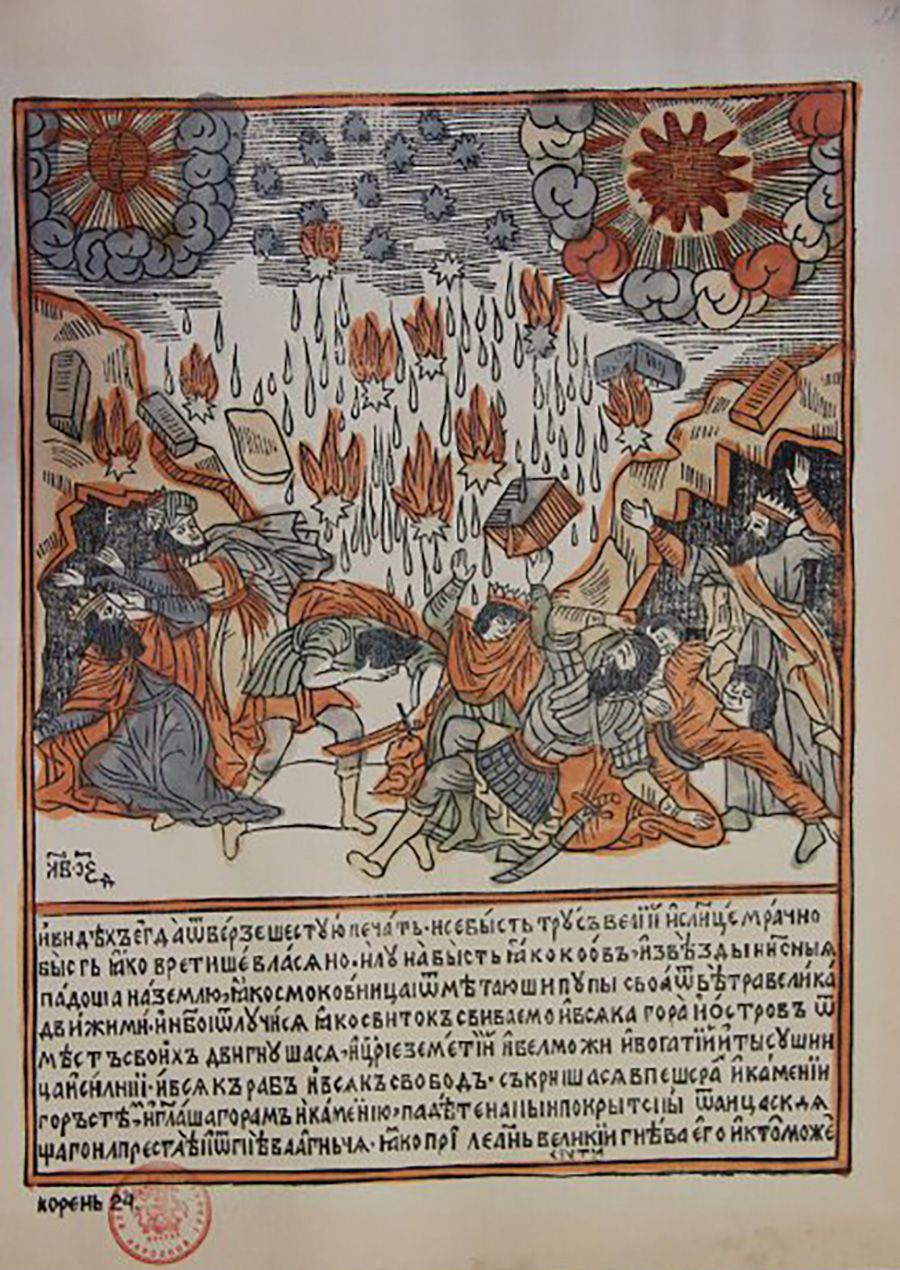 The Opening of the Sixth Seal is an episode from the sixth chapter of the Revelation of John the Theologian (the Book of Revelation).
Scholars note that Koren's edition is completely unique, both in technique and style – in it, folk lubok drawings are combined with biblical themes.