
Why did the Holy Synod BAN these icons?
In Summer 1767, while traveling along the Volga, Empress Catherine II was presented with an icon as a gift. Upon seeing it, she immediately wrote a letter to the Chief Prosecutor of the Holy Synod, expressing concern that other artists would follow the example of the Volga master and add multiple arms and legs to saints.
The image presented to the empress depicted the Trinity, but not a typical one. A four-eyed creature peered out from the canvas: three heads – of God the Father, the Son and the Holy Spirit – grew out of a single body. This was a so-called mixed-hypostasis icon: they arrived in Russia from the West in the 18th century. There, a similar painting tradition had existed since the 12th century.
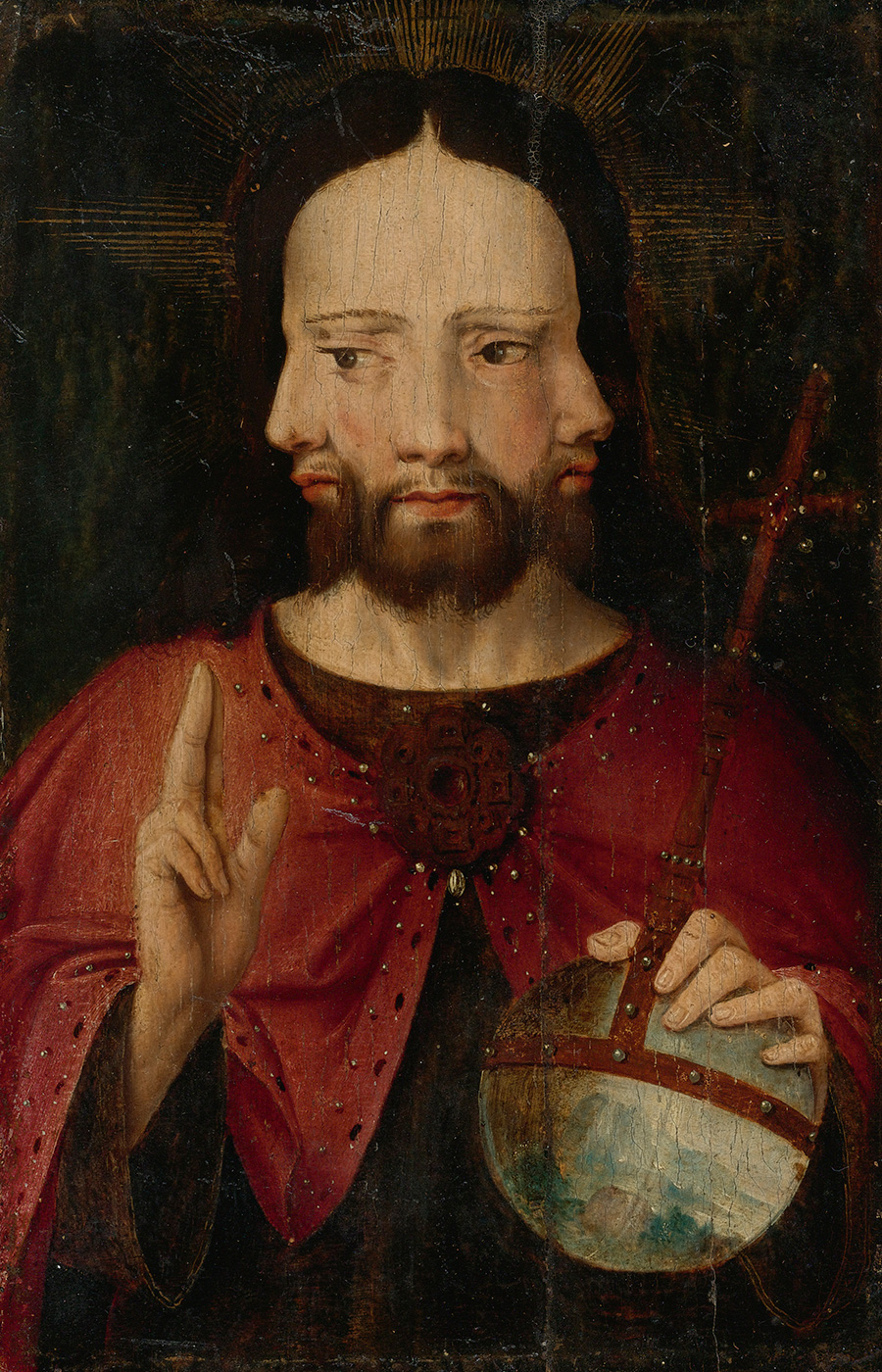 Anonymous Flemish master, Three-Faced Christ (The Trinity). Date circa 1500
Catholic iconographers depicted the Trinity either as three identical figures or as a three-headed creature, so that any peasant would understand the principle of the unity of the Lord’s hypostases and the fact that the Holy Spirit proceeds from both God the Father and God the Son. In Europe, "three-headed" images were banned several times, including at the Council of Trent in 1545. In 1628, Pope Urban VIII declared them heretical. They were too reminiscent of pagan deities with many faces.
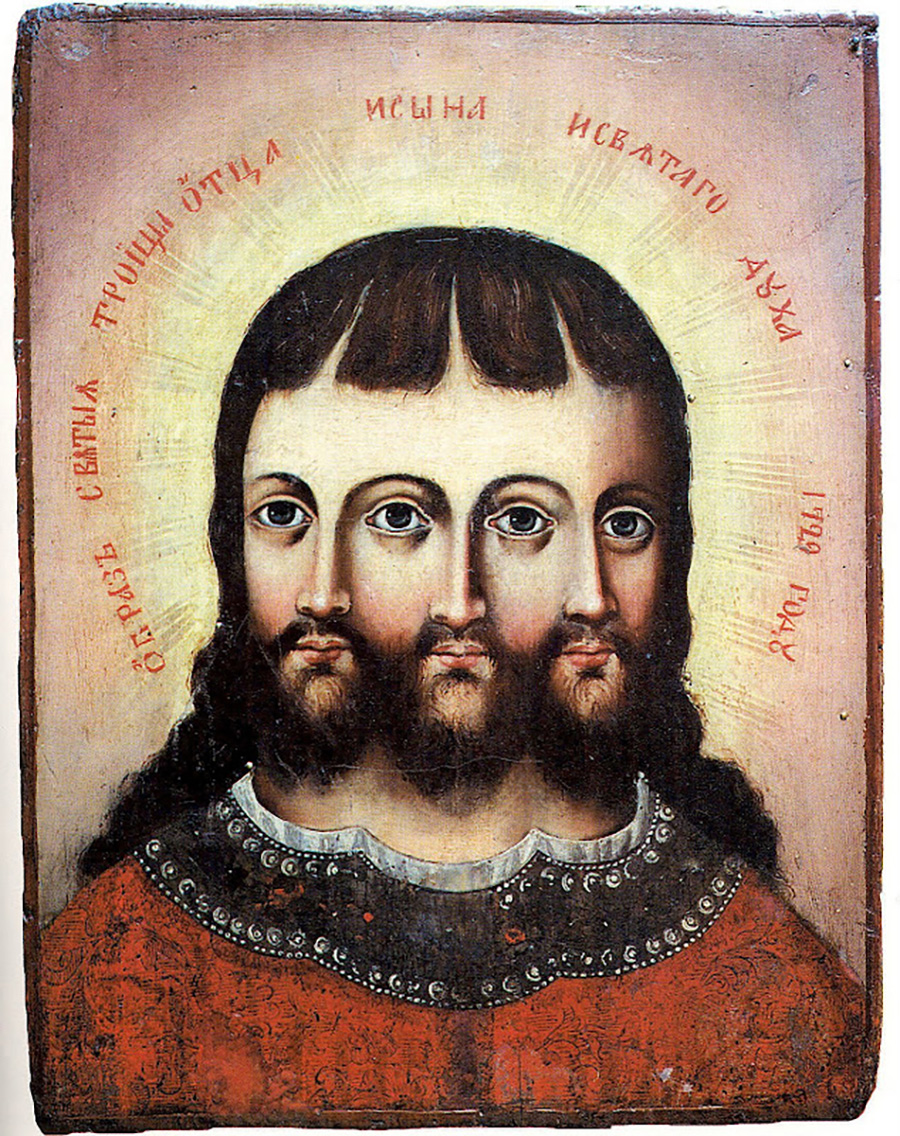
In Russia, mixed-hypostasis icons were also banned – in 1764 – as non-canonical and grotesque images. In Orthodoxy, only Christ can be depicted in human form, but not God the Father and the Holy Spirit, since they did not have a human incarnation. The Holy Synod ordered the immediate removal of questionable icons and their repainting in accordance with existing traditions. However, a few have survived to this day. For example, the Sverdlovsk Museum of Local History houses a mixed-hypostasis icon from 1729 that adorned the Annunciation Cathedral in Tyumen.