How did the ‘kokoshnik’ headdress become a symbol of Russia?
In the old days, this women’s headdress could cost more than a house!
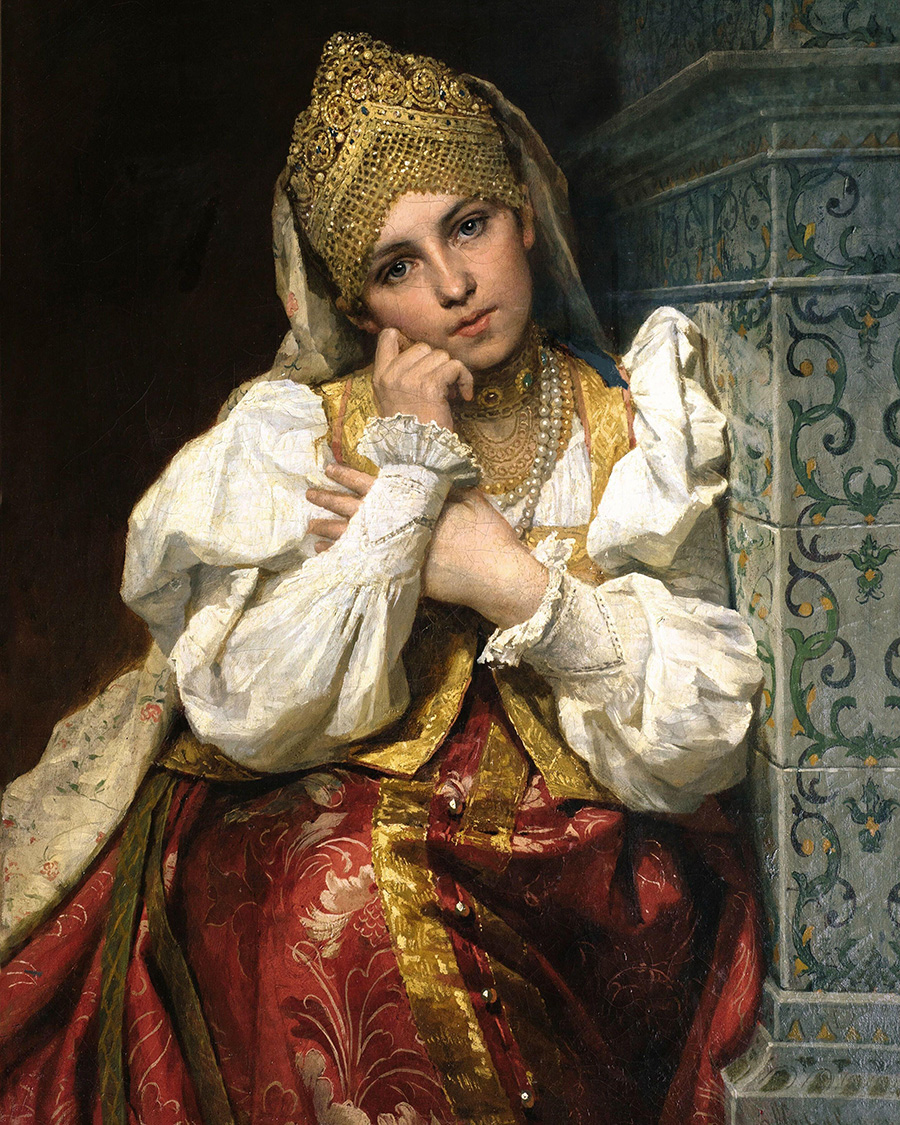
The ‘kokoshnik’ is a traditional headdress worn by a married woman. Its name is derived from the word ‘kokosh’ aka ‘hen’. Probably because of its shape, which resembles a chicken’s comb.
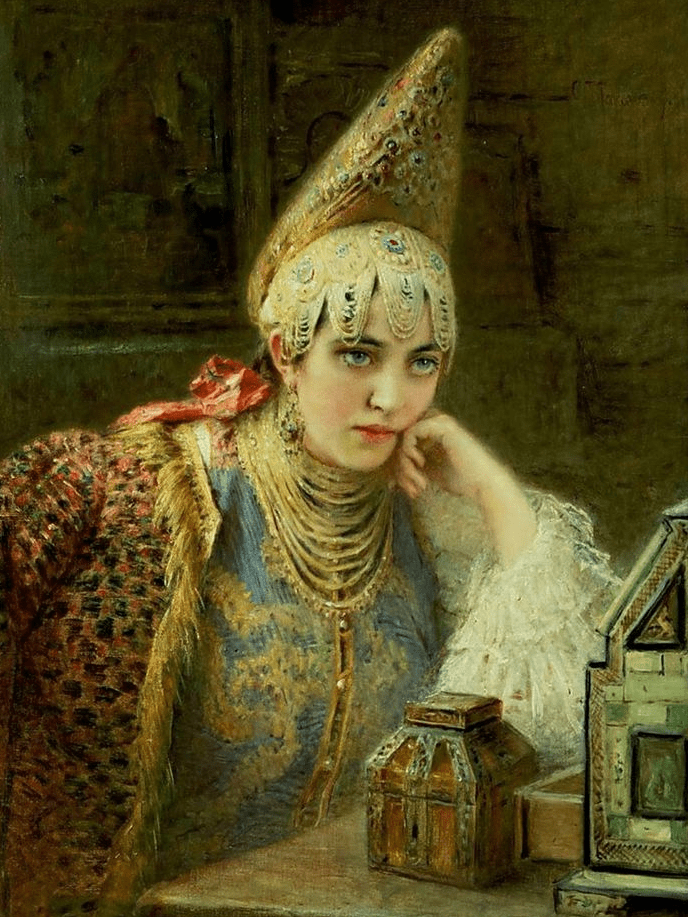
In pre-Peter the Great times, ‘kokoshniks’ were worn by both noble ladies and peasant women. But, at the beginning of the 18th century, Peter I ordered his subjects to abandon traditional Russian dress and adopt European fashion. From then on, aristocratic women no longer wore ‘kokoshniks’. Among peasant women and the merchant class, however, the headdress became very popular.
A ‘kokoshnik’ is an investment!
The ‘kokoshnik’ has always been a fabulously expensive luxury item. It was carefully passed down from mother to daughter. Among other things, it was a substantial investment: some headdresses cost as much as an entire house.
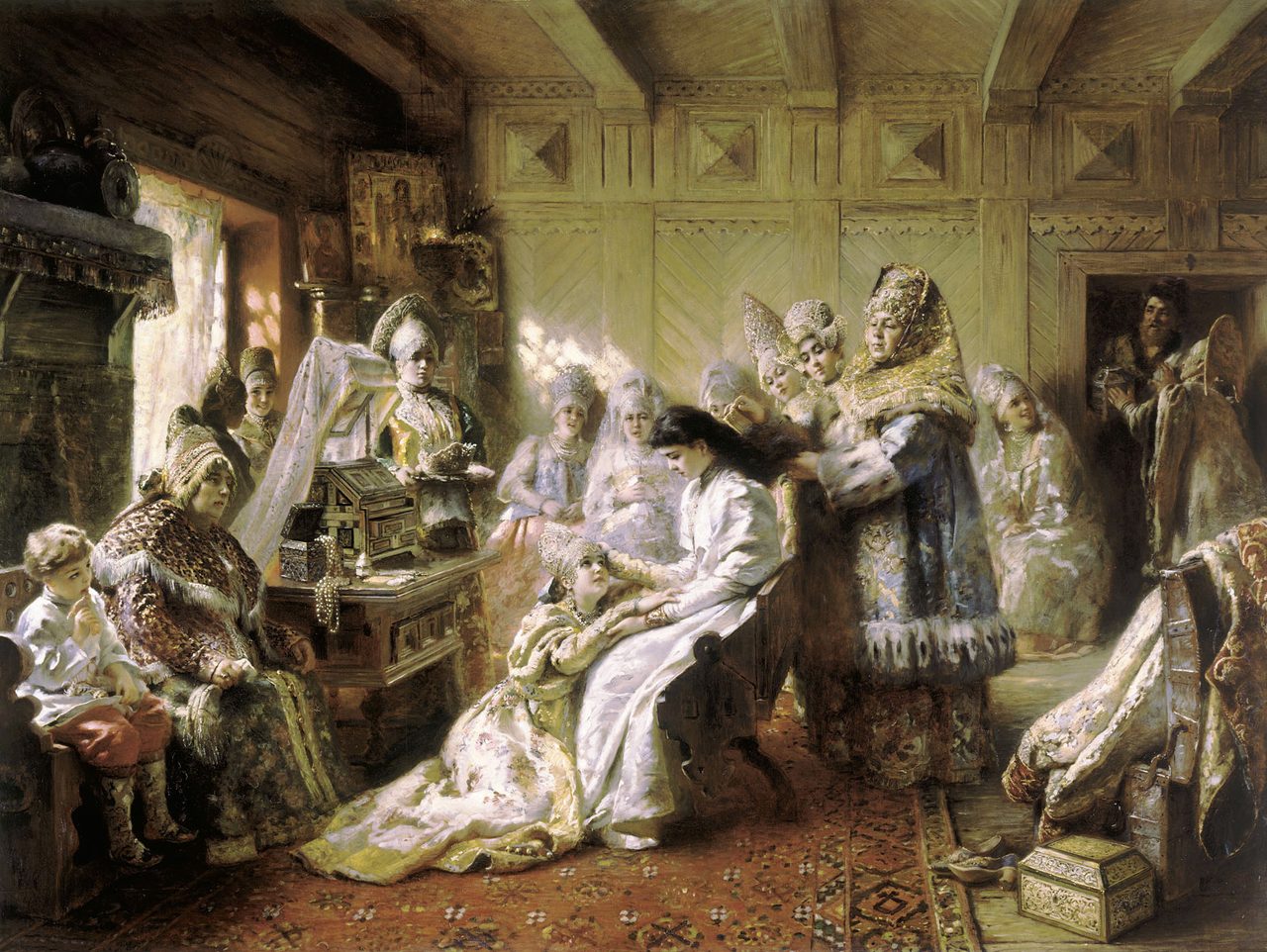
Women very rarely sewed ‘kokoshniks’ themselves. This work was usually done by private craftswomen or cooperatives, as well as workshops attached to monasteries. Working with expensive fabrics and materials required special skills. Customers commissioned the making of headdresses or chose them at large fairs.
In many provinces, a woman first put on a ‘kokoshnik’ during her wedding ceremony. After the wedding, the headdress was worn on holidays and during festivities.
Notable types of ‘kokoshniks’
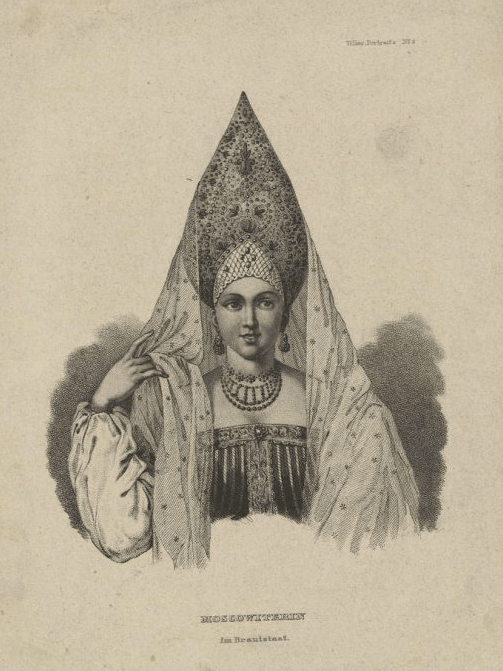
Museums house hundreds of diverse headdresses, each unique in its own way. In Kostroma and Yaroslavl provinces, ‘kokoshniks’ with a tall, triangular crest were worn.
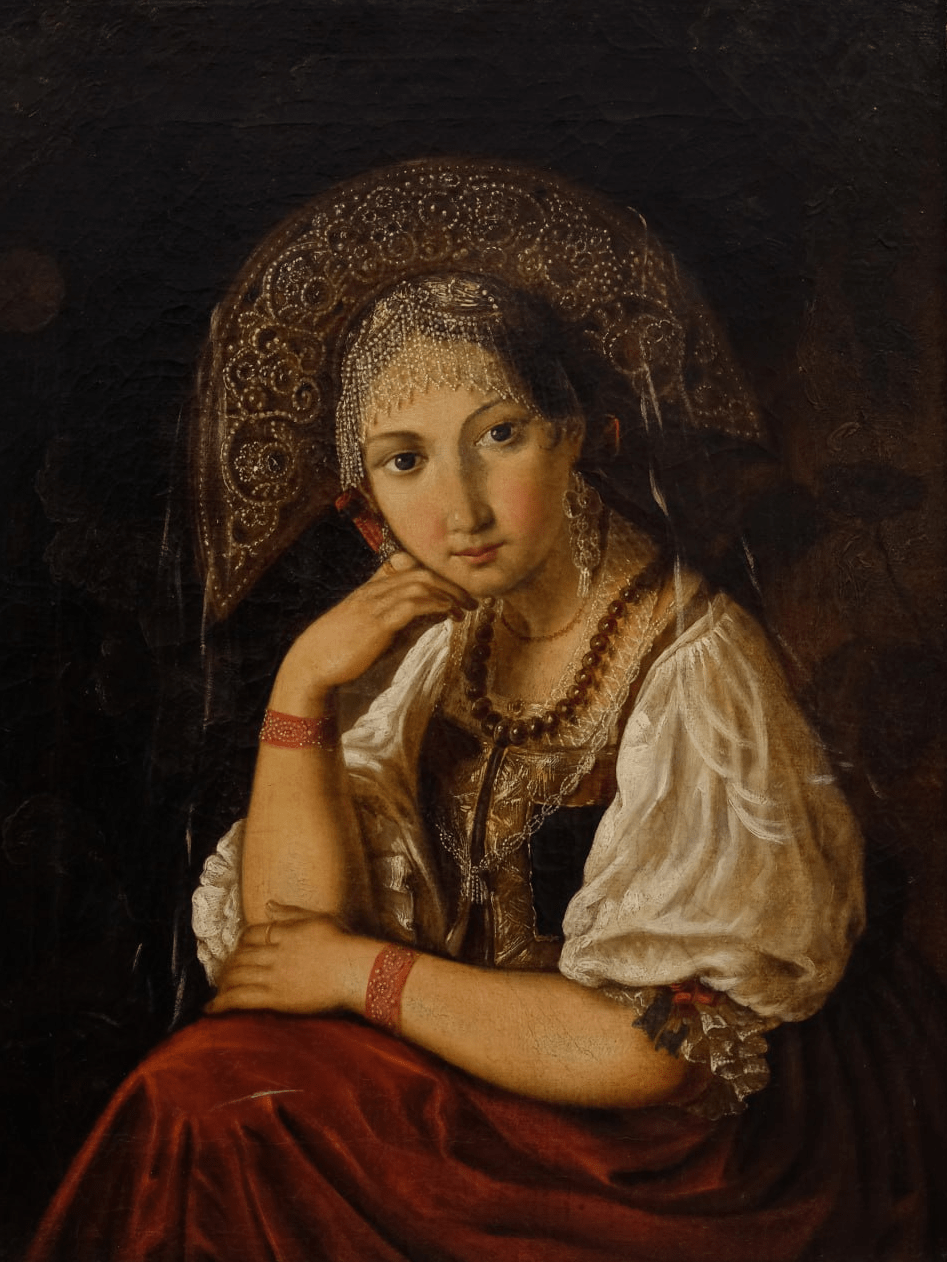
In Vladimir and Suzdal, ‘kokoshniks’ shaped like an inverted crescent were worn – known as ‘lunniks’.
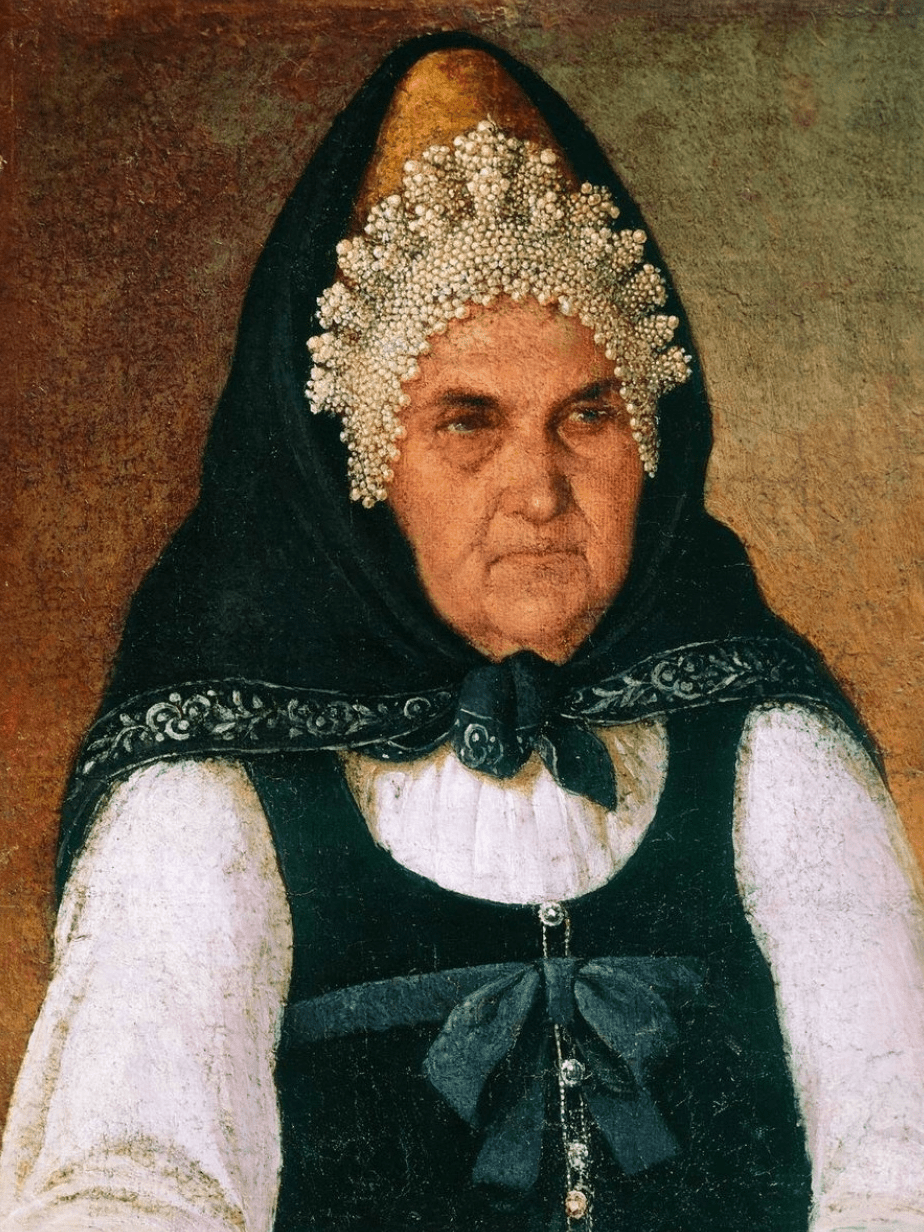
The Pskov ‘shishak’ is one of the most unusual ‘kokoshniks’. Its main decorative element consisted of convex “bumps” made of tow and decorated with pearls or mother-of-pearl.
The ‘kokoshnik’ as a symbol of Russia
After Peter the Great’s bans, the ‘kokoshnik’ remained out of favor for less than a hundred years: already under Catherine II, it reappeared at court. The empress emphasized her connection with the people: at gatherings at the Hermitage, she spoke only Russian and dressed in clothes modeled on folk costumes. Following her example, other court ladies also came to appreciate Russian headdresses.
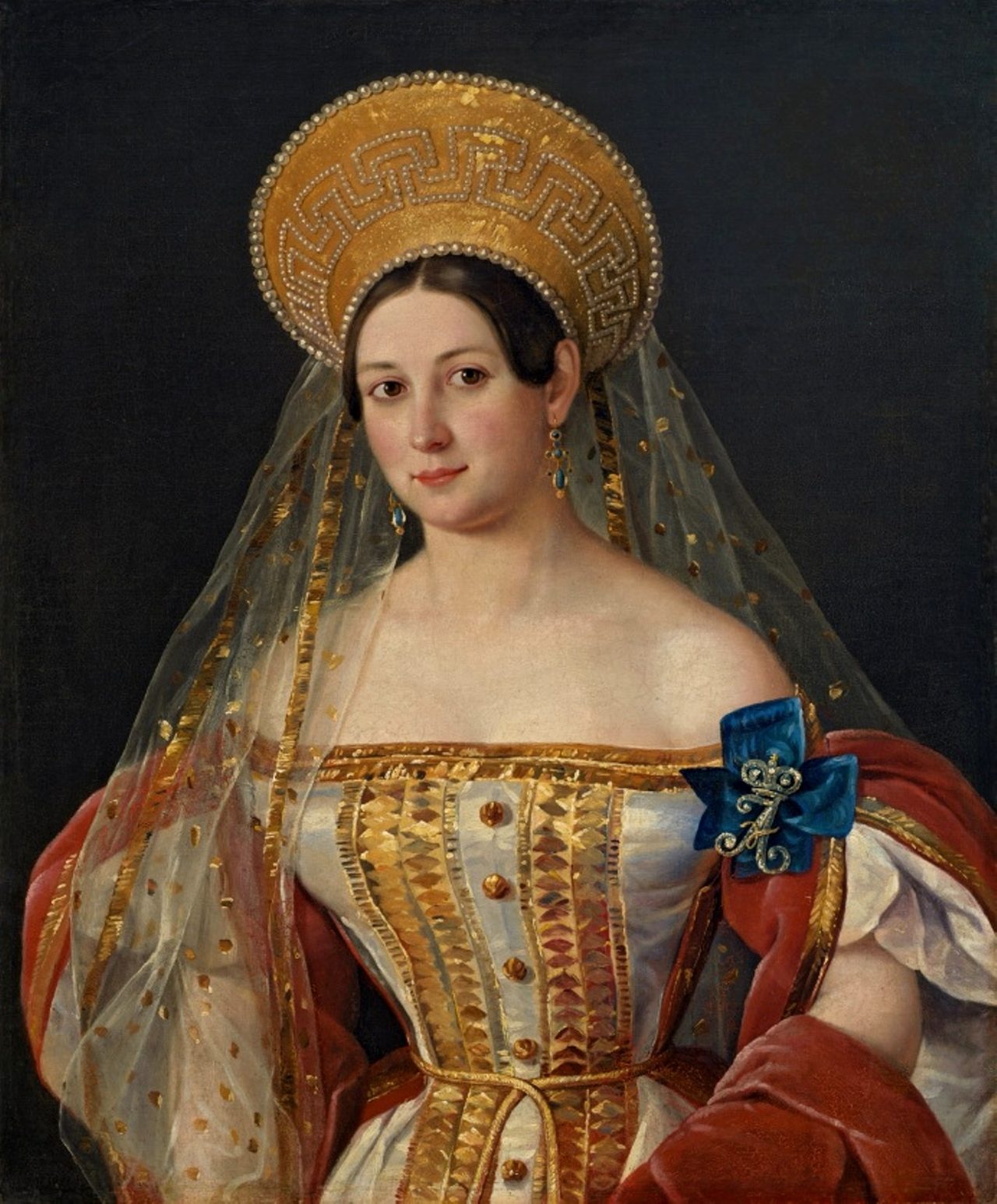
The next surge in popularity came after the victory in the war against Napoleon: Russian aristocratic women dressed in gowns resembling sarafans and in stylized ‘kokoshniks’.
In 1834, Nicholas I issued a decree introducing a new uniform dress for court ladies. This costume resembled a sarafan and was complimented by a headdress: for unmarried girls a headband, for married women a ‘povoinik’ or ‘kokoshnik’.
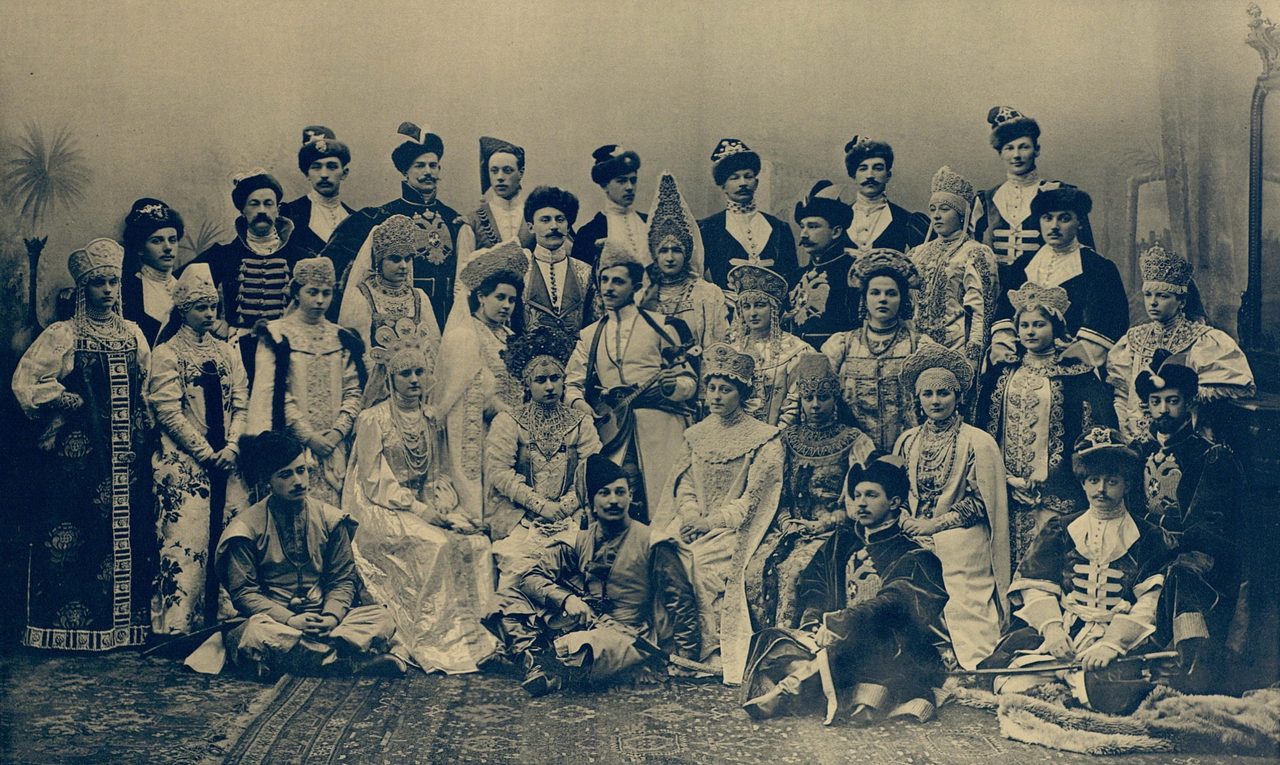
In the second half of the 19th century, interest in collecting Russian antiquities flourished. This trend reached its peak with the 1903 costume ball, held to celebrate the 290th anniversary of the Romanov dynasty. Real professionals took part in creating the costumes: the director of the Hermitage Museum provided historical references; while staff members of the Imperial Theaters, famous artists, fashion designers and jewelers handled the sketches and tailoring.
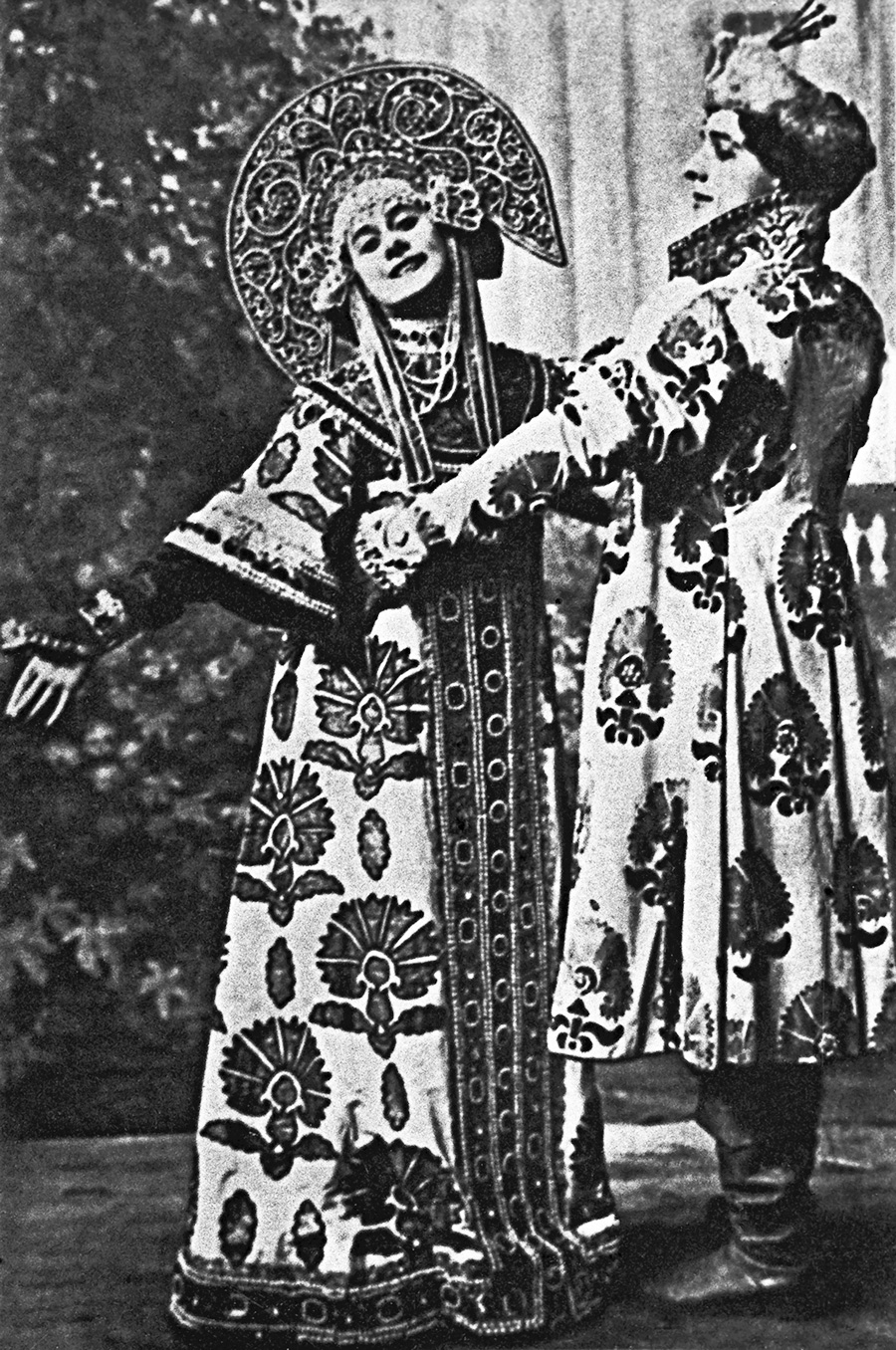
The next surge in the popularity of the ‘kokoshnik’ began in 1909, when the ‘Russian Seasons’ caused a sensation in Paris and then in London and other cities. Sergei Diaghilev’s theatrical project introduced Europe to Russian ballet, opera and luxurious Russian costumes.
In the 20th century, the ‘kokoshnik’ shone at foreign fashion shows, in silent films and even in Hollywood.
Read the full version of the article in Russian on the Culture.Ru portal.