
German musician Hans-Joachim Frey on Russian culture, life & language
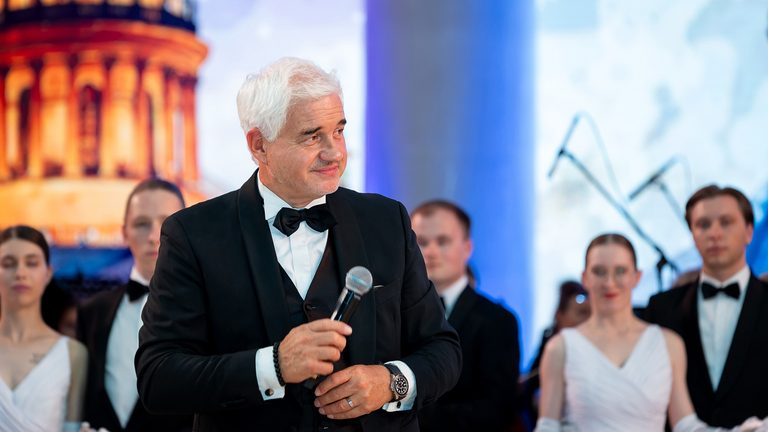
The artistic director of the St. Petersburg international festival ‘Tchaikovsky. Reboot’ shares his story.
On the first encounter with Russian culture
“At school, we read the great Russian writers, but, at 16, you read such books as required reading and understand only a small part of them. Returning to Dostoevsky and Tolstoy as an adult was a real revelation for me. Suddenly, I understood what people call the ‘Russian soul’: extremes, passion, a constant search for truth and meaning. And, today, I know: I understand Russian music better, thanks to Russian literature – and vice versa! Tchaikovsky and Tolstoy speak the same language.
And during my student years came an encounter with music — it was Tchaikovsky. Working as an assistant director at the Hamburg State Opera, I took part in a production of ‘Eugene Onegin’ – from that time on, this opera never let me go. I did not feel that I was hearing something foreign; on the contrary, it seemed that this was something deeply native to me. This music does not go through the intellect, but straight to the heart. Pushkin and Tchaikovsky, poetry and music in perfect unity! Tatiana's letter scene is for me one of the most sincere and touching moments in all of operatic literature.
On constant new discoveries in Russian culture
“Russia is so vast and rich that one lifetime is not enough to get to know it! I’ve discovered composers, who are almost never performed in the West, outstanding young talents from the regions and traditions you will not read about in any guidebook. Russia never ceases to surprise me – and I think it always will!
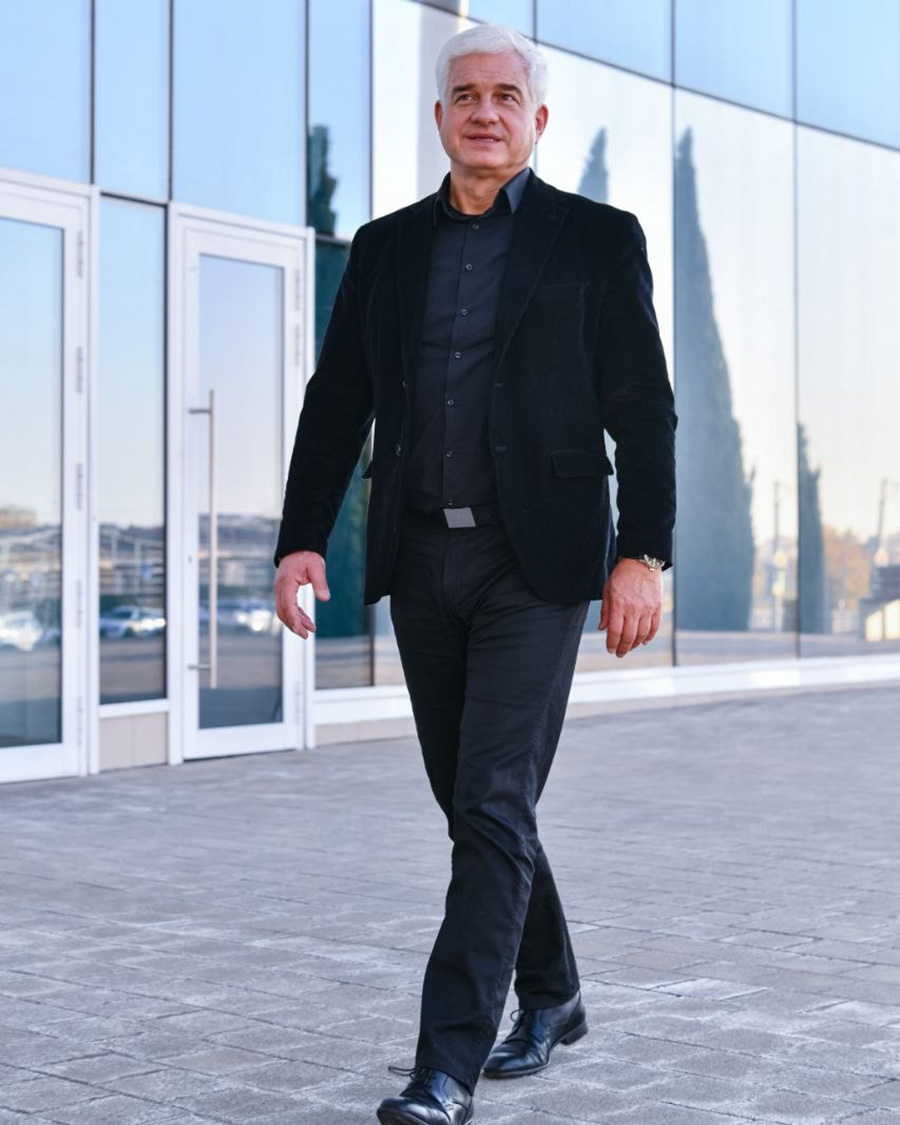
“Every new production, whether in Moscow, St. Petersburg, Ulan-Ude, Irkutsk or Vladivostok, has been an enrichment for me. Because, every theater, every company, every audience has its own soul.
On Russian masterpieces that have influenced world culture
“In music, the world would be poorer without Russia: Glinka, Mussorgsky's ‘Boris Godunov’, Rimsky-Korsakov's orchestral mastery, Tchaikovsky, Rachmaninoff, Stravinsky's ‘The Rite of Spring’, Prokofiev, Shostakovich – without them, classical music is unthinkable!
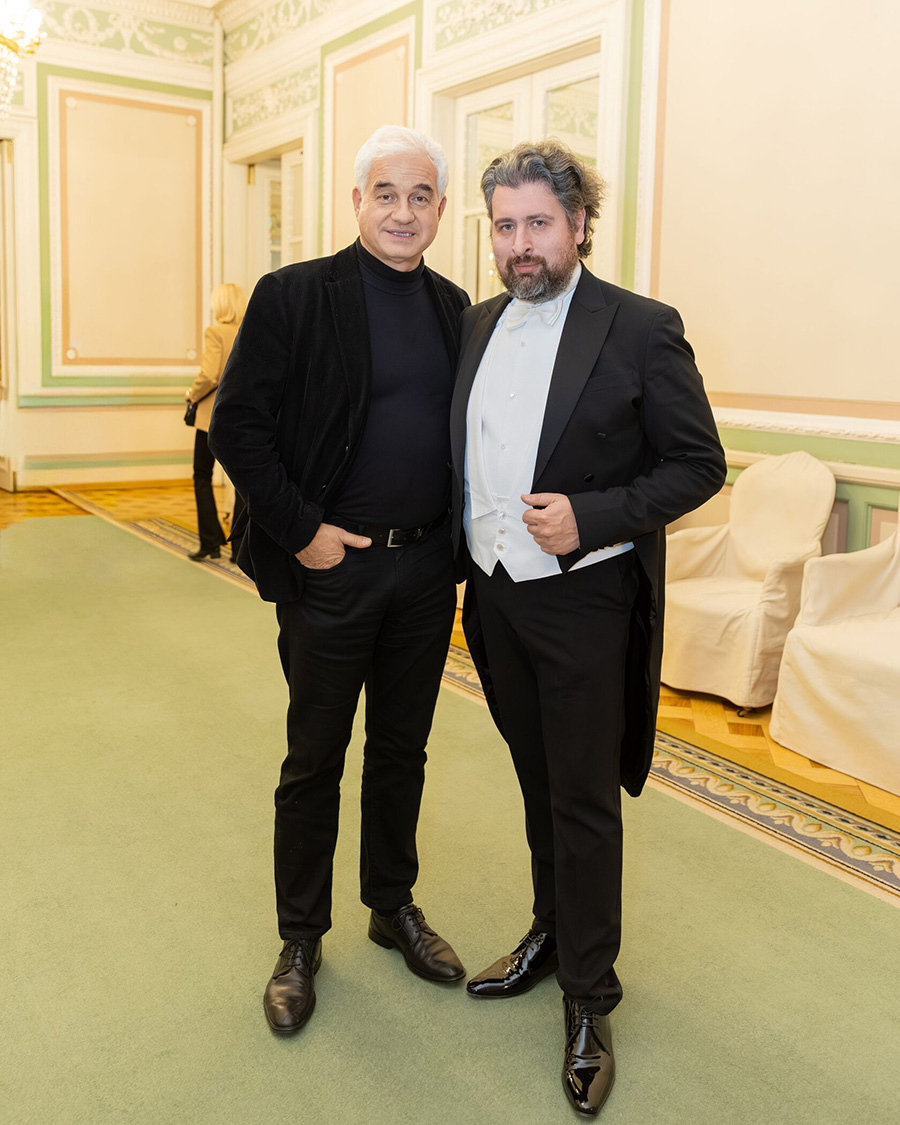 With the conductor Dmitry Yurovsky
In literature, Pushkin, Tolstoy, Dostoevsky and Chekhov changed the art of storytelling and theater throughout the world; without Chekhov, there would be no modern theater in its present form. In the visual arts, the path leads from the icons of Andrei Rublev to Kandinsky and Malevich, who opened the door to abstraction for art. And also ballet: Diaghilev's ‘Russian Seasons’ reinvented 20th-century dance.
That’s why I always say: Russian culture stands on a par with German, Italian and French culture! It’s one of the great pillars of world culture. This is exactly what my new book ‘Loving Russia as Part of World Culture’ is all about.
On Russian music that everyone should know
“Rachmaninoff's piano concertos, Mussorgsky's ‘Pictures at an Exhibition’ and ‘Boris Godunov’, Rimsky-Korsakov's ‘Scheherazade’, Borodin's ‘Prince Igor’ with the Polovtsian Dances, Prokofiev's ‘Romeo and Juliet’, Shostakovich's Fifth Symphony and, of course, Glinka, with whom it all began.
But, it’s also very important to me that Russian music did not end in the 20th century. Contemporary composers, such as Alexander Tchaikovsky continue this great tradition. This is precisely the meaning of our festival ‘Tchaikovsky. Reboot’: to rediscover the great heritage and connect it with modernity and with a young audience!
On places & people
St. Petersburg is unique – a whole city as a single work of art! The White Nights, the Neva River, the Mariinsky Theater, the Hermitage… Here, every stone is music! Moscow with the Bolshoi Theater is, for me, the beating heart of Russian culture. Sochi is associated with eight intense and wonderful years, where the sea and the mountains are close together. Kazan shows how naturally different cultures and religions live together in Russia.
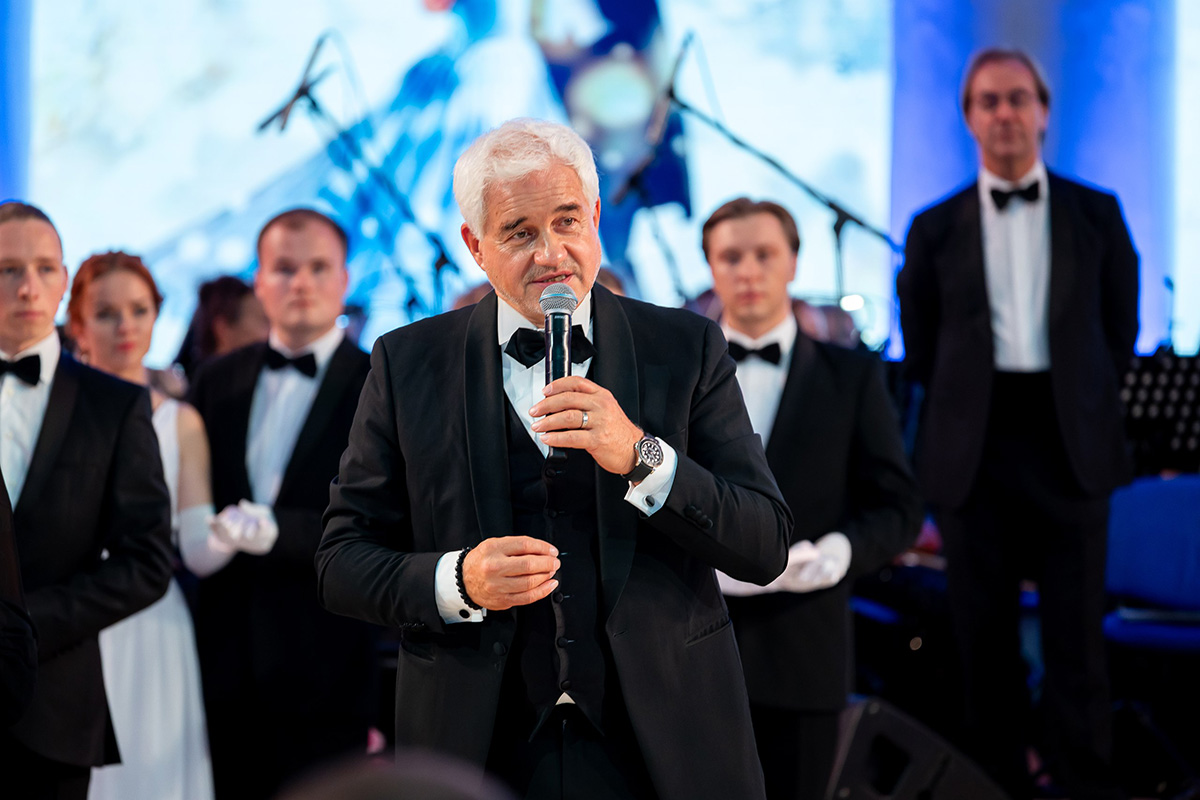
But, most of all, I have always been impressed by the people: their warmth, long evenings at one table and friendships that last a lifetime. I wrote about this in my book ‘Learning to Love Russia’.
On the Russian language
I continue to learn Russian every day. For a German, the grammar is a real adventure: six cases, verbs of motion and above all the perfective and imperfective aspects… You stumble over them again and again, even after many years!
What I love about the Russian language is its melody. It was created for singing and you can hear it in every Russian opera. And there are words like ‘toska’ or ‘dusha’ that cannot be translated literally into any other language! They can only be felt.