Sofia Gubaidulina: The leading female composer of the 20th century

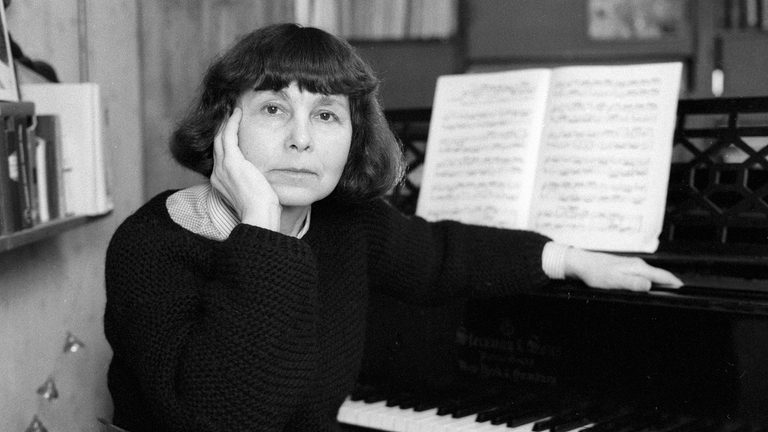
She was a leader of the musical avant-garde, wrote more than 100 symphonic works and composed music for dozens of films.
“I wish you to keep on going your 'wrong' way,” composer Dmitri Shostakovich once said to Sofia Gubaidulina, a student at the Moscow Conservatory.
These words ended up becoming the motto of the young lady’s entire creative life. She did everything her own way, guided only by personal aesthetic principles and intuition. At times, in defiance of all academic music and the Soviet order of things.
The ‘wrong’ way
Gubaidulina was born in 1931 in the small town of Chistopol, Republic of Tatarstan. Her father was a surveyor engineer and her mother was a school teacher. The family was far from creative pursuits. As Gubaidulina herself recalled, out of hopelessness and because of the greyness around her, she would, sometimes, look at the sky and draw inspiration from it and from silence.
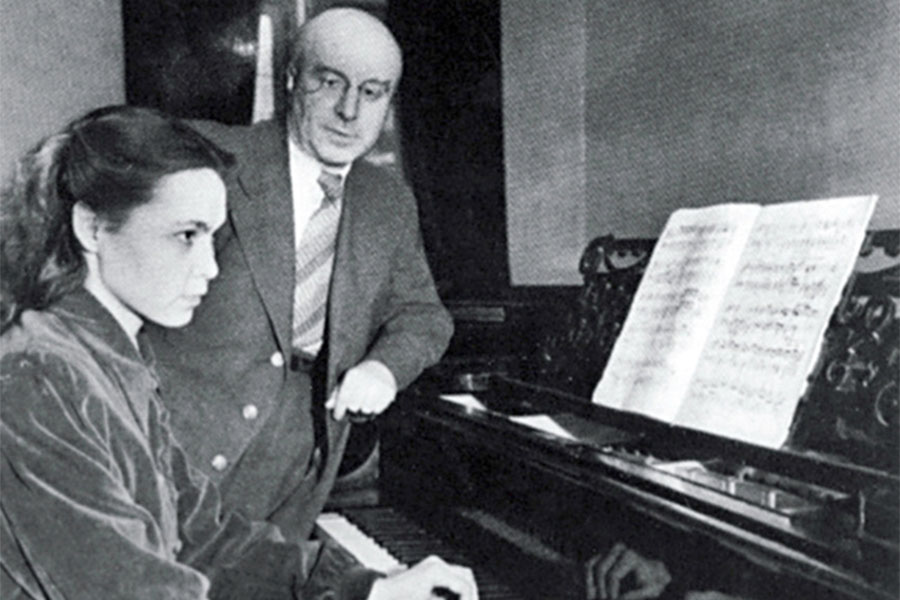 Sofia Gubaidulina and her Kazan professor
At the children's music school, the girl's genuine talent was discovered. The family then moved to Kazan and Gubaidulina enrolled in a piano class at the Kazan Conservatory. Later, she continued her studies at the Moscow Conservatory, now as a composer, where she received a Stalin scholarship for her achievements.
She was ahead of her time
“My goal has always been to hear the sound of the world, the sound of my own soul and to study their collision, contrast or, conversely, similarity,” said the composer.
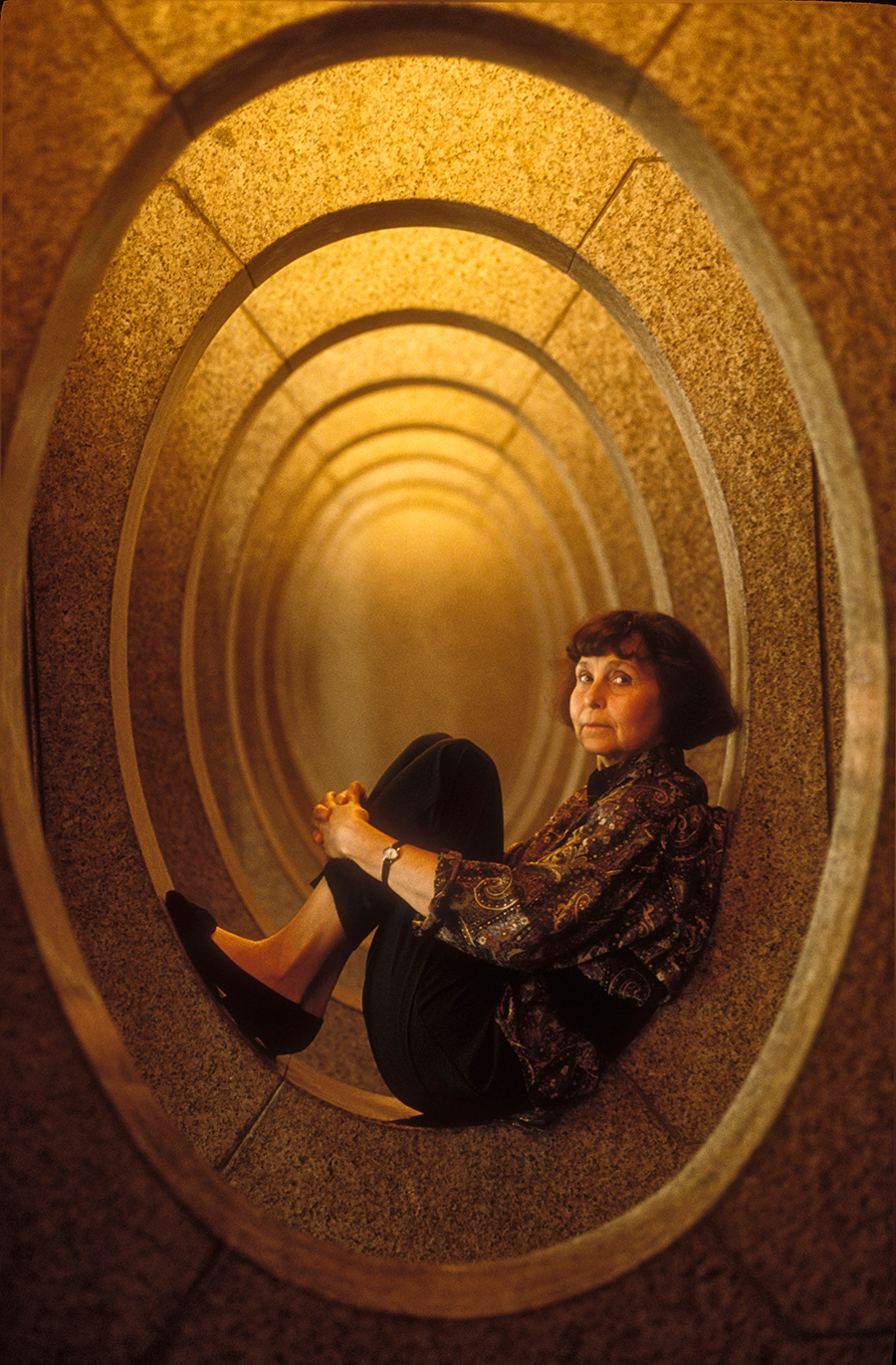 Sofia Gubaidulina in 1991
But, in the 1960s in the USSR, behind the ‘Iron Curtain’, contemporary Western music was simply banned. Nevertheless, she and her fellow musicians managed to obtain scores and even recordings of contemporary composers from the U.S. and Europe. Including, for example, the American avant-gardist John Cage.
Looking for a desired sound, the composer wasn’t afraid of experiments. One of the first in the USSR, she began writing electronic music and worked at the Moscow Experimental Studio of Electronic Music almost from its opening. Her electronic piece ‘Vivente – non Vivente’ (1970) was a real breakthrough at the time.
But, for the Soviet Union, with its commitment to realism, Gubaidulina's music turned out to be alien. As a result, her works were banned one after another. To earn a living somehow, she wrote music for movies and animation – her compositions can be heard, for example, in the Soviet animated motion picture ‘Mowgli’ (1967), where she managed to recreate both the noise of the jungle, as well as the scraping of a tiger's claws.
Avant-garde, ‘bayan’ & mathematics in music
Gubaidulina became one of the leaders of the musical avant-garde. She combined the most incredible instruments within a single work: For instance, she was the first to unite the harpsichord and percussion. Performances of her compositions often resembled a theatrical production in which musicians chaotically produce sound from instruments so incredible for academic music as the Javanese ‘tam-tam’, the gong or Indian bells.
In search of new acoustic effects, the composer became interested in the ‘bayan’, “this breathing beast”, as she called it. She showed that its acoustic possibilities were much bigger and she made it sound a new way. Gubaidulina wrote several important works for the ‘bayan’, including ‘De profundis’ (1878). In close collaboration with bayanist Friedrich Lips, they elevated this traditionally “folk” instrument to the class of academic and symphonic – and it came to be heard on stages all over the world.
Reflecting on music, Gubaidulina began to use mathematics to organize musical forms. For example, she used the Fibonacci sequence (in which each subsequent number equals the sum of the two previous ones) for the ratio of the durations of different parts of her works. And she used the symbol of the cross as the architectural framework of her score in the composition ‘In Croce’ (1979). This work, first performed in Vienna in 1981, brought her worldwide fame and Alfred Schnittke called it the most important work of the 20th century.
Flee from her homeland & world fame
While the whole world was listening avidly to her avant-garde compositions, at home in the 1980s, she, again, found herself on blacklists (including for the unauthorized performance of her works in the West). Then, in 1991, Gubaidulina received a scholarship and left for Germany, where she later settled in a remote village.
She toured all over the world, including in Russia. “I never considered myself an exile. I often return,” she said. In the 2000s, there were several celebrations of the composer in her native Kazan. Gubaidulina's symphonic works are still played by orchestras all over the world today; she was a Grammy nominee and received all kinds of awards in various countries, from Russia and the U.S. to Sweden and Germany.
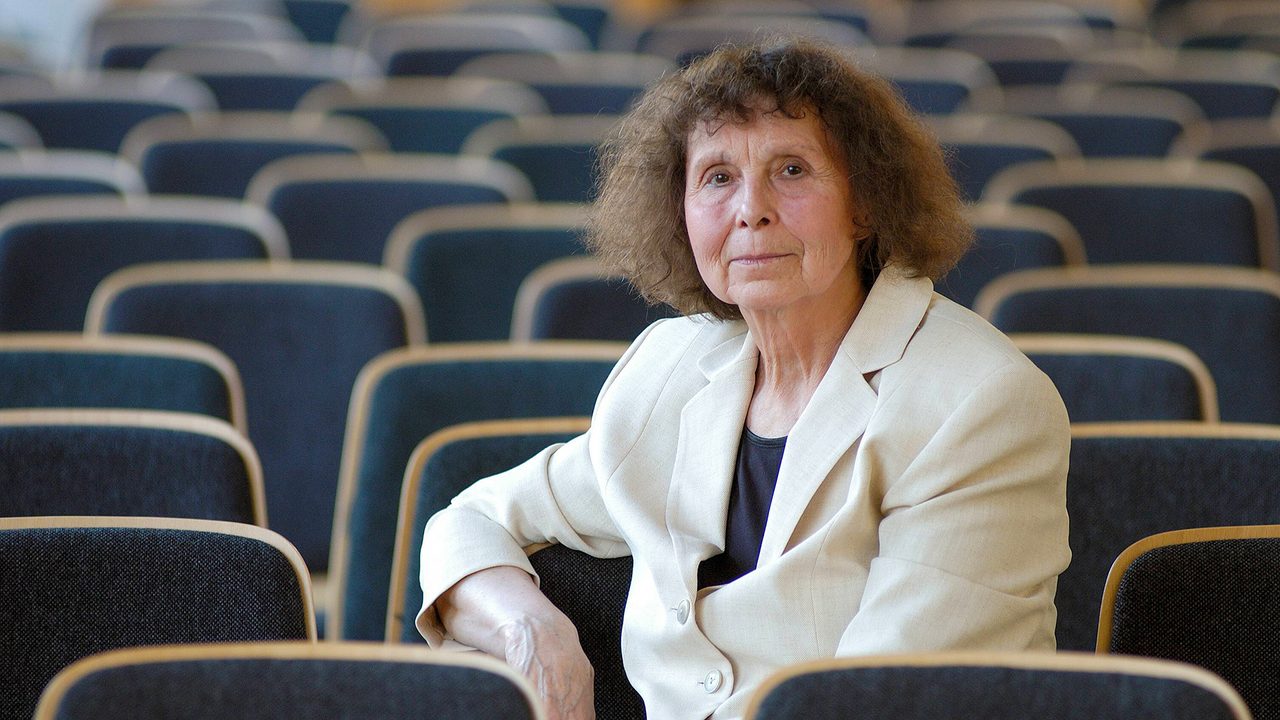 Sofia Gubaidulina in Berlin Philharmonie, 2005
All this time, her faithful companion was her second husband, Pyotr Meshchaninov, a pianist and conductor. He performed his wife's music and helped popularize it. She spent her final years with him in the German commune of Appen, continuing to compose music on a piano gifted to her by Mstislav Rostropovich.
And, in her free time, she would go out into the field to look at the stars and draw inspiration from her beloved silence. She passed away on March 13, 2025.