
What’s animate & inanimate in the Russian language EXPLAINED
Why is the word ‘покойник’ (deceased person) animate, but ‘труп’ (corpse) inanimate? And how did this category even arise in the language?
The category of animacy did not appear by chance. Scholars believe that the language reflects the human brain's ability to distinguish living objects from non-living ones, in order to identify potential partners, competitors, predators or prey.
We also animate those objects that are, in some way, similar to us. The more human characteristics we attribute to an object, the higher the probability that the language will treat it as animate.
The main signs of animacy include:
- the ability for independent movement
- the ability to influence the environment
- the ability to feel
- resemblance to the human body (presence of eyes, limbs, mouth, etc.)
It affects grammar, but not the meaning
The category of animacy directly influences grammar. For example, the form of a word in the Accusative case depends on it.
To compare:
- видеть отца (to see a father); любить брата (to love a brother); убить быка (to kill a bull). These words are animate. In the Accusative case, they decline according to the Genitive case forms.
- купить дом (to buy a house); построить храм (to build a church) – These words are inanimate. And in the Accusative case, they take the form of the Nominative case, the default one.
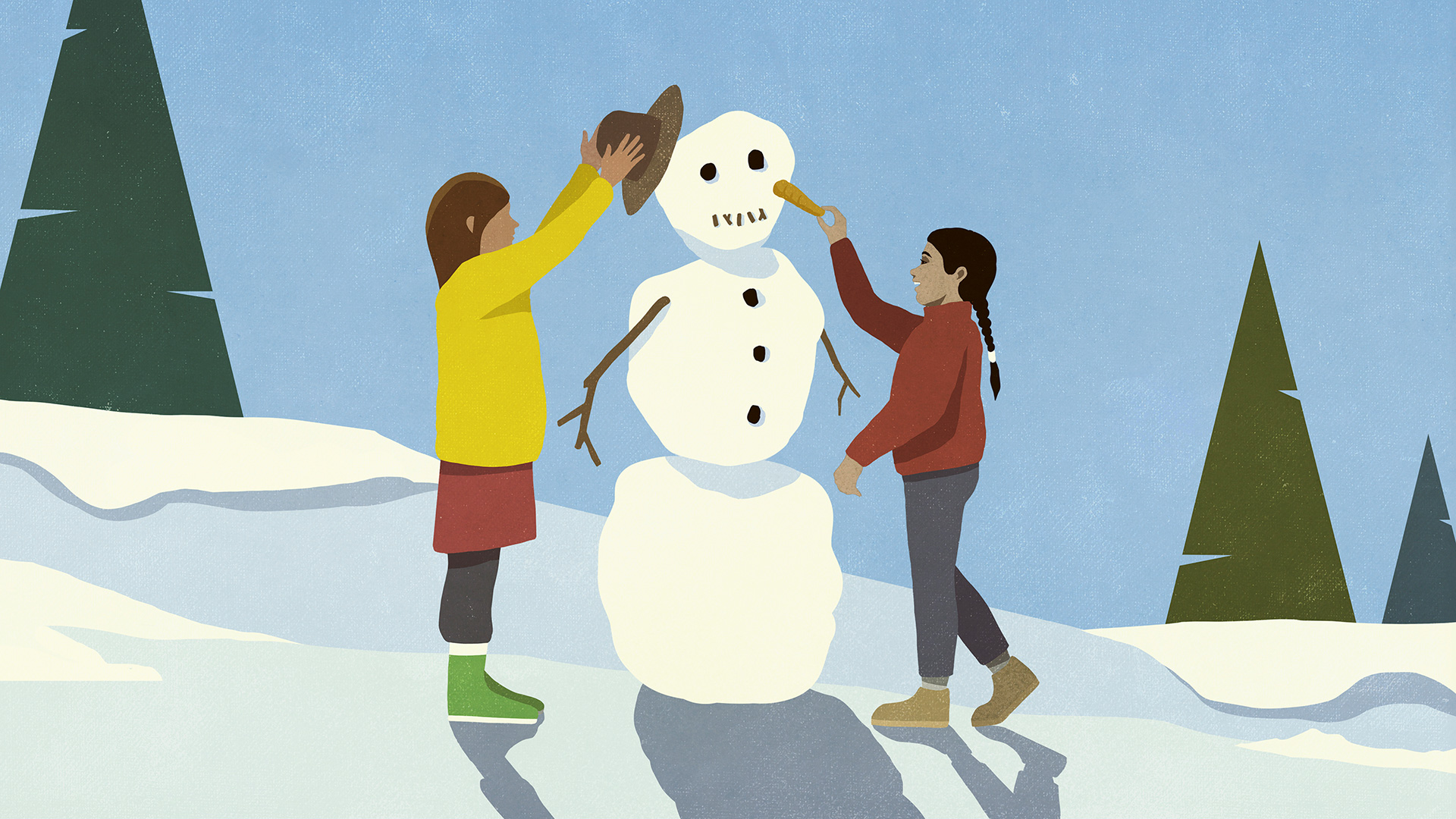
At the same time, the category of animacy/inanimacy is primarily grammatical and, sometimes, contradicts common sense. For example, the word ‘снеговик’ (snowman) is animate!
Most medical terms (like ‘эмбрион’ (embryo) are also inanimate, even though they may have a living origin. This is also why the concept of ‘труп’ (corpse) is inanimate, as if it has lost its connection to a living person, while ‘покойник, мертвец’ (which mean the same, a deceased person) are animate, because they are more often used to speak about a specific person, rather than a “soulless” corpse.
The gradual acquisition of a ‘soul’
The category of animacy in its modern form is a unique phenomenon, characteristic of Slavic languages.
In the Proto-Slavic language, the forms of the Nominative and Accusative cases in the masculine singular coincided. Under conditions of free word order in a sentence, this created a risk of ambiguity. For example, the ancient phrase “посла сынъ” could be read as either “послал сына” ([he] sent a son) or as “сын послал” (son has sent). Therefore, for convenience, it was necessary to differentiate the forms for the Accusative case.
“In the Old Russian language, the category of animacy 'captured' words gradually. In the earliest written monuments that have come down to us (for example, in the 'Ostromir Gospels'), only words denoting socially significant people or God take the Genitive form instead of the Accusative,” writes Anton Soldatov, editor of Gramota.ru (Грамота.ру).
“The process proceeded 'from top to bottom' according to social and biological hierarchy: first authoritative figures (князь – prince, отец – father), then designations for slaves, servants and those of lower status, later — names of animals. Moreover, the phrase “вести лошадей” meant “to lead horses” in plural (as an object), while “вести коня” meant “to lead one horse” (in singular, it was already animate).”
The final formalization of animacy in the plural occurred only by the 16th–17th centuries.
Fluctuations between living & non-living
In the modern language, there are many cases where a word can take either form. Context is always important when determining animacy – whether the object performs an independent function or is used as a tool. How to choose the appropriate form? The closer the concept is to a human, the more “animate” it is.
Toys and characters endowed with human traits tend toward animacy: кукла (doll), снеговик (snowman). Conversely, when the name of a person is transferred to an object, the word loses animacy: “отдал ‘Москвич’ (автомобиль) в ремонт” (he handed over his ‘Moskvich’ car to repair shop). ‘Moskvich’ here is the same as Muscovite in Russian, but already inanimate.
For words denoting seafood, the rule usually applies: while the creature is alive, the word is animate ("поймать анчоуса" (to catch an anchovy), "разводить устриц" (to breed oysters)), but, when it becomes food, variations are possible or inanimacy prevails ("приготовить анчоусы" (to cook anchovies), "подать устрицы" (to serve oysters)). Moreover, different seafood can behave (grammatically) differently!
The full version of this article can be found (in Russian) on Gramota.ru (Грамота.ру).