

How Russia deals with increasing Anglicisms in its language

The presence of foreign words in public spaces is now regulated by law.
In recent decades, along with globalization and internet trends, the Russian language has experienced an invasion of Anglicisms. The process literally spiraled out of control and, in some cases, crossed the bounds of common sense; and some people began to replace absolutely everything.
This particularly affected media workers and bloggers and, consequently, the entire public space. Many began to literally say ‘кейс’ (‘case’), instead of the Russian ‘случай’, or ‘фейк’ (‘fake’), instead of the Russian ‘подделка’. That is, many use calques of foreign words even when the Russian language has worthy equivalents. On storefronts, instead of words like ‘скидка’, the English word ‘sale’ often appeared.
However, on March 1, 2025, amendments to the law ‘On the State Language of the Russian Federation’ came into force. They restrict the use of foreign borrowings, primarily Anglicisms.
In 2025, several dictionaries were approved that establish the norms of the state language.
“The law interprets the use of foreign words as a violation of citizens' rights. In this case, their rights as consumers to receive accessible information about goods and services," writes Anton Soldatov, editor at Gramota.ru (Грамота.ру).
“Many neologisms are not included in dictionaries and have no interpretations. This means that, in the event of disputes, consumers simply have nothing to refer to. ‘Rospotrebnadzor’ (The Federal Service for Surveillance on Consumer Rights Protection and Human Well-being) proceeds from the principle that information about a product or service must be understandable to the consumer without a dictionary, translator or knowledge of foreign languages,” adds Soldatov.
Where exactly are Anglicisms being restricted?

This primarily concerns information located in public places that is meant to help a person make a choice or use a service. This can include:
- Signs, direction indicators, information plaques and notices
- Inscriptions on the exterior surfaces of buildings and structures
- Websites and internet pages used for trade or services
Personal blogs of ordinary citizens (not companies) are not directly subject to the law's requirements regarding ‘consumer information’. Business correspondence between companies and internal documents (orders, employee instructions) are also not required to comply with the rules for ‘public information’.
Priority must be given to the state language in many other areas: advertising products, mass media (print, TV, radio, internet), cinematography (including the dubbing/subtitling of foreign movies and tv shows), cultural events, education, official record-keeping, court proceedings and notarial acts, elections and referendums.
The absence of text in Russian on signs, as well as the use of foreign words in advertising, will now incur fines.
Will Anglicisms disappear completely?
Of course not. If a company considers it important to duplicate information in a foreign language or in the languages of the peoples of the Russian Federation, three mandatory conditions must be met:
- The text in Russian must always come first.
- The font of the Russian inscription cannot be smaller or less noticeable than the foreign one.
- The inscriptions must match in meaning and be accurate translations of each other; you cannot simply write foreign words in Cyrillic and consider that a translation (e.g., 'Beauty Studio' cannot become 'Бьюти Студио').
Furthermore, there is a legally approved list of Anglicisms that are permitted for use, as they are considered to have already been assimilated into the Russian language. However, words like ‘кэшбэк’ (cashback), ‘каршеринг’ (carsharing), ‘коворкинг’ (coworking) and even ‘окей’ (okay) are not on this list, meaning Russian equivalents must be found (which are ‘возврат наличных’, ‘совместное использование автомобилей’ and ‘совместная работа’, respectively).
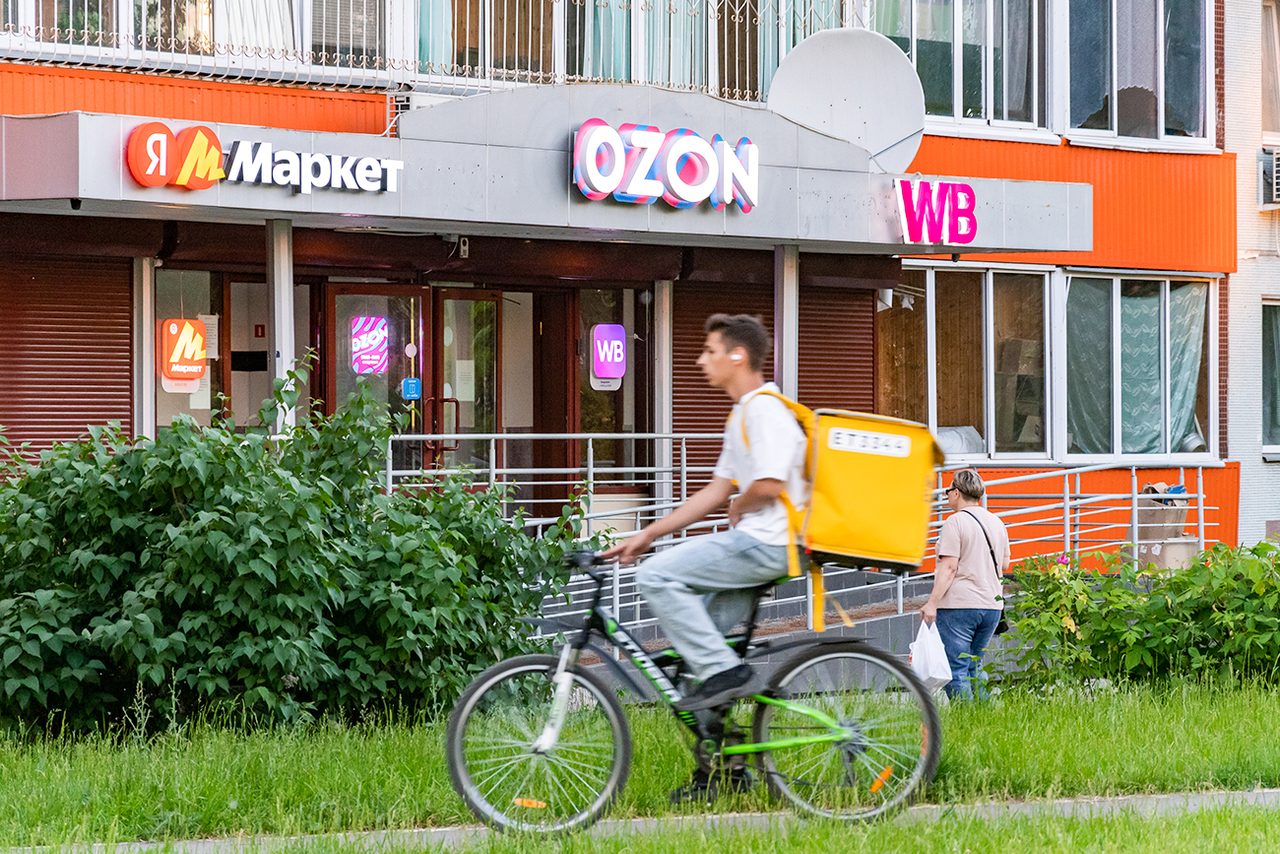
At the same time, trademarks registered with ‘Rospatent’ (the Federal Service for Intellectual Property) are not required to be Russified. This includes brand names like ‘Wildberries’, ‘Nike’, ‘Ozon’ and so on.