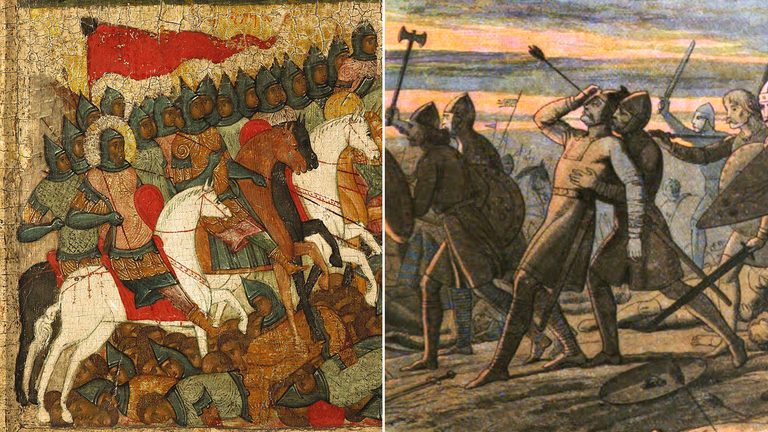
A VISUAL history of 16th-century Russia (PICS)
See how artists depicted key events in Russian history during this century – from military conflicts against the Grand Duchy of Lithuania to the end of Ivan IV the Terrible’s reign.
1. Unknown artist. ‘Battle of Orsha, September 8, 1514’, 1520-1534
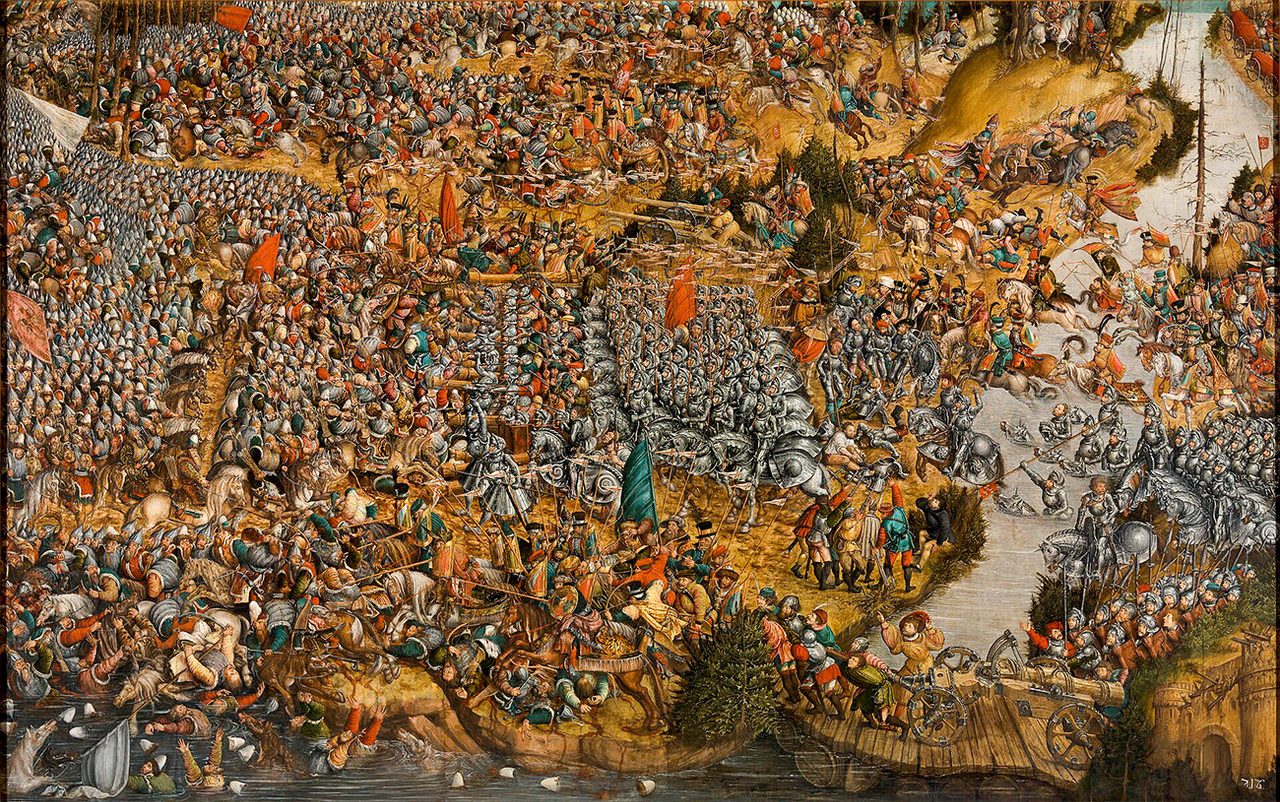
Throughout the first half of the 16th century, the Russian state and the Grand Duchy of Lithuania waged fierce wars. The struggle centered on the territories of the western Russian principalities, which fell under the control of Lithuanian rulers after the Mongol invasion.
Moscow managed to make significant inroads to the west, bringing a number of territories of the Grand Duchy under its control, most notably the strategically important city of Smolensk. A series of defeats forced Vilnius to seek closer ties with Poland, which led to the formation of the Polish-Lithuanian Commonwealth in 1569.
2. Pyotr Shamshin. ‘The entry of Ivan IV into Kazan’, 1894
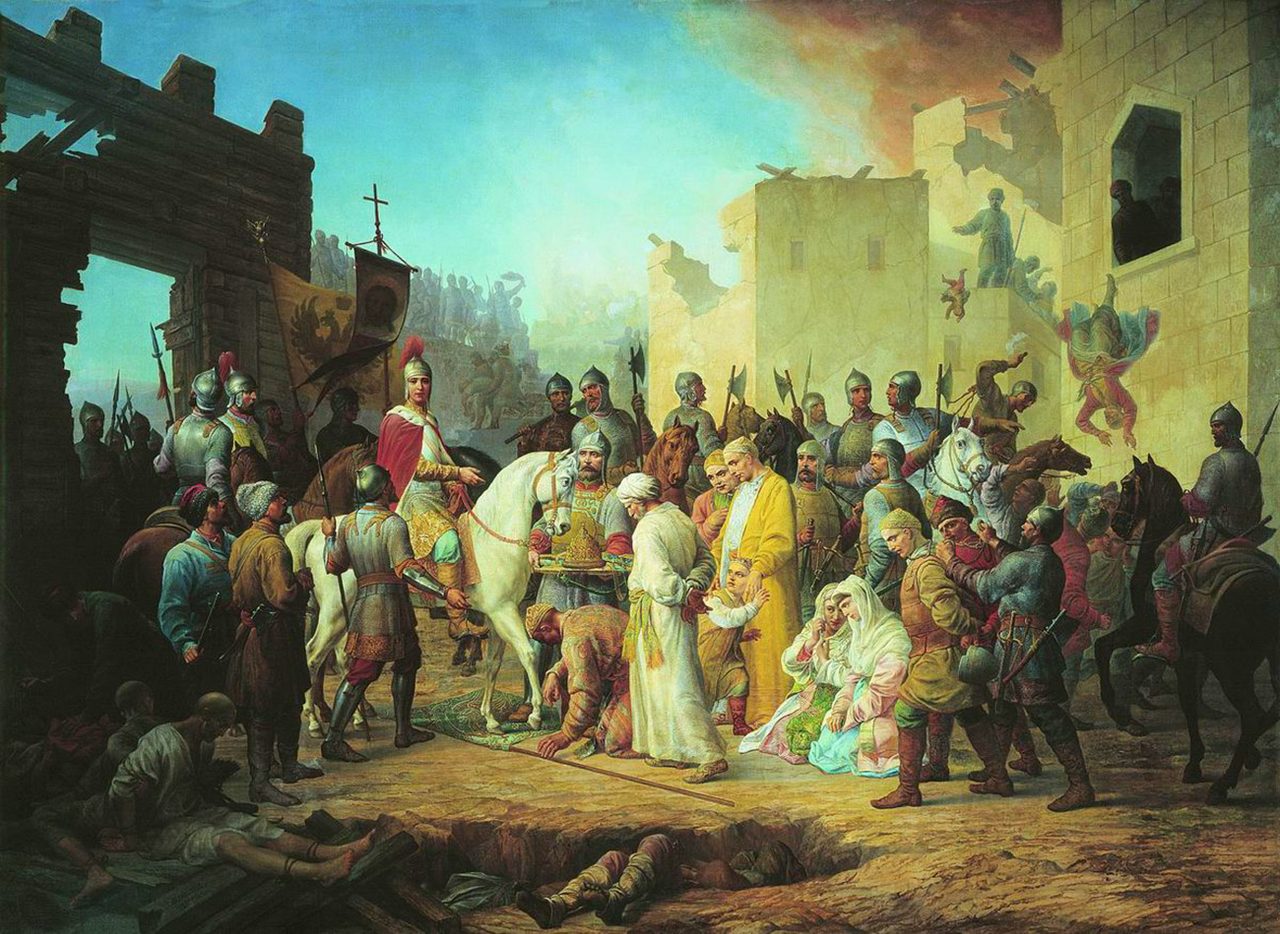
Following the collapse of the Mongol Empire (the Golden Horde) in the mid-15th century, the Russian state had to deal with its fragments. The Kazan Khanate was the closest to Moscow, with which military and diplomatic confrontation lasted for about 100 years. In 1552, Ivan IV the Terrible succeeded in subjugating Kazan and, just four years later, he annexed the Astrakhan Khanate.
3. Pavel Sokolov-Skalya. ‘Ivan the Terrible's capture of the Livonian Fortress of Kokenhausen’, 1937-1943
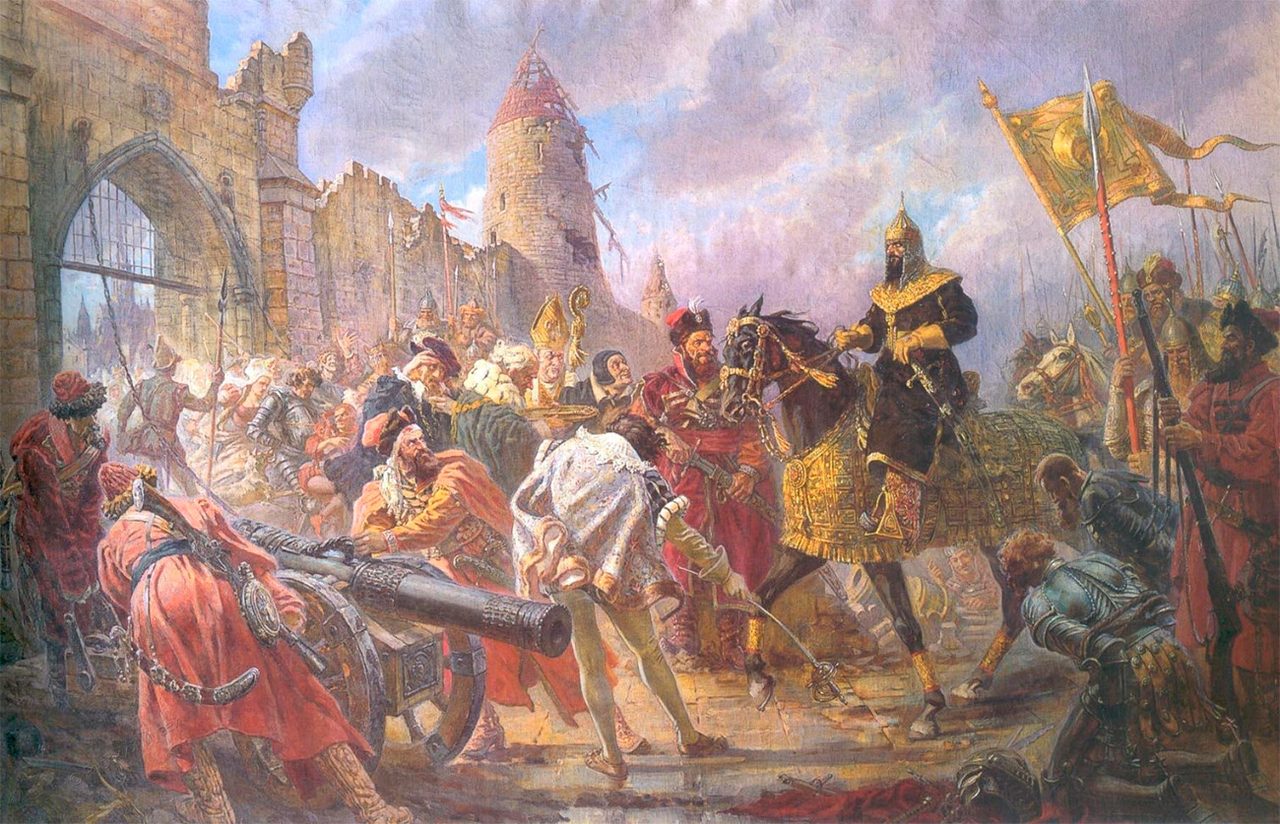
In 1558, Ivan the Terrible launched a war against the Livonian Confederation, which consisted of the Livonian Landmastery of the Teutonic Order and several bishoprics. The conflict was triggered by the latter's failure to pay the so-called ‘Yuri tribute’. Russian troops captured vast territories of modern-day Latvia and Estonia, reaching Reval (Tallinn). And, in 1561, the confederation collapsed.
4. Karl Bryullov. ‘The siege of Pskov by the Polish king Stefan Batory in 1581’, 1843
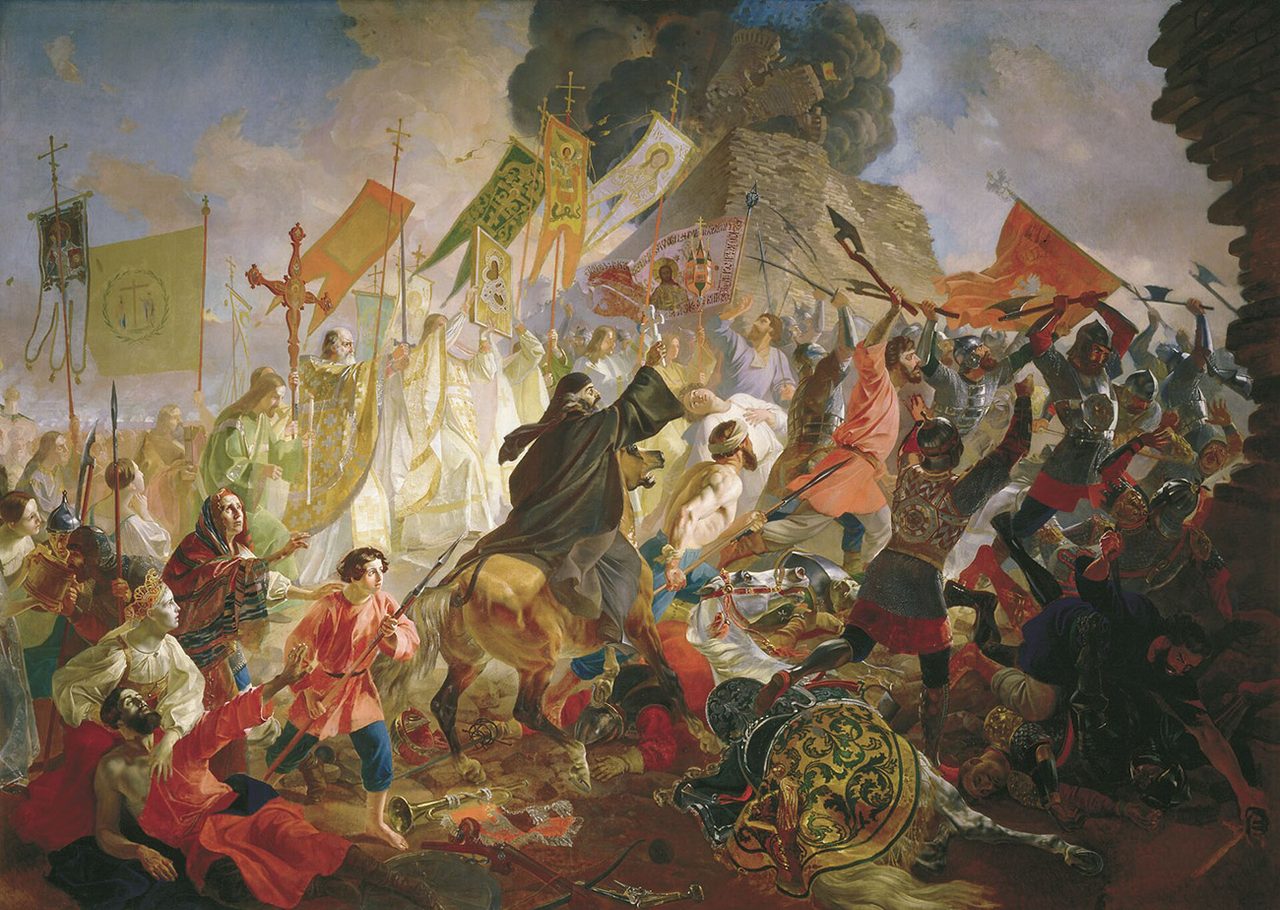
Gradually, neighboring powers, fearing the strengthening of the Russian state, became drawn into the Livonian War. In the final stages of the conflict, Ivan the Terrible found himself confronting both Sweden and the Polish-Lithuanian Commonwealth simultaneously. As a result, all gains in Livonia were lost, the Poles shifted the fighting onto Russian territory and lay siege to Pskov, although they were never able to capture it. The Swedes, meanwhile, received part of the southern coast of the Gulf of Finland as a result of peace negotiations.
5. Nikolai Nevrev. ‘Oprichniki’, 1890s
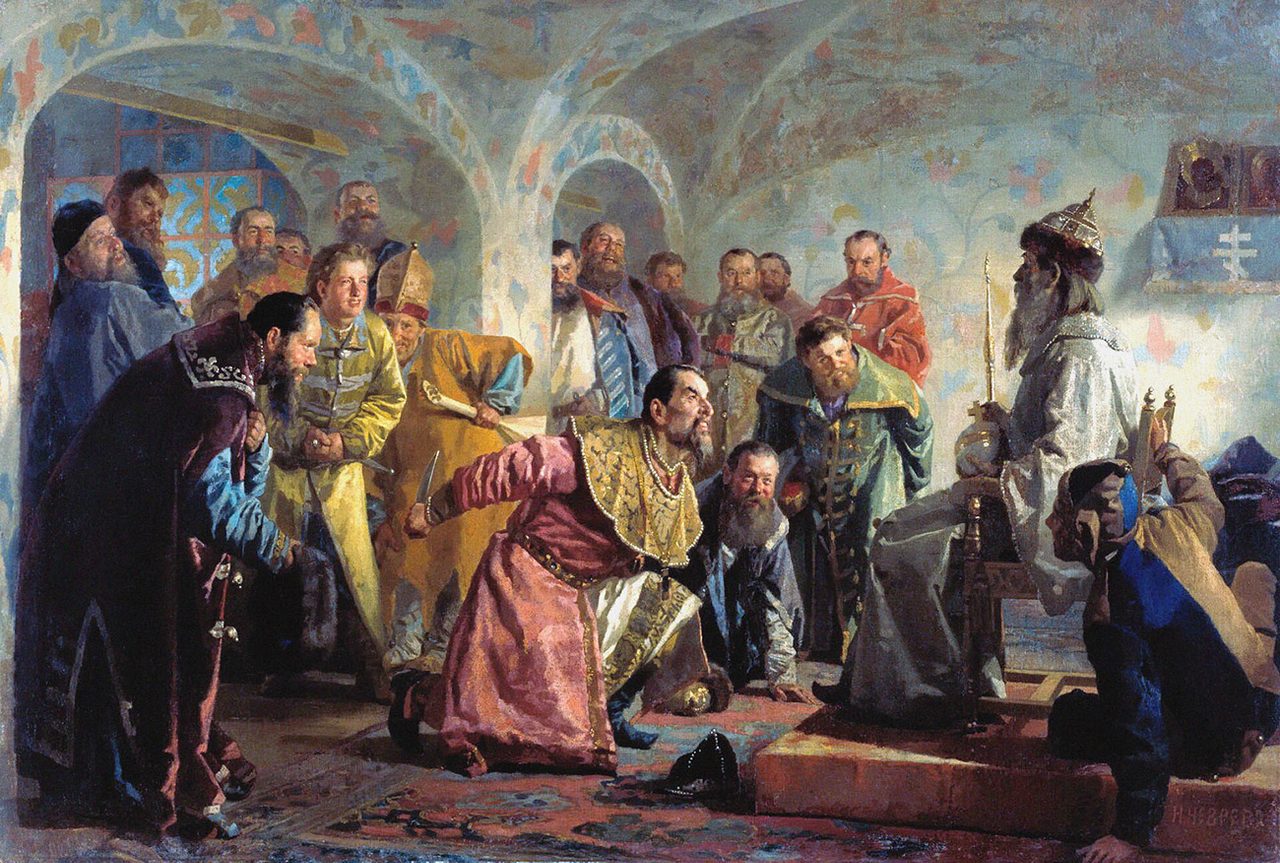
In 1565, Ivan IV, weary of attempts by the boyars and clergy to limit his power, divided the state into two parts: the ‘oprichnina’ (from the Old Russian word ‘oprich’, meaning ‘without’, ‘outside’, ‘separate’) and the ‘zemshchina’. The first, comprising the richest territories, became the tsar’s personal domain, where he ruled unchallenged. The second was headed by the Boyar Duma, but the tsar reserved the right to decide on the most important matters himself.
The ‘oprichniki’ – the tsar’s personal guard – waged a reign of terror against boyars and clergy he disliked and whom he suspected of treason. One of the victims was Boyar Ivan Fedorov-Chelyadnin. On September 11, 1568, he was allegedly dressed in the tsar’s robes and seated on the throne. The tsar bowed to him and then stabbed him with a dagger. This version of events was depicted in a painting by artist Nikolai Nevrev.
6. Alexander Novoskoltsev. ‘The last minutes of Metropolitan Philip’, 1889
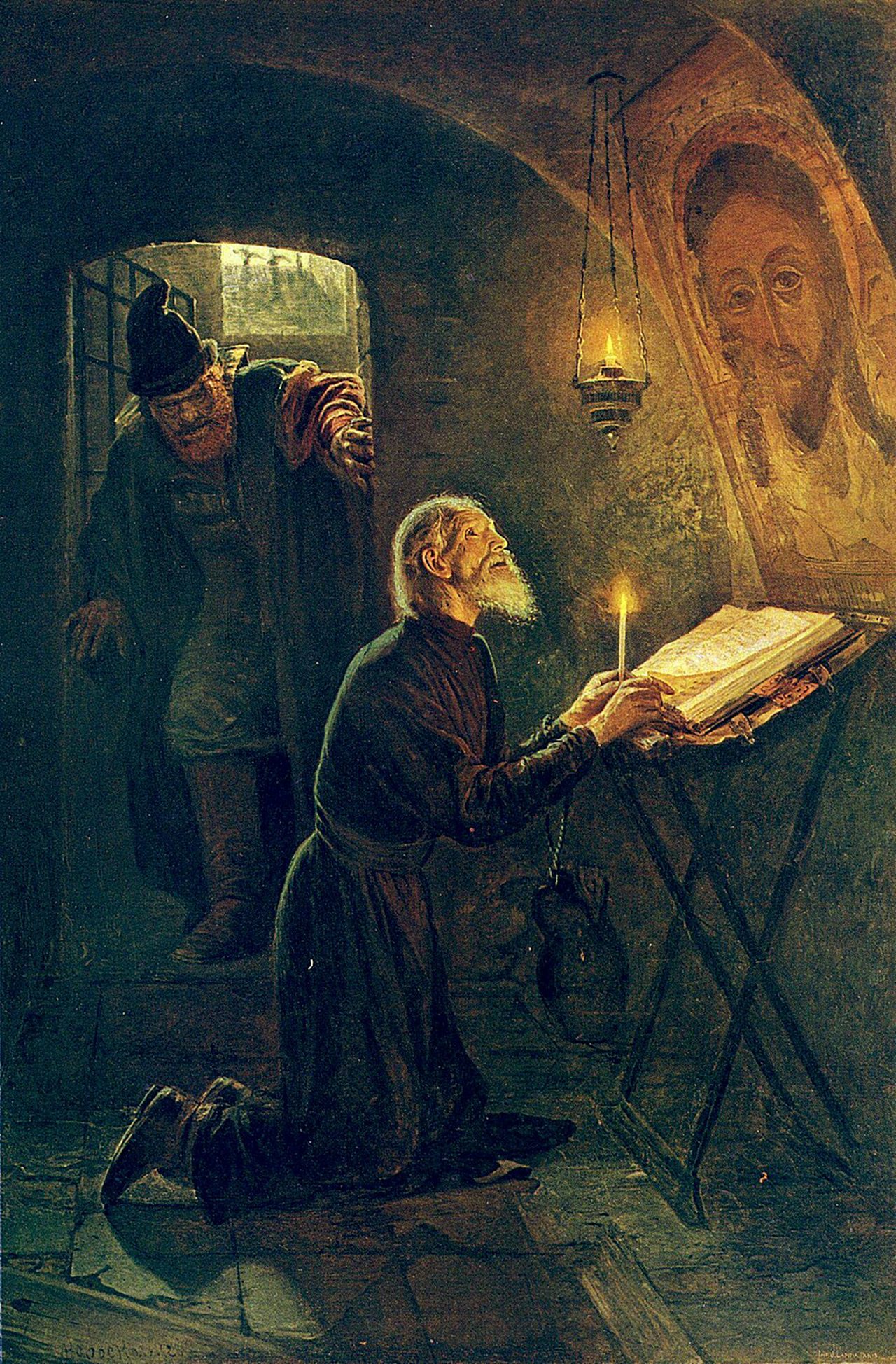
Another victim of the ‘oprichnina’ was Metropolitan Philip II of Moscow and All Russia, who had harshly criticized Ivan the Terrible's policies. The clergyman was defrocked and exiled to the Otroch Monastery in Tver, where he was killed by Oprichnik Malyuta Skuratov on December 23, 1569.
The weakness of a divided state was clearly demonstrated by the events of 1571, when Crimean Khan Devlet Giray broke through to Moscow and burned it to the ground. Although the combined army of zemsky and oprichna troops defeated the khan at the ‘Battle of Molodi’ the following year, the tsar abolished the ‘oprichnina’.
7. Alexander Litovchenko. "Ivan the Terrible shows treasures to the English ambassador Horsey", 1875
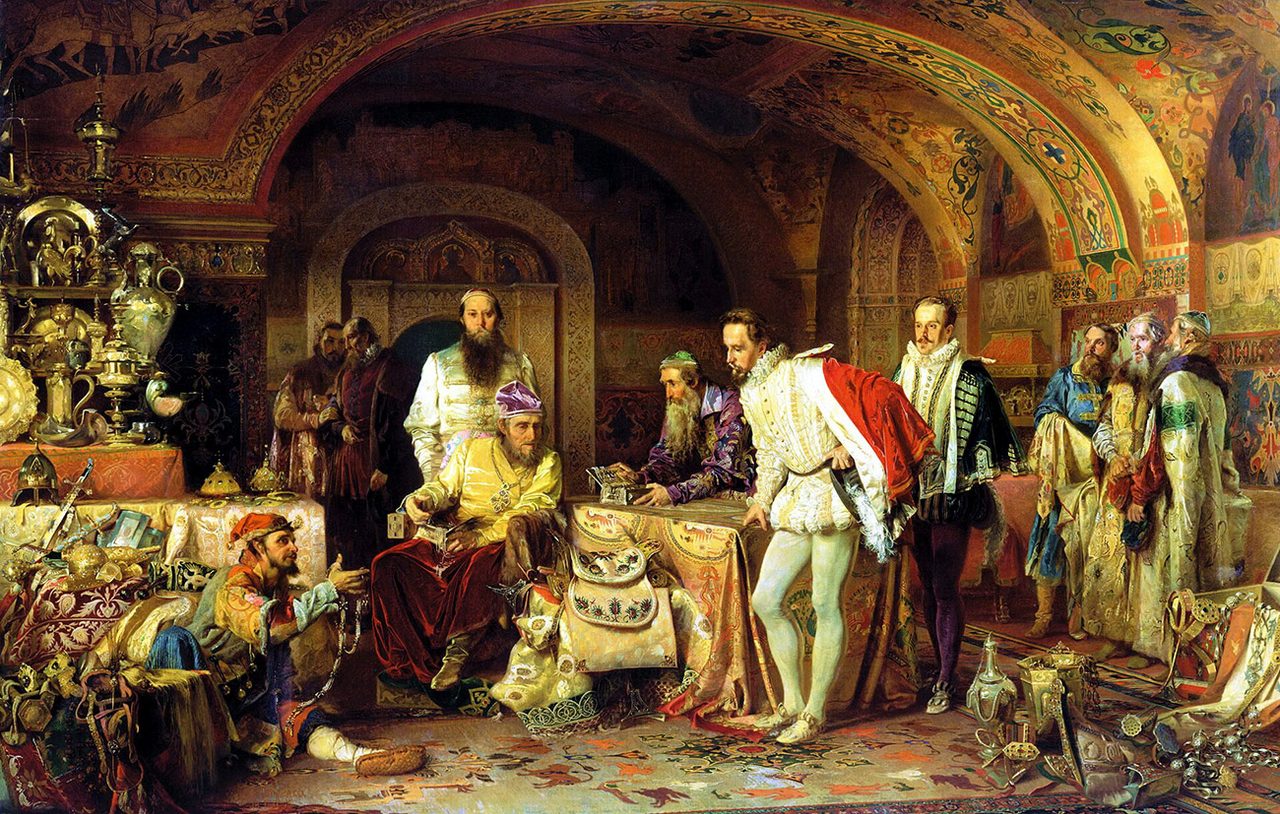
In 1553, English ships appeared off the coast of the White Sea. Captain Richard Chancellor reached Moscow, where he was granted an audience with Ivan IV and negotiated the establishment of ties between the two powers. Three years later, the English were granted the right to conduct duty-free trade in all Russian cities and to establish a trading company in the capital. For many years, England became the main economic partner of the Russian state.
8. Vasily Surikov. ‘The conquest of Siberia by Yermak’, 1895
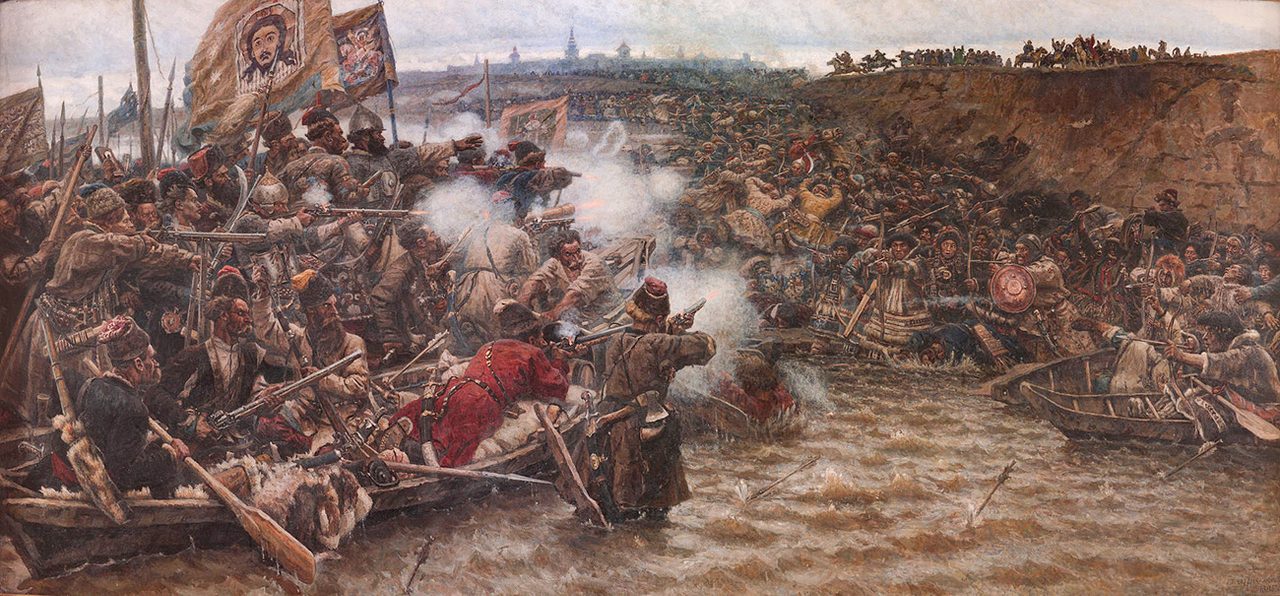
In 1581, the Cossack ataman Yermak led a large Cossack army on a campaign against the Siberian Khanate—one of the remnants of the Mongol Empire. The military campaign was funded by the wealthy Stroganov merchants, whose estates in the Urals were subject to regular Tatar raids. The campaign was so successful for the Cossacks that numerous military contingents, led by the Tsar's military commanders, soon followed them to Siberia.
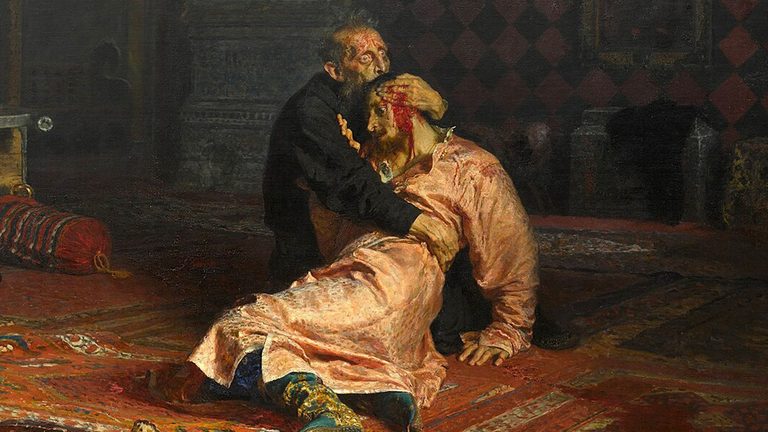
9. Ilya Repin. ‘Ivan the Terrible and his Son Ivan, November 16, 1581’, 1883-1885
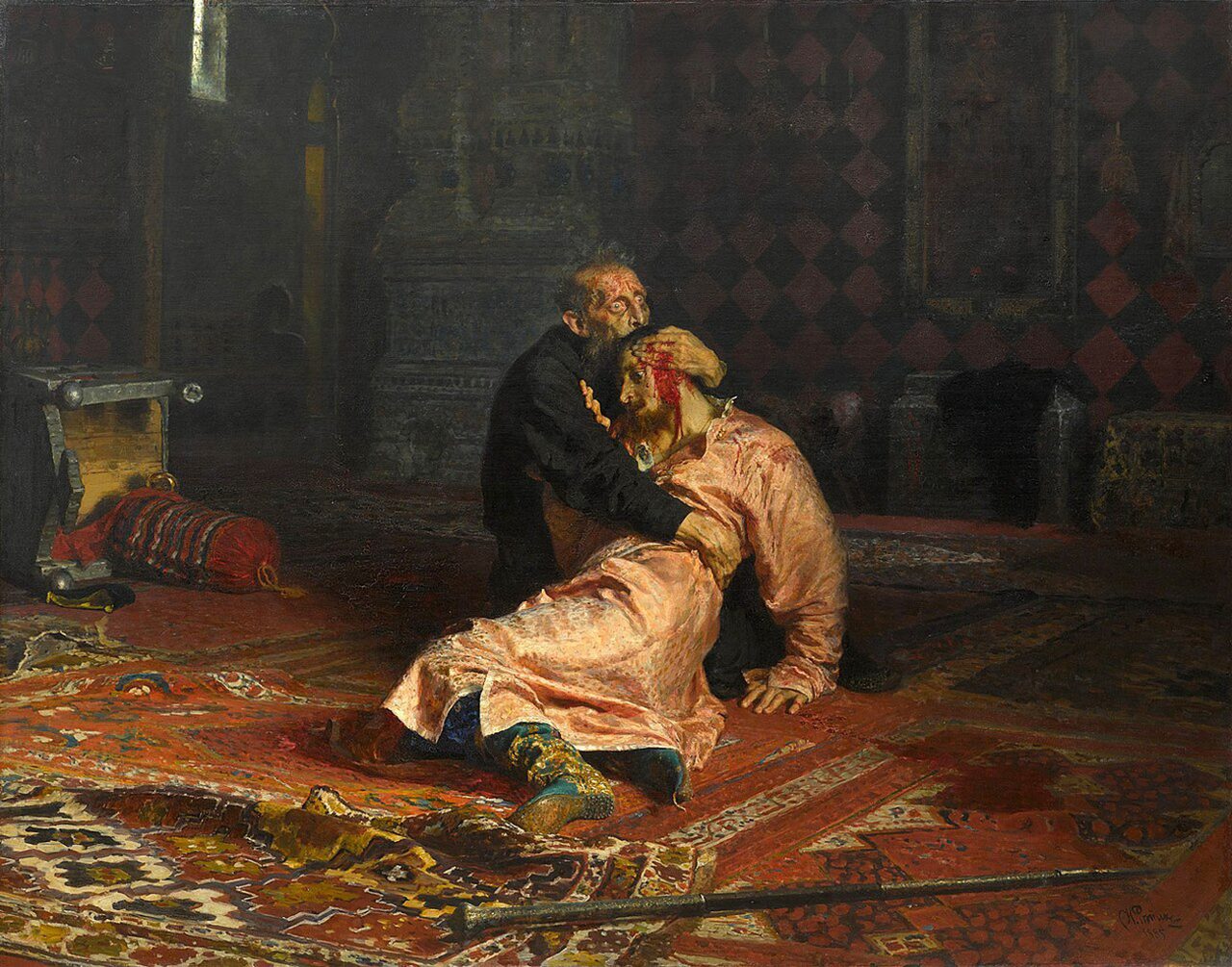
On November 19, 1581, Ivan the Terrible's son, Tsarevich Ivan Ivanovich, heir to the Russian throne, died at the age of 27. The circumstances surrounding his death remain unclear. According to the most widely accepted account, he had an argument with his father and the tsar, in a rage, fatally wounded him with a staff.
10. Mikhail Nesterov. ‘Murdered Tsarevich Dmitry’, 1899
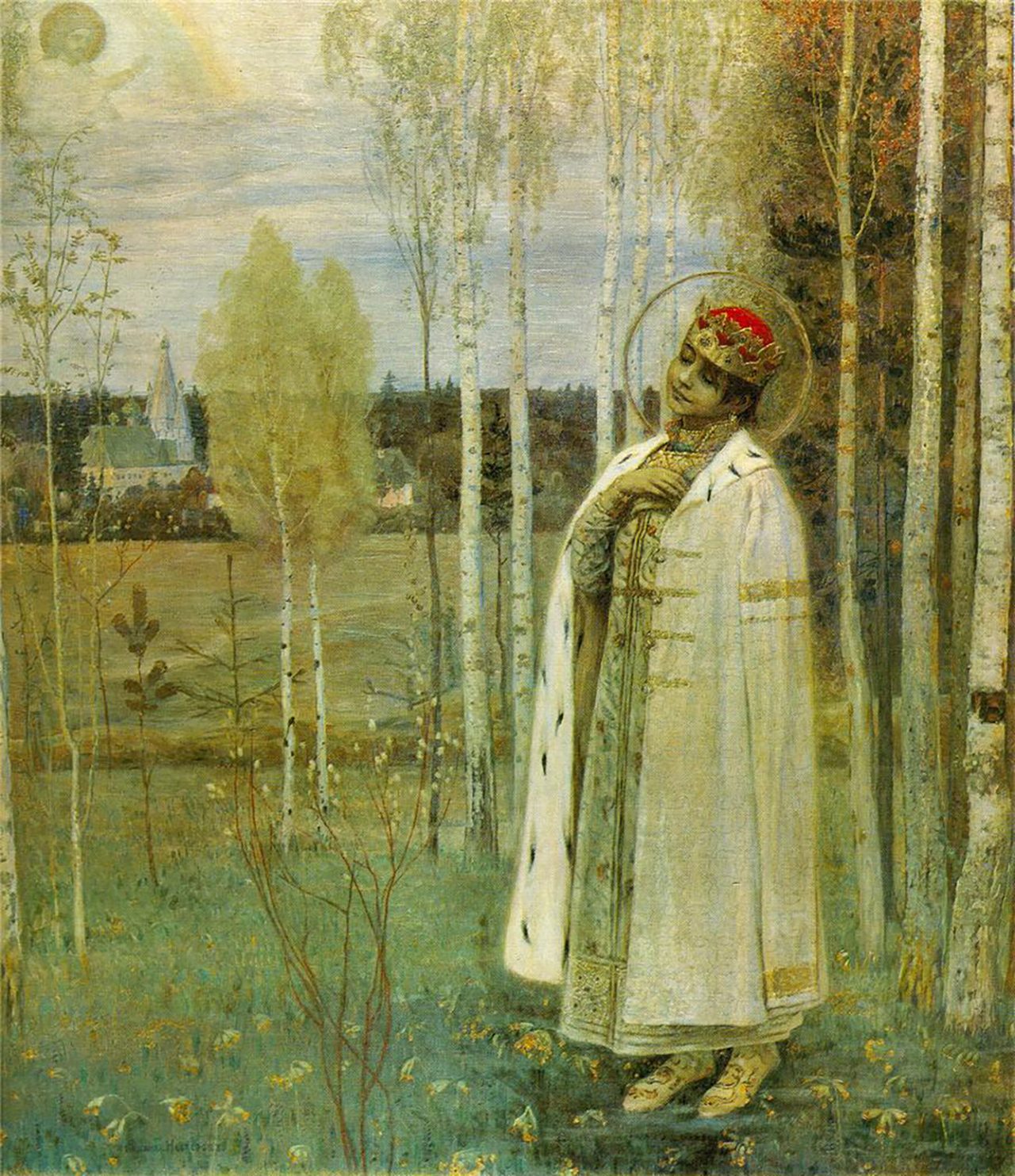
Ten years later, another son of Ivan IV died and the circumstances of his death are also shrouded in mystery. Eight-year-old Dmitry allegedly stabbed himself while playing with a knife in the yard and suffered an epileptic seizure. However, another theory holds that he was murdered on the orders of Boyar Boris Godunov, who, under the inert Tsar Feodor Ivanovich, concentrated all power in the country in his own hands and was actively clearing his path to the throne.
With the death of Dmitry (canonized in 1606) and the childless Feodor in 1598, the Rurik dynasty came to an end. The ‘Time of Troubles’ began in the country, characterized by a profound political and economic crisis, uprisings, foreign interventions and constant changes of rulers. One of the characteristic features of that era was the emergence of various impostors, who claimed to be the "miraculously saved" and "legitimate" Tsar Dmitry.
See how artists depicted key events in Russian history, from the birth of statehood to the overthrow of the Mongol-Tatar yoke.