
A VISUAL history of Medieval Russia (PICS)
See how artists depicted key events in Russian history, from the birth of statehood to the overthrow of the Mongol-Tatar yoke.
1. Viktor Vasnetsov. ‘The calling of the Varangians’, 1909
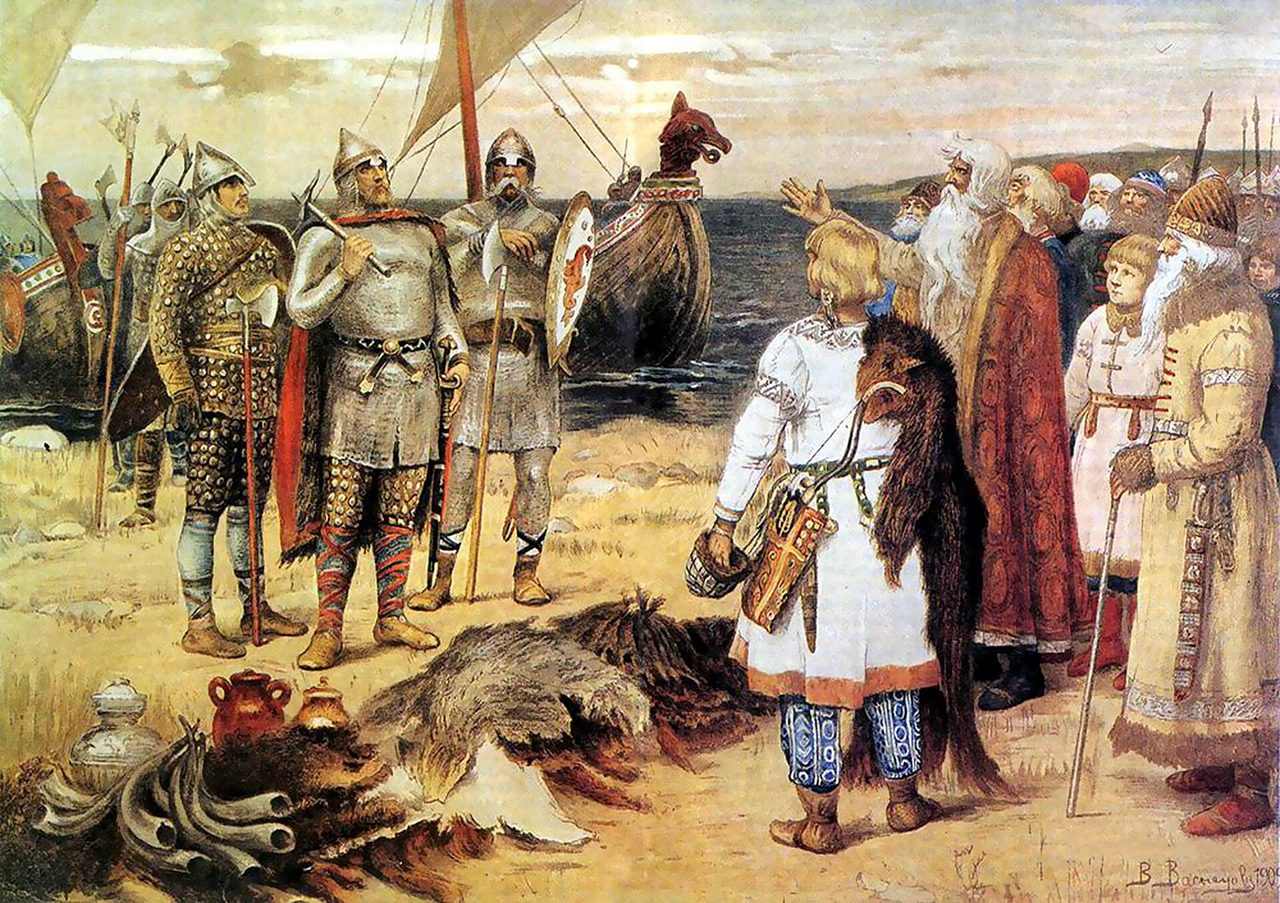
According to one theory, the birth of Russian statehood is linked to the so-called “calling of the Varangians (Vikings)”. The Slavic and Finno-Ugric tribes in the northwest of the Russian Plain invited a foreign ruler to end their feuds and strife. The noble Viking Rurik, the first Prince of Novgorod and founder of the Rurik dynasty, answered the call.
2. Viktor Vasnetsov. ‘Oleg the Prophet's farewell to his horse’, 1899
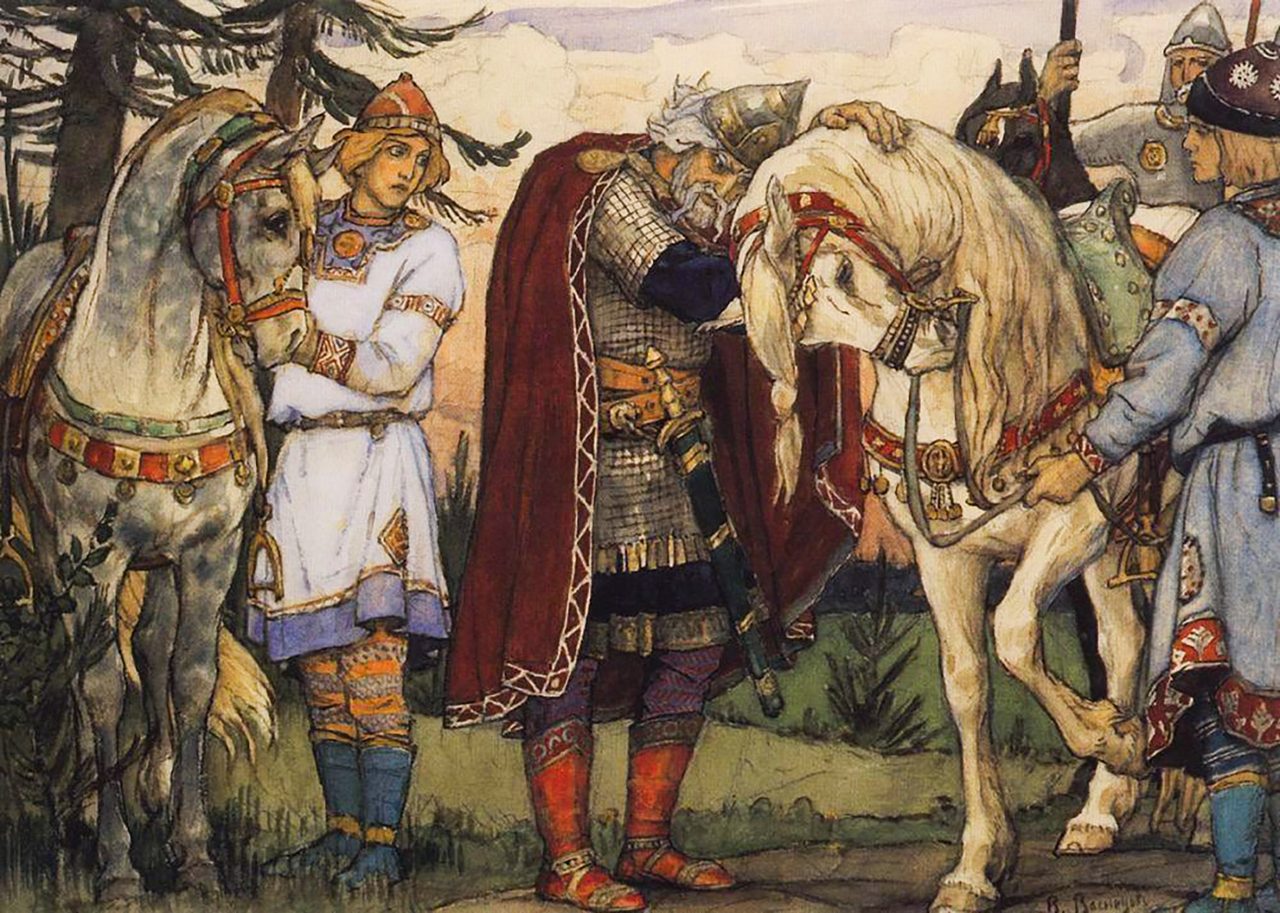
After the death of Rurik, Oleg, nicknamed the ‘Prophet’ (wise, foreseeing the future), ruled the Novgorod land as regent for his young son Igor. In the year 882, he captured Kiev, thereby uniting the two political centers of the Eastern Slavs.
According to legend, the ‘volkhvs’ (pagan priests) predicted his death at the hands of his beloved horse. The prince ordered the animal taken away from him and, several years after its death, wished to inspect its remains. Having mocked the ‘volkhvs’, Oleg stepped on the horse's skull, asking, "Is this what I should fear?" Immediately, a venomous snake slithered out of the skull and bit him.
3. Ivan Akimov. ‘The baptism of Princess Olga’, 1792
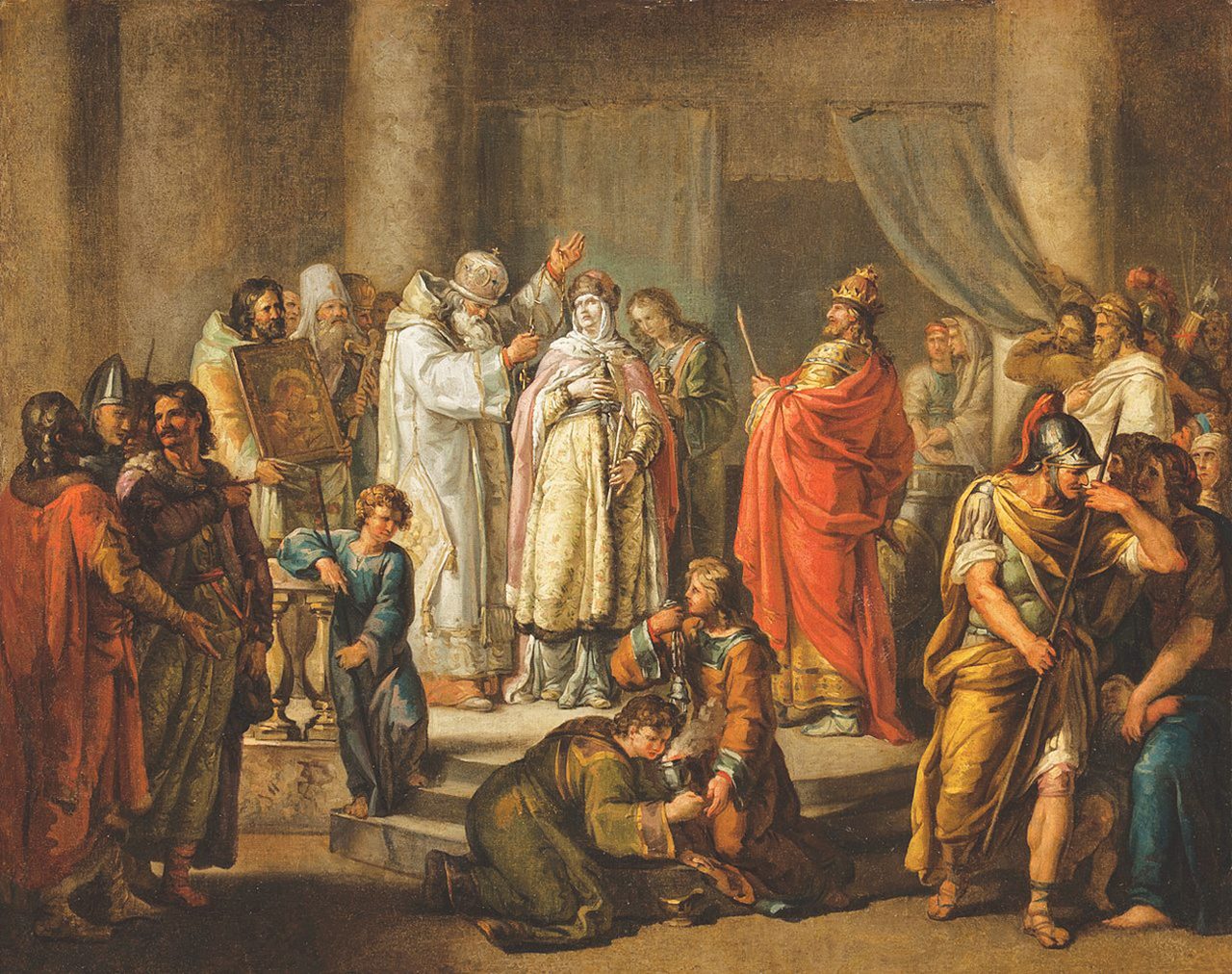
Grand Duchess Olga of Kiev ruled the Old Russian state as regent for her young son Svyatoslav after the death of her husband, Prince Igor Rurikovich of Kiev, in the year 945. She was the first Russian ruler to accept Christianity from the Byzantines, while her family, entourage and subjects remained pagans.
4. Henryk Siemiradzki. ‘Funeral feast of Svyatoslav's warriors after the battle of Dorostol in 971 (Night sacrifices)’, 1884
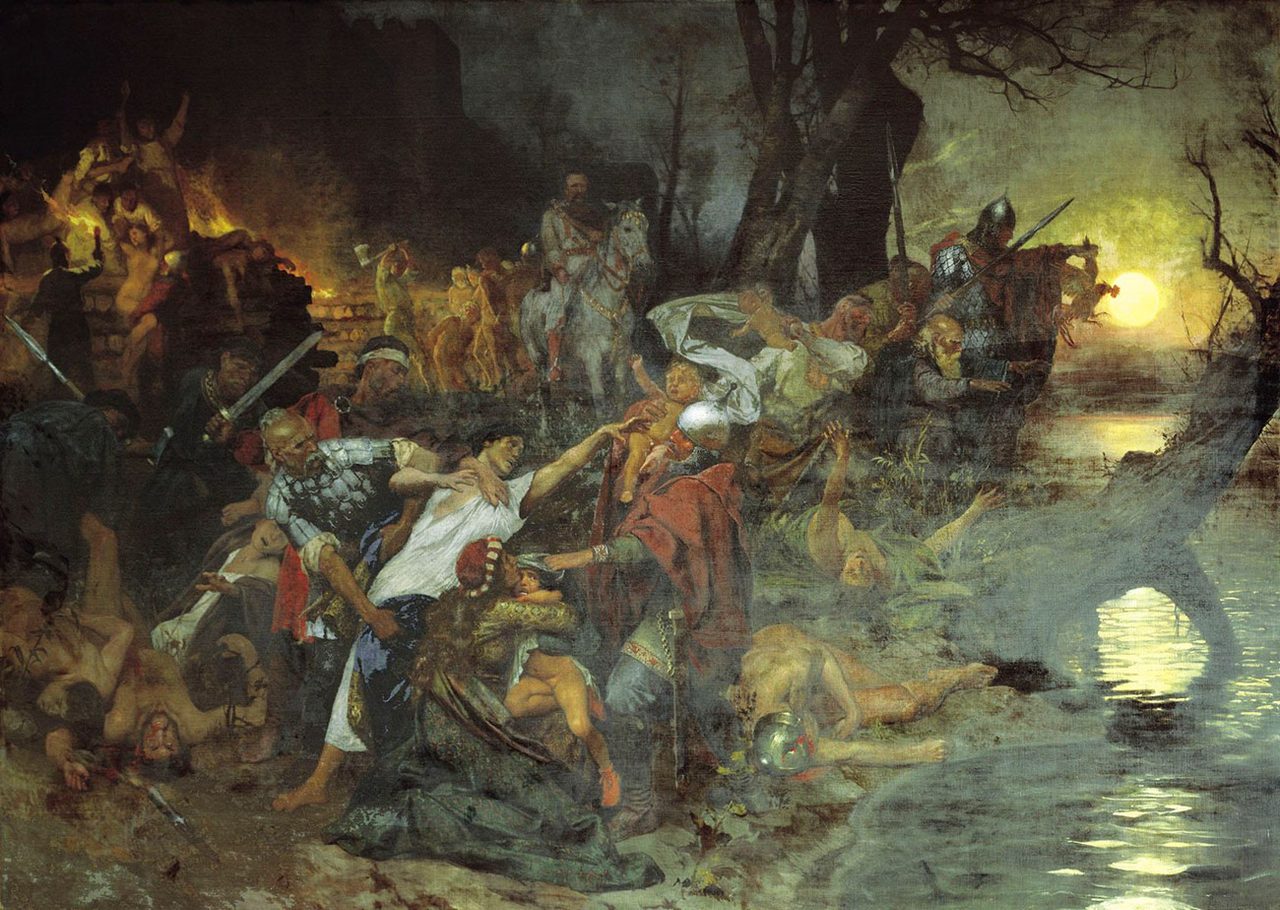
Grand Prince Svyatoslav of Kiev became renowned as an outstanding military leader, having defeated the powerful Turkic nomad state of the Khazar Khaganate and leading successful campaigns against the Bulgarian Kingdom. In the year 971, he was forced to endure a siege by Byzantine troops in the captured Bulgarian fortress of Dorostol. Heavy losses forced Svyatoslav to make peace with Emperor John Tzimiskes and leave the Balkans.
5. Ivan Eggink. ‘Grand Prince Vladimir chooses a faith’, 1822
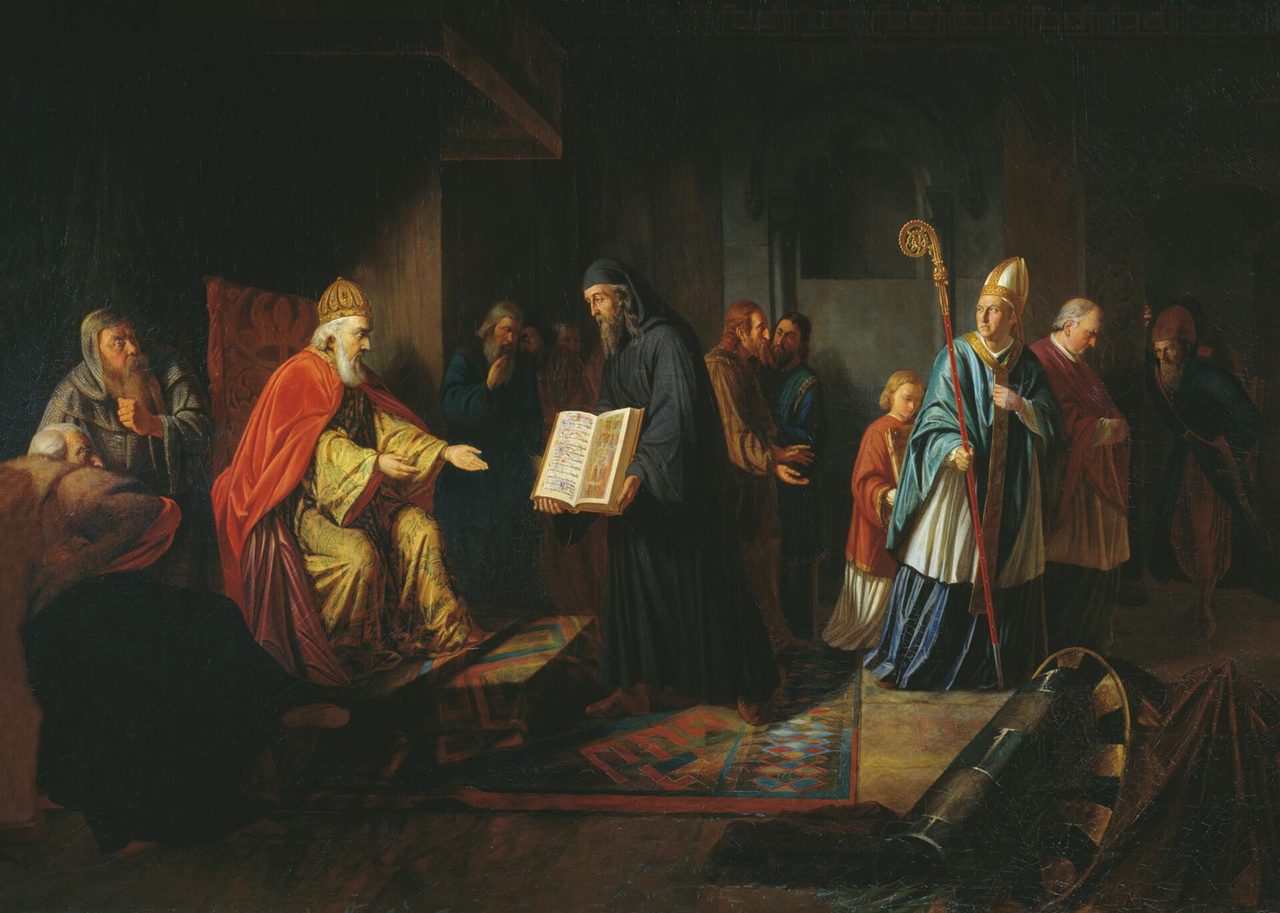
In the year 988, Svyatoslav's son, Vladimir, Grand Prince of Kiev, initiated the conversion of Old Russia to the Byzantine Church. According to legend, the ruler considered other options besides Orthodoxy. However, he rejected Catholicism for political reasons, Islam because of the prohibition on drinking wine and Judaism, because its followers were deprived of their land.
6. Pavel Ryzhenko. ‘Kalka’, 1996
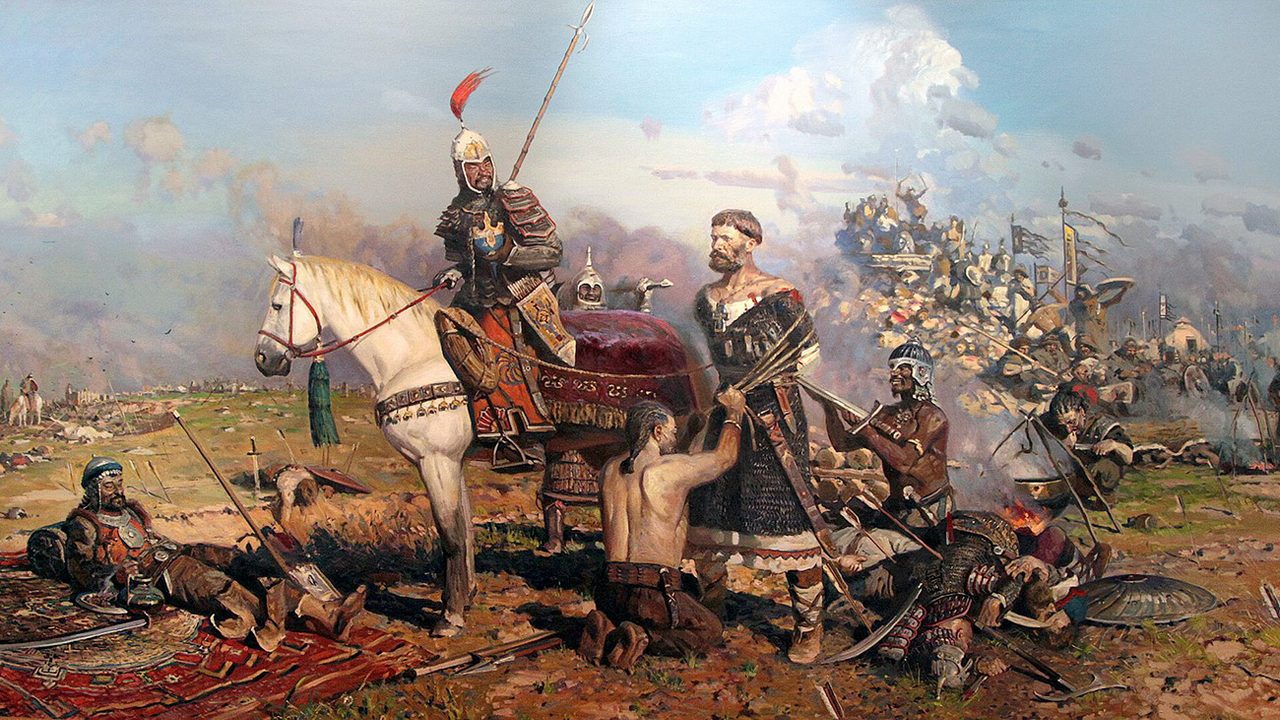
When the armies of Genghis Khan's finest military leaders, Subutai and Jebe, appeared on the Black Sea steppes in the year 1222, Old Russia was already in a state of feudal fragmentation. The Mongols invaded the lands of its neighboring Polovtsians, who turned to the princes for help.
In late May 1223, a major battle took place near the Kalka River in what is now Donetsk Oblast, in which the Old Russian-Polovtsian army suffered a terrible defeat. Twelve princes were killed and only one in 10 warriors returned home. "And there was weeping and wailing in all the cities and villages," the chronicles reported.
7. Nikolai Kulandin. ‘Prince Vasilko’, 1975
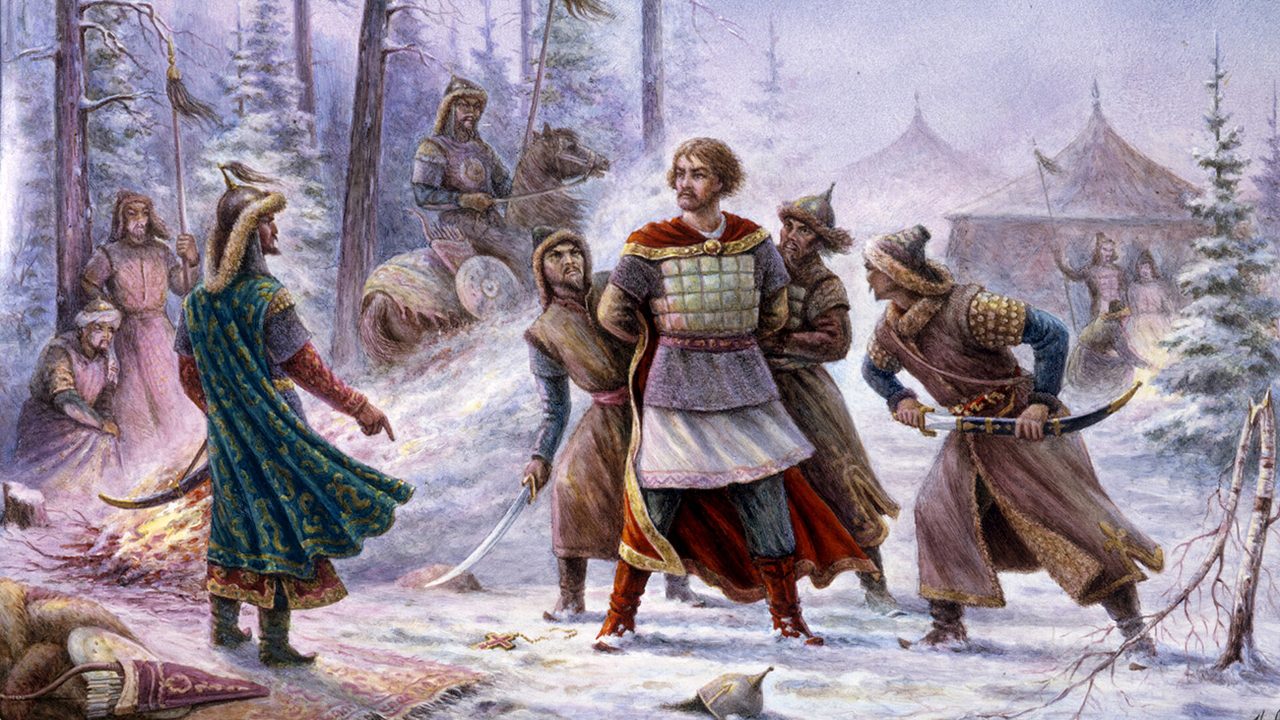
In the year 1237, the full-scale Mongol invasion of Russian lands began. It took place in several stages and ended in 1241. The forces of the Russian princes were routed and their devastated domains were forced to acknowledge political and economic dependence on the powerful nomads.
One of the rulers killed during this period was Prince Vasilko Konstantinovich of Rostov. Captured, he refused to swear allegiance to the khan and was tortured and killed by the Mongols. The Russian Orthodox Church canonized him as a martyr. Artist Nikolai Kulandin imagined the moments before the prince's execution in his painting.
8. Pimen Orlov. ‘Farewell of Grand Duke Mikhail of Tver’, 1847
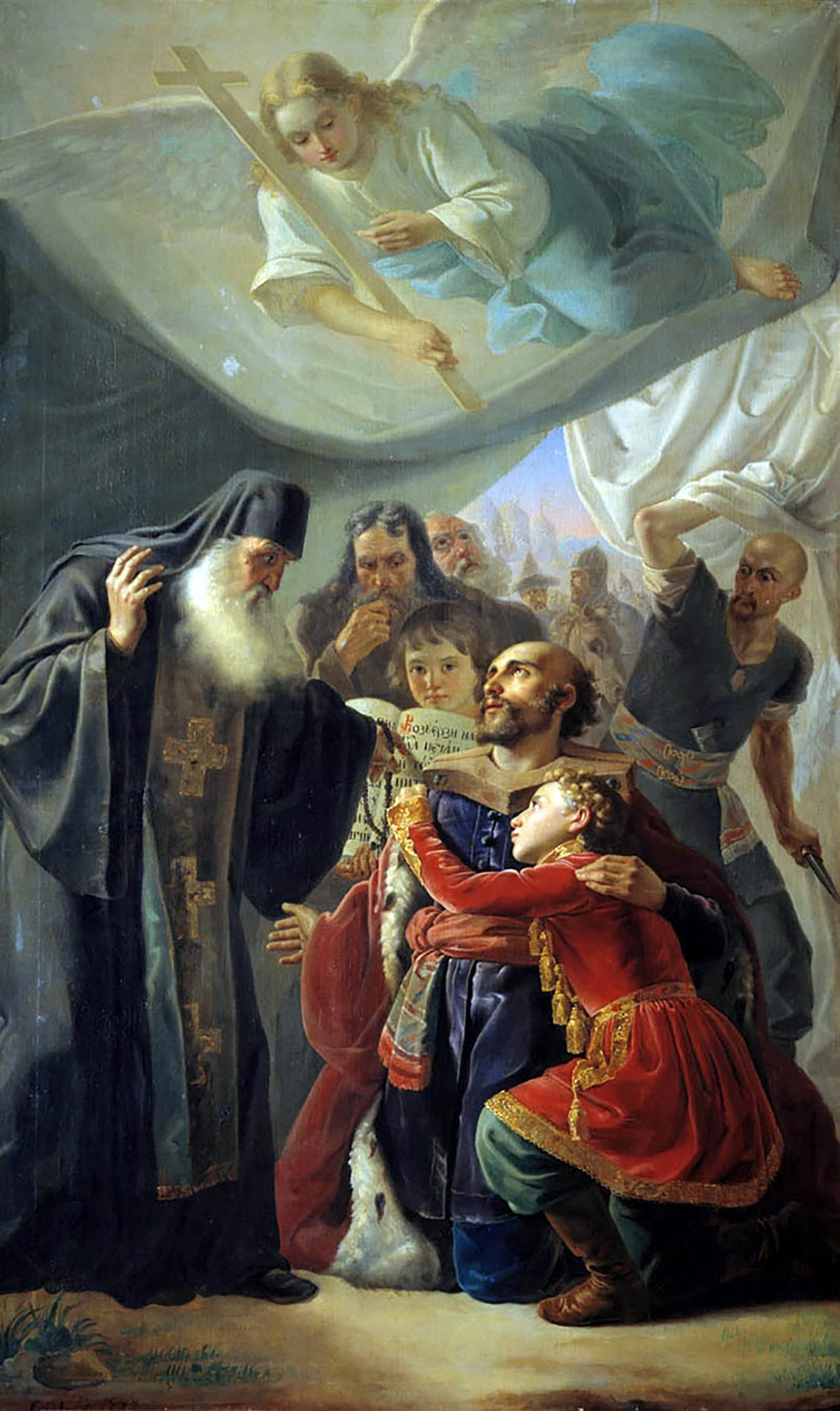
Living under Mongol rule, the princes not only paid them ‘vykhod’ (‘tribute’), but also received ‘yarlyks’ (‘permissions’) to reign in their own lands. The most important was the ‘yarlyk’ for the Grand Duchy of Vladimir, which granted its holder formal supremacy over other princes.
It was over this ‘yarlyk’ that a struggle broke out in the early 14th century between Prince Yuri Danilovich of Moscow and Prince Mikhail Yaroslavich of Tver. The rivals intrigued, plotted and openly fought each other, all the while trying to win the khan over to their side. Yuri emerged victorious from the skirmish; in the year 1318, Mikhail was summoned to Khan Uzbek's headquarters and killed. This greatly contributed to the rise of Moscow.
9. Alexander Bubnov. ‘Morning on Kulikovo field’, 1943-1947
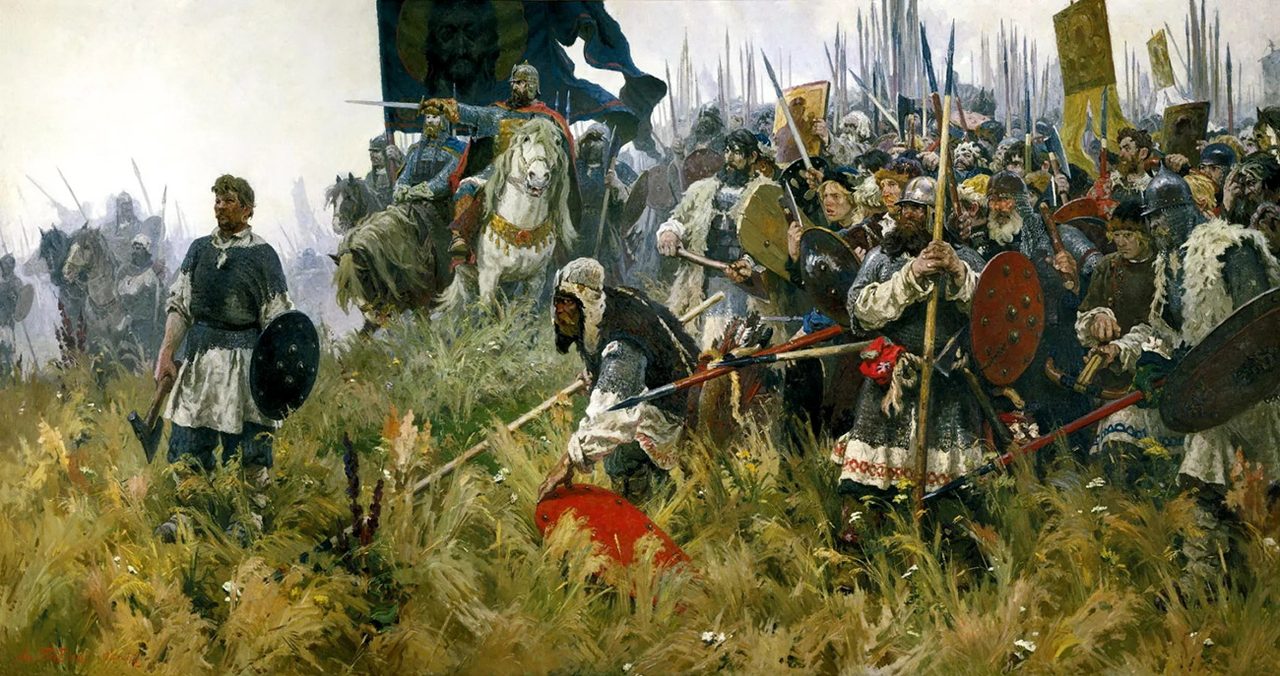
By the end of the 14th century, the Grand Duchy of Moscow felt strong enough to challenge the Mongols. In the year 1380, the troops of Prince Dmitry Ivanovich and several allied principalities defeated the forces of military commander Mamai, who had usurped power in the Golden Horde, at Kulikovo Field.
The victory did not immediately liberate Old Russia from Mongol rule, but it certainly set the process in motion. Nomads were no longer viewed with fear and trembling, the 'vykhod' payment was often sabotaged and the weakening Horde was powerless to stop it. In the 15th century, it completely disintegrated and Moscow was left to deal with its fragments.
10. Nikolai Shustov. ‘Ivan III overthrows the Tatar yoke by tearing down the khan's effigy and ordering the death of his envoys’, 1862
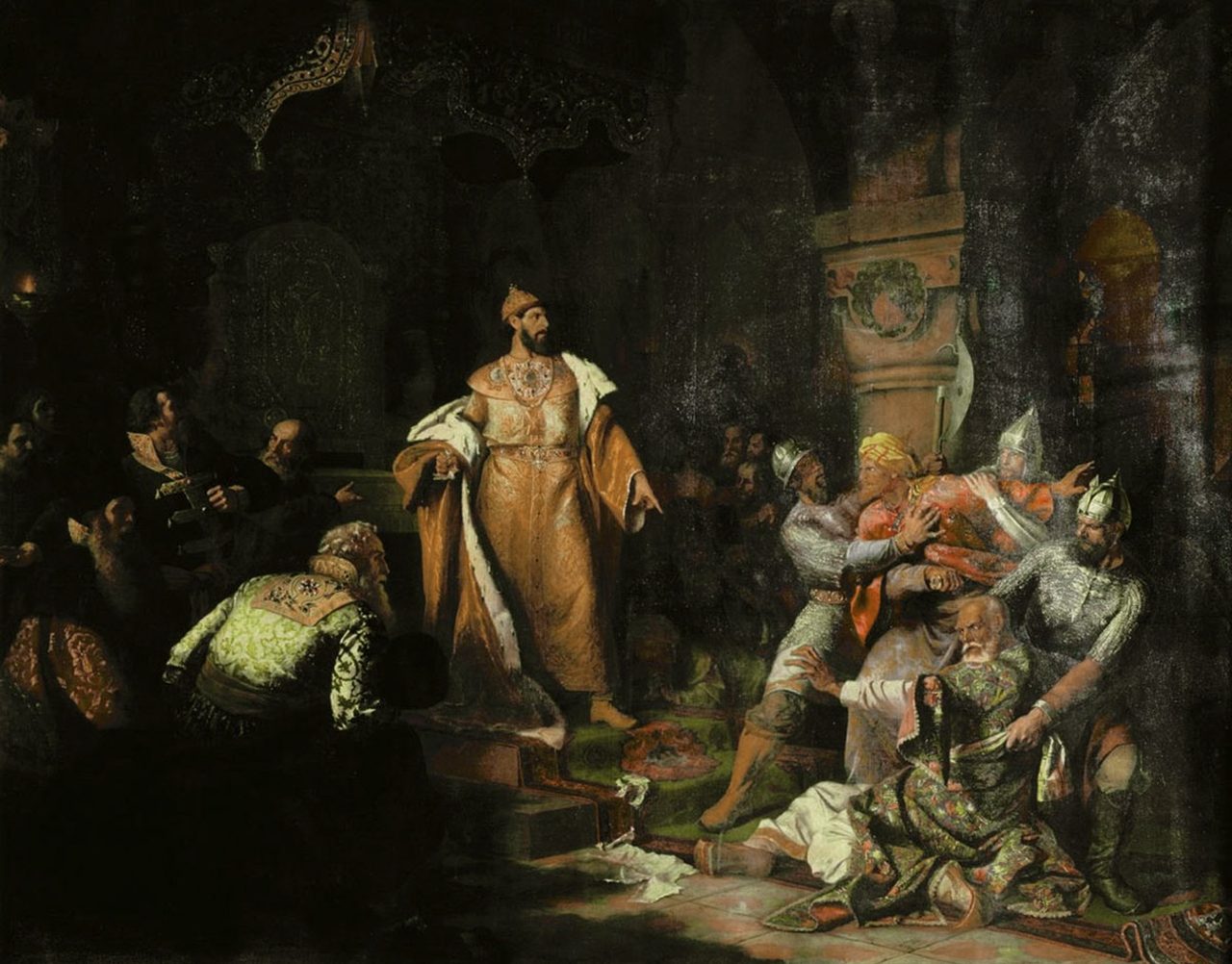
The Grand Duchy continued to pay ‘vykhod’ to the Great Horde, the successor to the Golden Horde, until the year 1472 (or 1476), when Ivan III demonstratively tore down the effigy of Khan Akhmat and ordered the death of his envoys and ambassadors. The armed conflict culminated in the so-called ‘Great Stand on the Ugra River’ in 1480. After several unsuccessful attempts to cross the river, Akhmat withdrew his troops, and Mongol rule over Old Russia was finally over.