
Why was the inventor of secret weapons executed in the USSR?
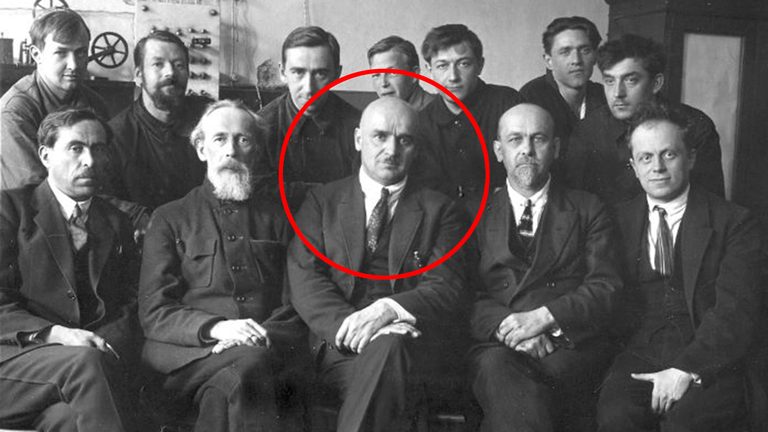
Vladimir Bekauri received vast sums of money for his research. Equipment, airfields and testing grounds were all placed at his disposal at a moment's notice.
Remote-controlled tanks, aircraft, armored trains, submarines and pillboxes – these were the projects being developed by the ‘Specific Technical Bureau for Military Inventions for Special Purposes’ (‘Ostekhburo’). It was led by an engineer named Vladimir Bekauri.
In 1920, Vladimir Lenin took notice of the talented inventor from Georgia. Bekauri already had several dozens of successful developments to his credit in telegraphy and railway transport, but the Bolshevik leader was particularly interested in his design for an electrical alarm system for steel safes. The designer was summoned to the Kremlin and his career took off rapidly from that point on.
In Summer 1921, authorities established ‘Ostekhburo’, with Bekauri at its helm. Its primary focus was the study of radio-controlled weapon systems. Many in the country's military-political leadership saw this as the future, so the developers received generous funding, equipment, airfields and testing grounds.
However, in nearly 20 years of operation, the bureau failed to produce any truly groundbreaking inventions. Its most successful project was a device for radio-controlled detonations, known as ‘BEMI’ (named after the initials of its inventors, Vladimir Bekauri and Vladimir Mitkevich). This technology served as the basis for radio-detonated mines used to blow up German command posts in Odessa and Kharkov in 1941.
However, Bekauri himself never saw the fruits of his labor. In 1937, at the height of the ‘Great Terror’, he was arrested on charges of sabotage and espionage on behalf of Germany. At the same time, ‘Ostekhburo’ ceased its operations and was split into three independent sectoral research institutes. The inventor, who was executed in 1938, was not rehabilitated until 18 years later.