What’s going on in Vasily Surikov’s painting ‘Menshikov in Berezov’?
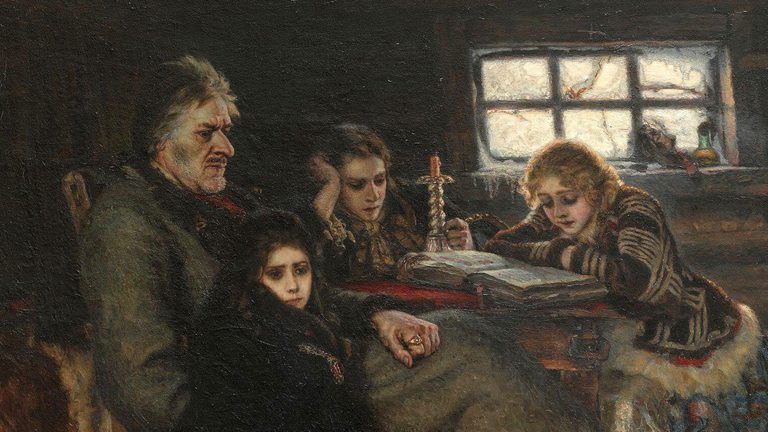
The scene is based on a dramatic, true story from the 18th century.
The rise & fall of Menshikov
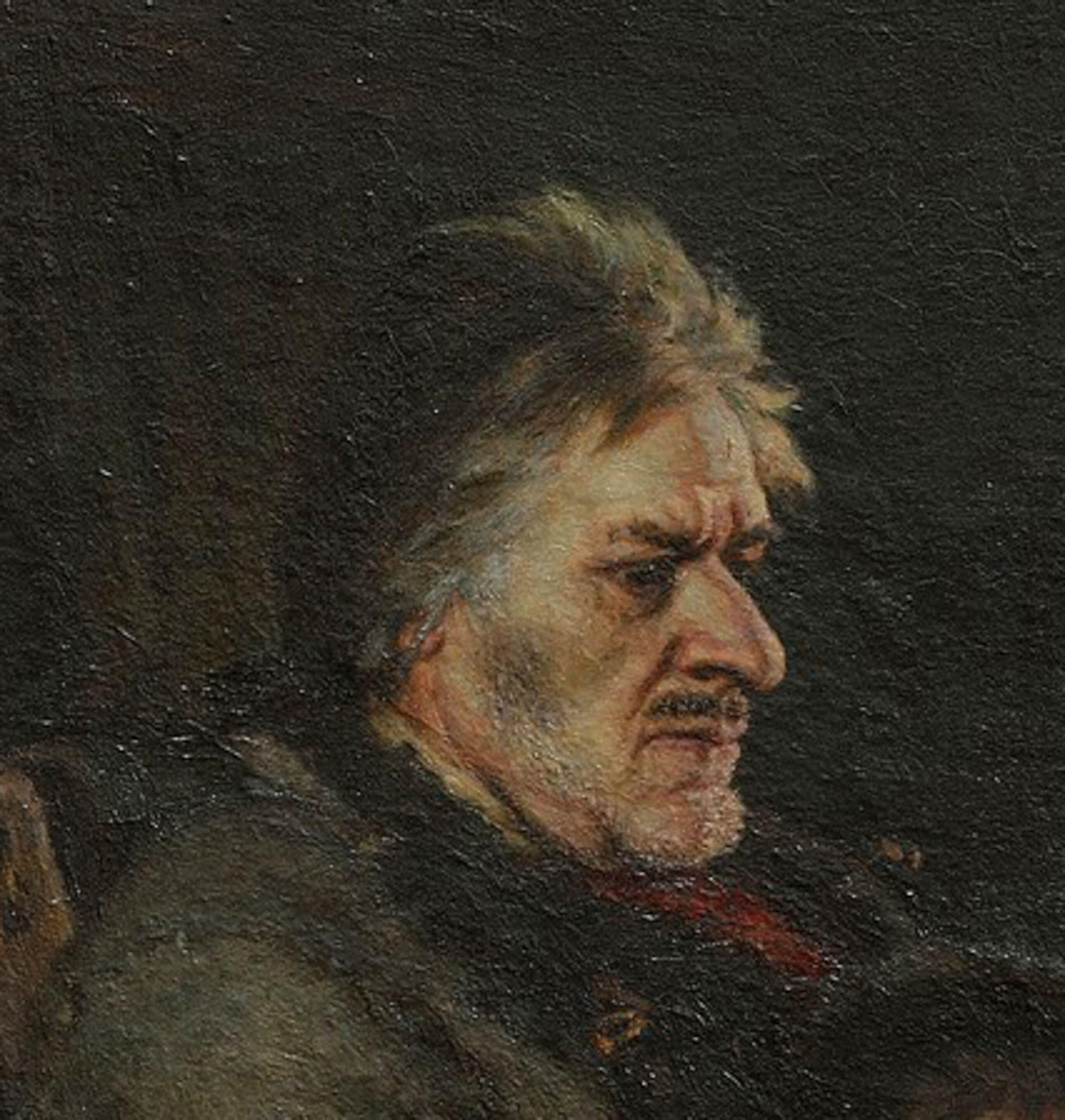
This famous canvas was painted in 1883. Its central figure, Alexander Danilovich Menshikov (1673–1729), is a truly remarkable individual. A friend and close associate of Emperor Peter, he was born into a humble family; legend has it that, as a child, he sold meat pies on the streets of Moscow. Thanks to his natural intelligence and quick-wittedness, he caught the eye of a Swiss military officer named Franz Lefort, a mentor and tutor to the young Tsar Peter, who took the boy into his service. From there, he soon became an aide to Peter, earning the tsar’s complete trust through his loyalty and diligence. As a result, he rose to become a generalissimo, an admiral, the first governor-general of St. Petersburg, as well as one of the wealthiest and most influential men not only in Russia, but in all of Europe.
Following the death of Peter I, Menshikov attempted to retain power by arranging the engagement of his eldest daughter, Maria, and the young Emperor Peter II. The plan fell apart, due to Menshikov’s illness and court intrigues. His enemies accused him of embezzling state funds and committing high treason. In 1727, he fell from grace, was stripped of all his titles and property and was exiled, along with his family, to the small town of Berezov in Siberia.
What the painting depicts
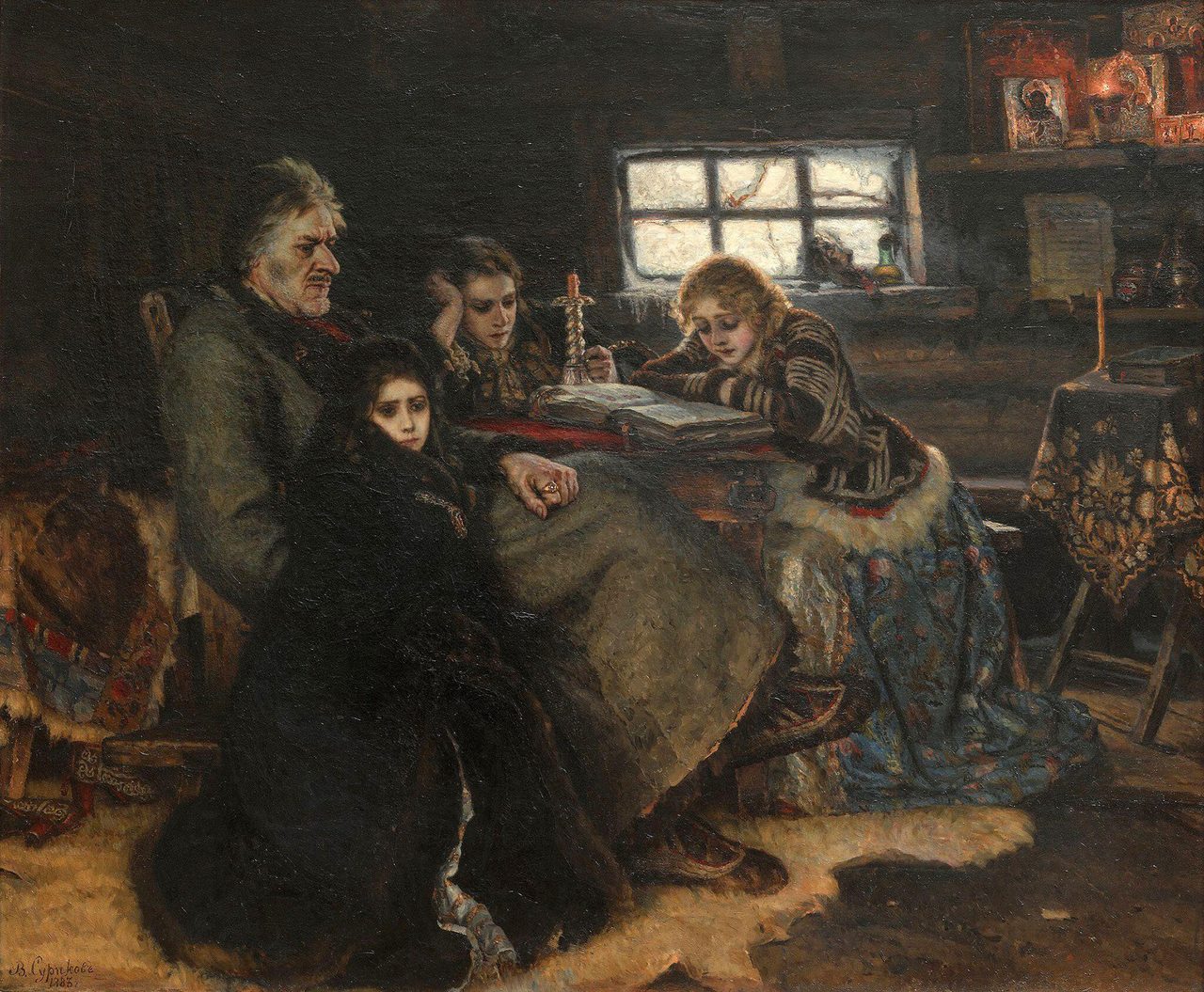
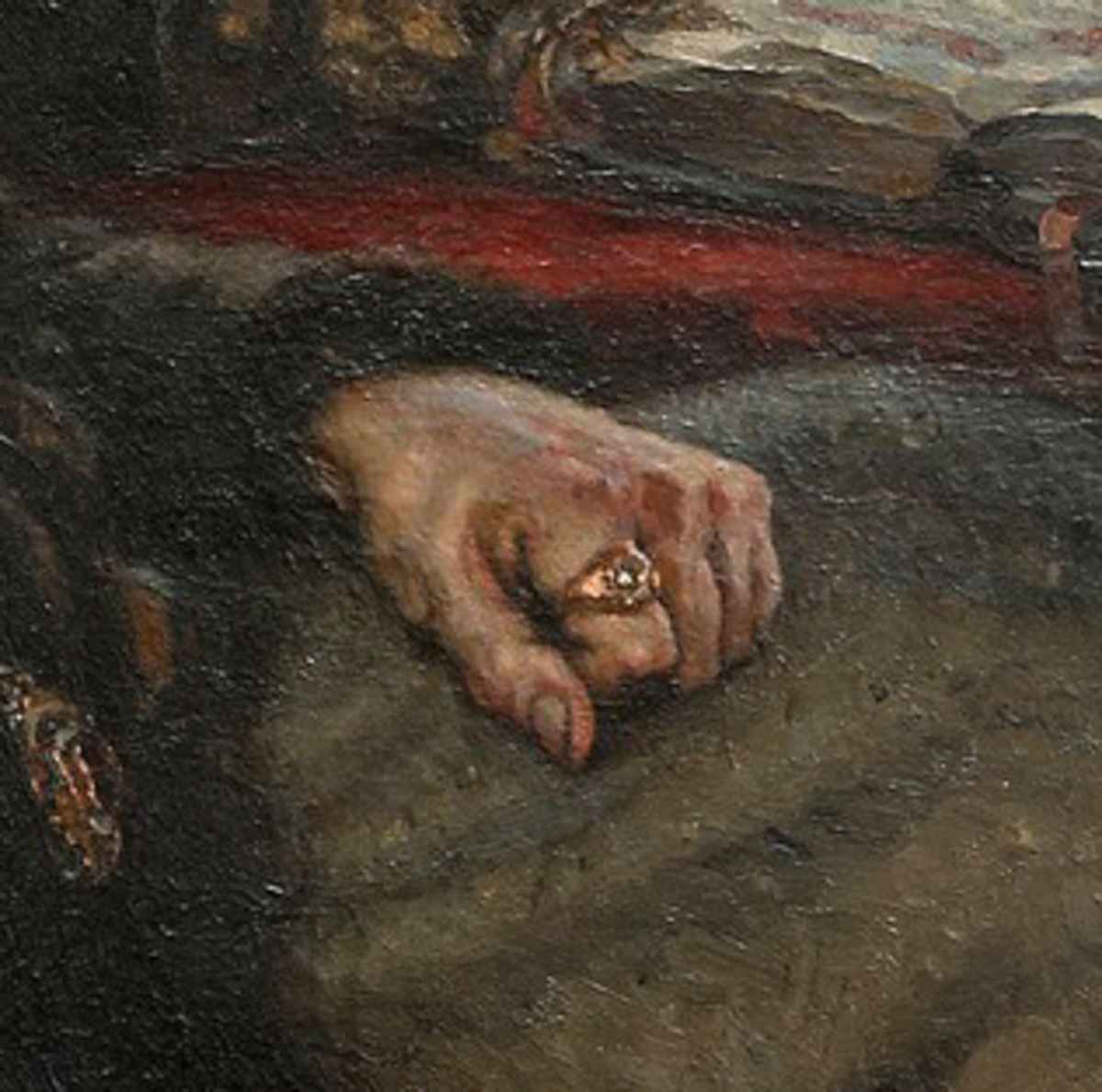
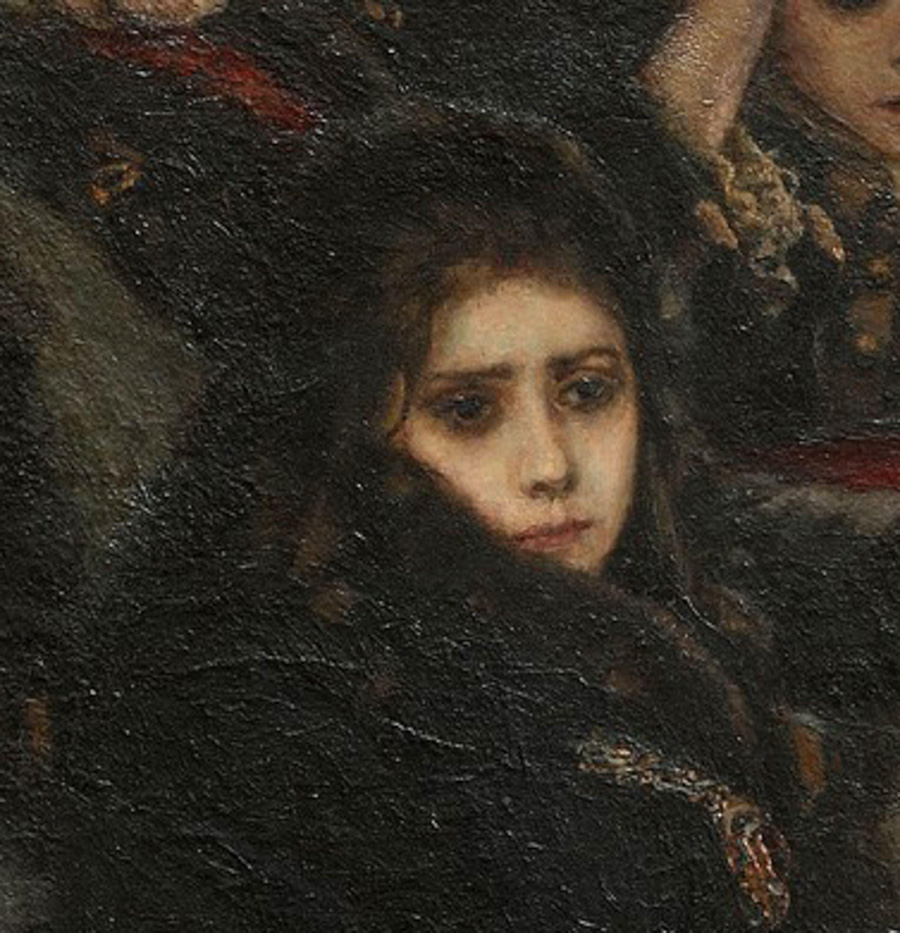
In this painting, Surikov portrays the life of the Menshikov family during their exile. The scene takes place inside a cramped, dimly lit peasant hut. Within this space, the viewer sees four people. Menshikov himself sits hunched over, lost in deep, somber reflection; he is no longer the powerful grandee he once was, but a broken man. His eldest daughter, Maria, presses herself against her father, shivering as she wraps herself in a fur coat. She is the only one whose face is turned toward the audience. Her life and hopes lie in ruins, a victim of circumstance. His younger daughter, Alexandra, reads aloud from the Holy Scriptures, yet it seems no one is listening to her; each person is consumed by their own heavy thoughts. His son, also named Alexander, sits at the table, mindlessly picking wax off a candlestick.
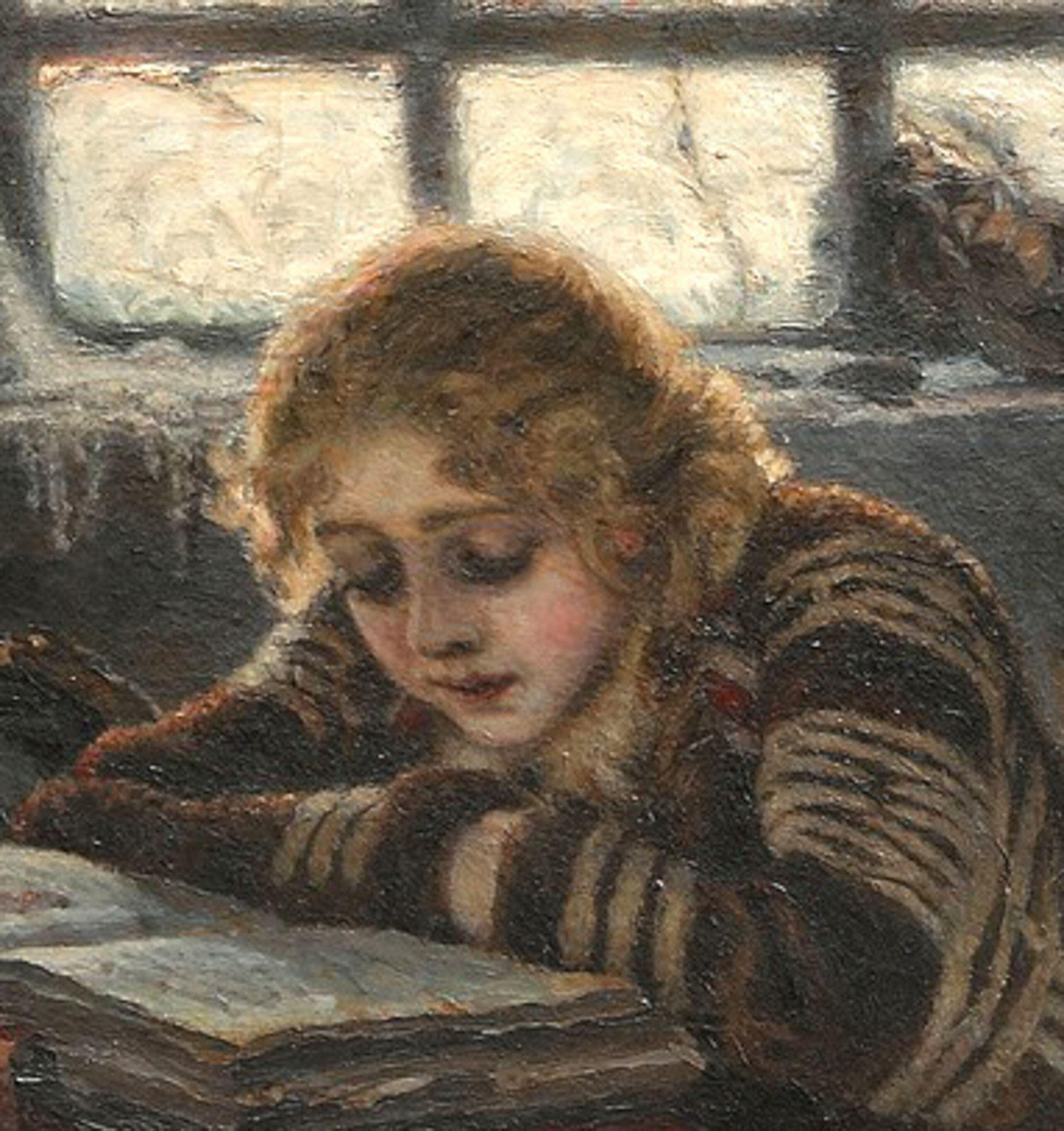
Menshikov’s children are dressed in rich, gold-embroidered garments, a detail that underscores the stark contrast between their recent, glittering past and their current, humiliating present. The artist intentionally constricted the space and enlarged the figure of Menshikov, emphasizing how ill-suited this new environment was for him.
The idea for the painting came to Surikov in the summer of 1881, while he was staying at a dacha in the village of Pererva, near Moscow (it was from this very dacha that he modeled the cramped peasant hut). The artist later recalled that the image of Menshikov appeared to him almost instantly, like a sudden epiphany. The initial sketches were produced that same year, while the entire work took about two years to complete.
In Search of Models
Rather than looking for models for his characters within the confines of his studio, the artist, instead, scoured the streets of Moscow. For a long time, he struggled to find the right face for Menshikov, until, one day, on Prechistensky Boulevard, he encountered a retired mathematics teacher. Surikov was struck by the man’s remarkable resemblance to the historical figure. At first, the teacher flatly refused to pose, but Surikov managed to persuade him by claiming – untruthfully – that he was painting military commander Alexander Suvorov.
Surikov painted his eldest daughter, Maria, who, according to the story, was terminally ill, based on his wife, Elizaveta Avgustovna, who was also unwell at the time. For a long time, the artist could not find a suitable model for his younger daughter, Alexandra. One day, he happened to see a young woman on the street, who he felt was a perfect fit for the painting. He followed her, which greatly frightened the stranger. Nevertheless, the encounter ended with tea and her agreeing to pose. Nikolai Shmarovin, the brother of a well-known Moscow patron of the arts, served as the model for Menshikov’s son, Alexander.
As soon as the painting was finished, it was acquired by collector and patron Pavel Tretyakov. It remains in the Tretyakov Gallery in Moscow to this day.