Who is known as the ‘Russian Sherlock Holmes’?
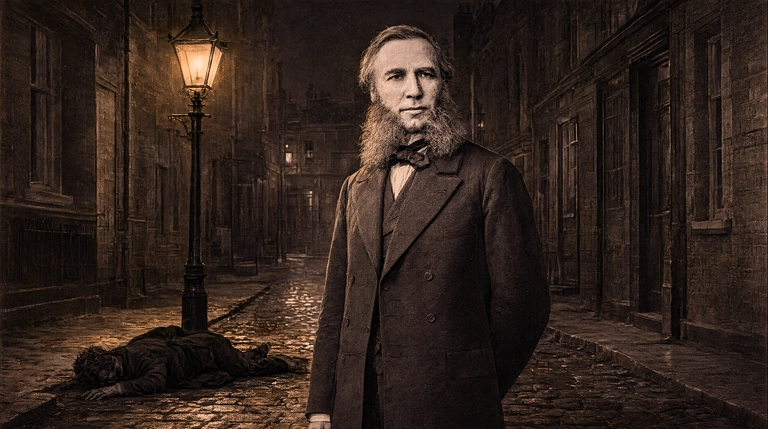
His methods became the stuff of legend during his lifetime and, after his death, he became a character in adventure novels, movies and television series.
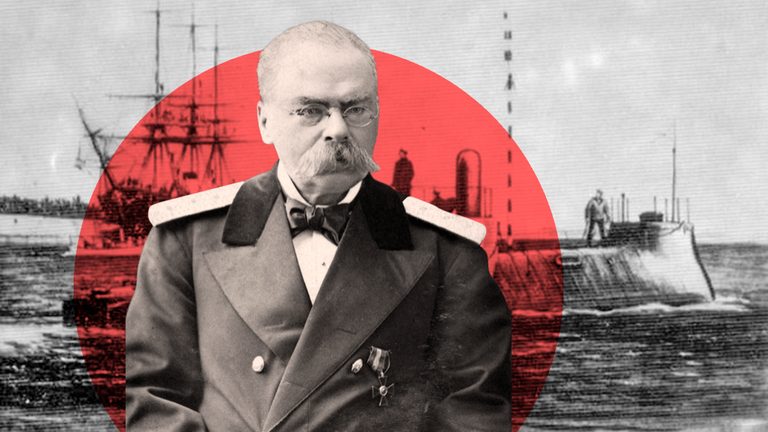
Biographical details regarding the early years of Ivan Putilin are scarce: he was born in 1830 in the tiny town of Novy Oskol to the family of a poor college registrar. He managed to complete a four-year district school, but could not pursue further formal education. At the age of 14, he began working as a messenger; but, realizing this path held no future, at age 20, he set off for the capital, St. Petersburg, to join his older brother, Vasily, who was already serving in the Ministry of Internal Affairs. Through his brother’s influence, he secured a position as a clerk in the administrative department. Recognizing that his lack of education was a major handicap, he devoted his spare time to study; three years later, he passed the full gymnasium curriculum examinations as an external student at St. Petersburg University. This opened the door to noble status and a professional career.
Soon after, he requested a transfer and was appointed as a junior assistant inspector within the St. Petersburg police force.
The birth of the ‘Undercover Method’
Putilin’s post was one of the most dangerous in the capital: the marketplace in the Apraksin Dvor area attracted criminals of all kinds. It was there, amidst the bustling crowds, that the future detective acquired his initial skills and, later, honed his mastery in the art of disguise and impersonation. He was one of the first in the Russian police force to systematically employ what is known today as "undercover work". He would frequently disguise himself as a vagrant, a manual laborer, a tipsy craftsman or a dockworker, and – risking his own life – would frequent inns, criminal dens and the seedy haunts of the city’s slums. There, he gathered intelligence while simultaneously studying the customs, codes and traditions of the criminal underworld. Thanks to his talent for disguise, he developed an extensive network of informants and, according to historians, solved hundreds of crimes.
One of his first high-profile cases involved the exposure and dismantling of a gang of "stranglers" in 1855. This group would rob and murder carriage drivers on the roads, strangling them with a noose. Putilin not only tracked down the criminals, but also managed to infiltrate their ranks, a feat for which he received his first award: the ‘Order of Saint Stanislaus’, 3rd Class.
The creation of the detective police
By the mid-1860s, following the abolition of serfdom, crime rates in Russia surged. The old system, in which investigations were handled by judicial investigators and local precinct overseers, proved inadequate. The need for a specialized agency became urgent. On December 31, 1866, Putilin was appointed chief of the newly established St. Petersburg Detective Police. Initially, the force was small, consisting of a chief, an assistant, four officers for special assignments, 12 police supervisors and 20 detectives. Yet, even with such a modest staff, the unit gained renown for solving some of the most sensational crimes of the era.
Among these was the murder of Austrian military attaché Prince von Arensberg in 1871. The case threatened to trigger an international scandal and Emperor Alexander II demanded hourly updates on the investigation. Putilin tracked down the killers (who turned out to be ex-convicts) within 24 hours, but they refused to confess. The detective then employed a psychological ploy: he told one of the men that he was facing execution for the diplomat’s murder regardless, so a confession would make no difference. This prompted the suspect to speak, revealing that the killing was not a contract hit, but an incident that escalated: the robbers had intended to steal from the sleeping ambassador, but he woke up. For his work on this case, the Austrian Emperor awarded Putilin the ‘Commander’s Cross of the Order of Franz Joseph’ (3rd Class).
His approach to interrogations was unconventional for the time. As a matter of principle, Putilin never resorted to physical violence against suspects. He remained unfailingly polite, even toward the most brutal criminals, and always conducted interrogations in private. Contemporaries noted his keen grasp of psychology, his powers of observation and his composure in any situation.
Legacy
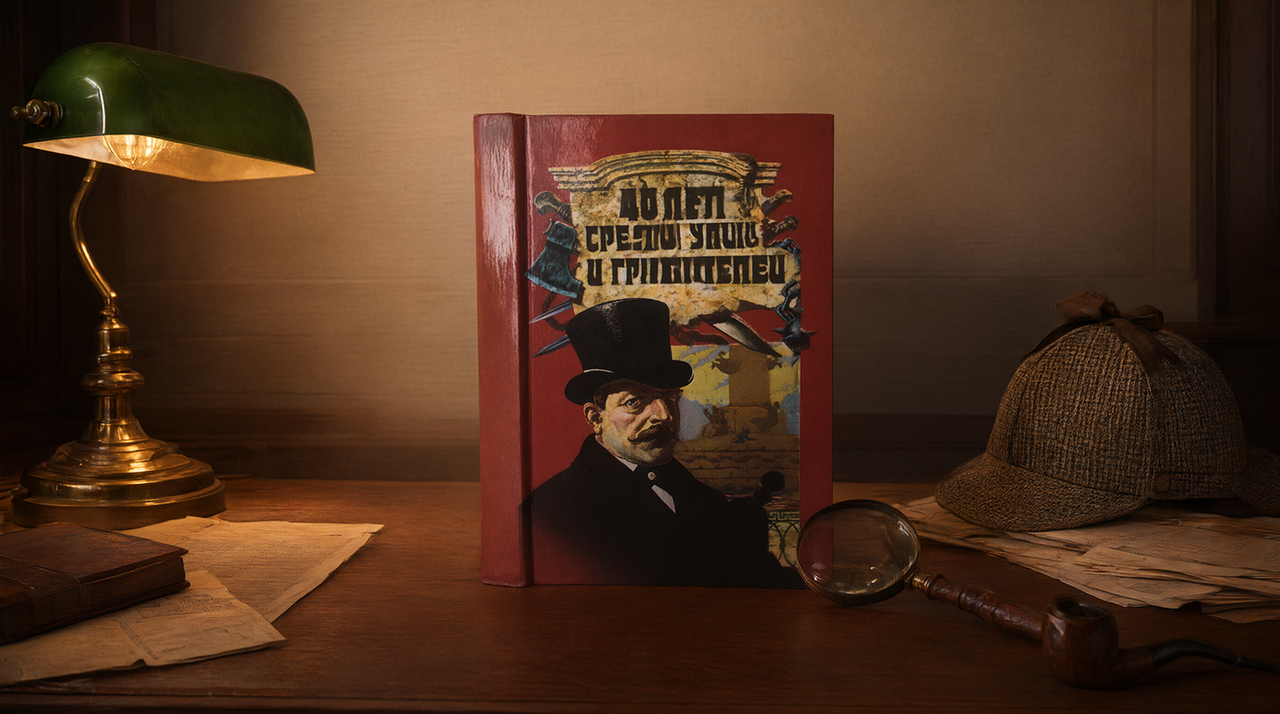
After 13 years at the helm of the investigative police, Putilin retired in late 1889, due to poor health, holding the rank of Privy Councilor (equivalent to a lieutenant general). He settled on an estate in Novoladozhsky District, where he penned his famous memoirs, ‘Forty Years Among Robbers and Murderers’.
Although these notes serve as a vital historical source, they were also polished for literary effect. The book contains 22 detective stories co-authored with journalist Mikhail Shevlyakov, as well as an essay titled ‘An Overview of Certain Types of Theft in St. Petersburg’. The collection is prefaced by an article from renowned jurist Anatoly Koni, who provided a concise, yet comprehensive, assessment of Putilin: "By his very nature, Putilin was exceptionally gifted and seemed tailor-made for his position… Thanks to him, vast sums of money were returned to the state treasury and to private individuals… A whole series of major frauds, forgeries… and mysterious murders were uncovered and solved."
Ivan Dmitriyevich passed away on November 18, 1893. In 2017, the Russian Ministry of Internal Affairs established a medal named after him.