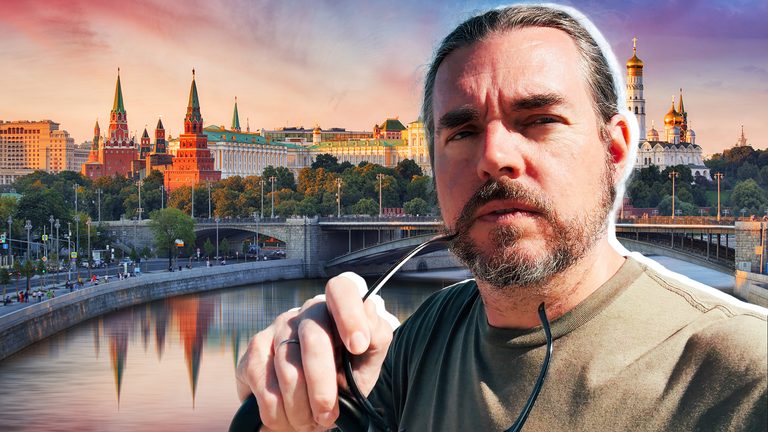

French chef François Cantin: ‘Russia is a country with a deep soul’

He moved to Russia and didn't plan to stay long. Eighteen years later, he's still there, building a career, starting a family and never ceasing to be amazed by the vast expanses.
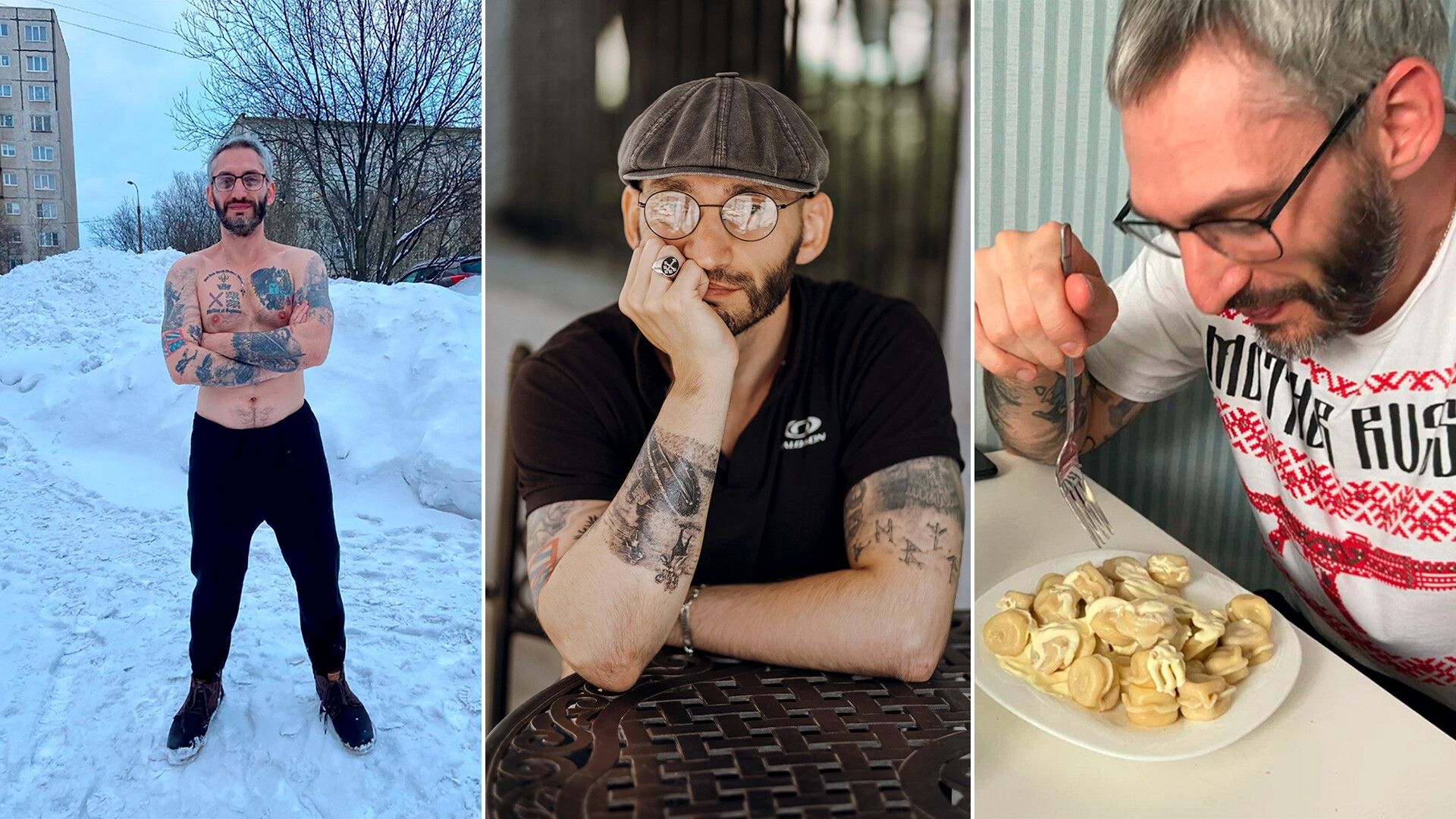
“In a way, I'm the embodiment of a stereotype: a Frenchman named François who's a chef,” our interviewee smiles.
For almost three years, he has been leading the kitchen at Hotel Astoria in St. Petersburg, subtly blending the best gastronomic features of the two countries and feeling, not without pride, like a successor to tradition: the hotel's first director almost 115 years ago was also a Frenchman named Louis Terrier.
Over eight years in St. Petersburg, François got used to the long and damp winters and integrated so organically into the city's life that only his accent and occasionally hesitant Russian give away his origins.
But, his Russian adventure didn't start there; it began in 2007 in Moscow with the signing of a contract at a prestigious capital city hotel.
“I've always been more drawn to the East,” he explains his decision. “Working in Russia was an opportunity to get to know a different culture, to see with my own eyes how people live and to gain my own experience. By that point, I had already worked in England for eight years and this offer was a chance to step beyond the familiar. I agreed without a second thought."
Incidentally, François already had some idea of the Russian capital. The year before, he had visited Moscow as a tourist and was pleasantly surprised by the city's atmosphere and the sheer scale of everything in it.
“I remember entering Moscow for the first time along Leninsky Prospekt: a square with a monument to the first cosmonaut opened up in front of me and two monumental buildings rose on either side,” he recalls. “They were like true city gates. That image struck me.”
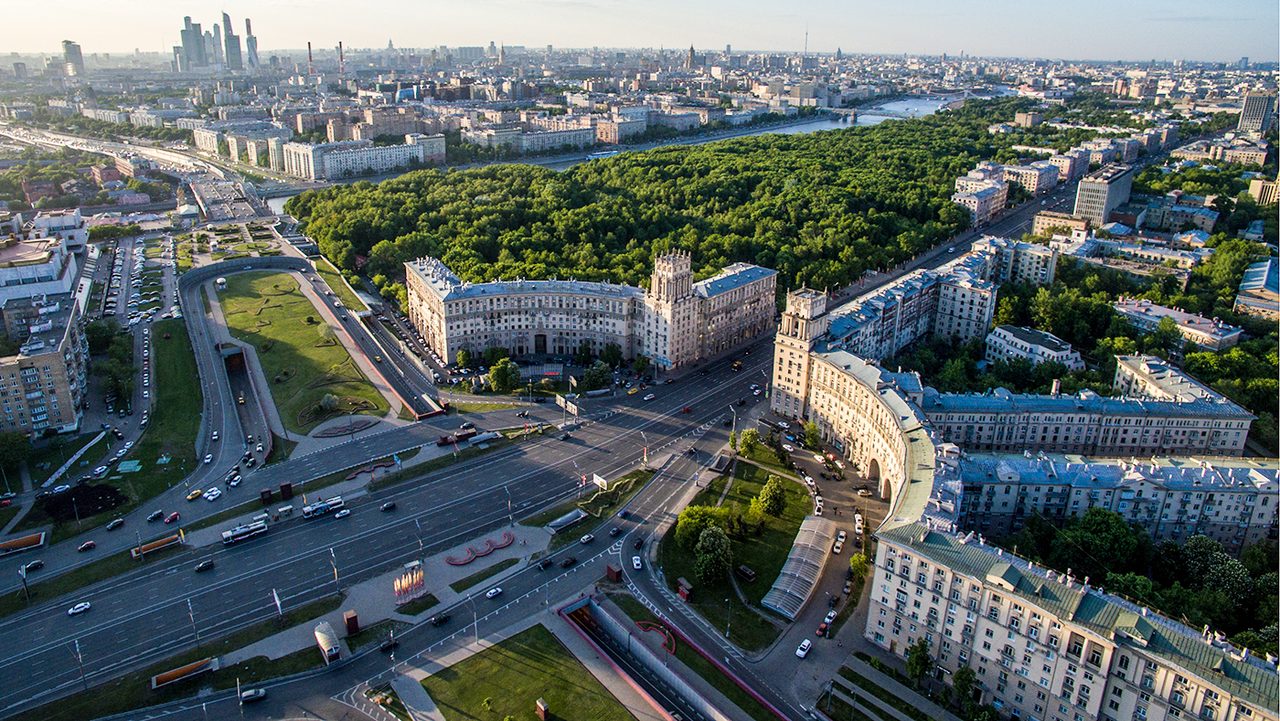 Gagarina Square at Leninsky Prospect in Moscow
‘A giant of a country and not just geographically’
Beyond the familiar stereotypes about Russia, rooted since Soviet times, François discovered for himself a country with a rich culture, history and impressive architecture, which he notes is, sometimes, even brighter and more interesting than in his homeland. Moscow impressed him with its dynamism, as everything in it is constantly changing and developing.
According to the Frenchman, adapting to the new country took him about six months. Having a job and housing in the city center, along with experience in the hotel industry where English is actively used, eased his first steps. Furthermore, a genuine interest in the country noticeably sped up the process.
However, not knowing the Cyrillic alphabet was a hindrance. Without it, it was difficult to navigate even the subway, where all signs were exclusively in Russian at the time. So, François started taking language lessons and simultaneously improved his reading skills by carefully studying street signs every time.
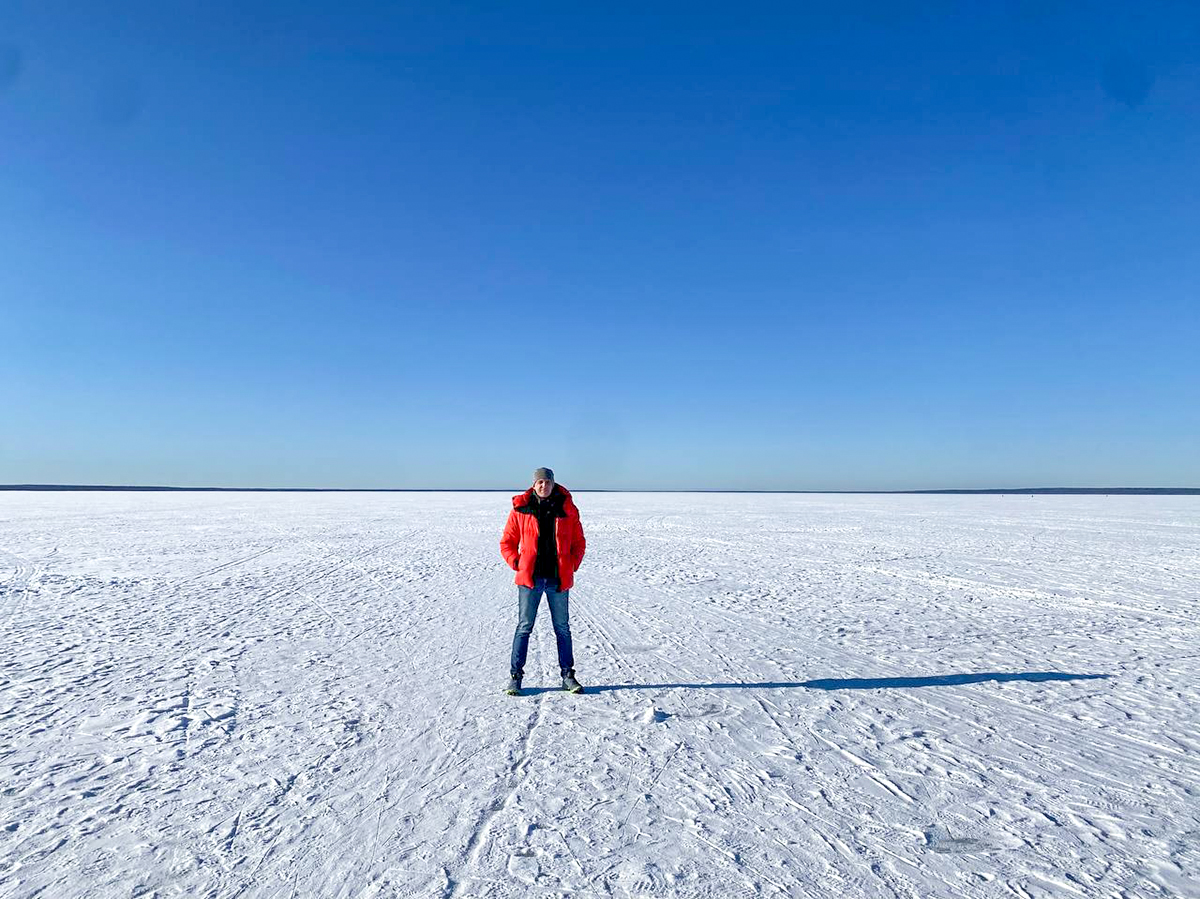 Somewhere near Rybinks, Yaroslavl Region
He quickly noted that the local people, despite the language barrier, were more welcoming than expected and friendly towards foreigners.
Once there, he truly grasped the scale of the country: it often turned out that his acquaintances and colleagues were from Russian cities that were even further from Moscow than his hometown of Laval. But, what surprised him most was the difference in the perception of distances.
“My city is about 100 kilometers from the sea and we almost never go there, as it's considered far. Here, on the contrary, a two- or three-day train journey or a three- to four-hour flight is seen as completely normal.”
Over the years living in Russia, François has managed to explore many regions and major cities in the European part of the country, from the boundless expanses of Crimea and the dense forests of Karelia to the golden-domed cities of the ‘Golden Ring’.
“Russia is a giant of a country and not just geographically. It's a distinctive world, with many cultures and with all this diversity, it remains surprisingly cosmopolitan and harmonious. It's a country with a deep soul.”
Becoming a local in Russia
Following his first contract, new offers came, both in Russia and in CIS countries and, what was initially supposed to be just a professional stage, turned into a true immersion in Russian life for the Frenchman.
“If you’d asked me 15 years ago if I would stay here long-term, I probably would have said no. It all started with my career and then, I started a family in Russia. New opportunities appeared… and, as you can see, I'm still here!”
When we asked François to share something unusual from his daily life, he paused as if trying to recall something, before admitting that, over the years, he has gradually integrated into Russian society. “Perhaps, my first trip to the ‘banya’… An unforgettable experience… But, over time, such things have become almost mundane, a part of everyday life,” he confesses.
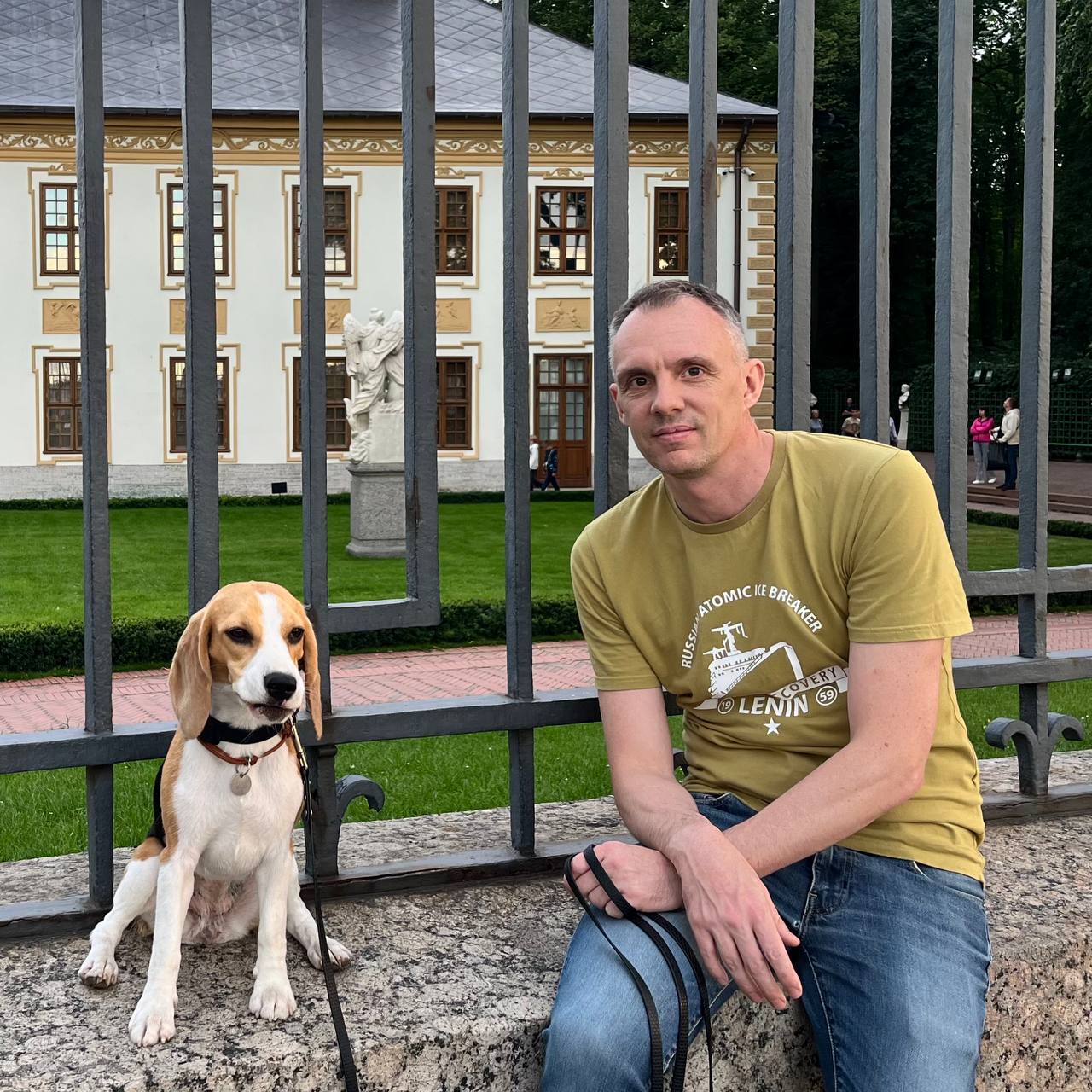 In St. Petersburg with Pixi
François has gradually mastered Russian cuisine, although he still sometimes misses French products. Being unusual for the French, buckwheat has slowly found a special place in his favorite dishes. He also highly values the abundance of soups, a kind of reflection of the diverse culinary traditions of Russia's many peoples. And, in the menu he developed, there are over five soup options presented, from traditional ‘borsch’ and Leningrad-style ‘rassolnik’ to an original pumpkin soup with coconut milk.
Russian cuisine is significantly different from French, particularly due to the climate. Traditional dishes pay less attention to fresh vegetables, instead widely using salted and pickled products. The attitude towards food is also different here:
“In France, we are very disciplined about mealtimes. Here, people eat when they have time or when they are hungry and restaurants serve customers practically anytime. I've gradually gotten used to this and it even seems logical to me: people eat when they feel like it!”
The journey of discovery continues
François acknowledges that, due to a demanding work schedule, his social circle was long limited mainly to his professional environment. On vacation, he tried to go home to France. However, the 2020 pandemic paradoxically allowed him to get to know Russia more deeply and make more friends than in the previous 13 years.
“In recent years, I've had many more opportunities to strengthen my ties to Russia, both through meeting people and by visiting new places,” he shares. His plans include reaching the Far East: just next month, he intends to go to Sakhalin.
“Places like Lake Baikal, Sakhalin or Kamchatka, those vast, boundless and remote landscapes, especially attract me,” he adds.
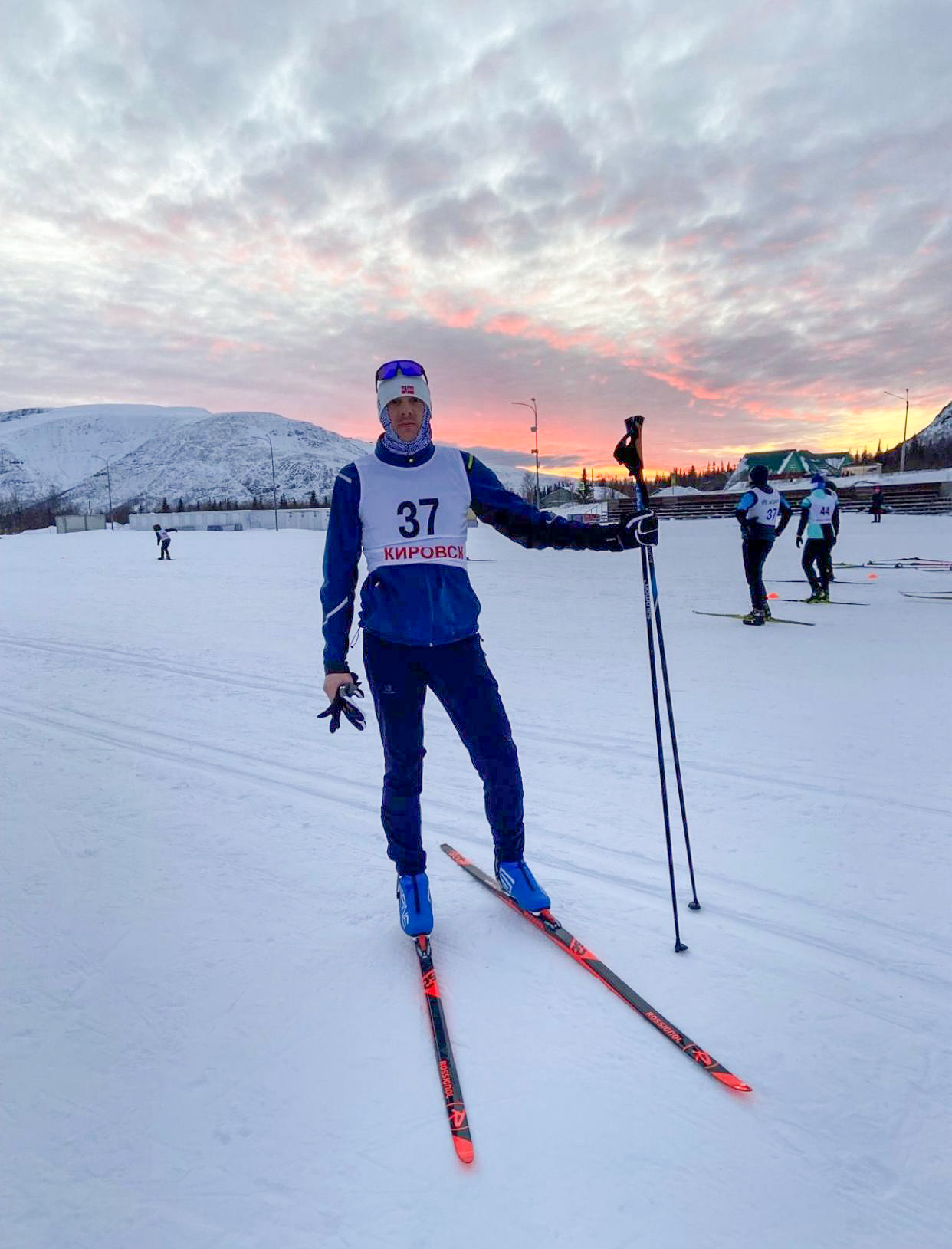 Skiing in Kirovsk
Although François hasn't yet decided if he will stay in Russia forever. He acknowledges that this country will forever remain one that has greatly influenced him. For now, what keeps him there are the strongest ties, his family, almost 20 years of his career, as well as pride in working at a legendary and historically significant establishment in St. Petersburg. So, it looks like the French chef's adventure in Russia will continue!