
Why do Russians insist on eating ‘Olivier’ & ‘Mimosa’ salads on New Year's Eve?


And how did ‘herring under a fur coat’, tangerines and Soviet ‘champagne’ appear on the holiday table?
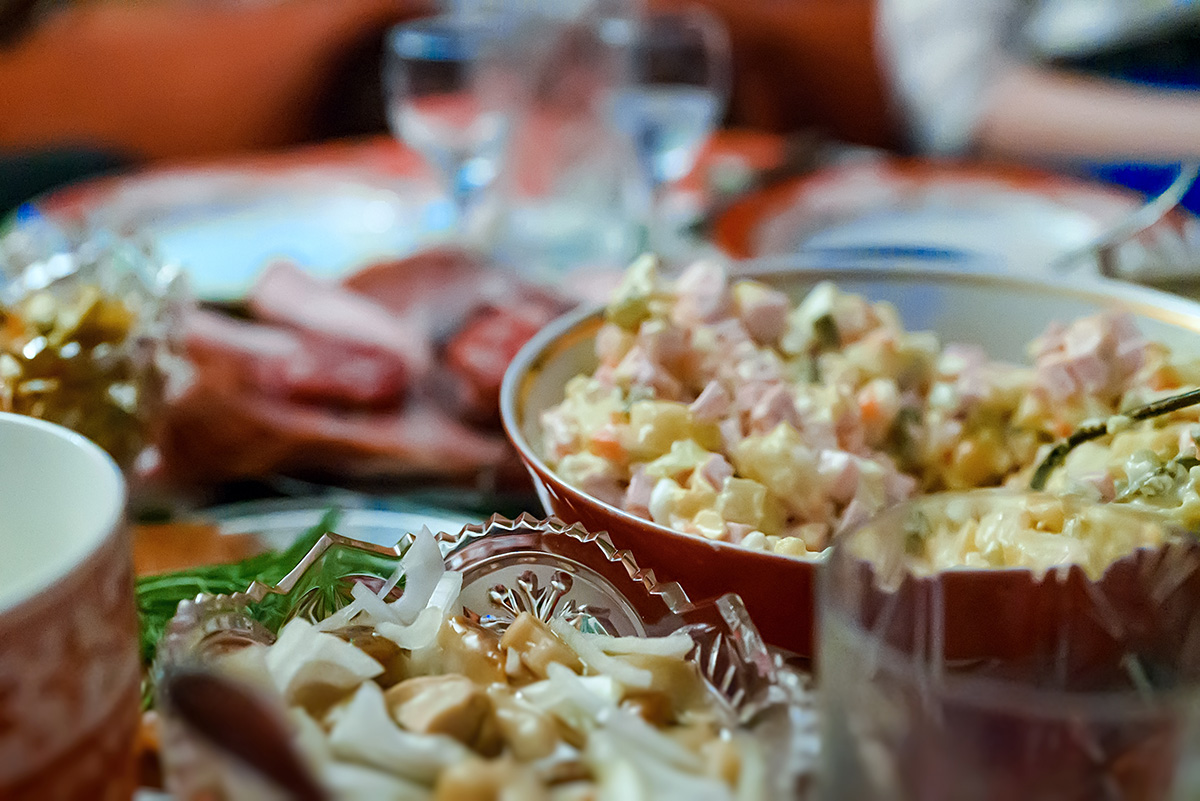
‘Olivier’, ‘Mimosa’, ‘shuba’ (fur coat), ‘kholodets’ (aspic meat jelly), tangerines and Soviet ‘champagne’ – this is what the standard table spread for a festive New Year's table looks like in Russia and virtually across the entire post-Soviet space. And it seems it’s always been this way. In reality, this gastronomic combination only took shape in the mid-20th century, when the push for a secular holiday, food shortages and popular ingenuity converged.
Pre-Revolutionary dishes in a new light
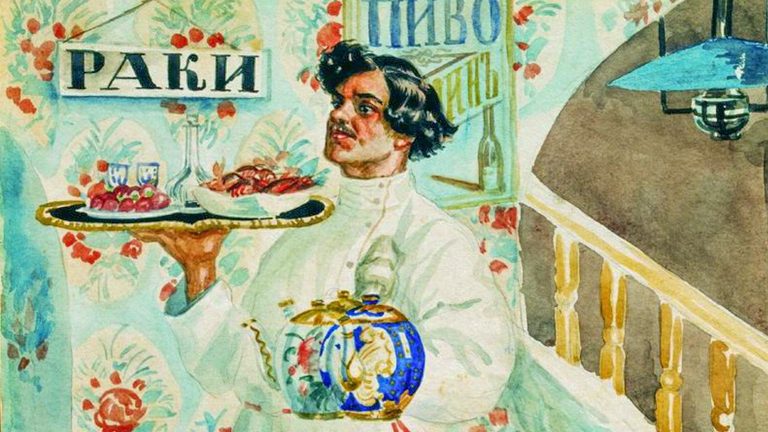
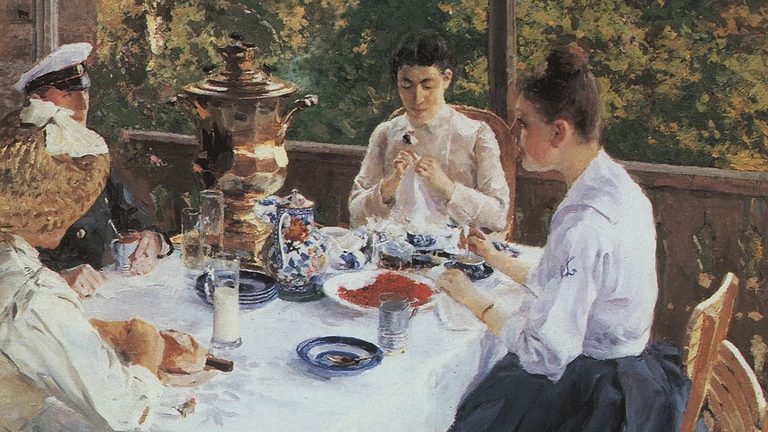
Before the 1917 Bolshevik Revolution, New Year's Eve was a secondary holiday after Christmas and there were no iconic dishes for its celebration. However, among the affluent in Moscow and St. Petersburg, it was fashionable to host lavish feasts on this evening. They featured items such as imported oysters, expensive fruits, refined appetizers and the famous salad by Lucien Olivier in its original form – with grouse, crayfish tails and Provencal sauce.
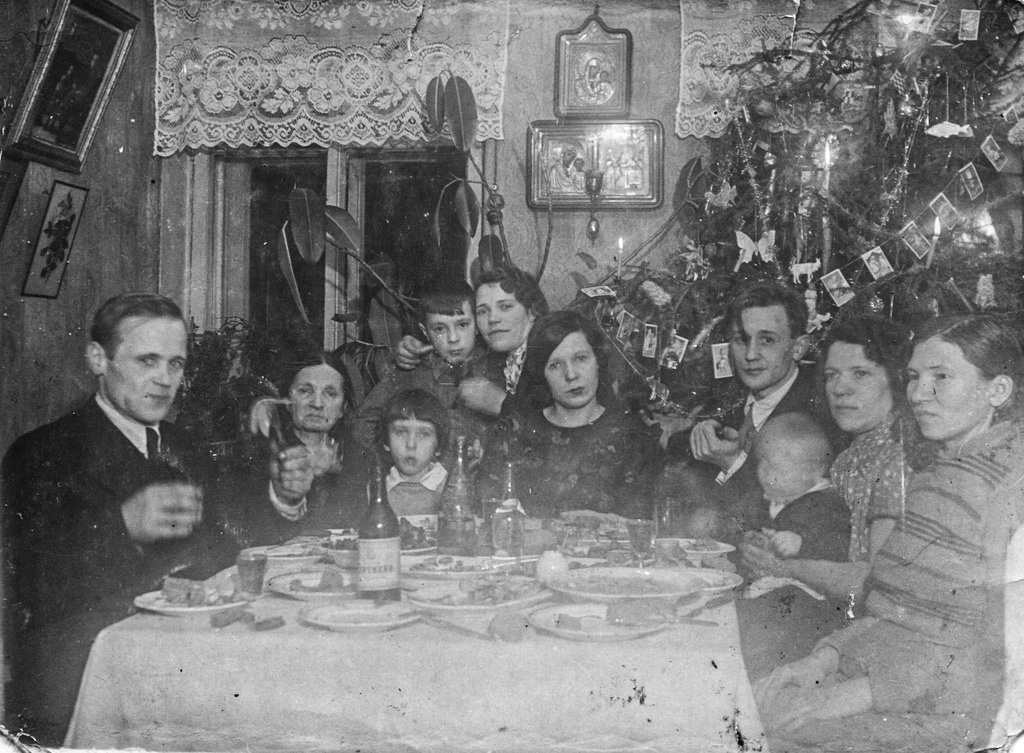
After the revolution, the Bolsheviks began fighting the remnants of the past: both Christmas and the "bourgeois" New Year were banned. A secular and family winter holiday only appeared in the USSR in the 1930s: ‘yolka’ (New Year's tree) parties were organized for children and recommendations for setting the New Year's table were published for adults. Many ideas were featured in the main culinary almanac of the USSR – ‘Knige o vkusnoy i zdorovoy pishche’ (‘The Book of Tasty and Healthy Food’), where the gastronomic delicacies of Tsarist Russia acquired Soviet "citizenship". The main changes became even more noticeable in the post-war years.
For example, the prototype for ‘herring under a fur coat’ was most likely an appetizer from the Moscow restaurant ‘Rossiya’, made with trout, beetroot and Provencal sauce with anchovies. The dish was even served at the coronation of Alexander III. It reached ordinary citizens already with budget-friendly herring. According to one version, the author of this "proletarian" salad was Moscow tavern keeper Anastas Bogomilov, who combined "red" and "white" ingredients so that his patrons wouldn't argue about politics.
In the bourgeois ‘Olivier’ salad, Soviet chefs replaced grouse meat with sausage, capers with canned peas and Provencal sauce with mayonnaise. The result was the most popular salad.
Affordable luxury
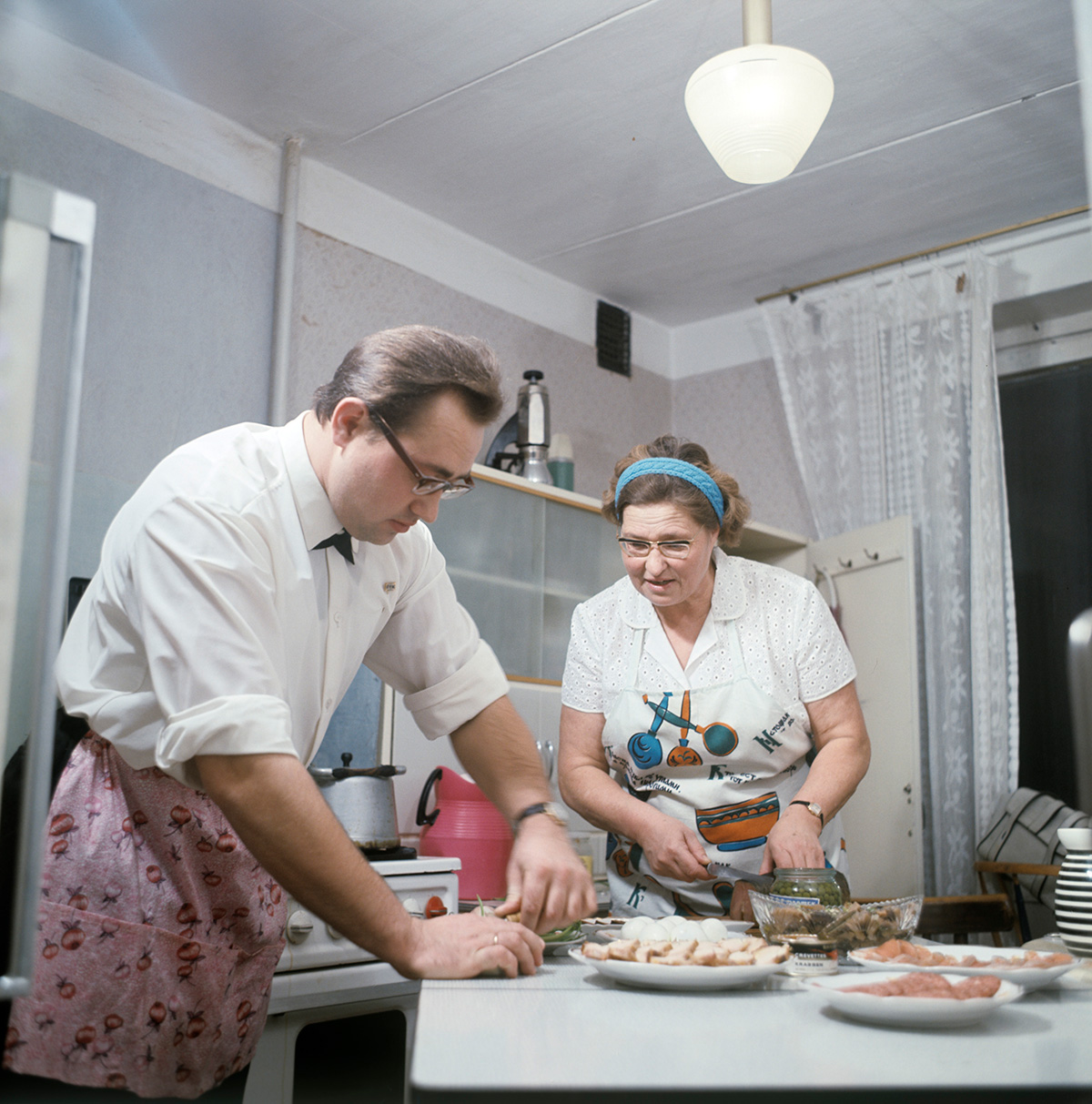
New Year's Eve became the main family holiday in Soviet times. And many strived to put only the best on the table.
In the 1960s, tangerines joined ‘Olivier’ and ‘shuba’ on New Year's Eve table spreads. The first shipment of these fruits arrived in the USSR from Morocco in 1963, just in time for New Year's Eve. They were virtually the only fresh and somewhat affordable fruits at the time, so, in the following years, tangerines secured their place on the Soviet table.
As for another well-known New Year's Eve salad – ‘Mimosa’ – it has no known author. It’s only known that its recipe appeared in the pages of magazines and newspapers in the 1970s and became very popular. After all, for it, as for other New Year's Eve salads, simple, cheap and hearty ingredients could be used – canned fish, eggs, carrots, mayonnaise, etc.
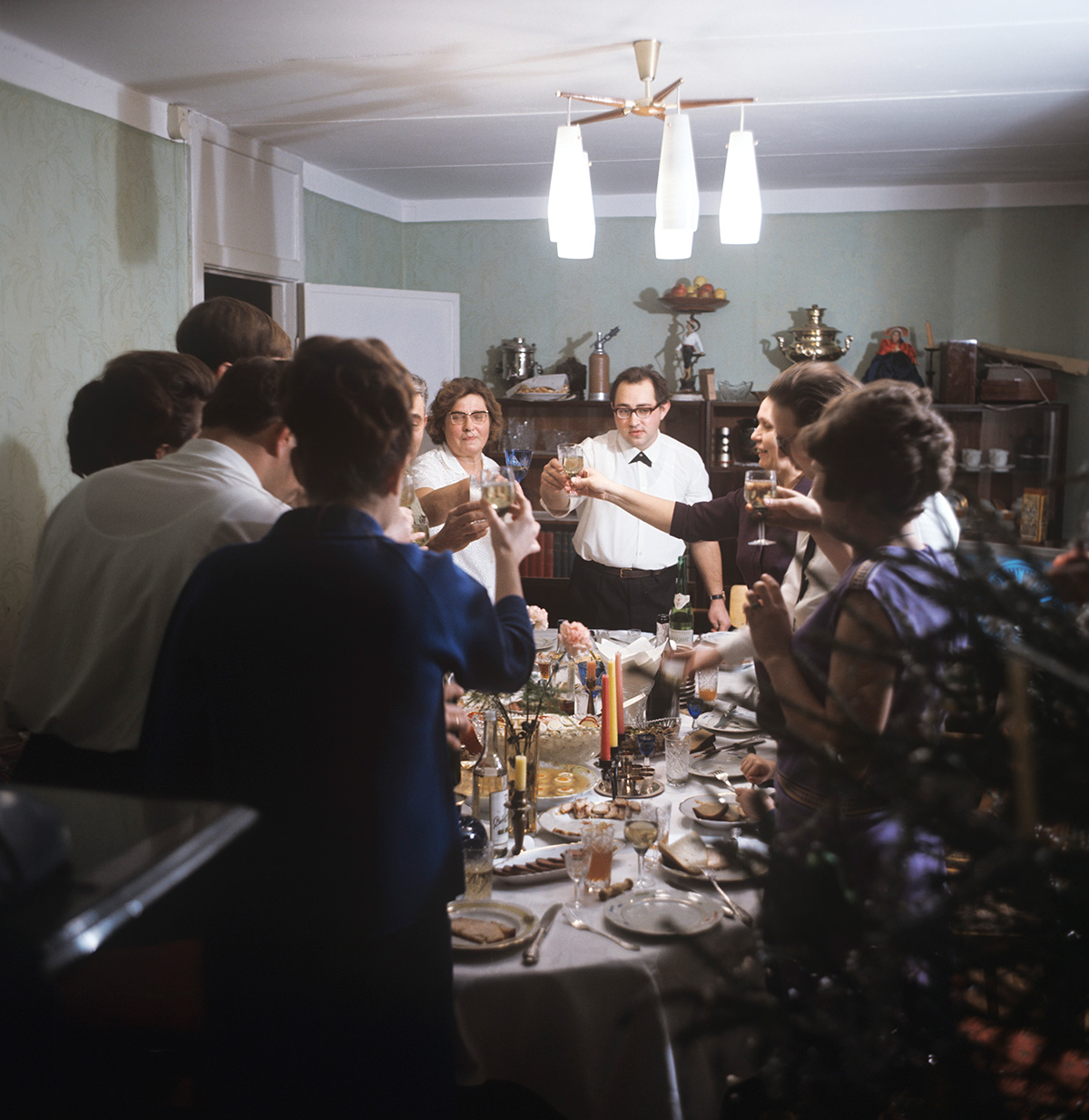
And, of course, everyone strived to put Soviet ‘champagne’ on the table. Sparkling wine had been produced in Russia since the 19th century and, by the mid-1930s, Soviet scientists had developed accelerated “champagnization” technology, resulting in an inexpensive and quite festive drink.
Cinema culture
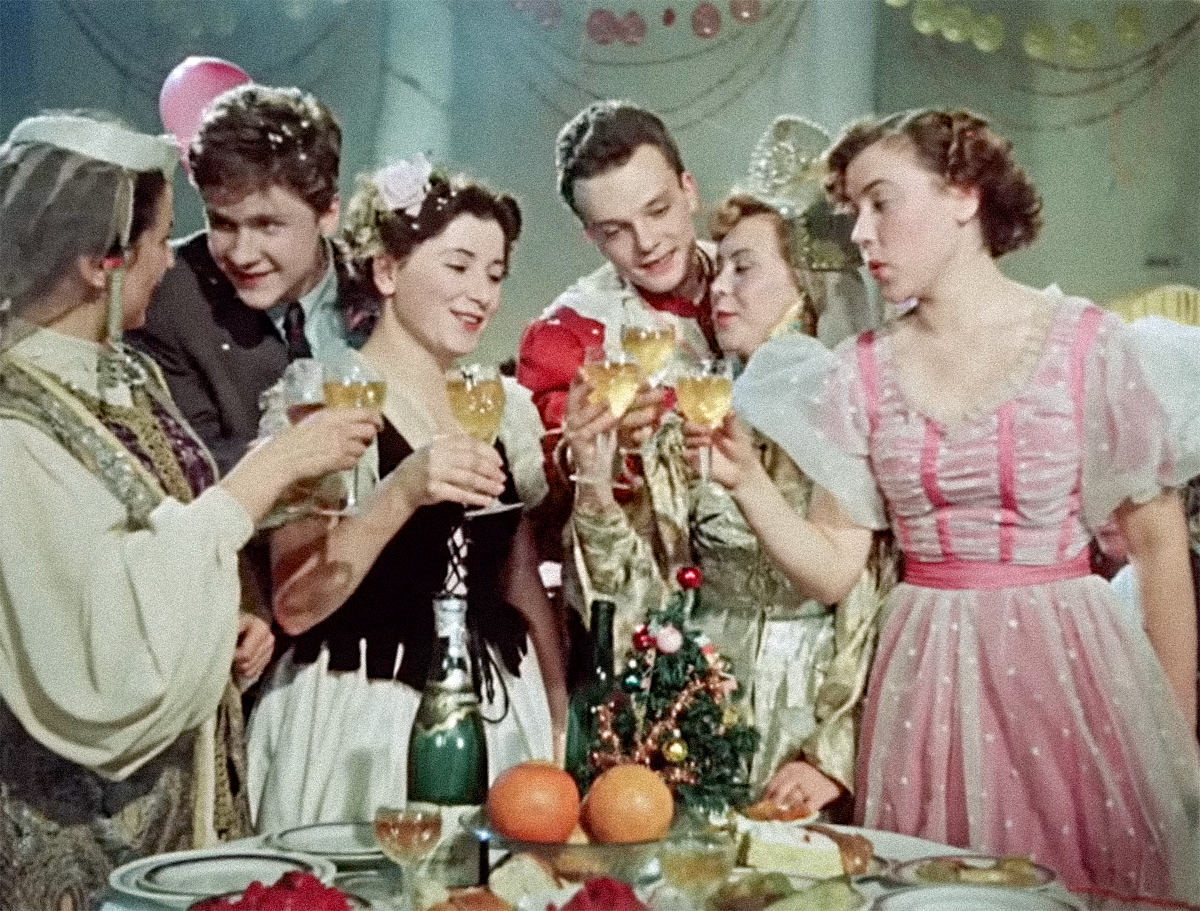 A scene from ‘Carnival Night’
Television also played a significant role in shaping the New Year's menu. Soviet viewers first saw a feast with Soviet ‘champagne’ and fruits in the 1956 movie ‘Carnival Night’.
The classics of the New Year's Eve table were also shown in ‘The Irony of Fate’: tangerines, Soviet ‘champagne’, salads and cold cuts. And even fish in jelly (aka aspic)!
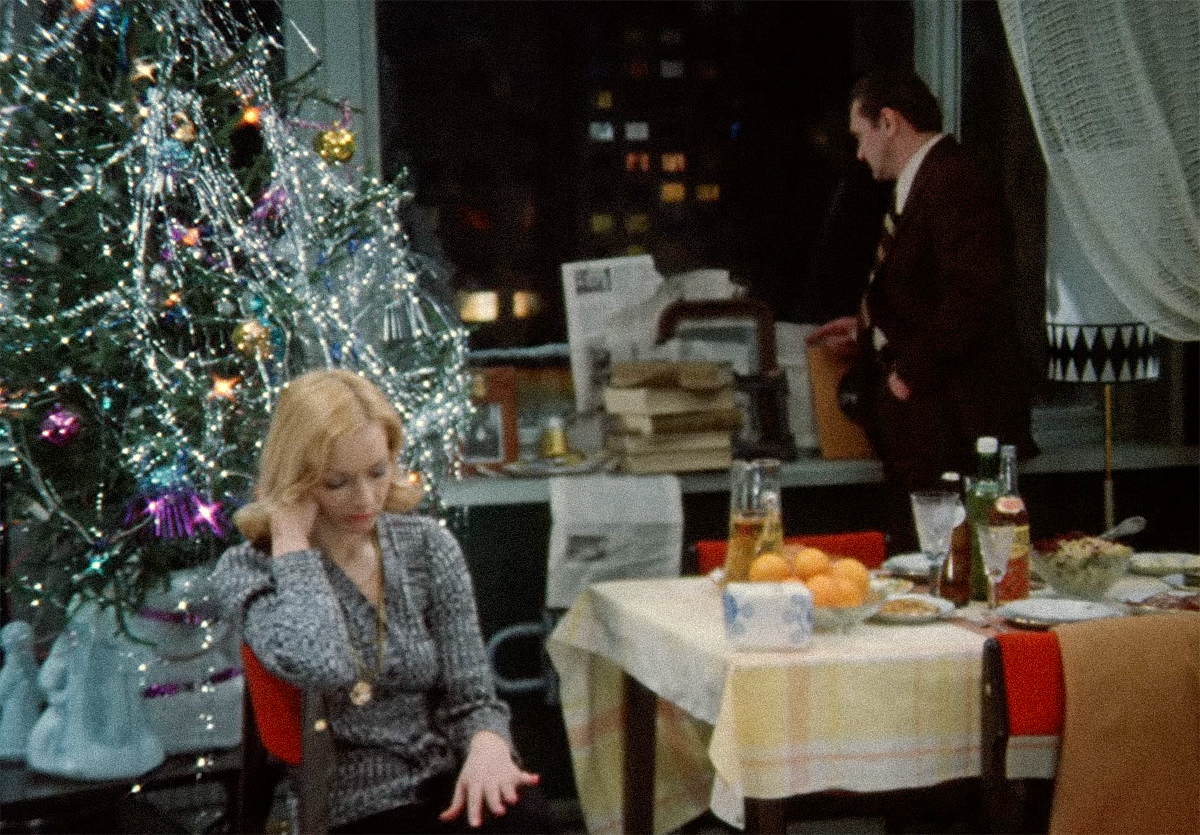 ‘The Irony of Fate’
And, of course, the traditional TV show ‘Blue Light’, which aired every New Year's Eve starting from 1962.
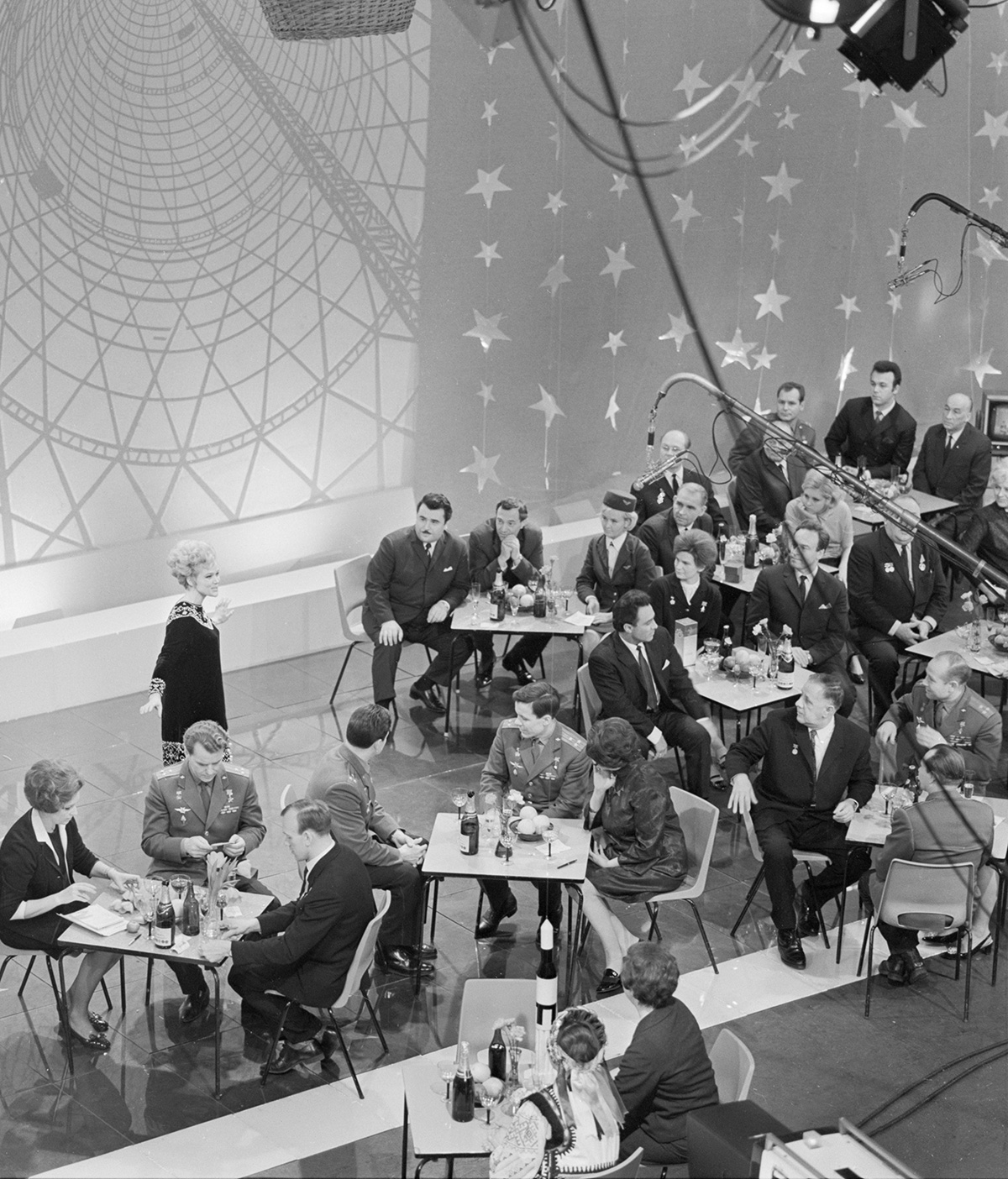
This is not to mention the numerous recipes in magazines that people used across the country – from Perm to Smolensk to Khabarovsk.
Thus, a unified unwritten law for the holiday table spread gradually formed, which is, for the most part, still adhered to today.