
This artist breathed life into Russian fairytales (PICS)
Every child in Russia has seen the illustrations of Ivan Bilibin. Few know, however, about the great artist’s many talents, and various facts about his life. Here’s a list that might surprise you.
If you grew up in Russia and your parents read you fairytales, then Ivan Bilibin's (1876-1942) extraordinary illustrations are probably imprinted in your mind forever.
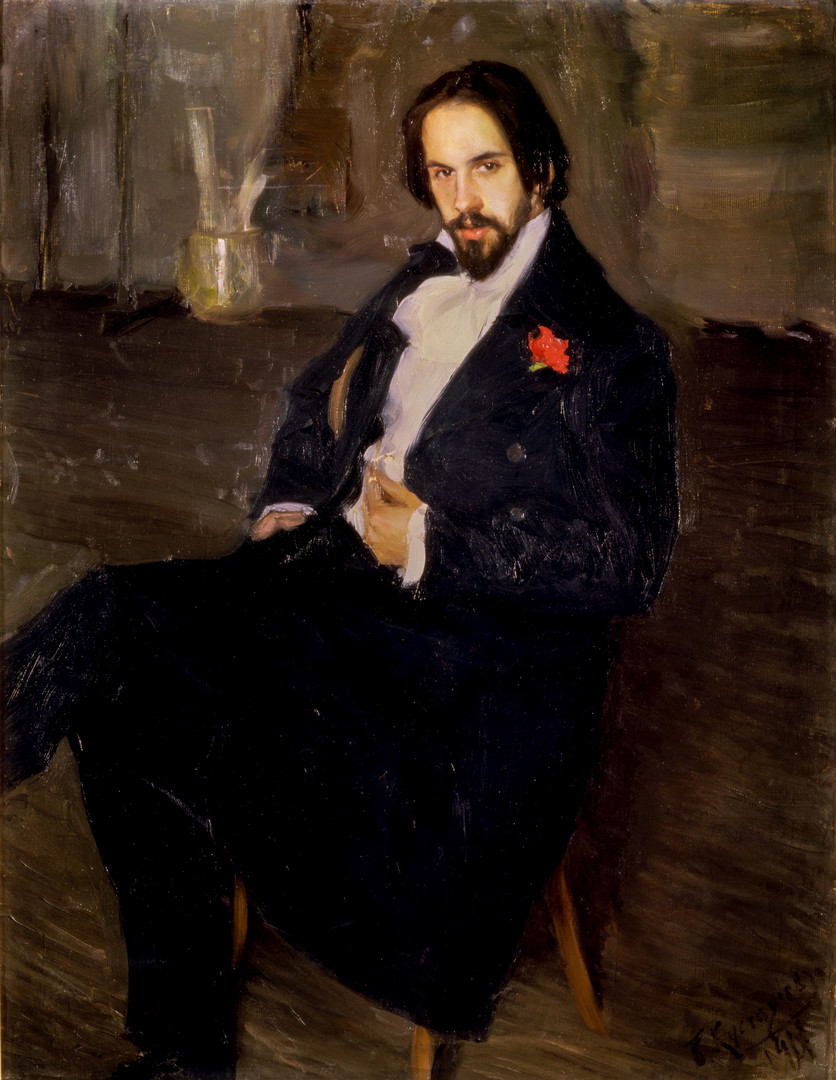 Ivan Bilibin, the artist who breathed life into Russian fairytales.
This artistic virtuoso originally had dreams of becoming a lawyer and even earned a law degree from St. Petersburg University in 1900. His legal calling, however, did not stop his artistic aspirations, and he studied painting with various famous artists, including Ilya Repin.
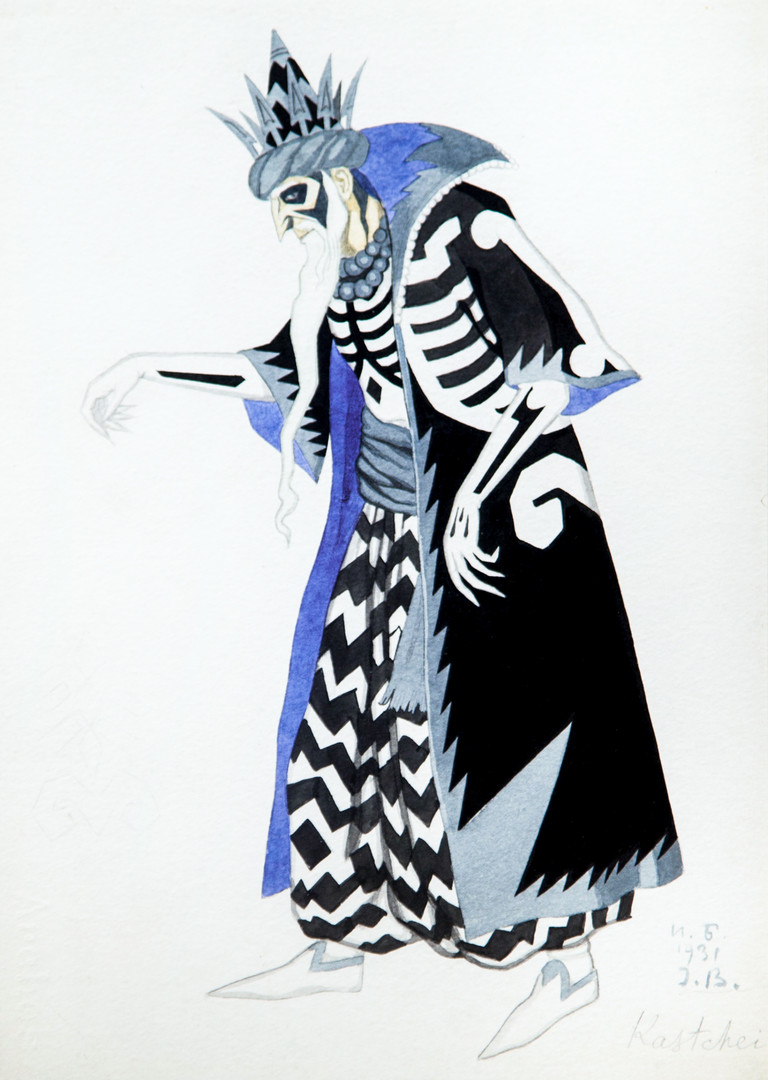 Bilibin’s sketch for the costume of a Slavic fairytale character, Koschei, in Stravinsky’s ballet “Firebird.”
Bilibin’s talent was in high demand even beyond the publishing world. A highly acclaimed connoisseur of traditional and historic costumes, Bilibin was active in stage design for operas and ballets all over the world, including in Prague, Paris and Buenos Aires. Here, we see Bilibin’s sketch for the costume of a Slavic fairytale character, Koschei, in Stravinsky’s ballet “Firebird.”
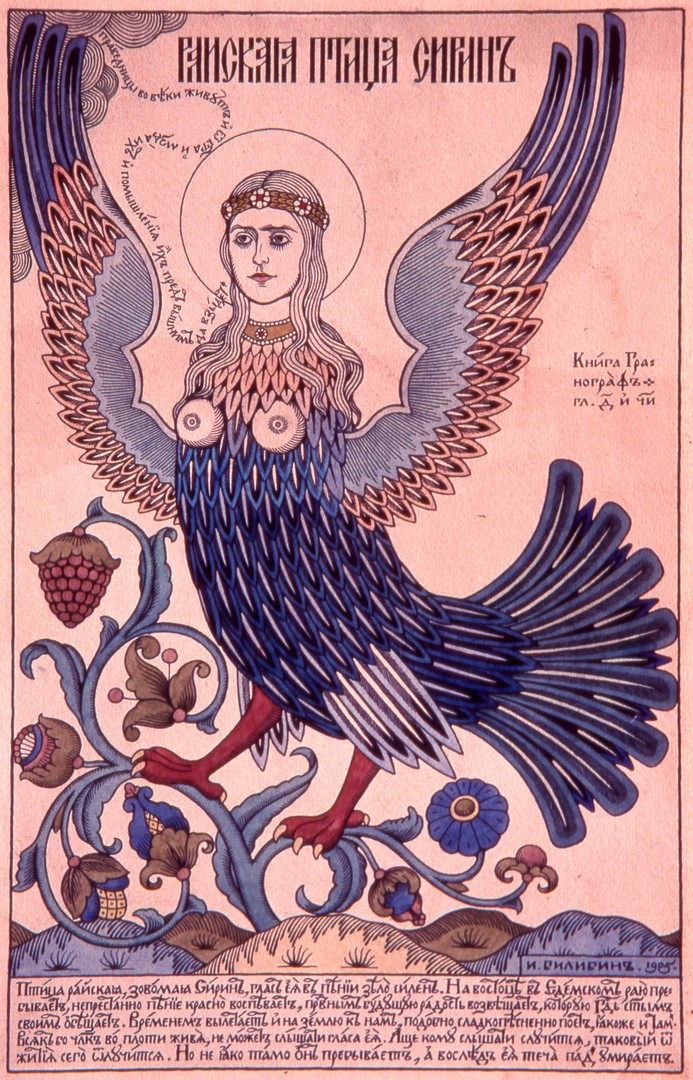 Magical Syrin the Bird
Bilibin’s vivid imagination and his talent for drawing all kinds of mystical birds came in use in a most unexpected way. His sketch of a two-headed eagle was adopted as the official symbol of the Russian Empire in 1917; though it was abandoned just a year later when the Bolsheviks seized power and proclaimed a socialist state. Almost 75 years later, however, Bilibin’s eagle inspired our contemporaries and it’s now used as the official emblem of the Russian Central Bank. Take a coin issued before 2016 and turn it heads up – you are looking at one of Bilibin’s many masterpieces.
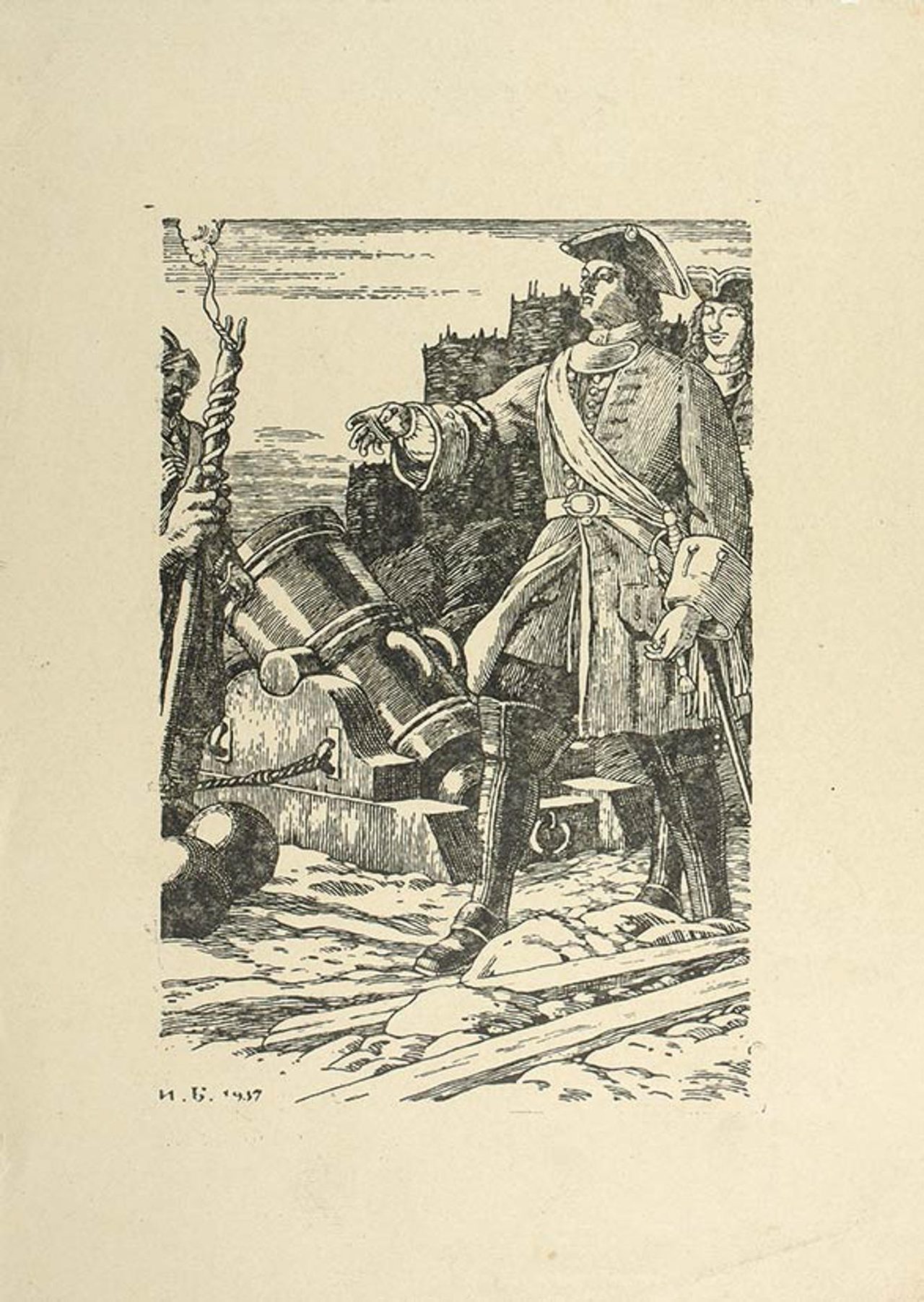 Bilibin’s sketch of Peter the Great is for Alexei Tolstoy’s novel by the same name.
Today, Bilibin is mostly remembered as an illustrator of fairytales, but the artist created sketches for novels, too. Here, Bilibin’s sketch of Peter the Great is for Alexei Tolstoy’s novel by the same name.
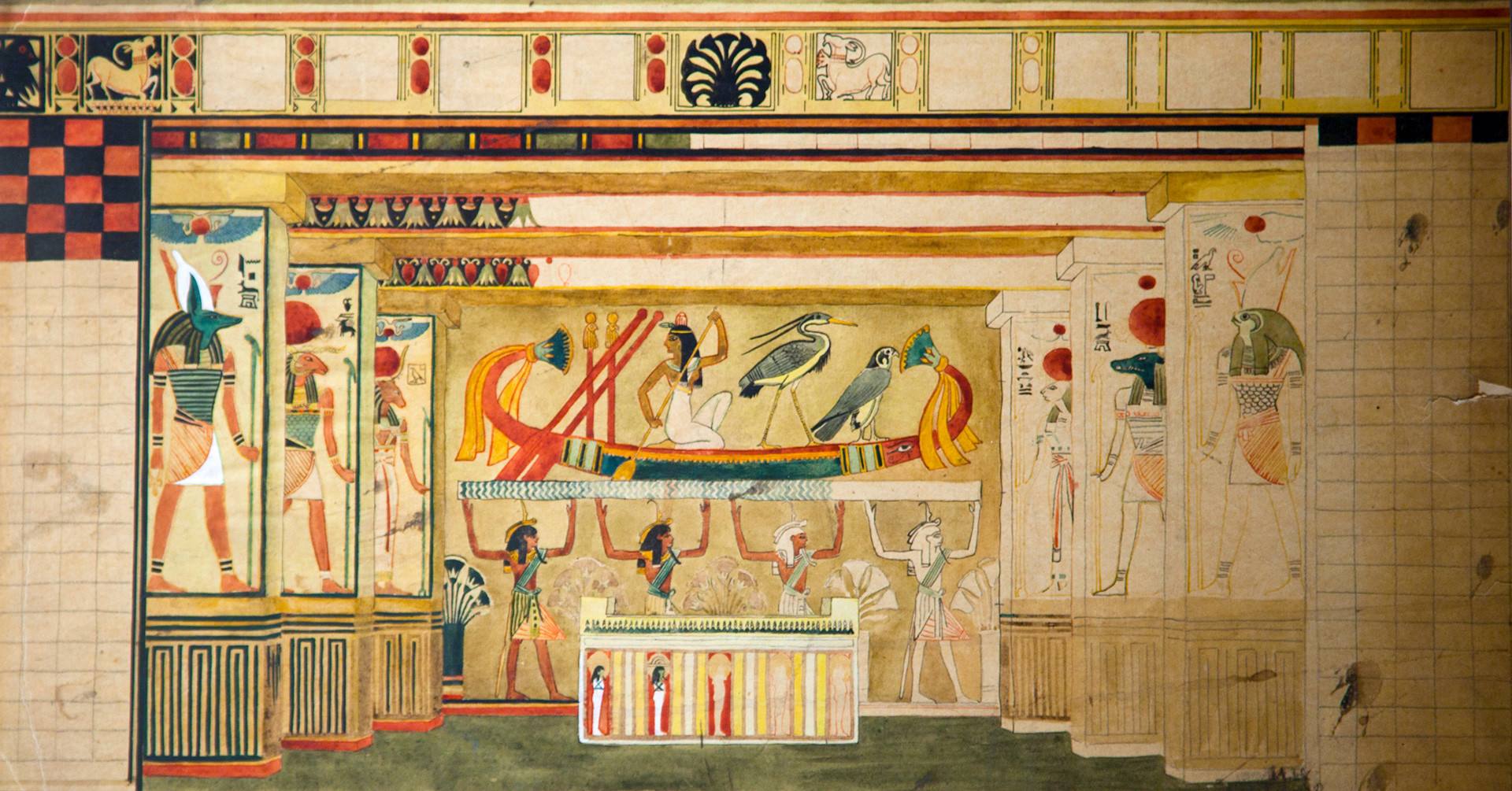 Bilibin’s decorations for Tcherepin’s ballet, “Romance of the Mummy.”
Fleeing Revolutionary Russia, Bilibin ended up in a camp in Cairo where English authorities settled Russian refugees arriving by ship. The artist spent five years in Cairo and then relocated to Alexandria, before heading to Paris. Here, Bilibin’s decorations for Tcherepin’s ballet, “Romance of the Mummy.”
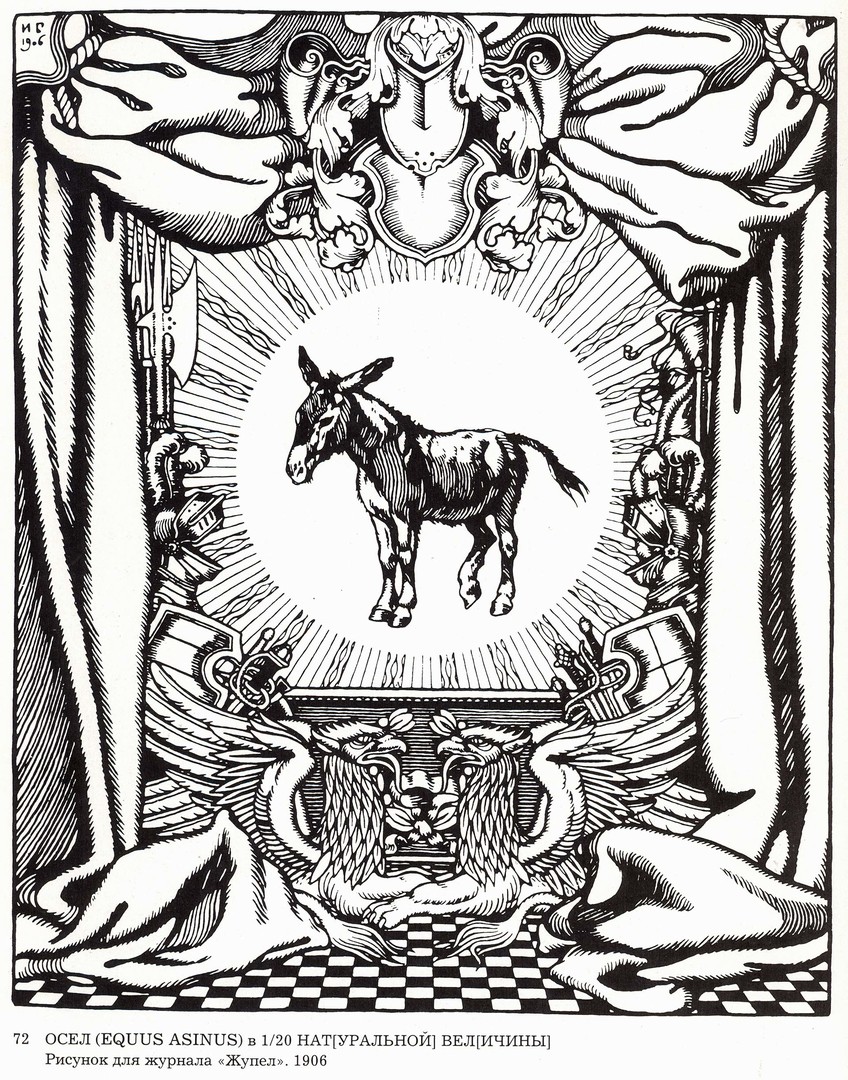 An illustation for a magazine
Although Bilibin fled Soviet Russia, he didn’t sympathize with the Tsarist regime. He had been arrested in 1906 for his part in developing an anti-autocratic satirical magazine, Zhupel. Here is Bilibin’s political caricature of the tsar.
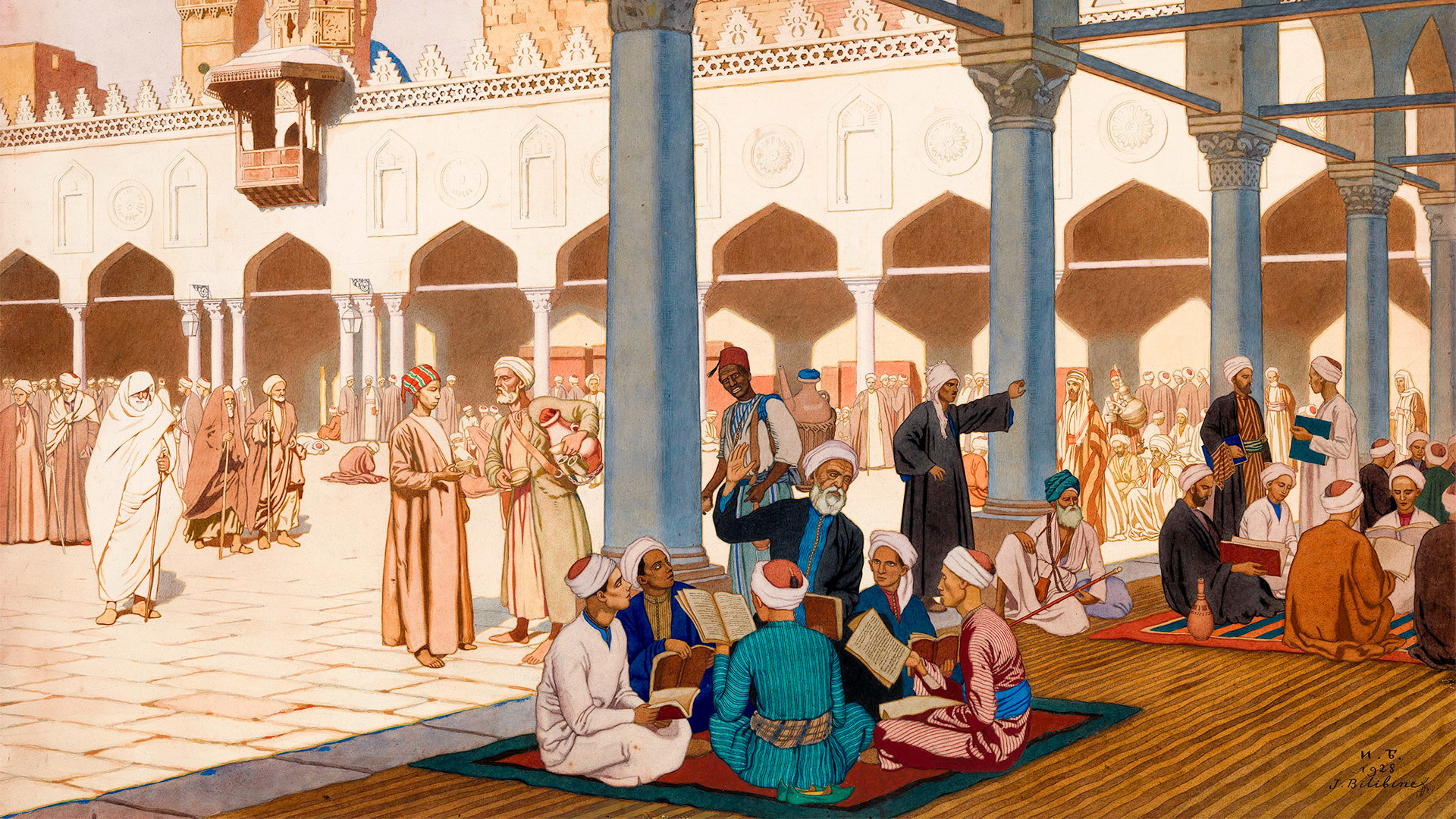
Courtyard of the Al-Azhar Mosque
In Egypt, Bilibin earned his living by making frescos to decorate the homes of wealthy people, and he also studied ancient Egyptian art. Here is Bilibin’s painting of the Al-Azar mosque’s inner yard and the University of Cairo.
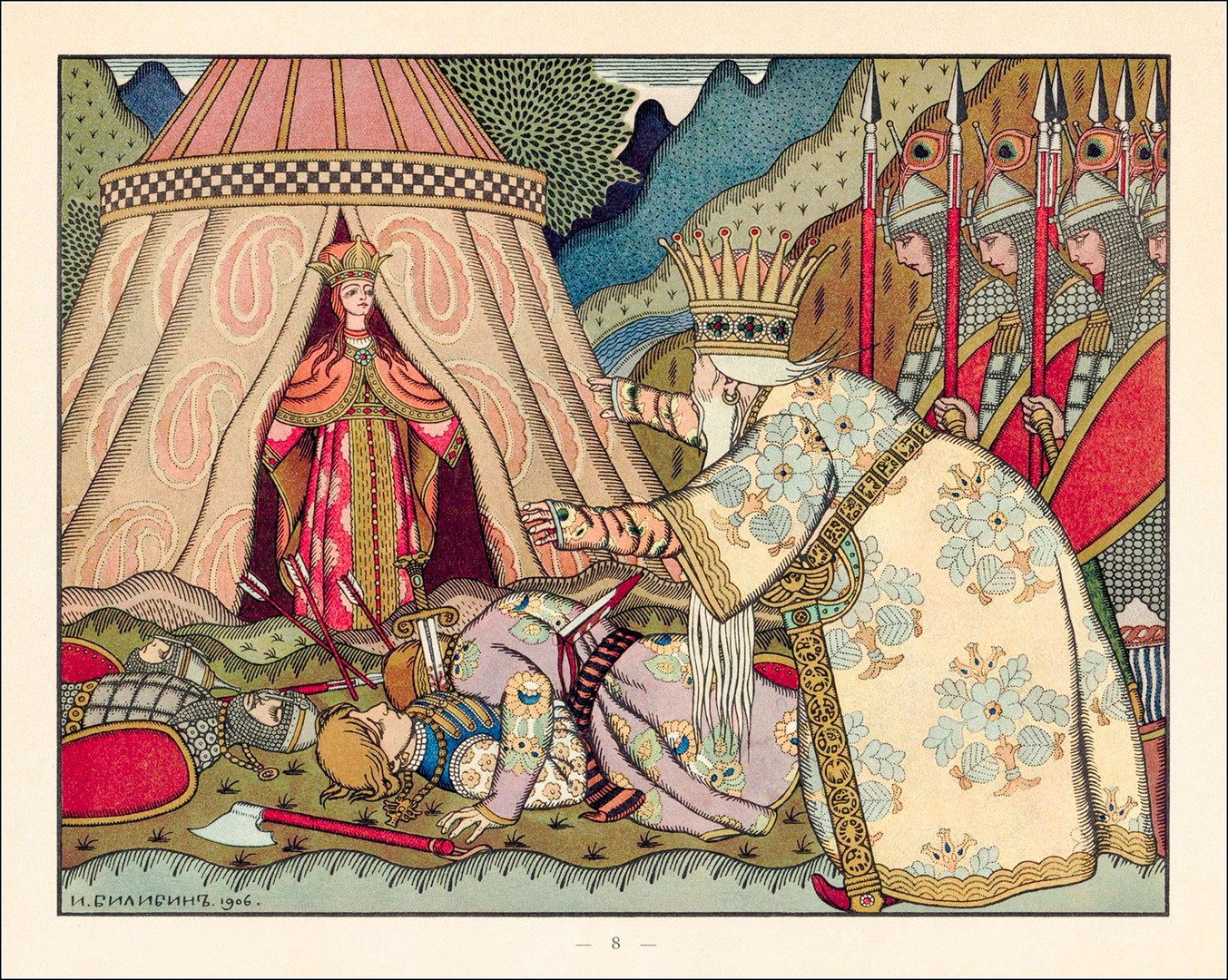 Ivan Bilibin's illustration of 'The Tale of the Golden Cockerel'
Bilibin discovered his signature style while sojourning in the village of Yogna (400 kilometers from Moscow). There, the artist created a series of illustrations for Russian folk fairytales - 'Tsarevitch Ivan', the 'Firebird', and the 'Gray Wolf', which would become iconic and define his artistic style forever.
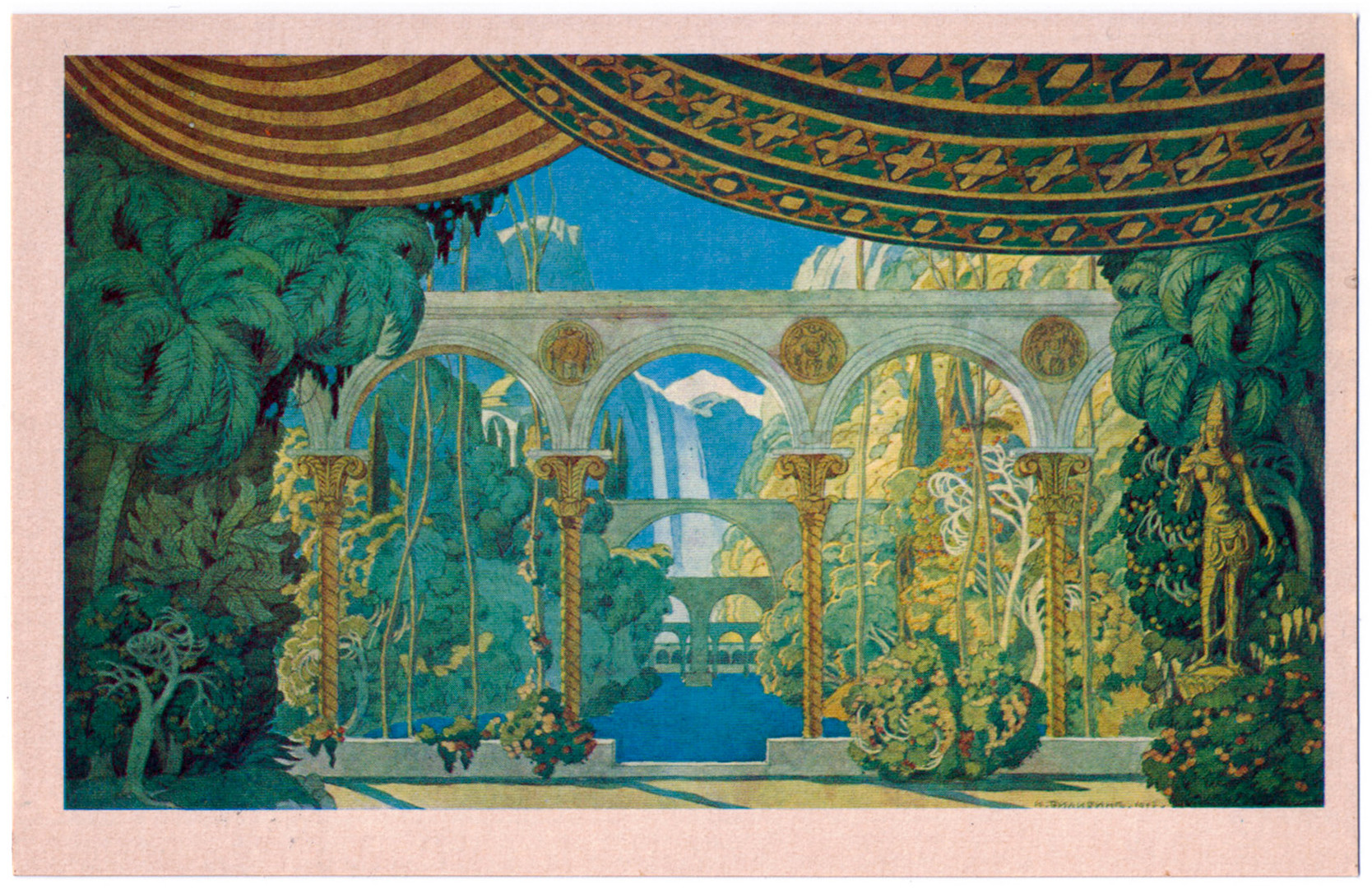 Bilibin's stage decorations for the opera “Ruslan and Ludmila.”
In addition to famous fairytale characters, Bilibin created remarkable stage decorations such as this one, the Gardens of Chernomor, for the opera “Ruslan and Ludmila.”
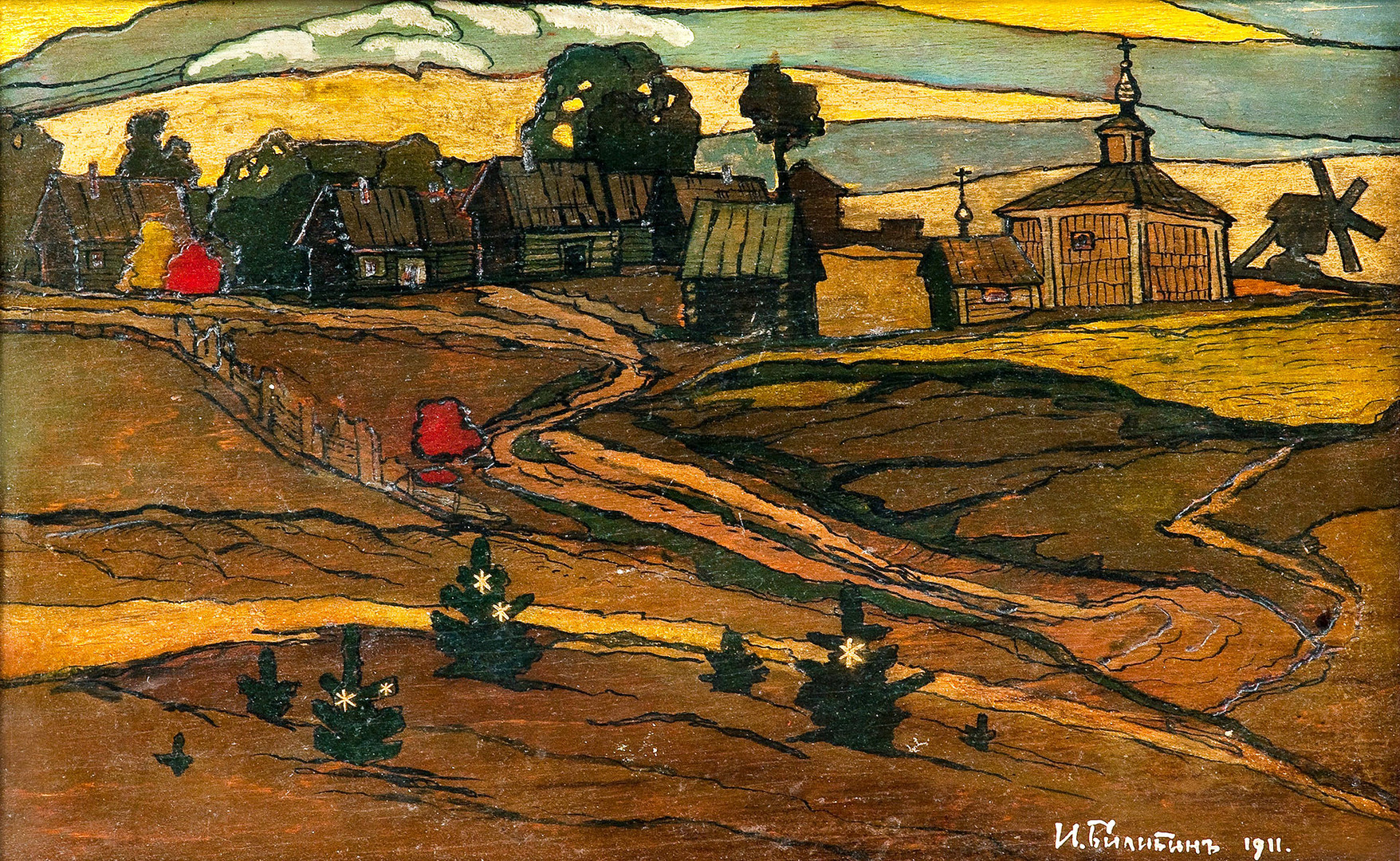 This rural landscape, 1911
Almost all of Bilibin’s paintings embody Russian folk culture. For example, this rural landscape painted in 1911 will most certainly seem familiar to everyone who has ever been to the Russian countryside.