
What is going on in the painting ‘To War’ by Savitsky?
And why did the artist cut up the first version of the painting and paint a second?
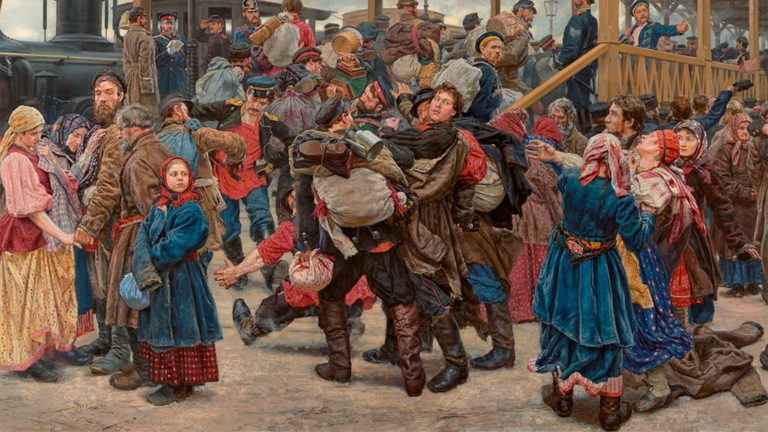
The first thing that catches the viewer’s eye when approaching Konstantin Savitsky's large-scale (2 by 3 meters) canvas is how densely populated it is. The painting features many large figures, all of whom are in motion: crying, dancing, rushing toward each other, hugging and so on.
It might even seem as though the painting has no main characters. Each small group of people is experiencing its own separate drama. And each of them is important. In the center is a young conscript, whom soldiers are forcibly dragging away from his family. His wife is rushing toward him, but her relatives are holding her back.
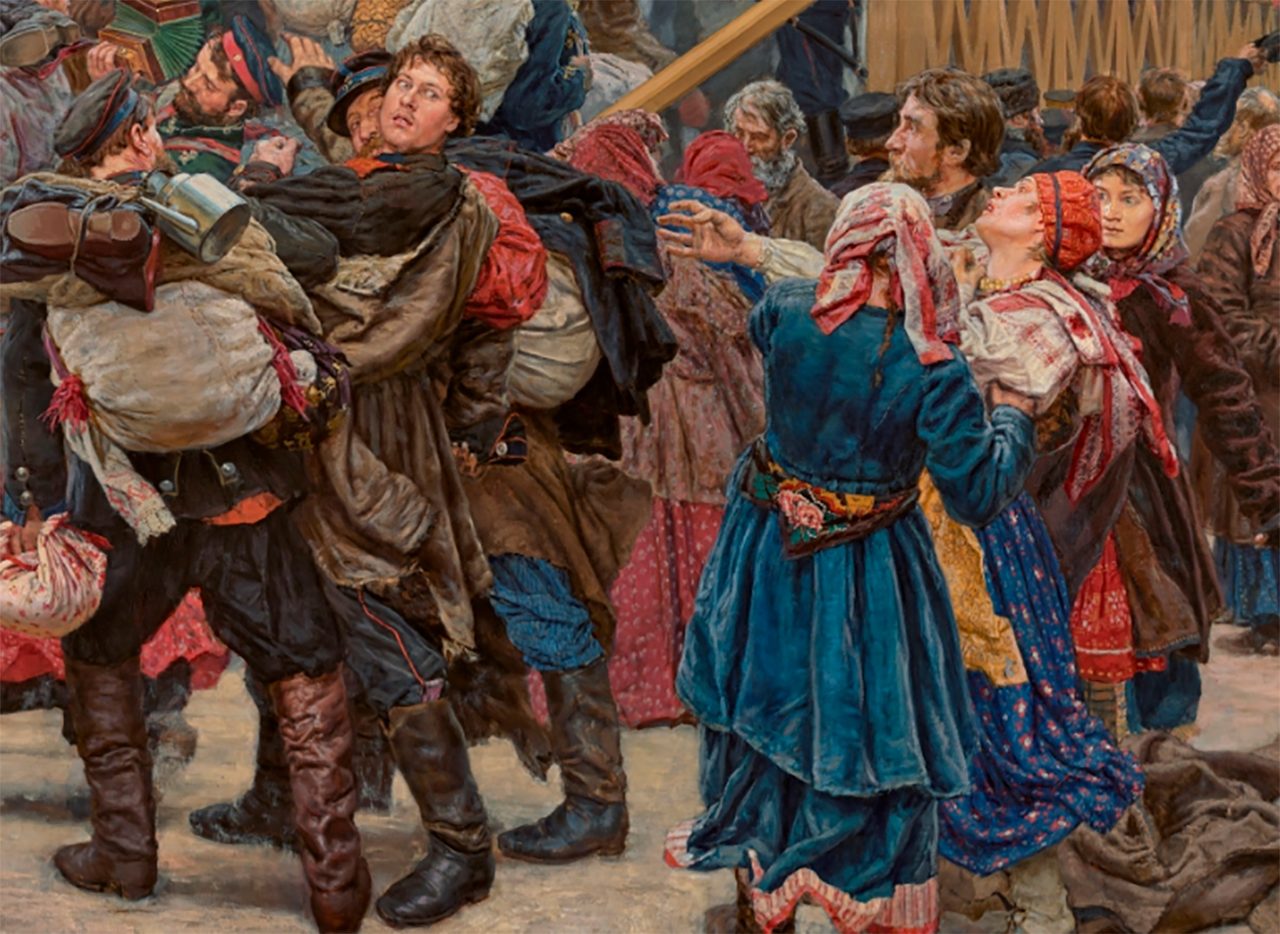
Next to them, an elderly mother clings to her son's chest. Their grief is quiet and silent, but it's clear they are all in great pain. Behind them, a soldier, already in uniform, but still wearing a peasant’s red-striped shirt, is dancing. No one is seeing him off. And his dance is hardly an expression of joy. Rather, it's a gesture of despair. They are all setting off for the Russo-Turkish War (1877–1878).
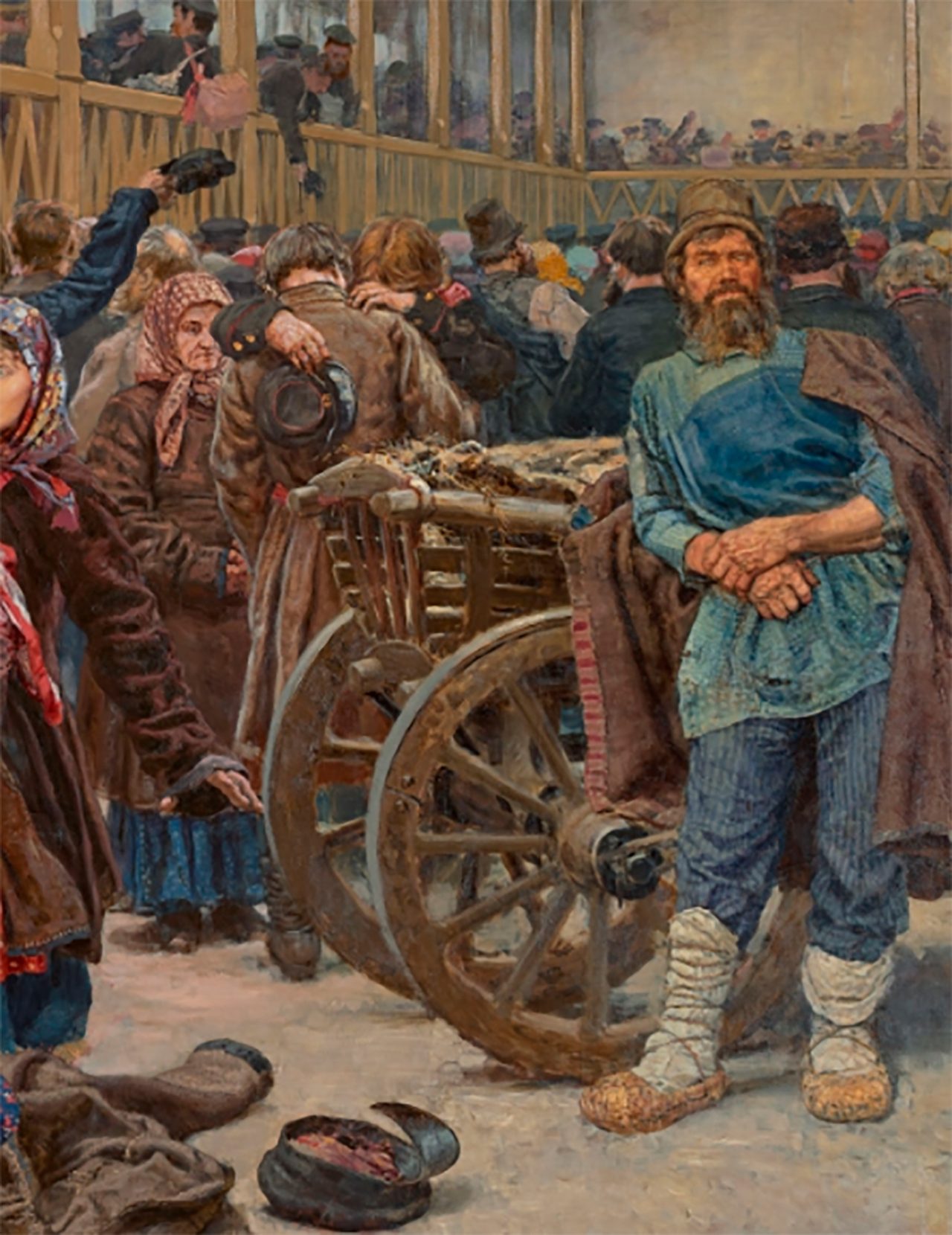
The artist depicted the war not through military action, but through the moment when the soldiers bid farewell to their families and loved ones. Savitsky sought to convey the emotions of the soldiers and their families at this moment of separation, transforming a typical scene into a portrait of national grief.
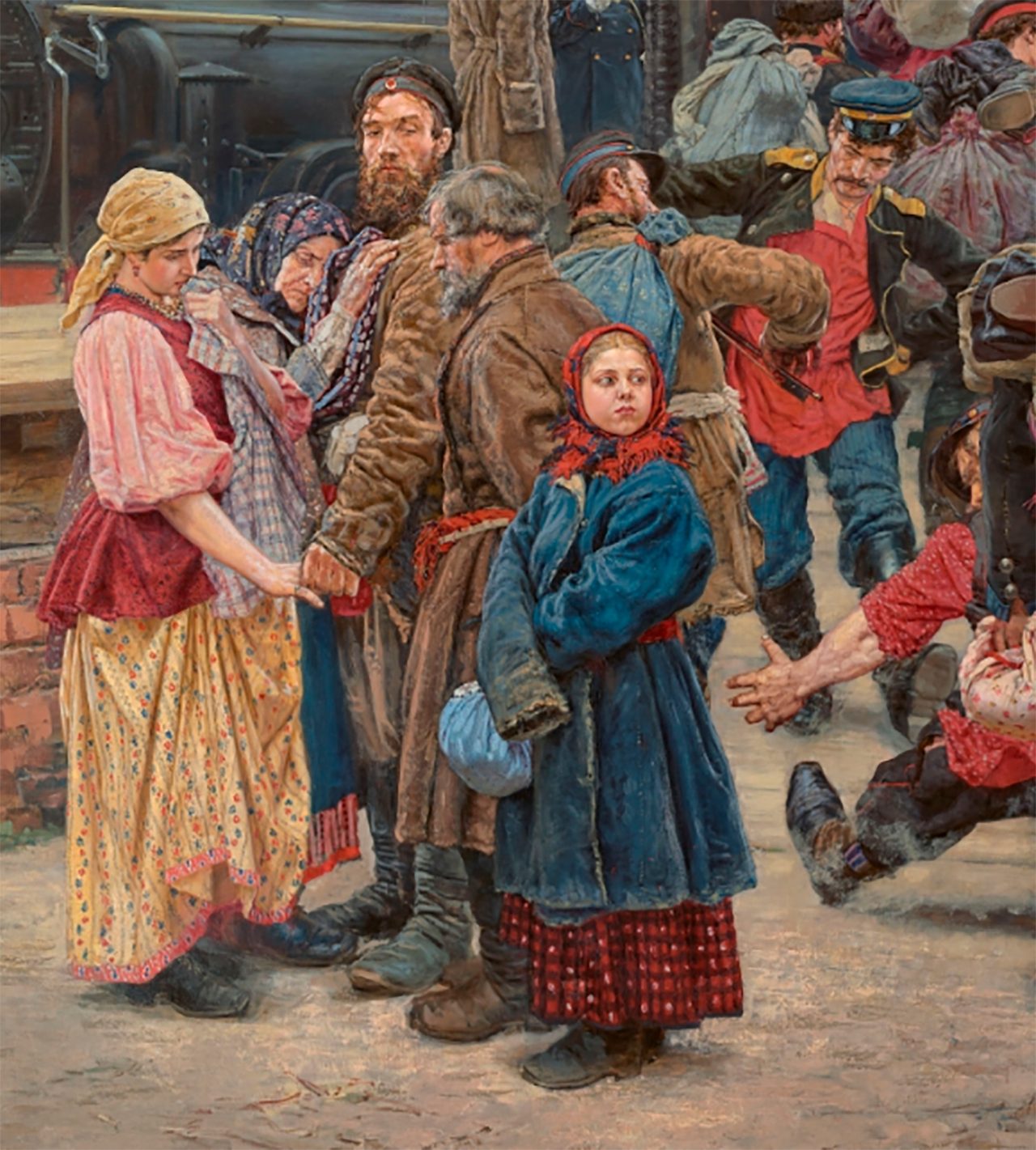
The Russo-Turkish War began under the slogan of liberating their fellow Slavic brothers from Ottoman rule and sparked a surge in patriotism among the public. Savitsky's painting offers a more down-to-earth and tragic perspective. Instead of heroic pathos, the artist shows the confusion and bewilderment of the peasants, who are torn from their families and sent to war, the meaning of which is often unclear to them.
This painting was created in 1888 and is currently housed at the State Russian Museum in St. Petersburg. However, it’s not the first version of the work. In total, the artist worked on this subject for nearly 10 years. Savitsky first conceived the idea for the painting in 1876, while he was in Paris. He showed a sketch to artist Alexei Bogolyubov, who, in turn, showed it to Grand Duke Alexander Alexandrovich, the future Emperor Alexander III. It was Alexander III who commissioned the artist to create the final version of the painting.
The first version was completed in 1880 and presented at the 8th exhibition of the ‘Peredvizhniki’ (Wanderers) artists. Critics received it with mixed reviews. They noted that the painting contained “much truth and feeling”, but criticized the artist for overloading his work with too many figures. Savitsky generally favored complex, multi-figure compositions and high emotional intensity in his works. And the criticism struck a nerve: he cut the painting into pieces and began working on a new version.
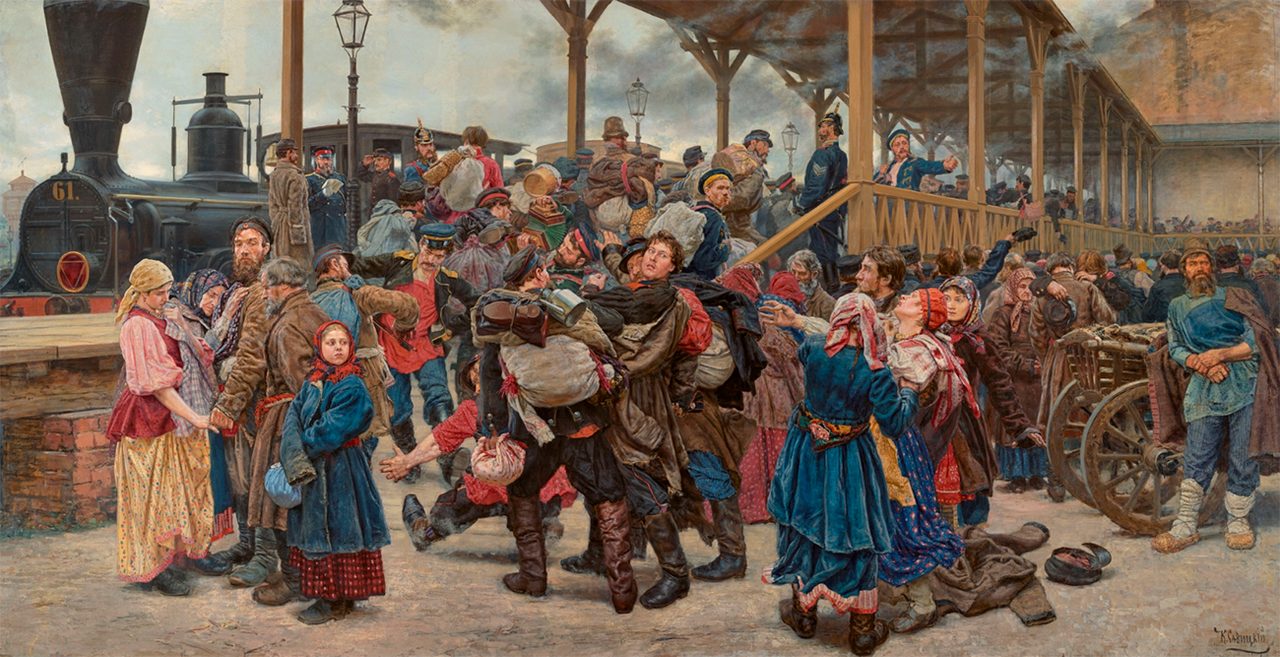
Renowned critic Vladimir Stasov called the second version Savitsky's finest creation. Alexander Benois, another critic, noted that, in terms of expressive power, the painting ranks among the finest works of the ‘Peredvizhniki’.