This Soviet synthesizer was one of the world’s first musical computers
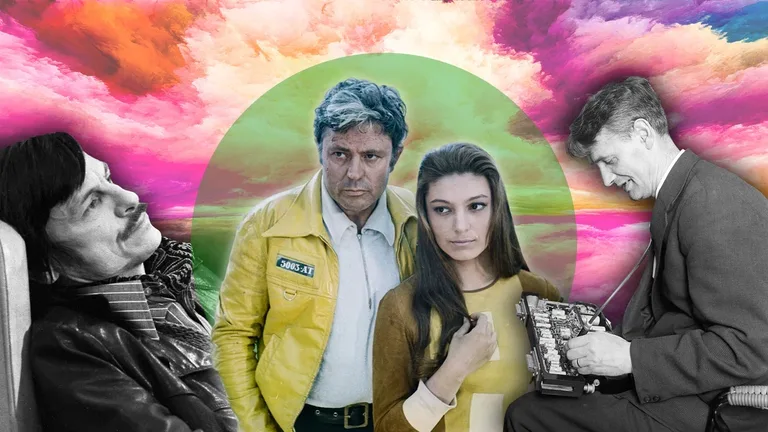
The “voice” of this musical instrument is used to depict the ocean in Andrei Tarkovsky’s film ‘Solaris’.
Engineer Evgeny Murzin was passionate about music and played it himself. He decided to create an instrument that would allow people to compose music, arrange it and perform it without an orchestra. As he put it, his goal was to “unlock a treasure trove of unknown sound combinations and show contemporary composers the way to new harmonies”.
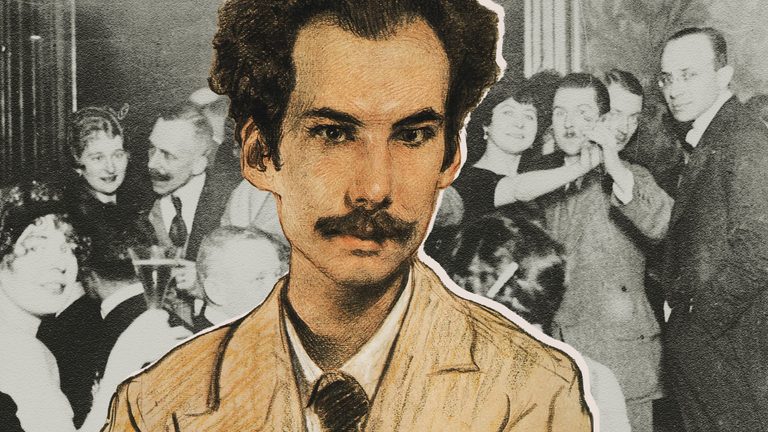
Murzin spent 20 years working on his invention. He began in 1938 and completed a working prototype in 1958. He named his photoelectronic synthesizer the ‘ANS’, in honor of composer Alexander Scriabin, who inspired him. Although, it would be more accurate to describe Murzin’s creation as one of the world’s first musical computers.
Unlike the traditional 12-tone scale, the ‘ANS’ has 72 divisions per octave, providing 576 tones. This made it possible to create subtle sound variations and combine them in virtually any way, building a musical composition that could not be produced using conventional instruments.
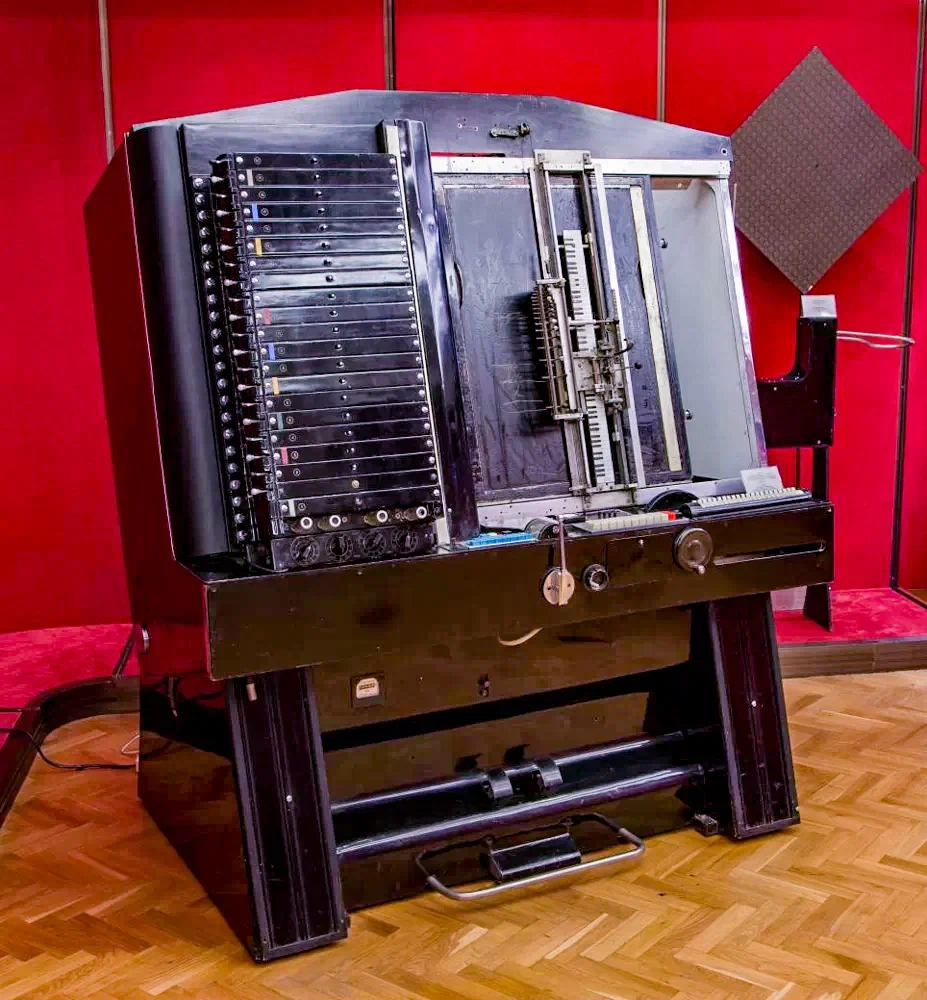
Creating music with the ‘ANS’ was more like painting than traditional composing. The score was “written” on glass coated with light-blocking paint. A special recorder cut lines into the coating to represent overtones, pure tones and bass notes. To produce noise or echoes, the composer had to paint over the transparent gaps. Photoelectric cells then picked up this sound “picture” and transformed it into music. All that remained was to add the finishing touches: speeding up or slowing down the sound and adjusting its volume.
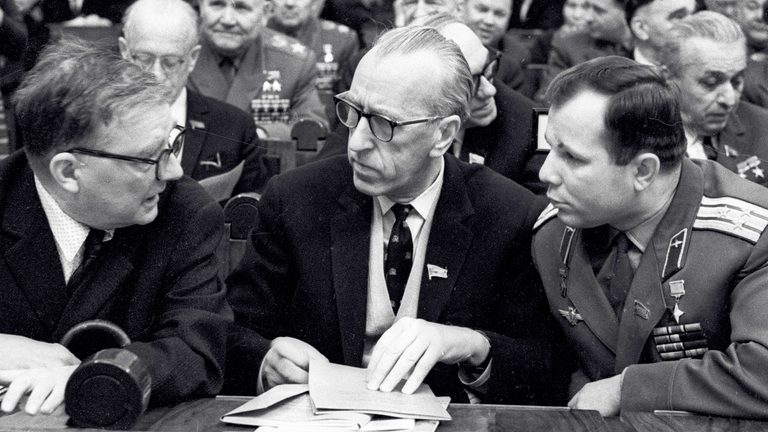
Composer Dmitri Shostakovich was so impressed by Murzin’s invention that he proposed putting it into mass production and helped produce a working prototype of the synthesizer. In 1966, an experimental electronic music studio opened in Moscow, where musicians and composers worked with an ‘ANS’.
The first music created using this synthesizer appeared in the 1961 movie ‘Into Space’. Its distinctive sounds can also be heard in Andrei Tarkovsky’s ‘Solaris’ (1972) and ‘Mirror’ (1975), Andrei Konchalovsky’s ‘Siberiade’ (1979) and Leonid Gaidai’s ‘The Diamond Arm’ (1969).