
Why did Russia send Orthodox icons to German poet Goethe?

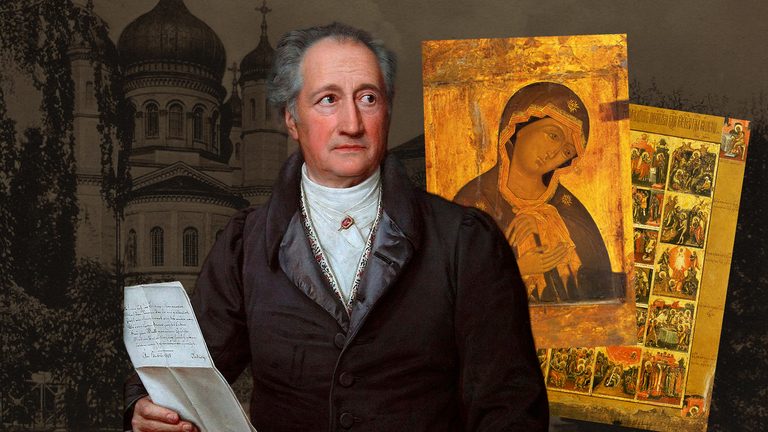
The great German poet admired icon painting and asked a relative of the Russian tsar about the history of religious art.
At the beginning of the 19th century, the sister of Emperor Alexander I – Maria Pavlovna – married Carl Friedrich, the Grand Duke of Saxe-Weimar-Eisenach. So, she took up residence in Weimar, where Johann Wolfgang Goethe also lived. The famous poet was subsequently introduced to the Russian princess and became a regular in her circle.
In 1814, after the Russian army and allies’ defeat of Napoleon, Maria Pavlovna invited Goethe to a festive service at the Orthodox church in Weimar (which had been built especially for her). The poet was overwhelmed by the atmosphere of the church, but, most of all, by the Orthodox icons. He was a great art lover and this “curious” painting style greatly intrigued him.
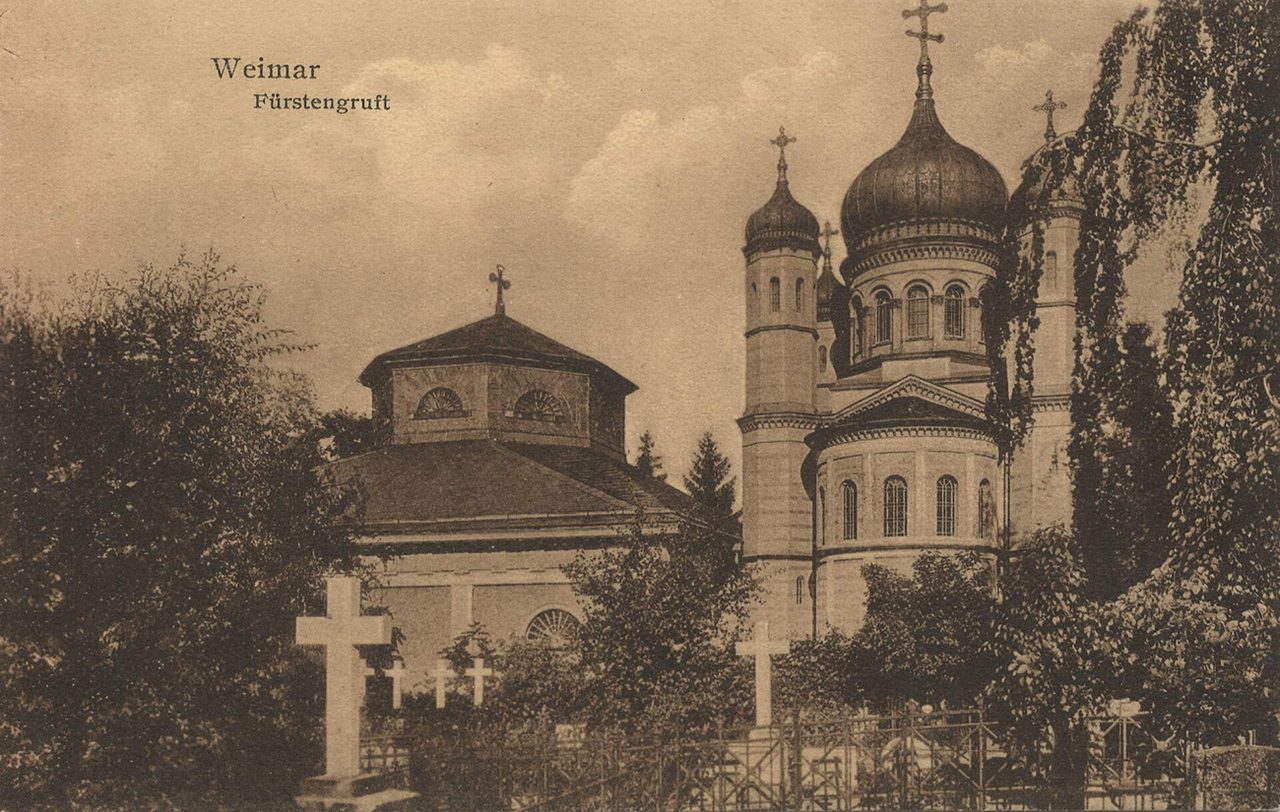 Weimar's Fürstengruft chapel and Russian Orthodox Chapel (on the right)
Goethe asked the princess about the history of ‘Suzdal icon school’ and she sent a letter to her mother, the dowager empress, in Russia, enclosing the German poet's note. The matter was taken seriously and at the highest level. Information about the icons was gathered by the Minister of Internal Affairs, the governor of the Vladimir region and court historian Nikolai Karamzin.
Along with the historical background, the Russian officials decided to send Goethe examples of icons from the Palekh school, one of the most distinctive icon-painting schools in Russia, known for its detailed draughtsmanship and richness of subject matter – featuring depictions of the Twelve Great Feasts and the Mother of God. Which icons were sent to him and how the poet reacted to the gifts, history, unfortunately, did not record.