
How poet Fyodor Tyutchev explained Russia's “special” path
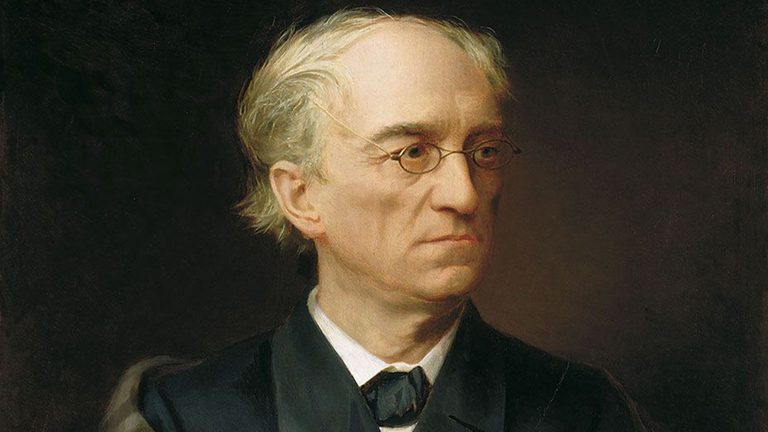
The poet, who was a master of short philosophical verse, once wrote a poem about Russia on a scrap of paper in 1866. And these short four lines became the country's "formula".
“Russia cannot be understood with the mind,
It cannot be measured with the common yardstick:
It has a special character –
One can only believe in Russia!”
In Russian culture, there is no more of a comprehensive explanation of the country's “special” path – despite being located simultaneously in Europe and Asia, Russia ultimately chose its own.
Tyutchev addressed this theme repeatedly in his writings. He spent several years working on the philosophical treatise ‘Russia and the West’, publishing individual chapters in the Parisian press. In them, he reflected on the relationship between the Old World and the Russian Empire, revolutions, wars and religion. However, the work remained unfinished.
His philosophical views were also reflected in his poetry. Having created the famous quatrain, Tyutchev returned to this theme a year later. In 1867, the first All-Russian Ethnographic Exhibition dedicated to the Slavic peoples was held in Moscow: It featured household items, photographs of various social classes, archaeological finds and much more. It took place during the Slavic Congress, which angered Austrian Foreign Minister Friedrich Ferdinand von Beust. He declared that "the Slavs must be pushed to the wall". The poet used these words as an epigraph, writing a response that was read at a gala banquet in honor of the Slavic guests of said Ethnographic Exhibition.
“It was stormed more than once –
Here and there, three stones were torn off,
But, in the end, the heroes retreated
With bruised foreheads…”