
Why is MONEY the real protagonist in Mikhail Bulgakov's novel ‘The Master and Margarita’?

Most remember Woland's phrase about Muscovites "corrupted by the housing problem". However, his meaning went deeper: humanity has loved money throughout history. But, it hasn't always brought them joy.
In Mikhail Bulgakov's cult novel ‘The Master and Margarita’, in which the devil named Woland unexpectedly appears in 1930s Moscow with his eccentric entourage (the giant cat Behemoth, the sharp-tongued trickster Koroviev, the vampire Hella and the dark demon Azazello), the complex relationship between people and money is actually one of the central themes. In both the biblical and the Moscow narratives, money serves as a universal measure of human qualities.
Judas & the 30 Pieces of Silver
In the Jerusalem chapters of ‘The Master and Margarita’, which tell the story of procurator Pontius Pilate, who sentenced wandering philosopher Yeshua Ha-Nozri to execution, money becomes a symbol of Judas' betrayal and moral decline.
"Then one of the 12, called Judas Iscariot, went to the chief priests and said, 'What will you give me and I will betray him to you?' They offered him 30 pieces of silver," as stated in the Gospel of Matthew (26:14–15). Thirty pieces of silver equal 30 tetradrachms. These are the very coins, minted in the Phoenician city of Tyre, that Judas received for betraying Jesus Christ.
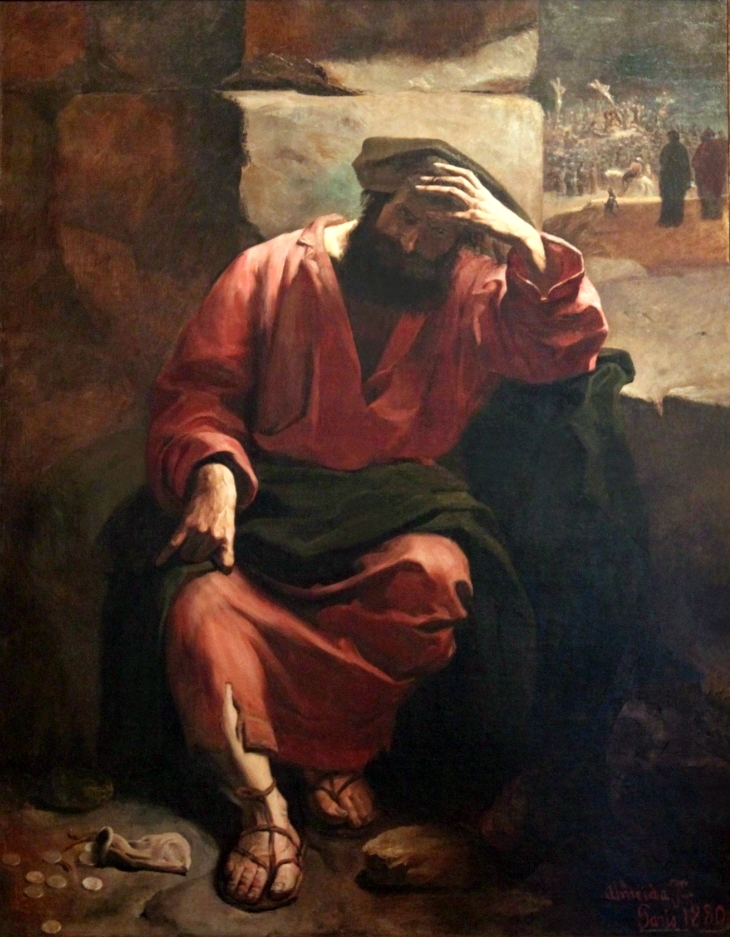
Next, he brings the guards to the Garden of Gethsemane at night, where Jesus is praying, and, approaching Christ, says, "Hail, Rabbi!" and kisses him, thus, signaling who should be arrested. Later, when Jesus was condemned to death, Judas repented of his deed, returned the 30 pieces of silver to the high priests and said, "I have sinned by betraying innocent blood," and then committed suicide out of despair.
Bulgakov radically reinterprets the Gospel story. In the novel, Judas of Kiriath is not an apostle, but an outsider. He provokes Yeshua into making political statements that are dangerous to authorities and arranges a meeting in the Garden of Gethsemane.
He needs the money not for its own sake, but to ransom the woman he loves from her husband. The 30 tetradrachms he receives become a means to find love. However, the meeting with his beloved turns into a trap: he is lured to the Garden of Gethsemane, where he is killed on the orders of Pontius Pilate.
Moscow, 1930s
In the novel's Moscow chapters, money becomes a satirical tool. With it, Woland and his retinue expose the vices of their contemporary society. The climax occurs with the famous séance at the Variety Theater. Using magic, Woland causes chervonets and then dollars to rain down on the audience. The audience instantly loses their composure and rushes to catch the money. Bulgakov ironically depicts how people are willing to lose their humanity for the sake of easy money. However, Woland's money soon turns into shredded paper.
The power of money to destroy a person is illustrated by the case of Nikanor Ivanovich Bosoy, the chairman of a housing cooperative. To allow Woland's retinue to move into a Moscow apartment, Koroviev gives Bosoy a bribe of 400 rubles, which are later converted into dollars. An anonymous call to authorities – and a greedy building manager accustomed to petty extortion – becomes a victim of the Soviet repressive system of the 1930s.
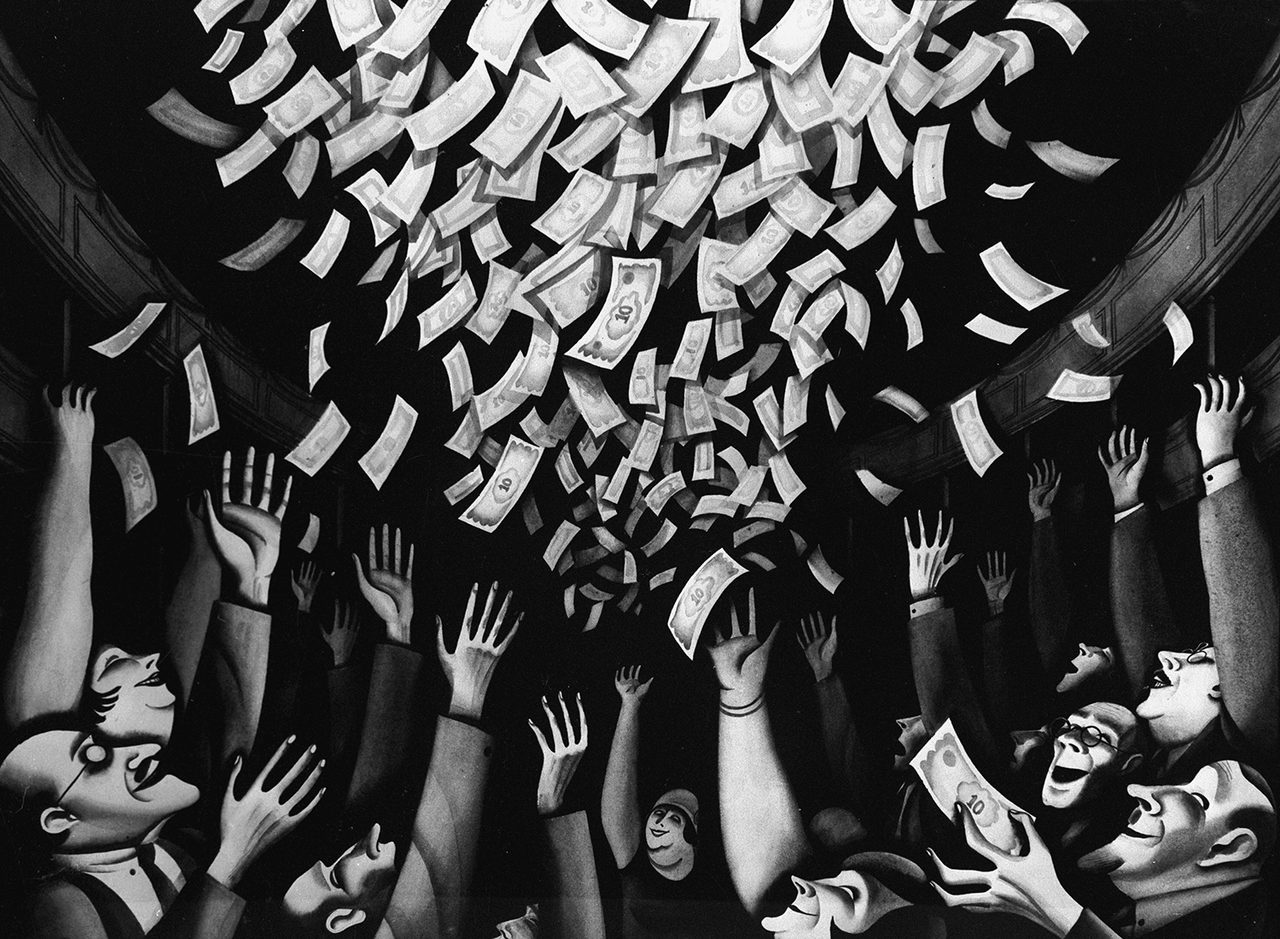
Another important aspect of money is access to the world of "luxury". The Torgsin, where Koroviev and Begemot enter, is a store for scarce goods, available only for foreign currency or gold. It’s a place where two realities collide: the total shortage experienced by ordinary citizens and the supposed abundance for the "chosen few". The pogrom perpetrated by Woland's entourage at the Torgsin is not simply an act of vandalism, but a symbolic act of systemic destruction.
The novel also includes characters who refuse money. And their refusal is emblematic. For example, Margarita, the book's protagonist, leaves her rich, secure life with her unloved husband for the love of the Master. Money means nothing to her, just as it does to the writer Master. And, in the end, they both receive a reward: a life free from material vanity.
"A visible embodiment of all sorts of temptations and vices," as curator Elena Semiletnikova put it, can be seen in the ‘People Like People. They Love Money’ exhibition at the Historical Museum until January 18, 2027. It’s to commemorate the 135th anniversary of Mikhail Bulgakov's birth and mark the 60th anniversary of the first publication of his novel ‘The Master and Margarita’.