

How famous scientist Mikhail Lomonosov made mosaic icons (PHOTOS)

He was known as a physicist, chemist, astronomer, geographer, geologist and even a poet. But, he was also an artist.
His passion for mosaics had not only artistic, but also scientific purposes.
By the mid-18th century, the art of mosaics in Russia was virtually lost. Italian masters were the primary keepers of the secrets of melting smalt – colored opaque glass – in Europe at the time. And they were reluctant to share them. So, Lomonosov approached this problem as a scientist: He decided not to copy the technology, but to develop his own.
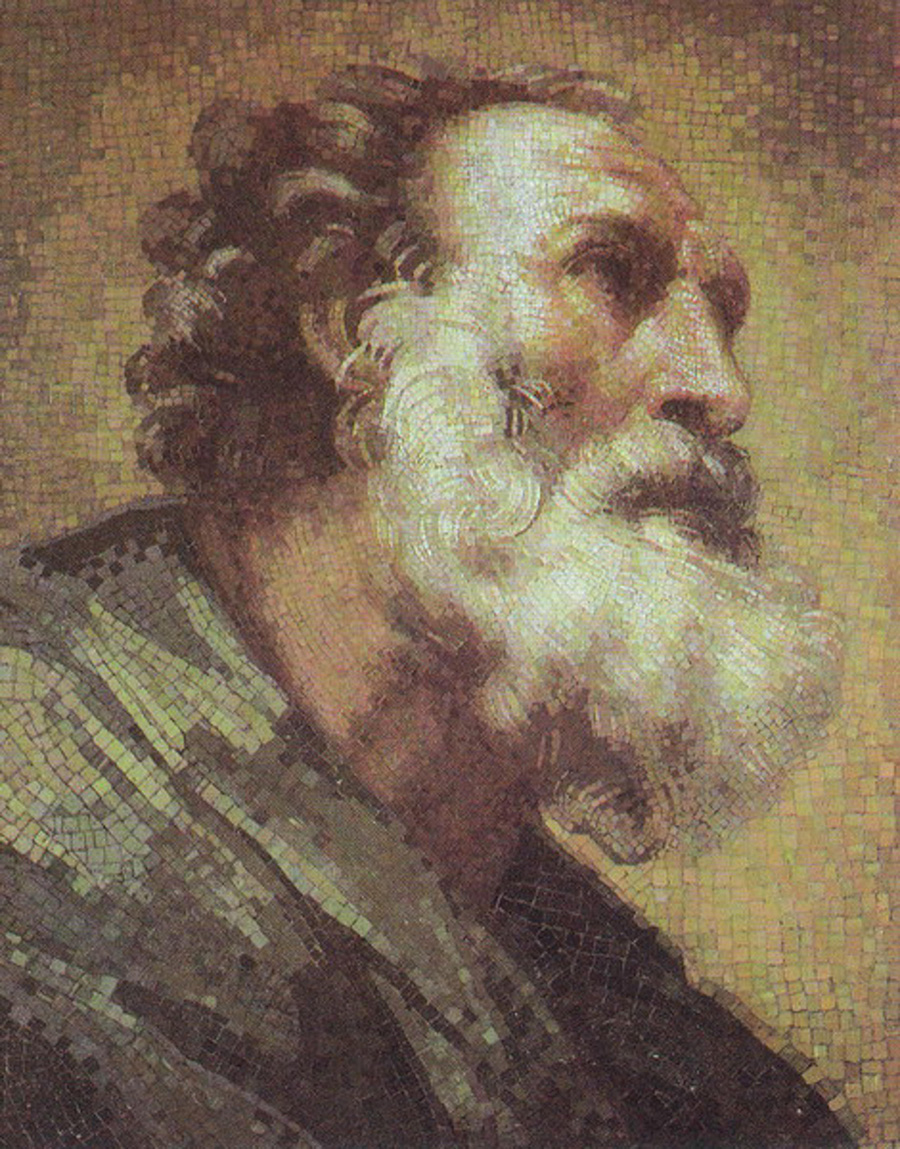 Saint Peter. 18th century. Lomonosov
In 1748, he secured the construction of his own chemical laboratory, where he conducted several thousand experiments on melting colored glass. He studied the influence of metals on hue: copper produced green tones, while gold ruby-red and antimony yellow. Lomonosov developed a formula and created a palette that rivaled the Italian one in its variety of shades. This allowed him to begin creating his own mosaic canvases.
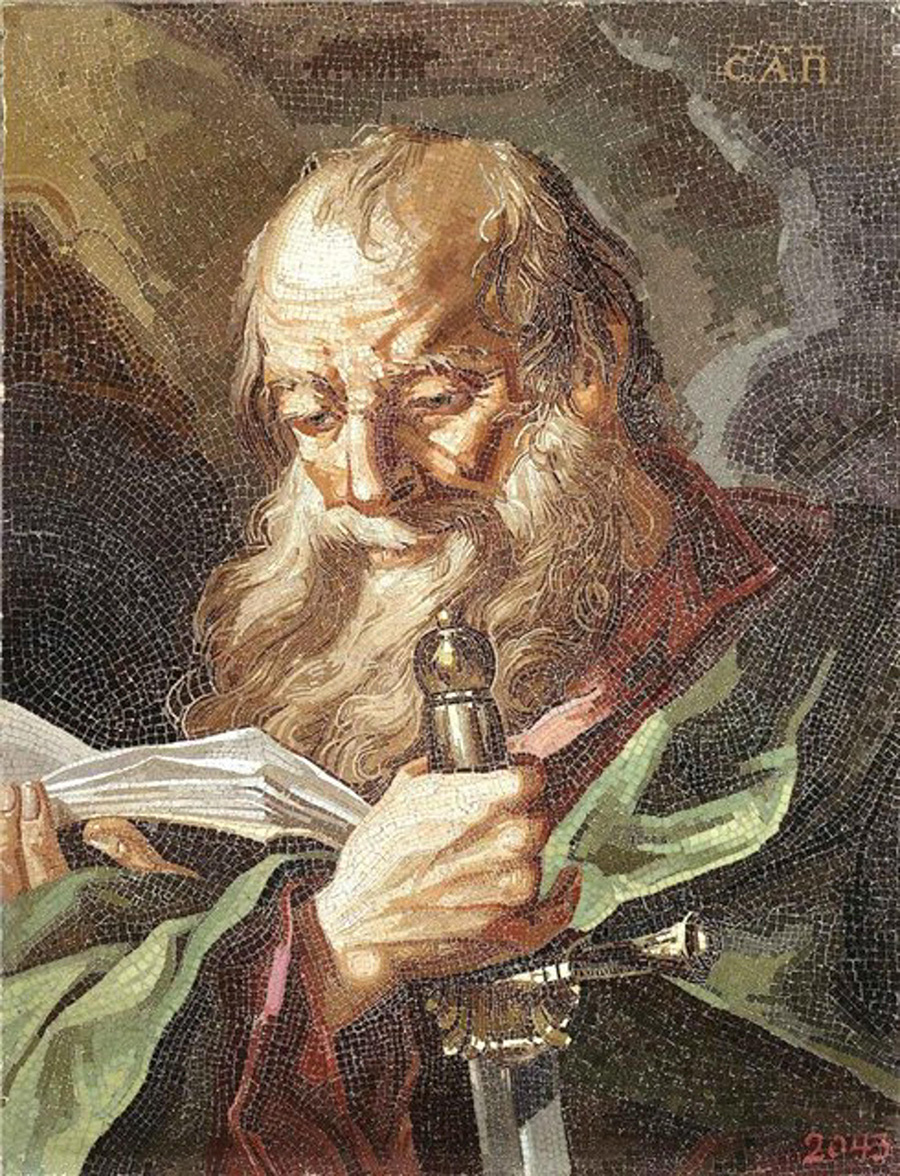 Saint Paul. 18th century. Lomonosov
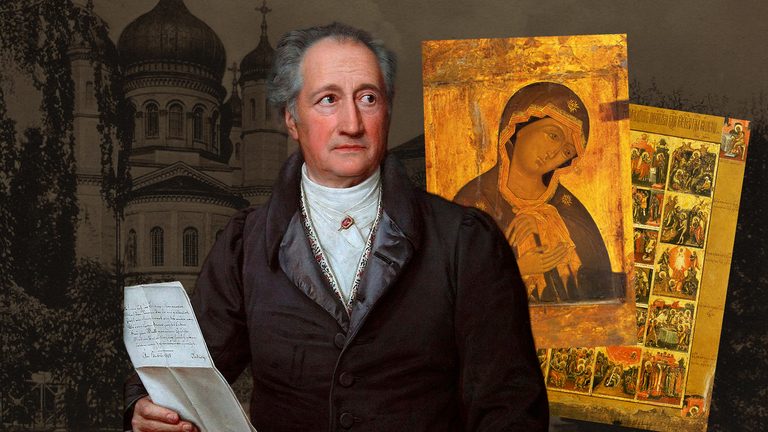
As early as 1752, the scientist presented Empress Elizabeth Petrovna with a hand-painted mosaic icon of the Mother of God. The work, composed of over 4,000 pieces of smalt, made a real impression at court. A year later, he created ‘The Savior Not Made by Hands’ – a small icon (11 x 9 cm), which he considered a technological test.
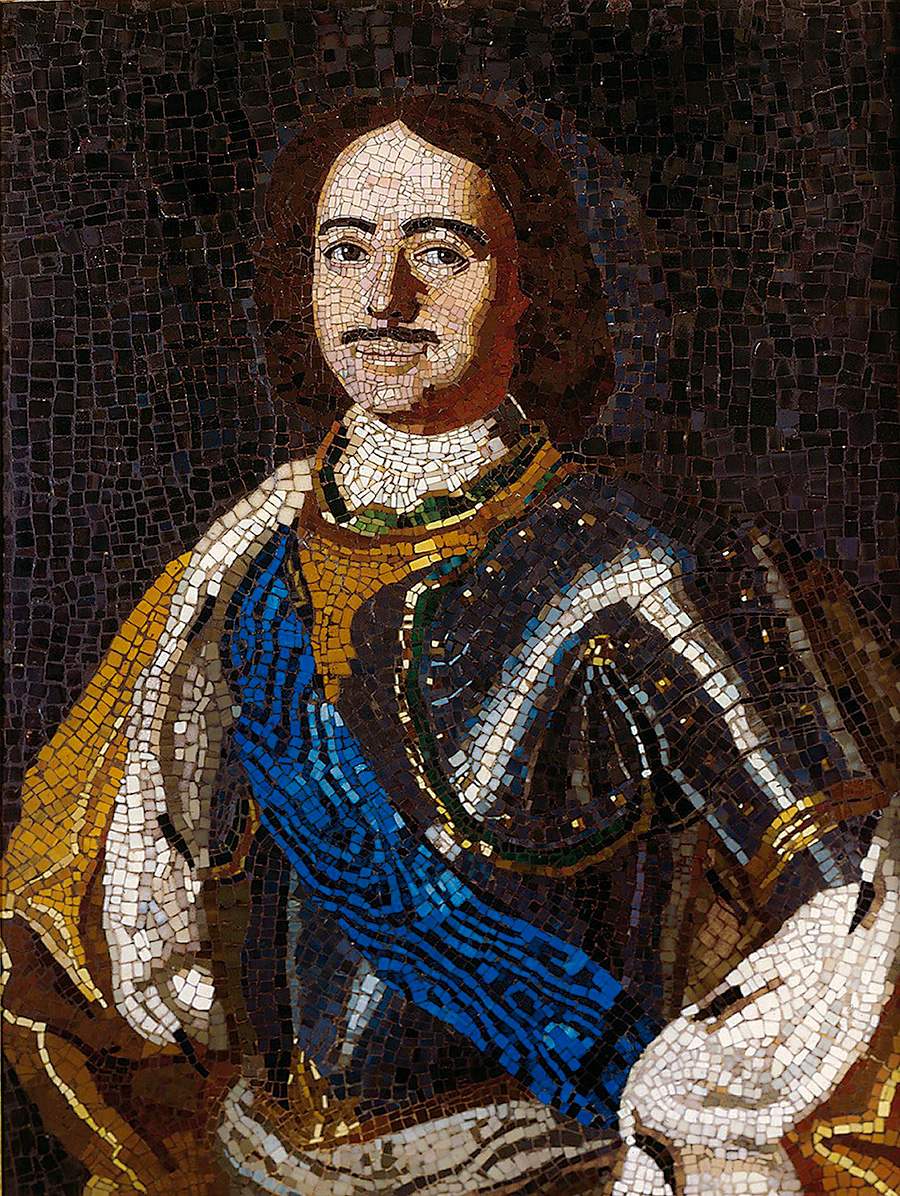 Portrait of Emperor Peter I the Great (1672-1725). State Hermitage, St. Petersburg
Realizing that large-scale projects could not be realized alone, Lomonosov organized production. In 1754, he received land for the construction of a smalt foundry. There, he established the production of glass beads, seed beads and mosaic compositions. At the same time, he trained the first Russian mosaicists from the Drawing Chamber of the Academy of Sciences, Matvey Vasiliev and Efim Melnikov, while he continued to participate in the commissioning of many works.
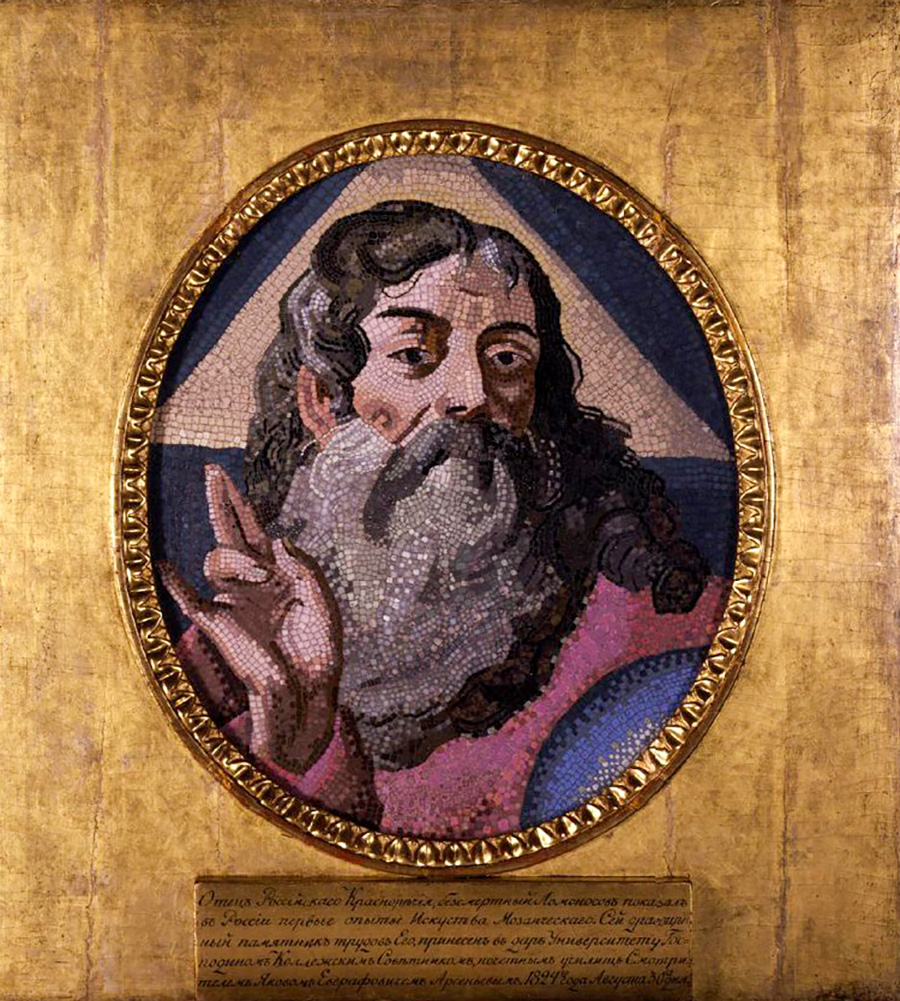 God the Father. Mosaic. Lomonosov Workshop. Workshop of M.V. Lomonosov. 18th century (1756-1757)
Among the icons he created were images of Alexander Nevsky, the Apostle Peter and several versions of the Virgin Mary. His approach to mosaic differed from traditional ones: He sought to convey not just contours, but volume and texture. For example, in portraits and icons, Lomonosov used tiny pieces of glass to achieve the effect of lace or folds of fabric.