

The first Russian travelogue: Afanasy Nikitin's ‘A Journey Beyond the Three Seas’
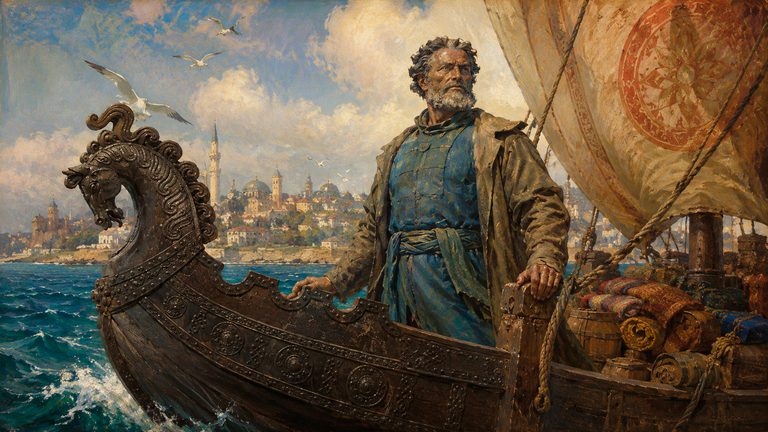
In 1468, he set out from Tver down the Volga River to the Caspian Sea with a caravan of ships. His journey turned into an odyssey spanning several years and countries.
Afanasy Nikitin was a 15th-century Russian merchant. Almost nothing is known about his life, other than that he was the son of Nikita (meaning ‘Nikitin’ was not his last name, but his patronymic) and lived in Tver. His grand journey began as a trade expedition. However, after the caravan was robbed by local bandits near Astrakhan, Nikitin did not turn back, but continued on his way to minimize his losses. Via Derbent and Persia, he reached Hormuz and, from there, he crossed the Arabian Sea by ship and landed at the Indian port of Chaul.
He spent about three years in India, observing the daily life, trade, religious rituals and political structure of the local principalities. His notes are unique in that they constitute the first secular account of distant lands in Old Russia, free of legends. He honestly recorded prices, goods, customs and his own experiences, including homesickness and reflections on the Christian faith among Hindus and Muslims.
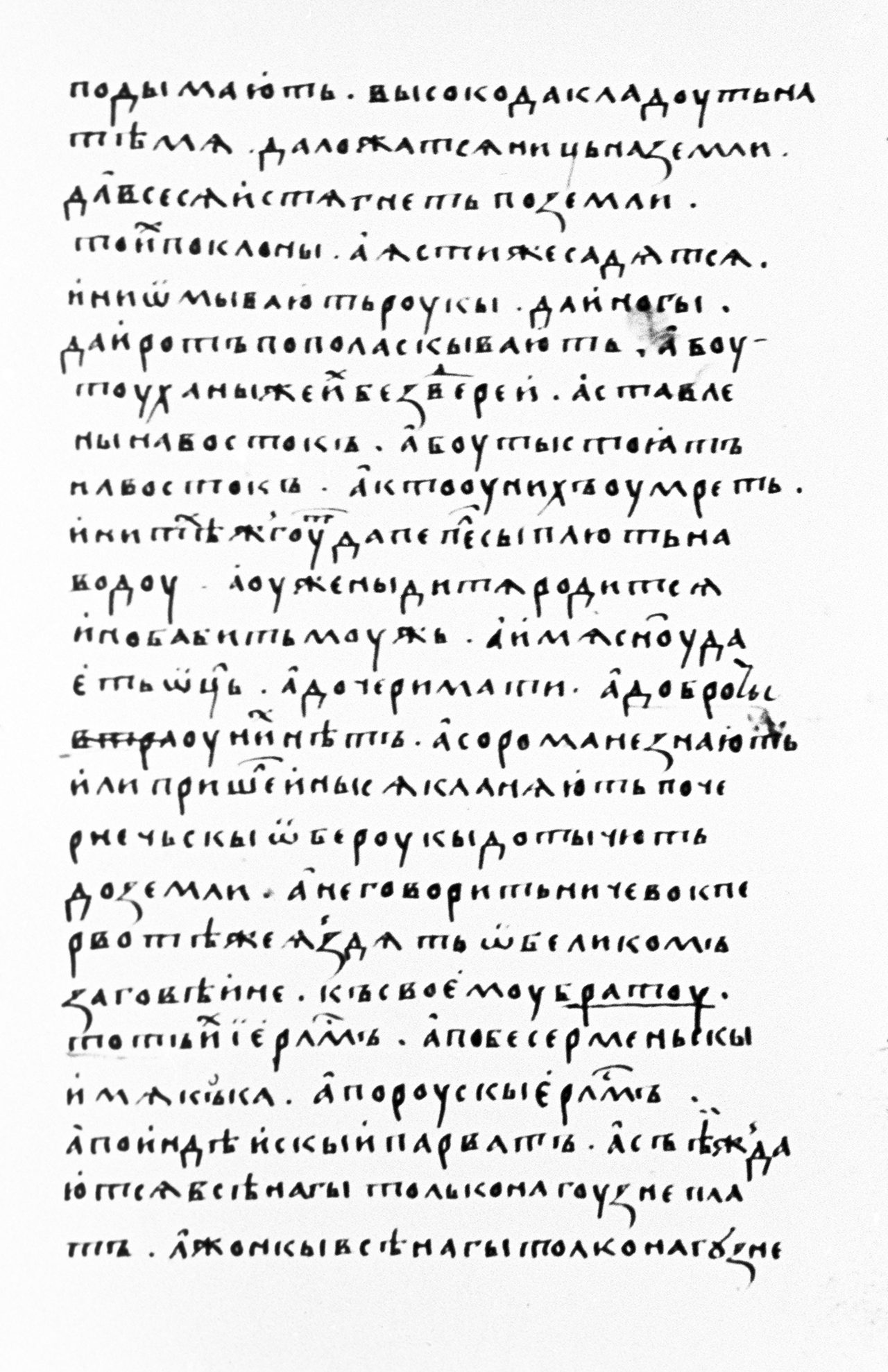
His notes are called ‘A Journey Beyond the Three Seas’. The three seas are the Caspian, the Arabian and the Black seas (he crossed the last on his return journey). In reality, his route was more complex: he visited the Bahmani Sultanate, its capital Bidara, the legendary Vijayanagar, as well as the sacred city of Parvatta. His return journey took him through Arabia, Persia and Trebizond, but he did not manage to reach his native Tver – he died near Smolensk in Fall 1475.
His companions brought the handwritten notebooks containing his notes to Moscow, where they were incorporated into the chronicle.
For its time, ‘The Journey’ was a breakthrough for several reasons. First, it is a secular journey. The genre of "journeys" existed in Old Russian literature before Nikitin, but all known examples were pilgrimage accounts – descriptions of journeys to holy sites, primarily Jerusalem. Nikitin, on the other hand, writes about trade, prices, roads and the political situation – a practical account, not spiritual edification.
Second, a realistic view of India. Before Nikitin, fantastical legends about India – such as people with dog heads and the like – circulated in Russia and Europe. Nikitin, however, saw the real country: he describes peasants eating rice and vegetables, townspeople engaged in crafts, princes riding elephants and warhorses valued more highly than gold. He records in detail what goods are imported and exported, where one can buy what and what local currencies are in circulation. His perspective is that of an observant merchant.
Third, there's a sincere internal dialogue. Throughout the text, Nikitin reflects on faith. Finding himself surrounded by Muslims and Hindus, he keenly feels his isolation as a Christian; he respectfully describes Hindu customs (fasting, ablutions, sun worship), yet at the same time grieves that he cannot observe Orthodox rites.
‘A Journey Beyond the Three Seas’ was written 30 years before Vasco da Gama's voyage and predated European descriptions of India by several decades. For Russian readers of the 15th century, it was a window into a completely unknown world. For historians today, it’s an invaluable document.
Russian historians did not read Nikitin's notes (in chronicle manuscripts) until the early 19th century. In 1817, Karamzin proudly wrote about it in his ‘History of the Russian State’: “Until now, geographers did not know that the honor of one of the oldest European voyages to India described in European sources belongs to Russia in the era of John… At a time when Vasco da Gama was solely preoccupied with the possibility of finding a route from Africa to Hindustan, our man from Tver was already trading on the Malabar Coast and conversing with the locals about the tenets of their faith.”