

6 Russian idioms that hide famous place names

If it's a verst, then it's Kolomenskaya and if it's a nightingale, then Kursk. There are expressions in Russian that can be used to study history and geography.
1. ‘Во всю Ивановскую’ (‘Vo vsyu Ivanovskuyu’)
‘At the top of Ivanovskaya Square’
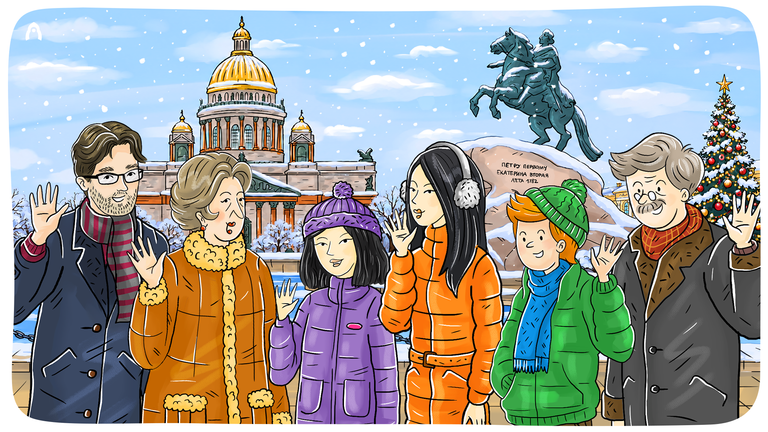
If you're going to shout, then do it like this, in the very heart of the Moscow Kremlin. In the 16th and 17th centuries, all new decrees signed by the tsar were announced on Ivanovskaya Square, located in the ancient fortress. They were read loudly and emphatically, that is, at the top of Ivanovskaya Square – so that even those far from the herald could hear.
2, ‘Белгородский кисель’ (‘Belgorodskiy kisel’)
‘Belgorod Kissel’
Thanks to the cunning of the Belgorod residents, the city managed to escape its Pecheneg enemies. The invaders thought the townspeople would surrender after the siege, as they had no food left. But, to their surprise, they saw buckets full of jelly and honey being hauled up from the wells. Little did they realize that two barrels had been specially placed there – one containing jelly made from the remains of wheat, bran and oats and the other containing the city's last honey reserves. The Pechenegs, deciding that the siege would achieve nothing, retreated from Belgorod.
3. ‘Коломенская верста’ (‘Kolomenskaya versta’)
‘Kolomenskaya verst’
This expression is often used to describe very tall, thin people – as in, "Wow, you've grown so tall!" The expression comes from the verst, a unit of distance commonly used before the 1917 Bolshevik Revolution. Each road was marked with a special verst post – for example, the road from Moscow to Kolomenskoye, the royal residence, was marked this way. Moreover, the posts were taller than usual, meaning they were specifically Kolomenskaya versts.
4. ‘Сирота казанская’ (‘Sirota kazanskaya’)
‘Kazan Orphan’
This expression appeared after the conquest of the Kazan Kingdom. According to one version, local princes sought to gain a position at the court of Ivan the Terrible by converting to Orthodoxy and maintaining a distinctly modest demeanor. They were jokingly dubbed ‘Kazan orphans’. Another version holds that the orphans were genuine – after the battles, many children were left without parents and were found new families, who took them in.
5. ‘Курский соловей’ (‘Kurskiy solovey’)
‘Kursk Nightingale’
This is a case where the expression can be used both to express admiration for someone's vocal abilities and to doubt them. Those who chatter a lot are also called ‘Kursk Nightingales’.
6. ‘Китайская грамота’ (‘Kitayskaya gramota’)
‘Chinese Literacy’
This expression appeared in the Russian language thanks to a trip to China by Tomsk merchants. They carried with them a letter from Tsar Mikhail Feodorovich. Emperor Zhu Yijun had previously sent the Russian monarch a document permitting visits to the country and trade within its borders. However, the court only learned of this half a century later, when a Chinese translator was found. And the expression itself began to be used to describe something completely incomprehensible.