
The life of Catherine the Great on canvas by artists (PICS)
She’s considered to be the most outstanding Russian ruler and one of the most powerful women in world history. See how artists depicted some episodes from her life.
1. Anna Rosina de Gasc. ‘Grand duchess Catherine Alexeyevna with her husband Peter III Feodorovich’, 1756
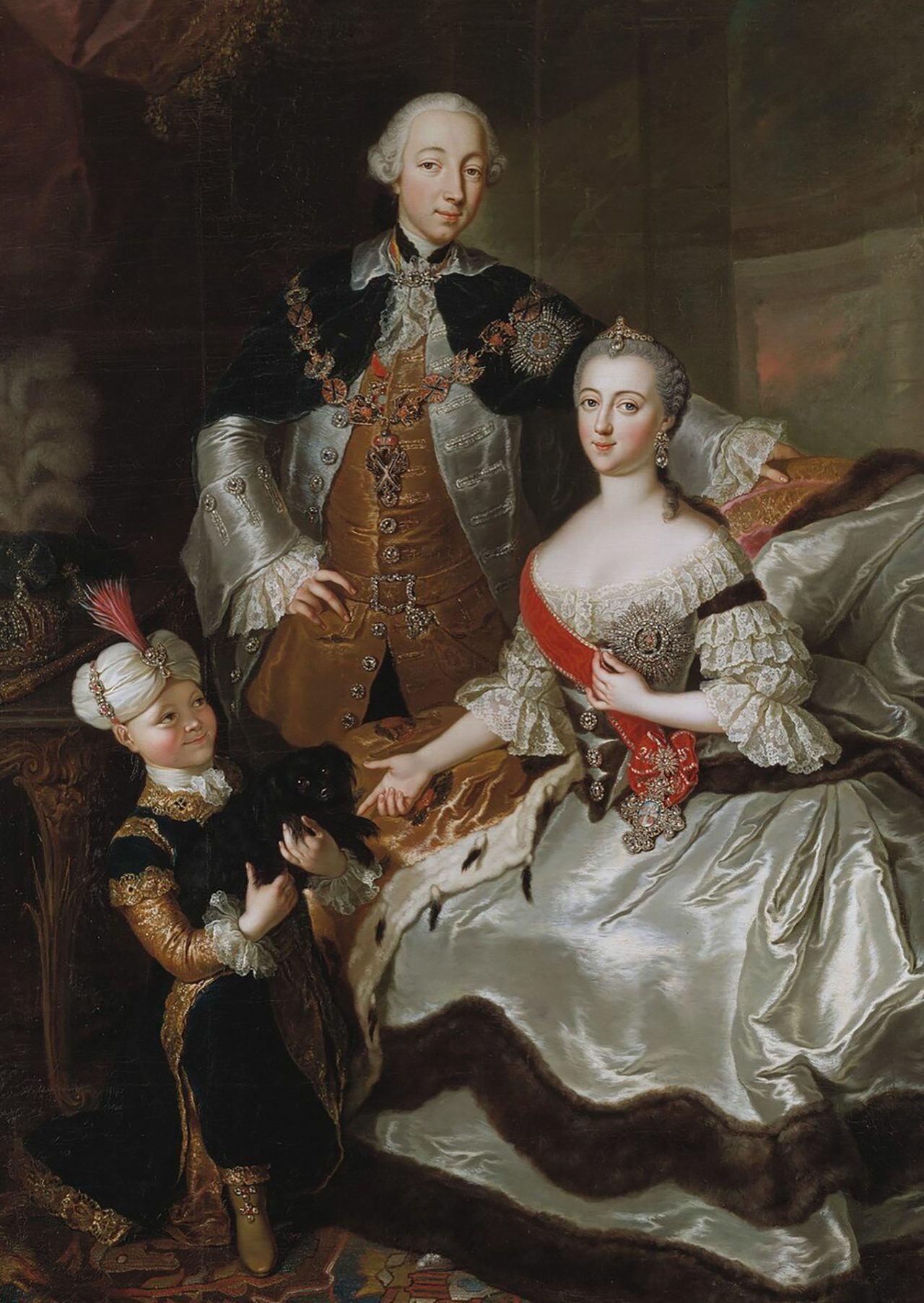
In 1743, a childless Empress Elizabeth Petrovna began searching for a wife for Karl Peter Ulrich (Peter III), her nephew and heir to the throne. She chose Sophie Frederica Augusta (Catherine II) of the German princely family of Ascanius. However, their family life did not go well.
2. Nikolai Ge. ‘Catherine II at the coffin of empress Elizabeth’, 1874
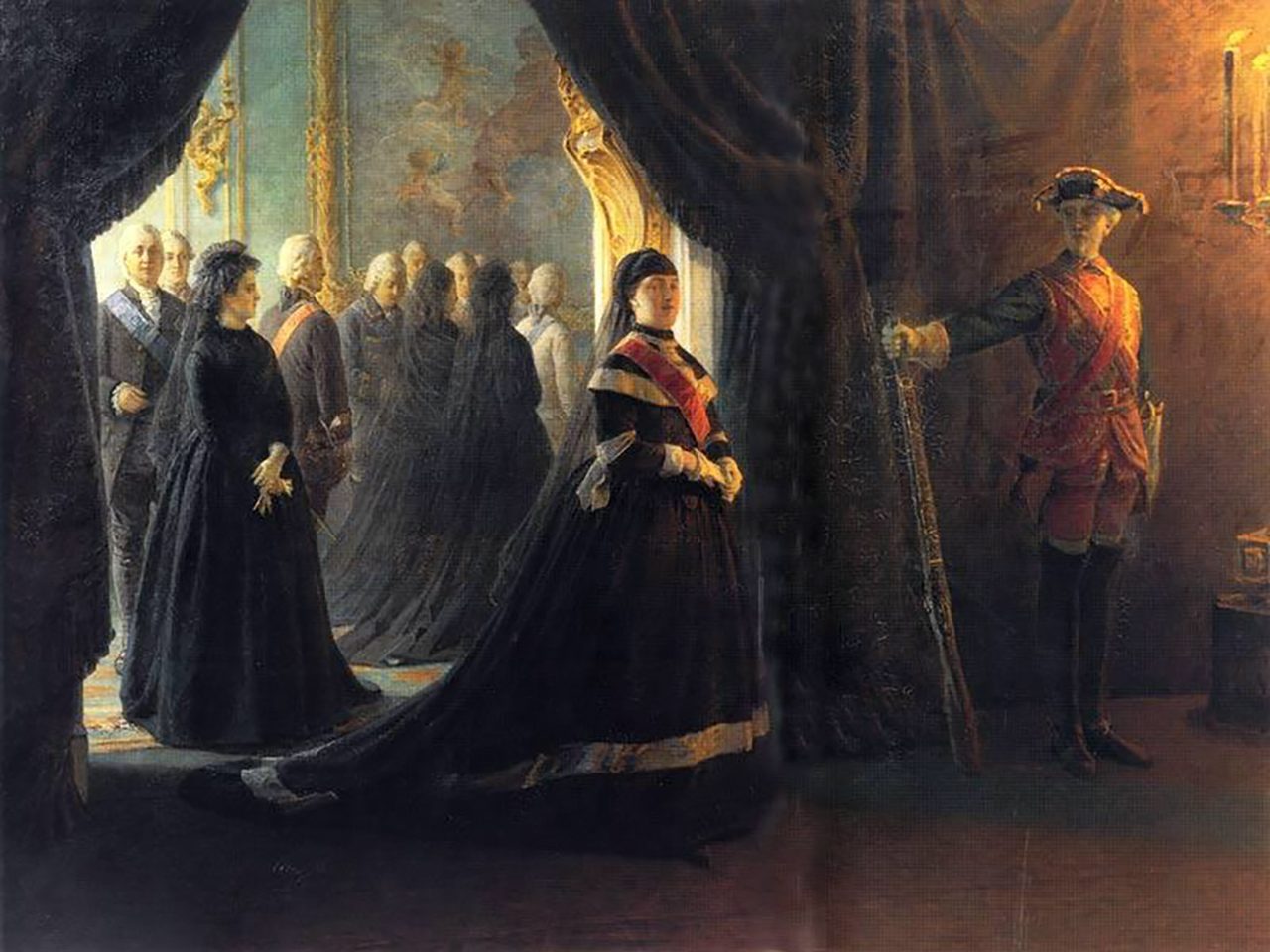
In 1761, Elizabeth died. During the mourning period, Peter behaved completely inappropriately, joking and laughing a lot. Catherine, on the other hand, made every effort to demonstrate piety and submissiveness, winning the sympathy of society – she was already plotting to deprive her husband of power.
3. Joachim Kästner. ‘Catherine II on the balcony of the Winter Palace, greeted by the guards and the people on the day of the coup, June 28, 1762’, 1760s
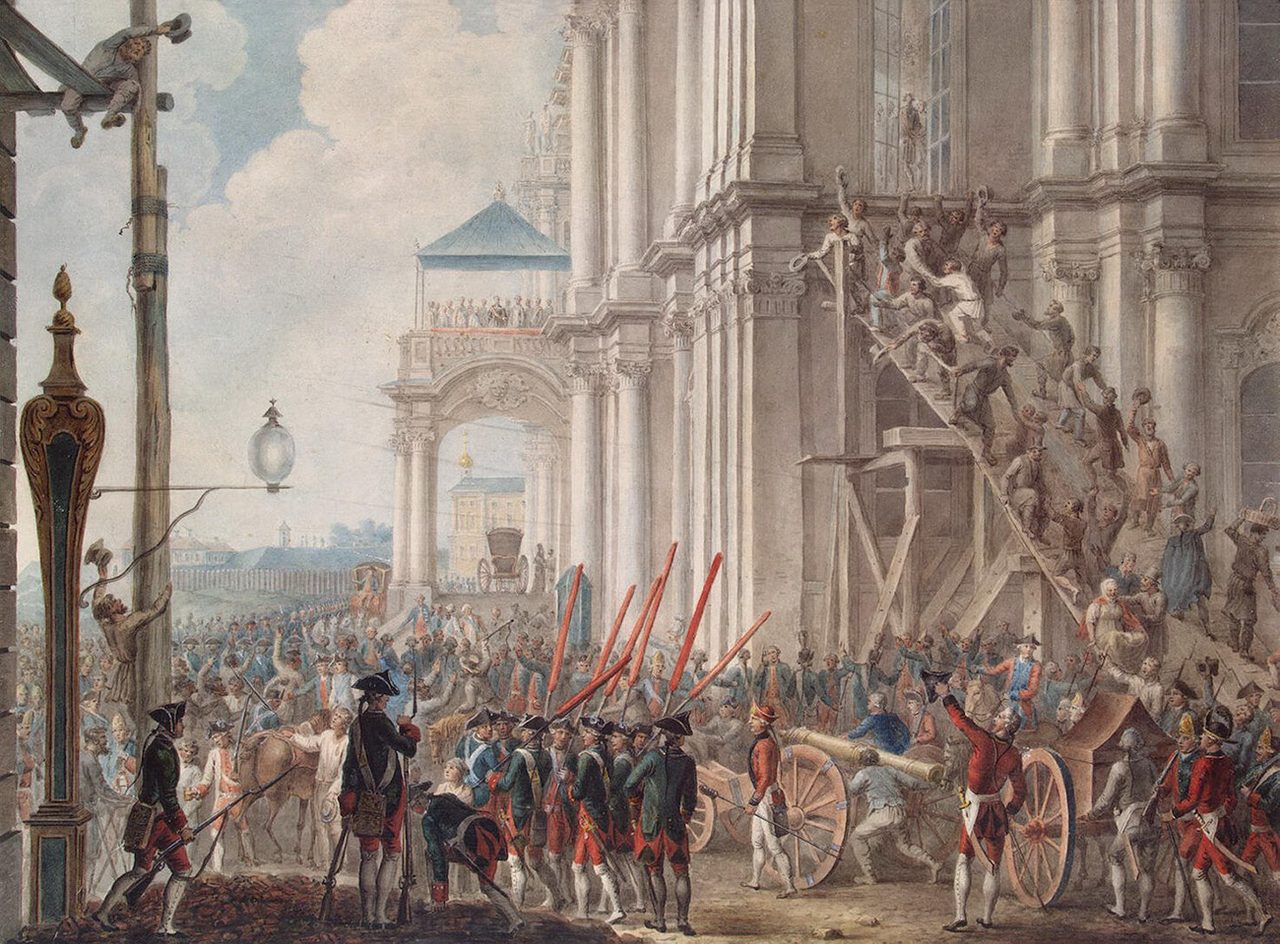
On July 9 (Gregorian calendar), 1762, Catherine, with the support of the guards, overthrew her husband, Peter III, who, in just six months of his reign, had managed to anger everyone with his disregard for Orthodoxy and ill-considered foreign policy. The coup was bloodless, but, a week later, the deposed monarch died under unclear circumstances.
4. Stefano Torelli. ‘The coronation of Catherine II, September 22, 1762’, 1777
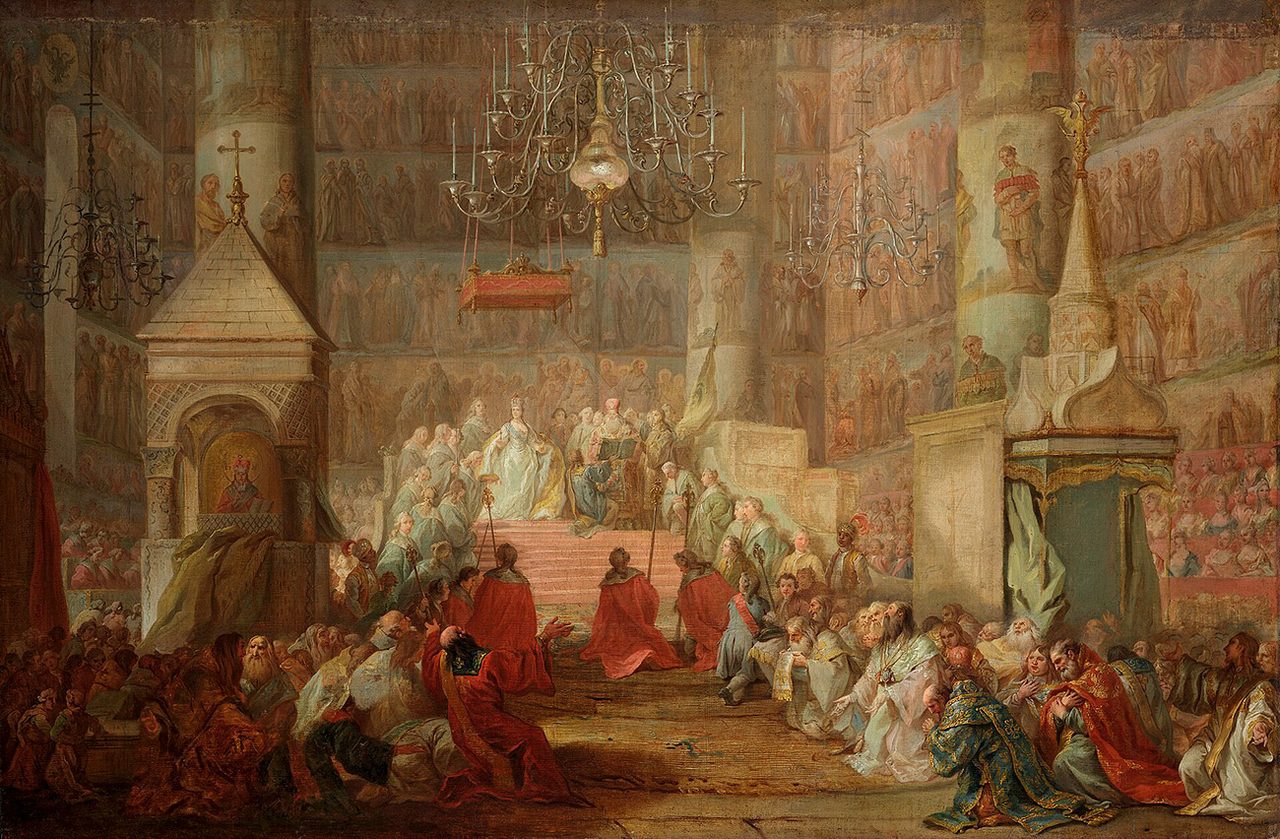
A large-scale and spectacular ceremony took place in the Moscow Kremlin’s Assumption Cathedral. The coronation celebrations continued for about six months. Food was distributed to the common people and the nobility reveled at the evening balls. The culmination was the ‘Triumphant Minerva’ street masquerade, attended by 4,000 people.
5. Fyodor Rokotov. ‘Coronation portrait of Catherine II’, 1763
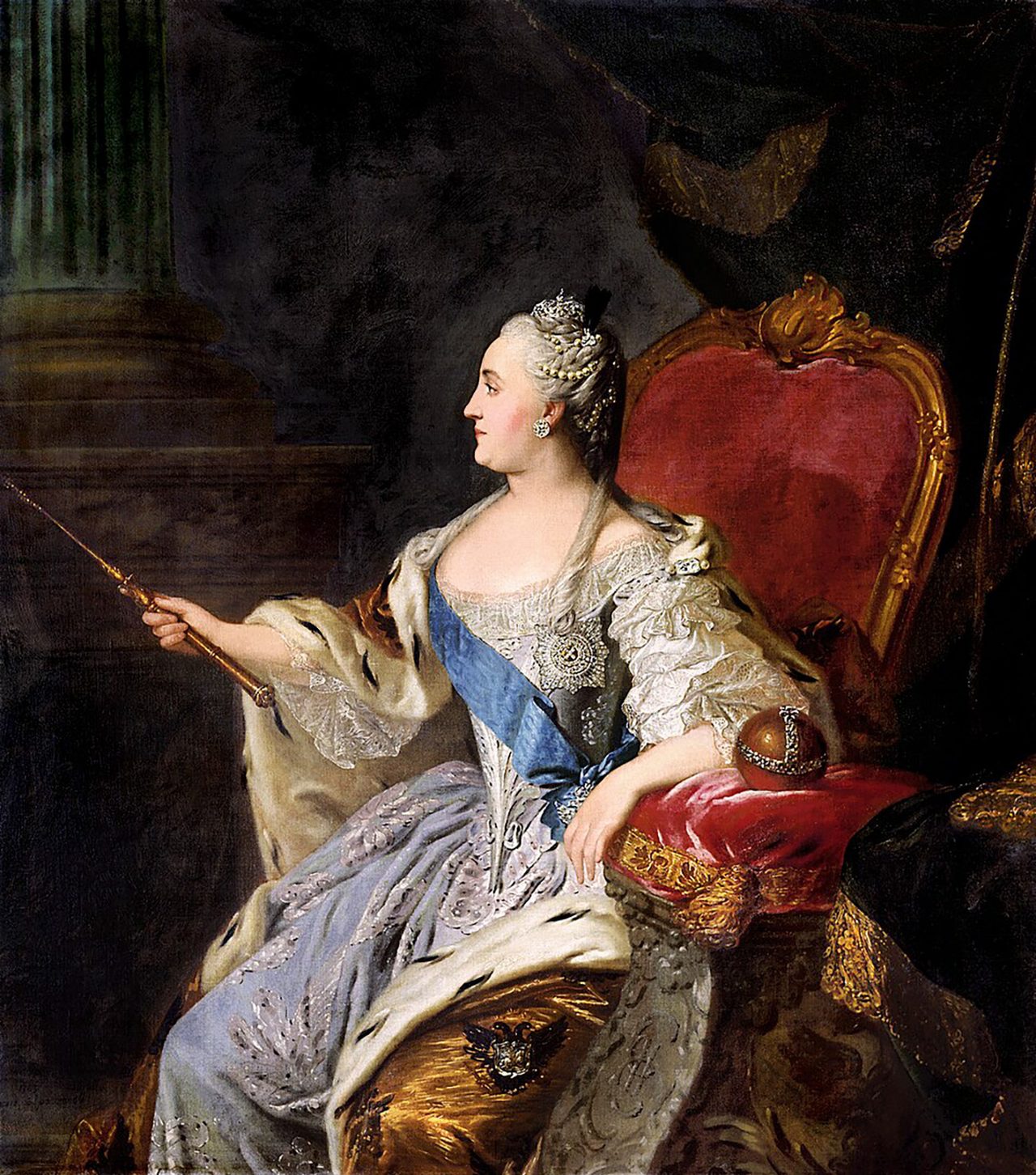
The empress' dress was adorned with numerous images of the state coat of arms. They were intended to emphasize the legitimacy of her power. No other Russian monarch appeared at a coronation wearing a costume adorned with such symbols. They were otherwise used exclusively on robes.
6. Ivan Fedorov. ‘Empress Catherine II with M.V. Lomonosov’, 1884
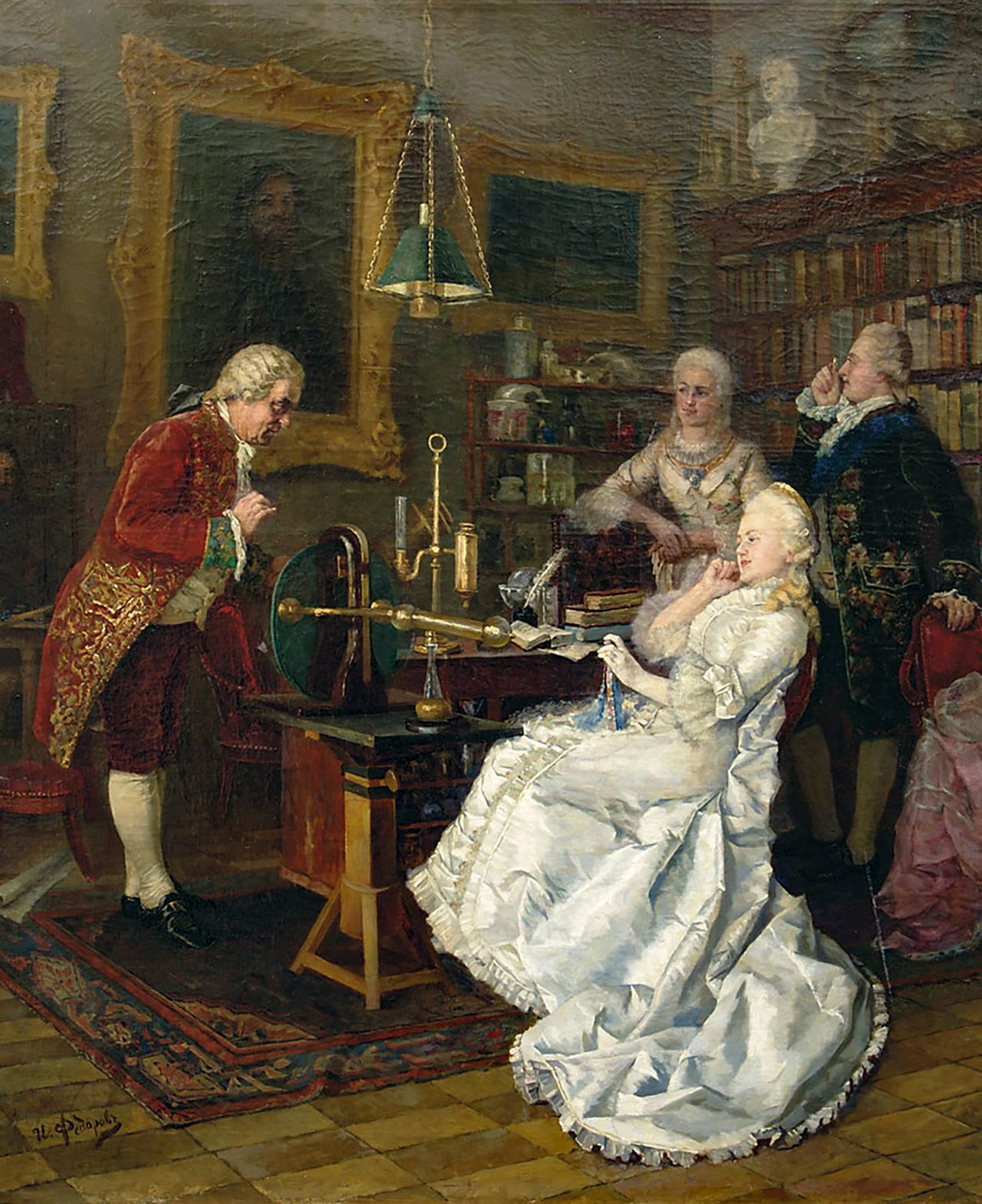
Known as one of the most outstanding Russian scientists, Mikhail Lomonosov became renowned as a chemist, physicist, historian, astronomer, geographer, geologist, poet, artist and linguist. Catherine patronized him and even visited his home in St. Petersburg in 1764. Lomonosov demonstrated his inventions to her and conducted several physics and chemical experiments.
7. Jean-Michel Moreau. ‘The king's cake’, 1773
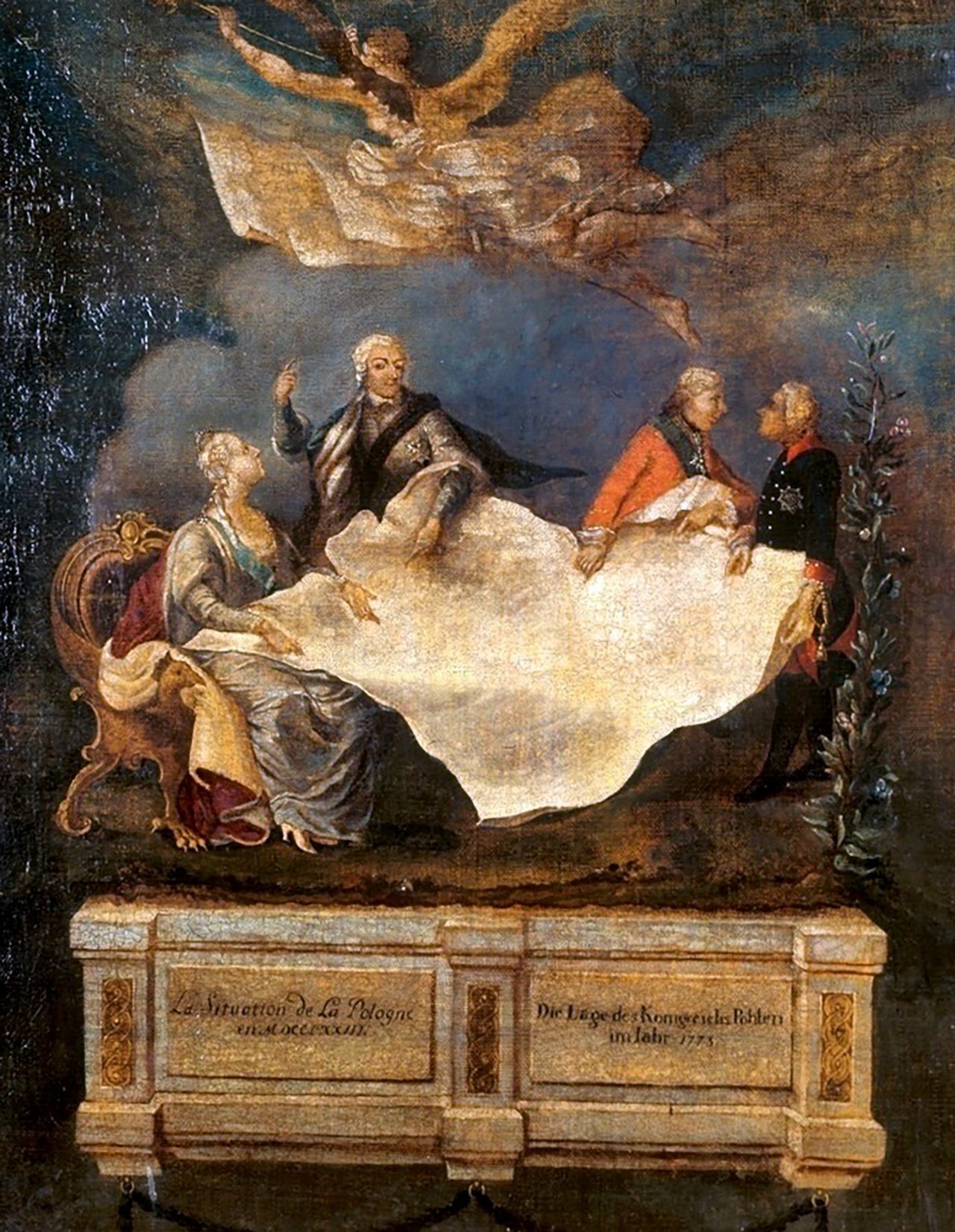
In the second half of the 18th century, the once-mighty Polish-Lithuanian Commonwealth fell into decline and became easy prey for its neighbors. In 1772, Russia, Austria and Prussia signed a convention to alienate part of its territory in accordance with demands "as ancient as they are legitimate". This marked the first of three partitions of the Polish-Lithuanian Commonwealth, which ultimately led to its disappearance from the political map of Europe.
In the engraving, the artist depicts Catherine II, Holy Roman Emperor Joseph II, King Frederick II of Prussia and a Polish ruler Stanisław II August Poniatowski.
8. Gunnar Berndtson. ‘Diderot with a speech to Catherine II’, 1893
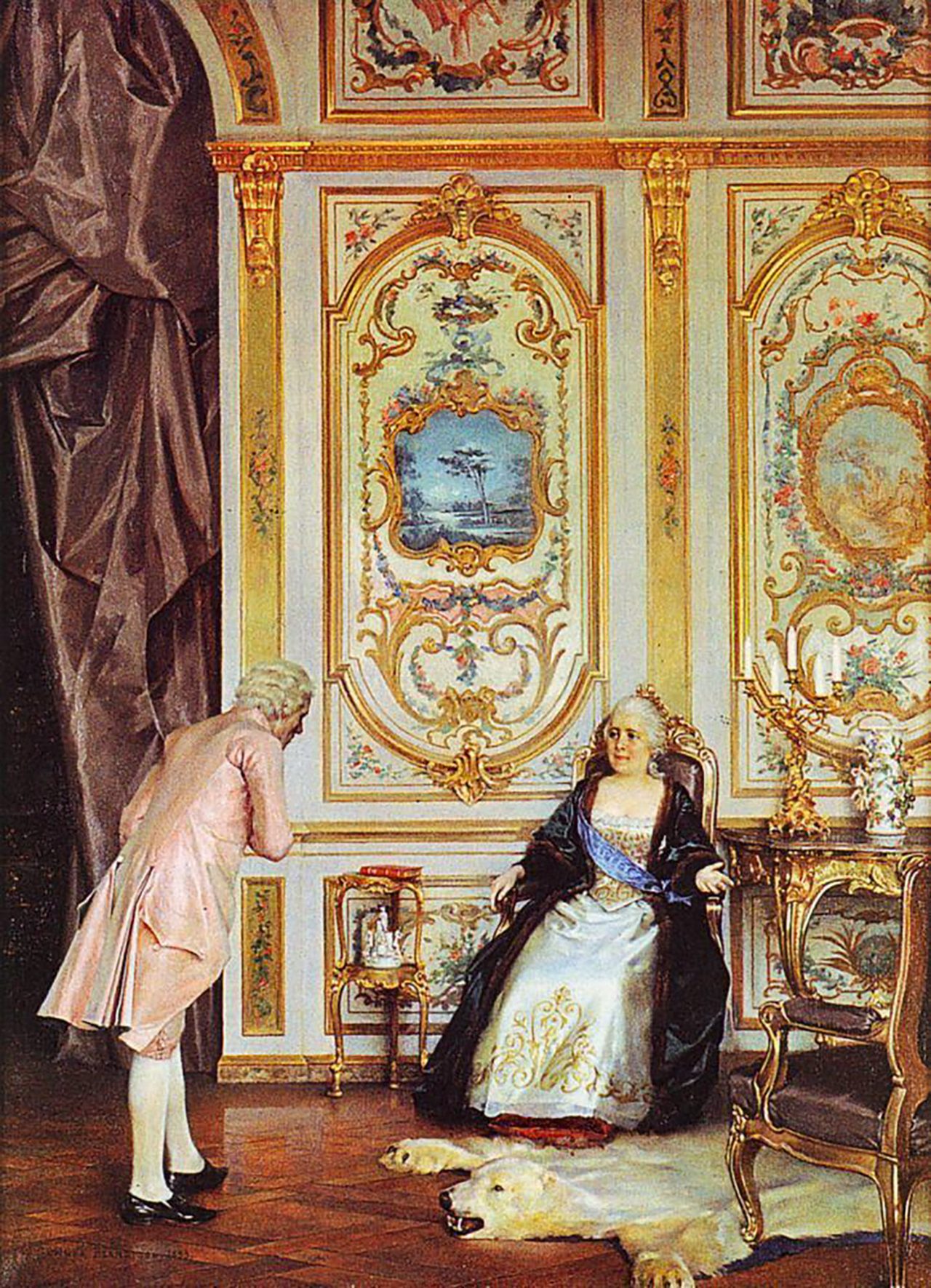
Catherine II considered herself an enlightened monarch and corresponded with several prominent thinkers of her time, including Denis Diderot. In 1765, she acquired his private library with the right to transport it from Paris to St. Petersburg after the philosopher's death, which was accomplished in 1785. Diderot's only visit to Russia was at the invitation of the empress in 1773.
9. Stefano Torelli. ‘Allegory of Catherine II's victory over the Turks and Tatars’, 1772
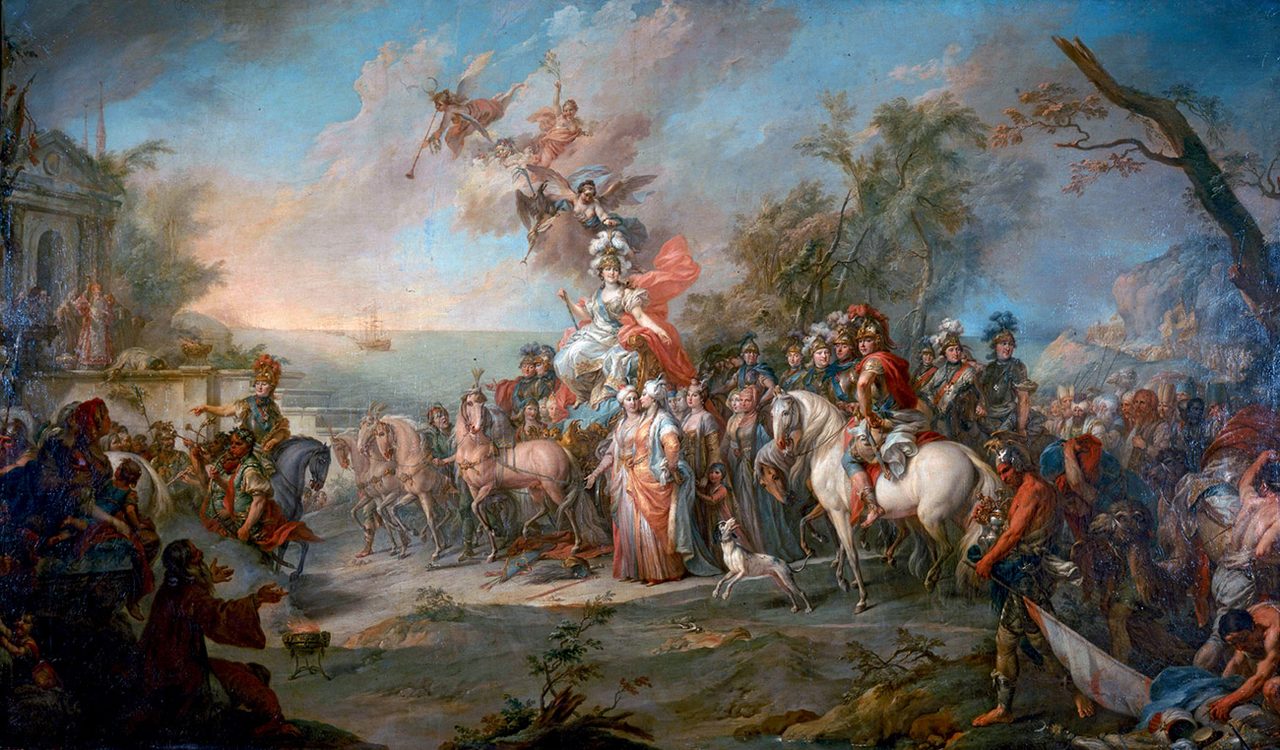
Victory in the 1768-1774 war against the Turks allowed the Russians to gain a foothold in the northern Black Sea region and acquire their first lands in Crimea (also known then as Taurida). Istanbul lost control of the Crimean Khanate, which formally declared independence. Russia consolidated its status as a great power, while the Ottoman Empire began its rapid decline.
Toreli completed the painting in 1772. There were still two years until the end of the conflict, but its outcome was no longer in doubt. The artist depicted Catherine II as Minerva, the ancient Roman goddess of wisdom and war.
10. Andreas Caspar Hüne. ‘Catherine II gives laws to Taurida’, 1791
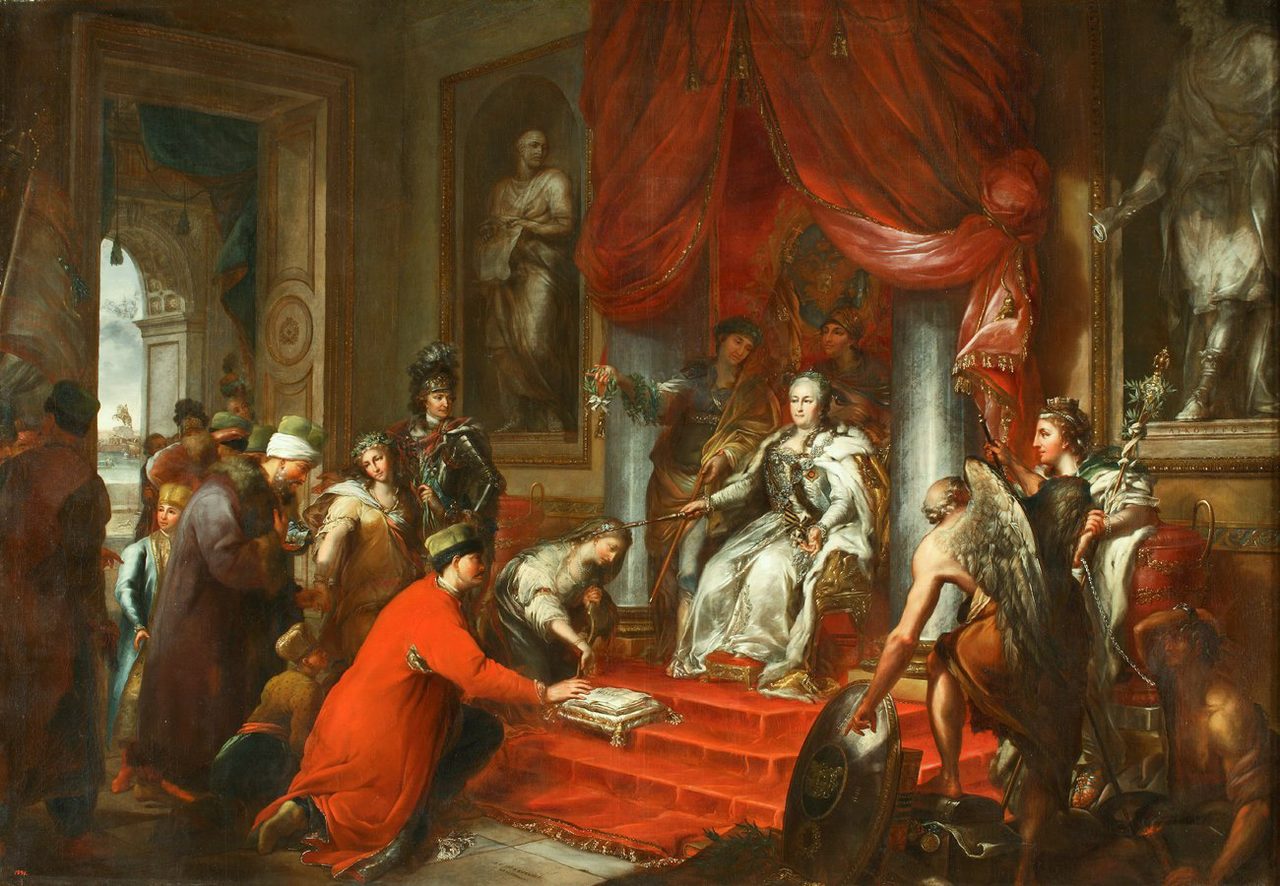
In the early 1780s, the Crimean Khanate It was a mere shadow of its former power and was subject to intense pressure from both the Russian and Ottoman empires. Russia ultimately emerged victorious in the struggle for control of the peninsula. In 1782, an anti-Russian uprising broke out in Crimea. Catherine sent troops to suppress it and, the following year, annexed the khanate to the empire.
11. Ivan Aivazovsky. ‘Arrival of Catherine II in Feodosia’, 1883
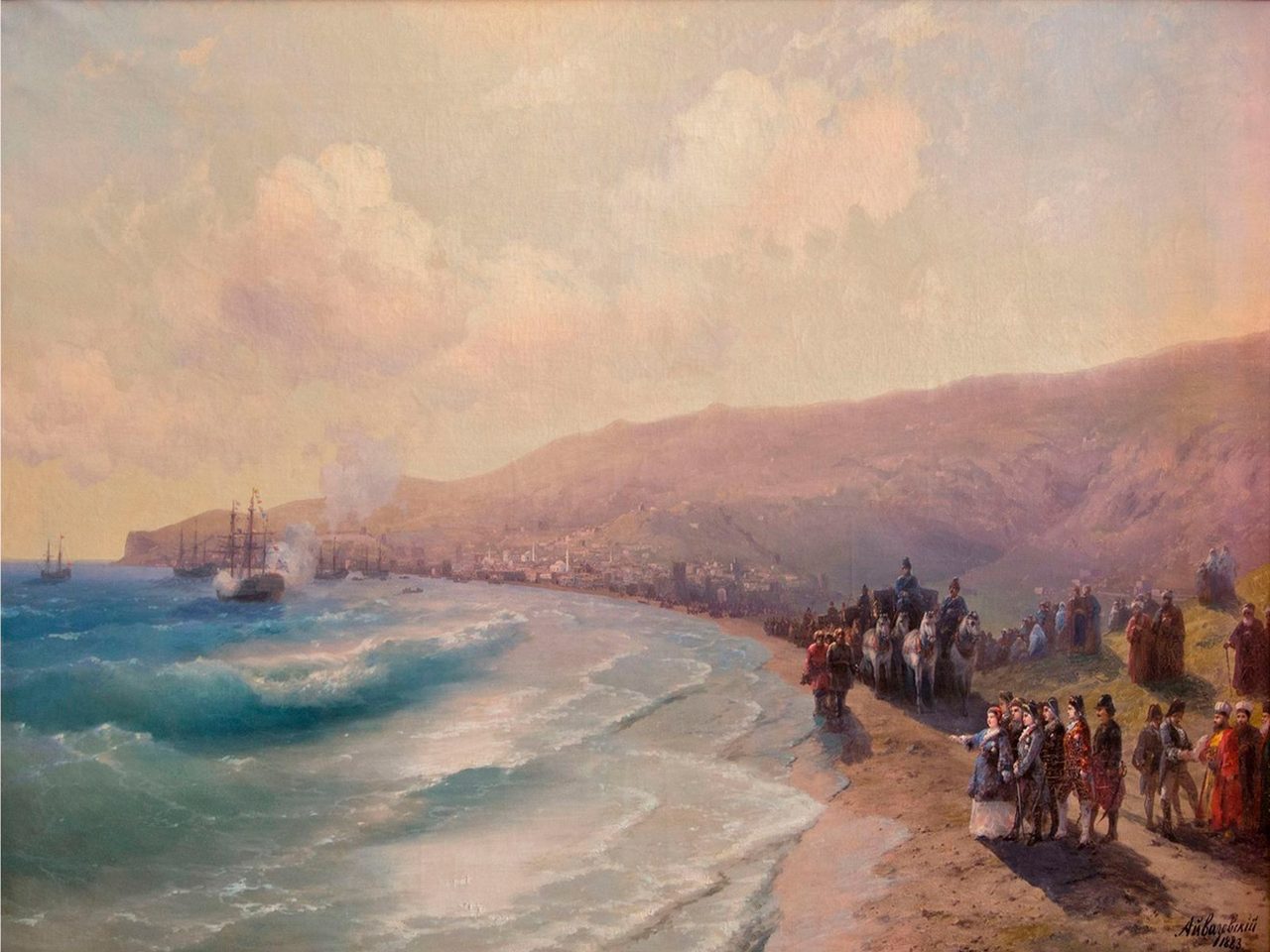
In 1787, four years after the annexation of Crimea, Catherine II embarked on a six-month visit to the peninsula. This event astonished contemporaries with its scale – the empress' retinue numbered approximately 3,000 people. The empress was very pleased with what she saw and called Taurida "the finest jewel in her crown".
12. Dmitry Levitsky. ‘Portrait of Catherine II as the lawgiver in the temple of the goddess of justice’, 1783
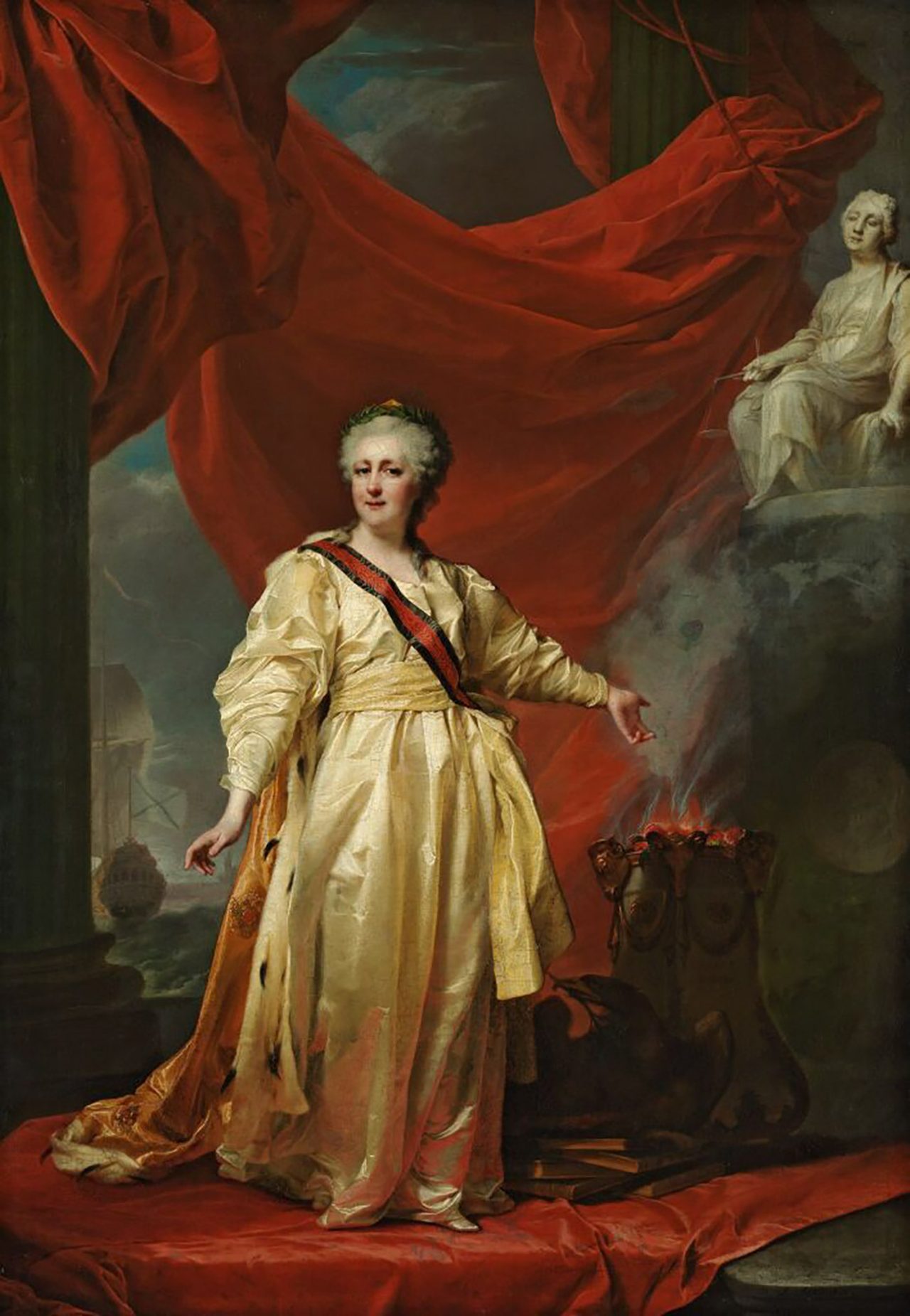
The artist depicted the empress as a pagan priestess in the ancient temple of the goddess Themis. Beside her stands an altar on which she burns poppies – a symbol of her own peace. In this way, she seems to sacrifice her personal peace for the public good.