
5 famous people of the Russian Empire born out of wedlock (PICS)
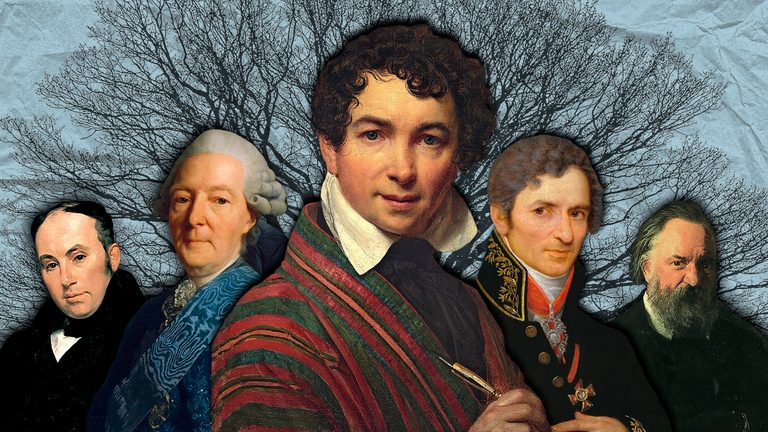
Being an illegitimate child often granted freedom from convention, which many turned to their advantage.
Their fathers provided them with an education and status, but not always a family name. This was a way to ensure a decent future for illegitimate children, without infringing on the inheritance rights of legitimate offspring. Nevertheless, among the illegitimate children of nobles, there were those who changed the face of the empire.
1. Ivan Betskoy, personal secretary of Empress Catherine II (1704–1795)
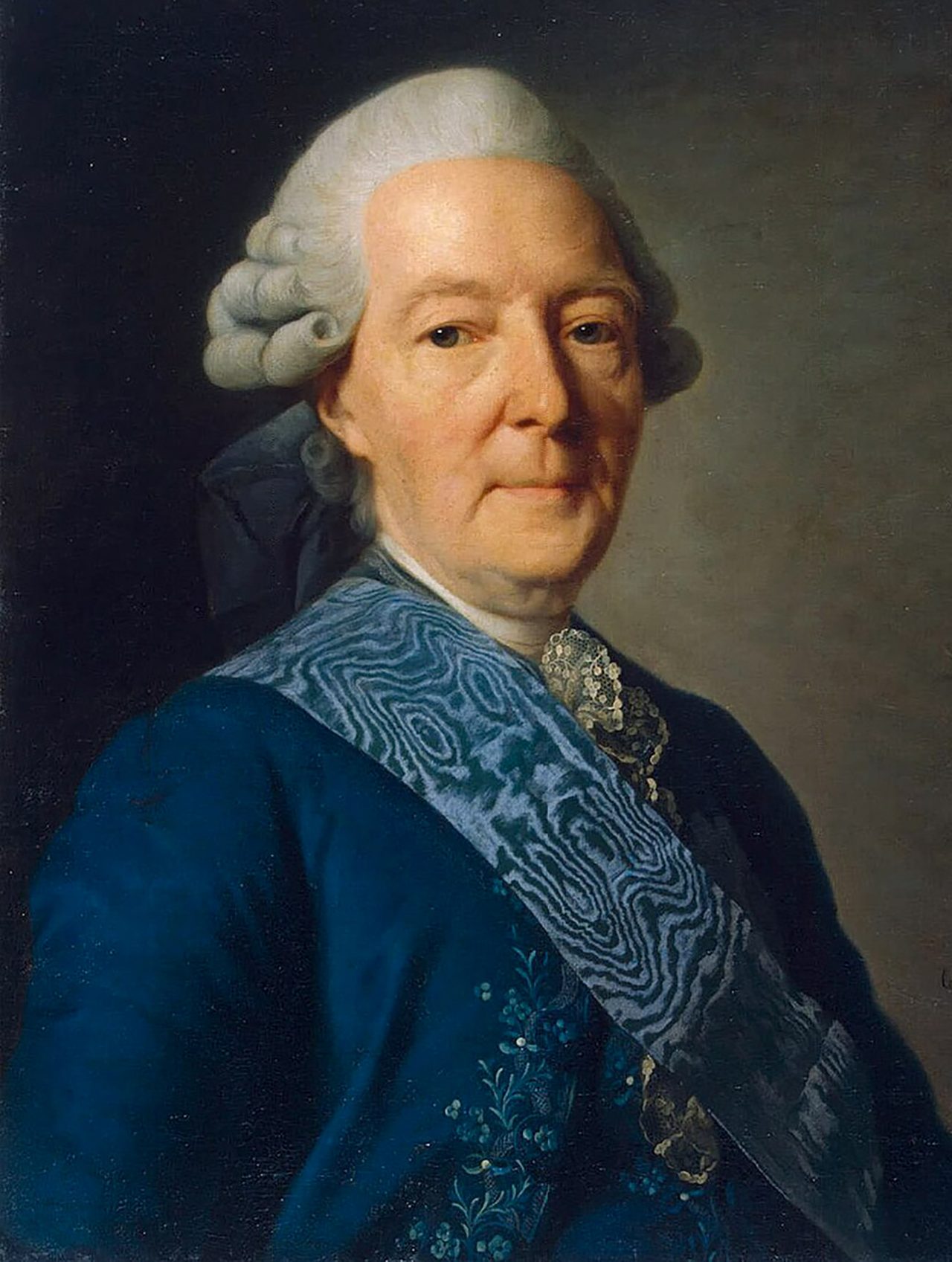 Alexander Roslin. Portrait of I. Betsky
The illegitimate son of Prince Ivan Trubetskoy (hence the last name ‘Betskoy’, his father's surname, minus the first syllable) was born in Stockholm, educated at the cadet corps in Copenhagen and traveled extensively throughout Europe, where he encountered the ideas of leading Enlightenment thinkers. He ended up becoming one of the most prominent statesmen of the Enlightenment era. As the empress' chief advisor on educational matters, Betskoy developed and led a large-scale educational and pedagogical reform aimed at creating a "new breed of people" for all social classes. As personal secretary of Catherine II, he initiated the creation of the Smolny Institute for Noble Maidens and Educational Homes in Moscow and St. Petersburg. He was also president of the Academy of Arts.
2. Artist Orest Kiprensky (1782–1836)
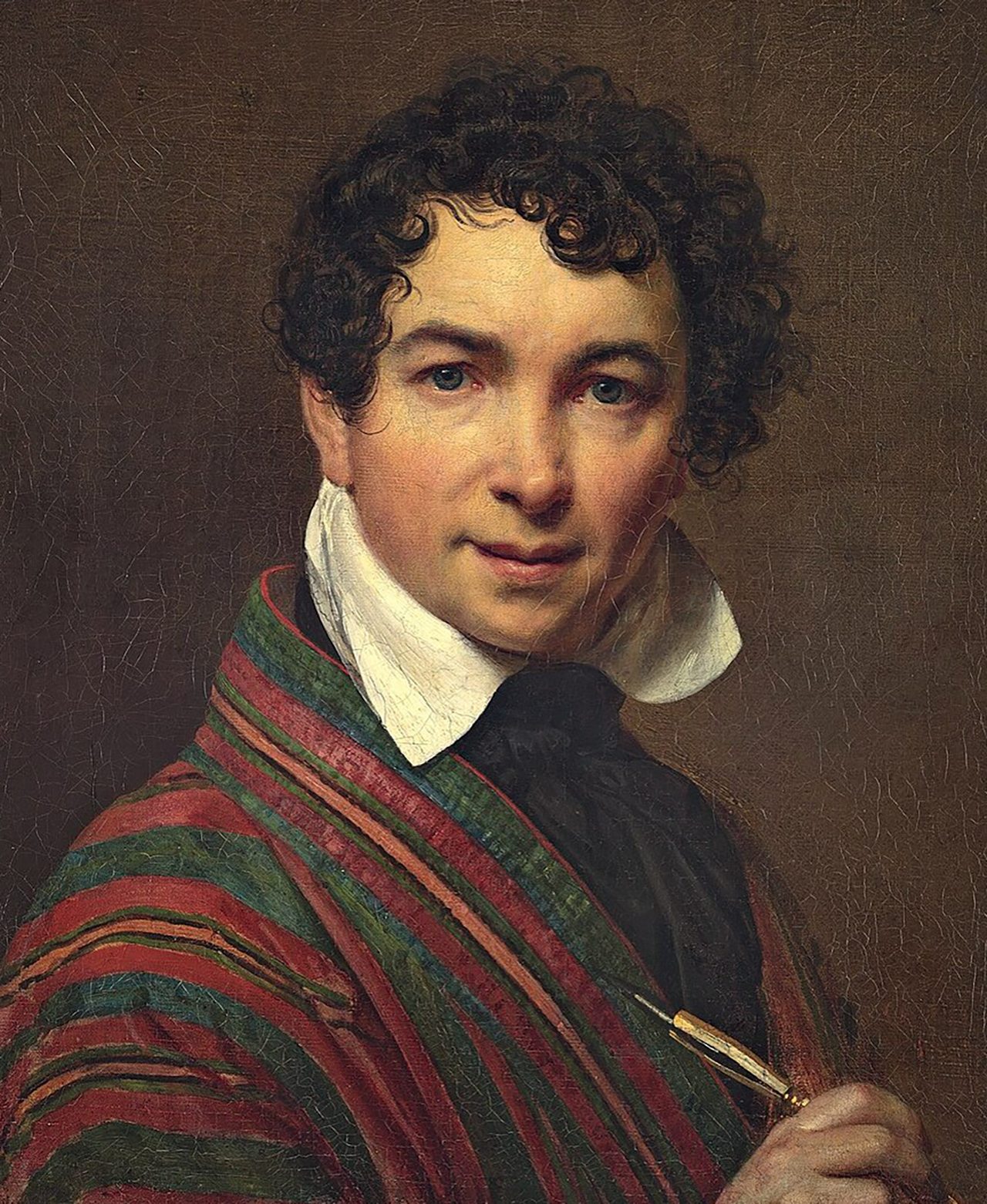 Orest Kiprensky. Self-portrait in a Striped Robe. 1828
An outstanding painter and one of the finest portraitists in the history of Russian art. The illegitimate son of landowner Alexei Dyakonov and a serf peasant woman. He studied at the St. Petersburg Academy of Arts under Grigory Ugryumov and Dmitry Levitsky. In 1804, with his portrait of his stepfather, Adam Schwalbe, Kiprensky pioneered a new type of intimate romantic portrait. He was later awarded the title of academician (1812) for his portraits of the Prince of Holstein-Oldenburg, Colonel Yevgraf Davydov and others. He painted the famous portrait of Alexander Pushkin, which the poet himself called "flattering". From 1816, he lived and worked extensively in Italy and passed away in Rome.
3. Poet Vasily Zhukovsky (1783–1852)
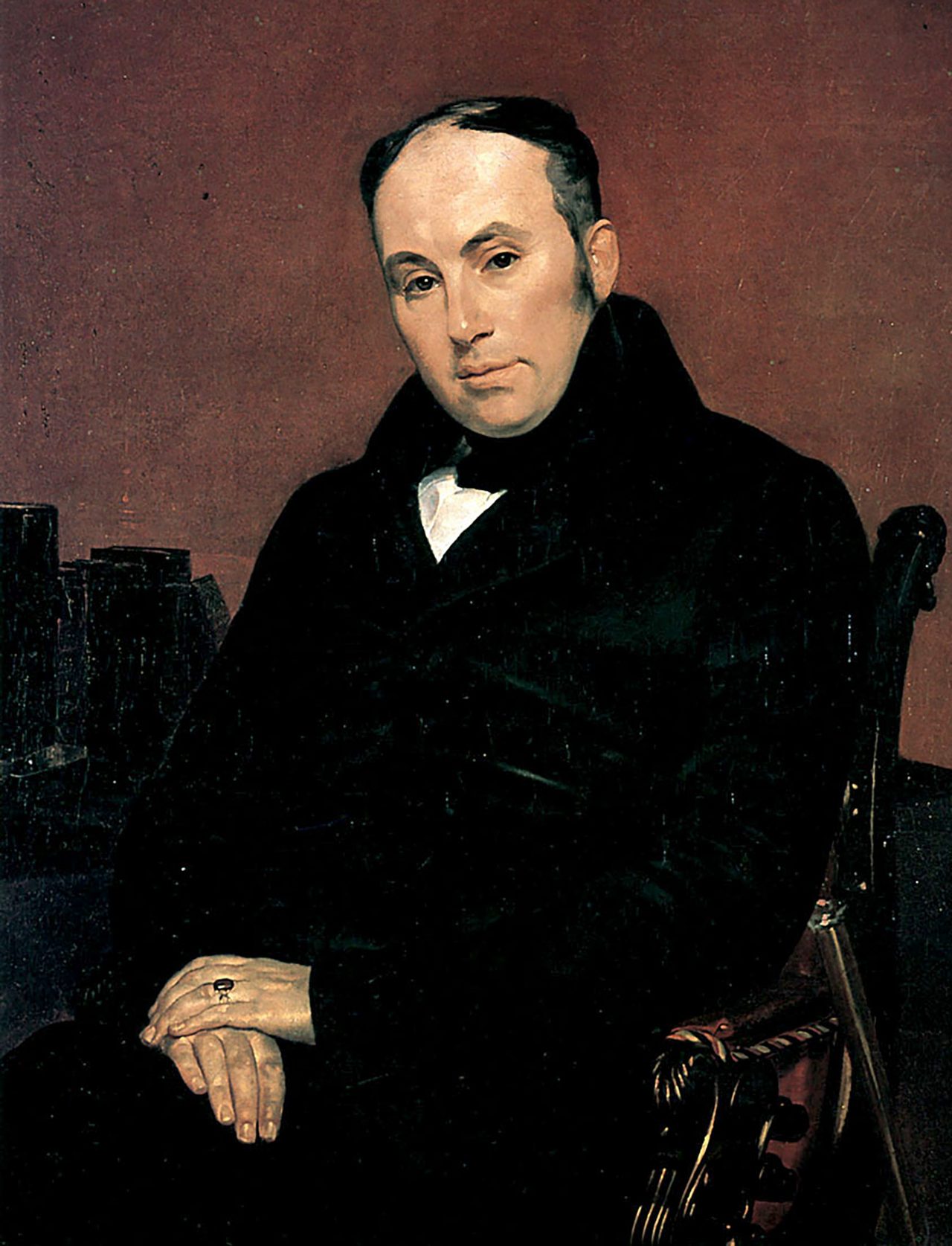 Karl Bryullov. Portrait of the poet V. A. Zhukovsky
Poet, translator, founder of Romanticism in Russian literature, mentor to the future Emperor Alexander II. He was the illegitimate son of the Tula landowner A. Bunin and the Turkish captive Salha. He received his surname from his godfather. He graduated from the Noble Boarding School at Moscow University and became famous as the creator of the first Russian romantic ballads – ‘Lyudmila’ (1808), ‘Svetlana’ (1813), ‘Aeolian Harp’ and others. As a brilliant translator, he introduced Russian readers to Homer (‘The Odyssey’), Schiller, Byron, Goethe and other European authors. In 1815, he began his court service: he served as a reader to the Dowager (widowed) Empress Maria Feodorovna, as a Russian teacher to Grand Duchess Alexandra Feodorovna and, from 1825, as a tutor to the heir to the throne, the future Emperor Alexander II, whose personality and reforms he profoundly influenced.
4. Architect Andrei Voronikhin (1759–1814)
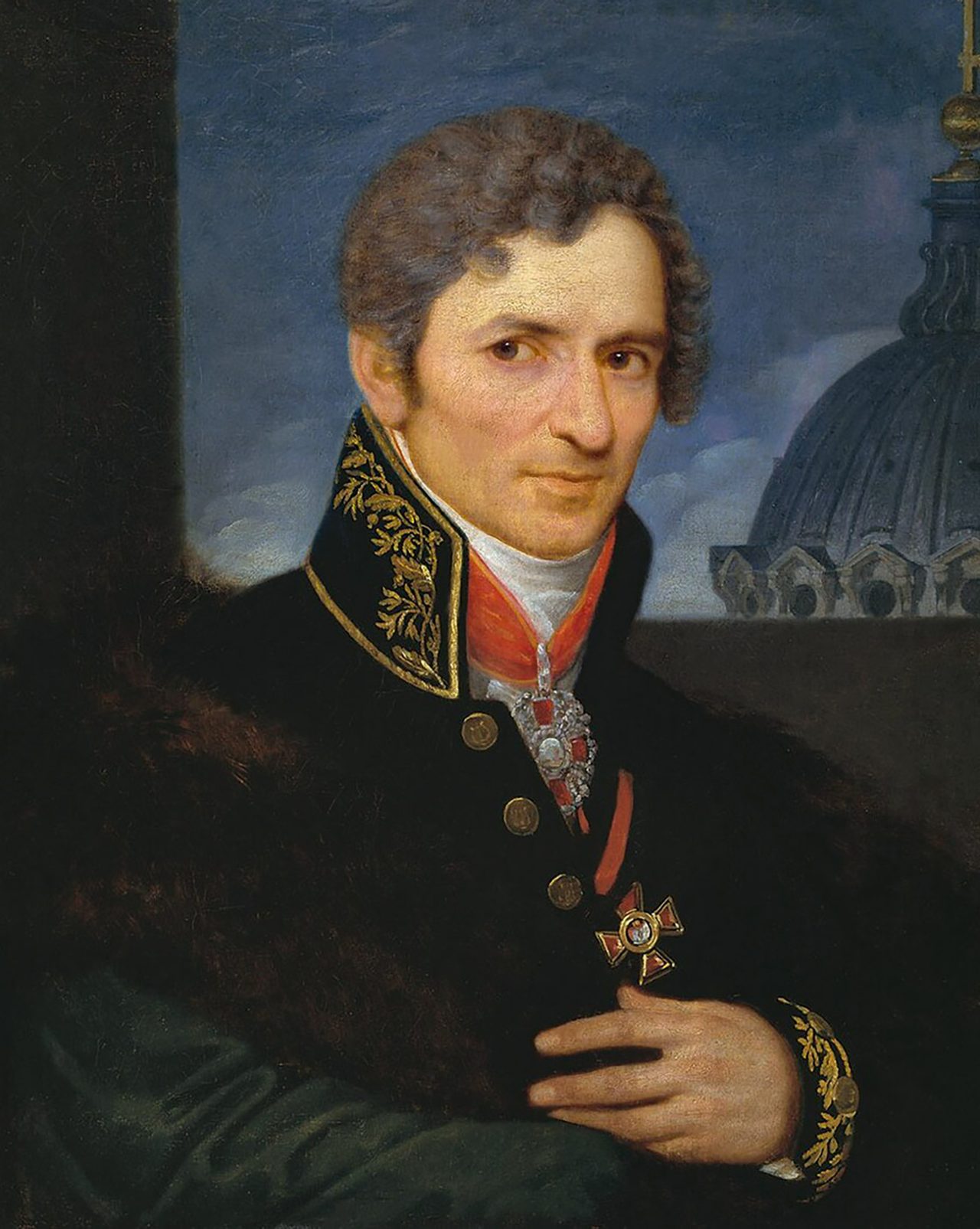 A. Voronikhin. Self-portrait. Before 1811
Architect and painter, one of the founders of the Russian Empire style and designer of the Kazan Cathedral in St. Petersburg. He was born into a family of serfs belonging to Count A. S. Stroganov, who, noticing and recognizing his talent, granted him his freedom and provided him with an education in Moscow under architects V. Bazhenov and M. Kazakov, then sent him on a journey through Europe to study architecture. In 1800, Voronikhin received the title of architect and, in 1802, he became a professor at the Imperial Academy of Arts. In addition to the Kazan Cathedral (1801–1811), he also designed the building of the Mining Institute and participated in the creation of the architectural ensembles at Pavlovsk, Peterhof and Strelna.
5. Writer Alexander Herzen (1812–1870)
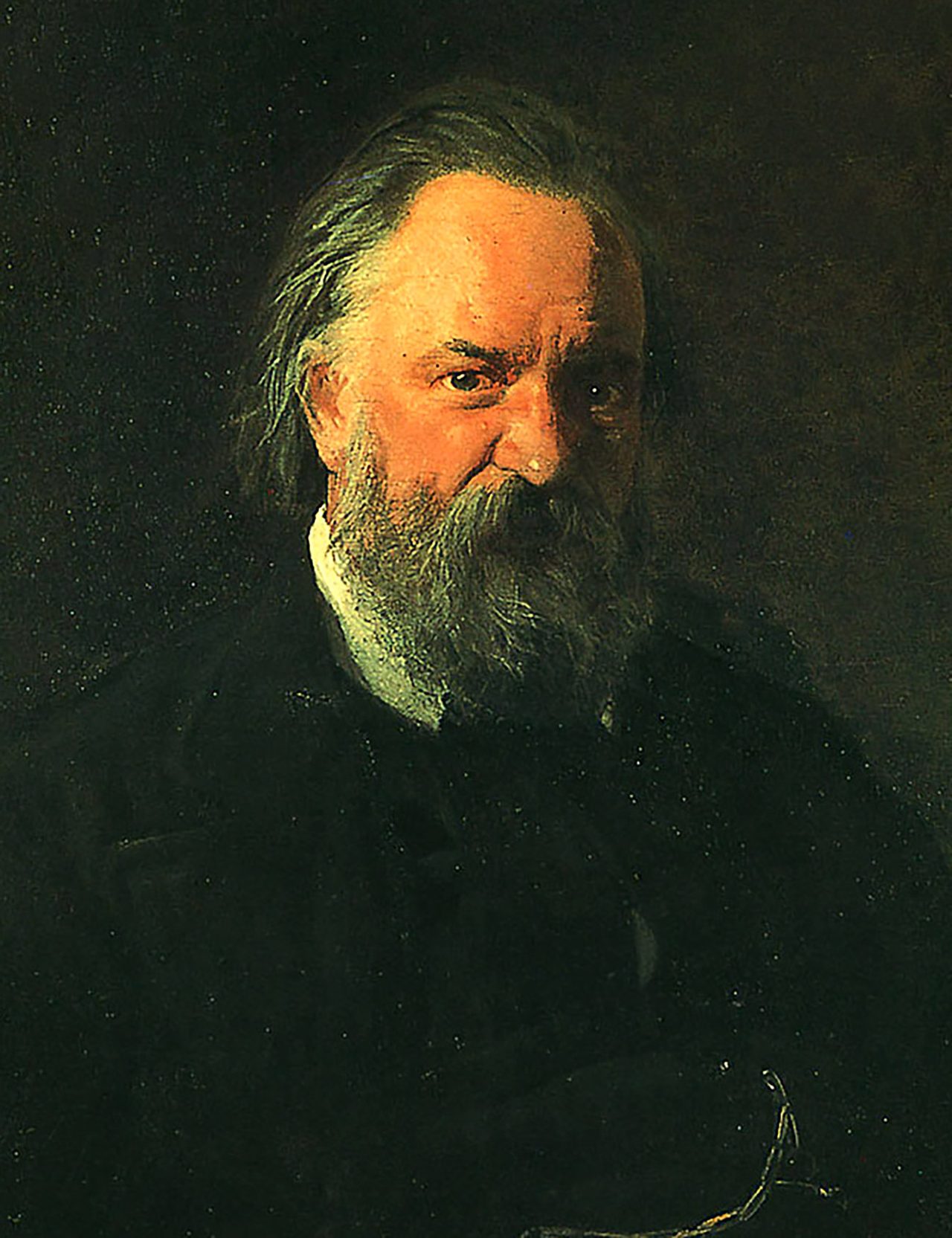 Nikolai Ge. Portrait of A. I. Herzen. 1867
Alexander Herzen was a writer, publicist and philosopher, as well as the founder of Russian socialism and uncensored press. He was the illegitimate son of landowner I. Yakovlev and a German woman named Henrietta Haag. His surname derives from the German word ‘Herz’ (‘heart’). He graduated from the physics and mathematics department of Moscow University, but was arrested in 1834 and spent several years in exile for his political beliefs. Upon his return, he created his major works of fiction: the novel ‘Who is to Blame?’ (1846) and the novellas ‘Doctor Krupov’ and ‘The Thieving Magpie’. From 1847 onward, he lived in exile, where he founded the Free Russian Printing House in London (1853) and began publishing the ‘Polar Star’ almanac and the ‘Kolokol’ (‘bell’) newspaper, the first uncensored Russian printed publication, which was read secretly in Russia. The crowning achievement of his literary career was the autobiographical epic ‘My Past and Thoughts’.