
5 facts about the ‘Battle of Poltava’
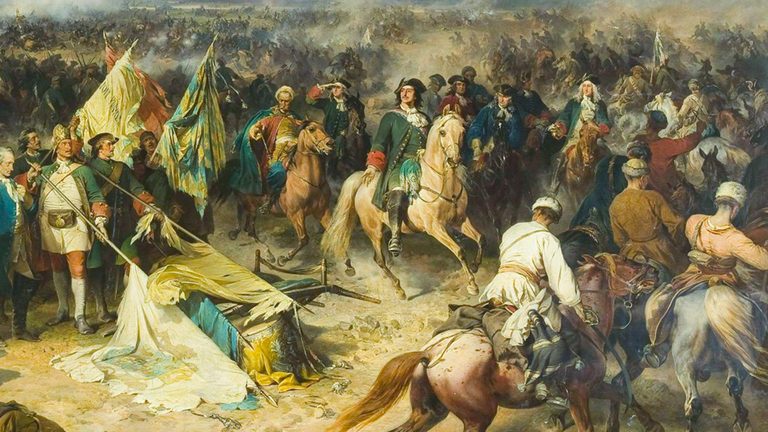
The Russian army's victory over the Swedes at Poltava in 1709 effectively determined the outcome of the Great Northern War, even though the fighting would continue for another 12 years.
1. The Swedish king fought in the battle while wounded
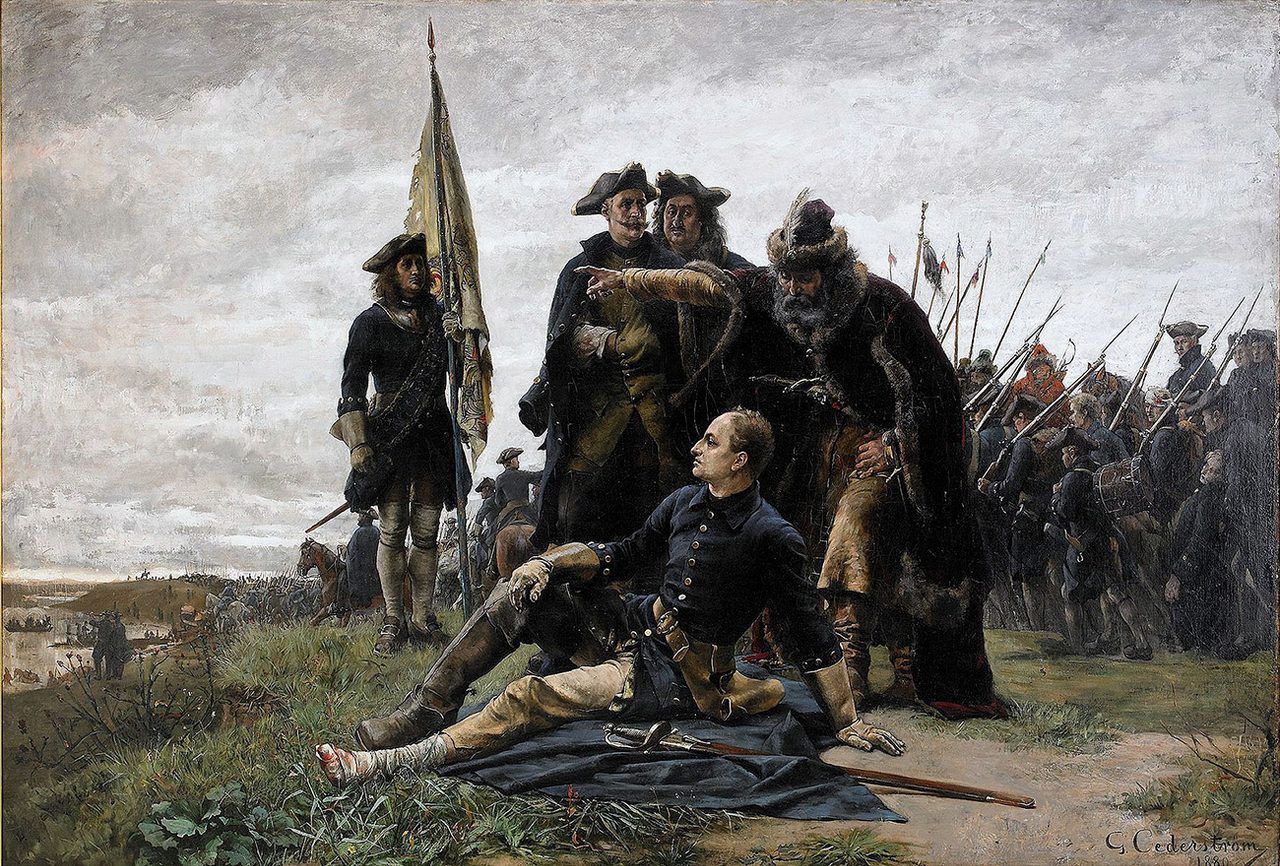 Gustaf Cederström 'Karl XII and Ivan Mazepa after The Poltava Battle,' 1879.
Charles XII was wounded in the heel shortly before the decisive battle. The wound was poorly treated and the monarch suffered from fever. He was carried to the battlefield on a stretcher and could barely follow the events unfolding around him. Charles eventually handed over command to Field Marshal Carl Gustav Rehnskiöld.
2. The Swedes fought with virtually no artillery
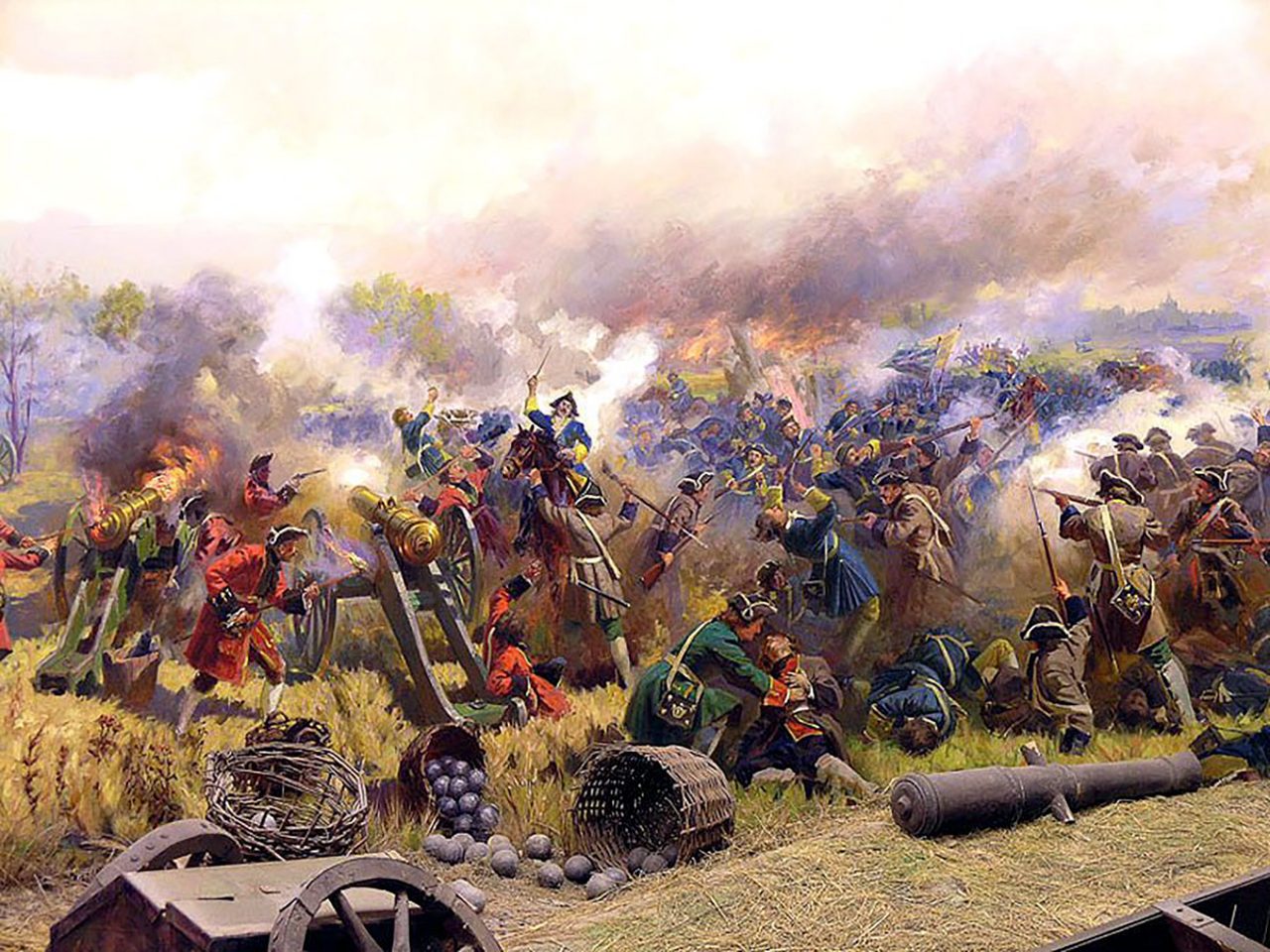 A section of the Battle of Poltava diorama.
The Swedish army had 40 guns, but used only four – they lacked ammunition and gunpowder. The Russians, on the other hand, had about a hundred cannons. Their cannonballs even damaged Charles's stretcher, but he himself was unharmed.
3. Tsar Peter entered the battle at a critical moment and nearly died
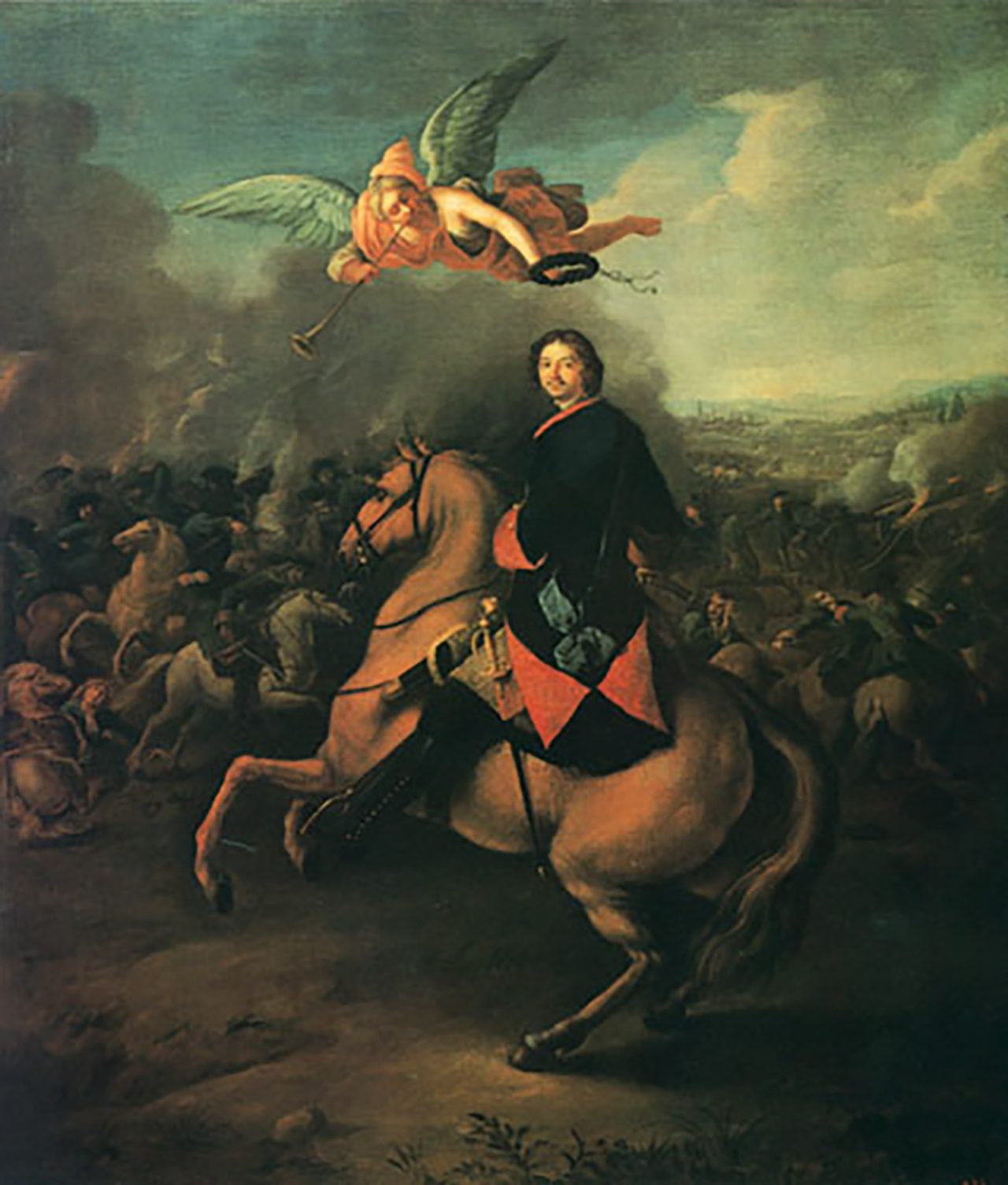 Johann Gottfried Tannauer. 'Peter I at the Battle of Poltava,' 1724 or 1725.
When the left flank of the Russian army wavered under the onslaught of the Swedish infantry, the tsar led a counterattack. His appearance inspired the soldiers and the breach was closed. A bullet pierced Peter's hat, a second struck his pectoral cross and a third hit his saddle.
4. Zaporozhian Cossacks were present in both armies
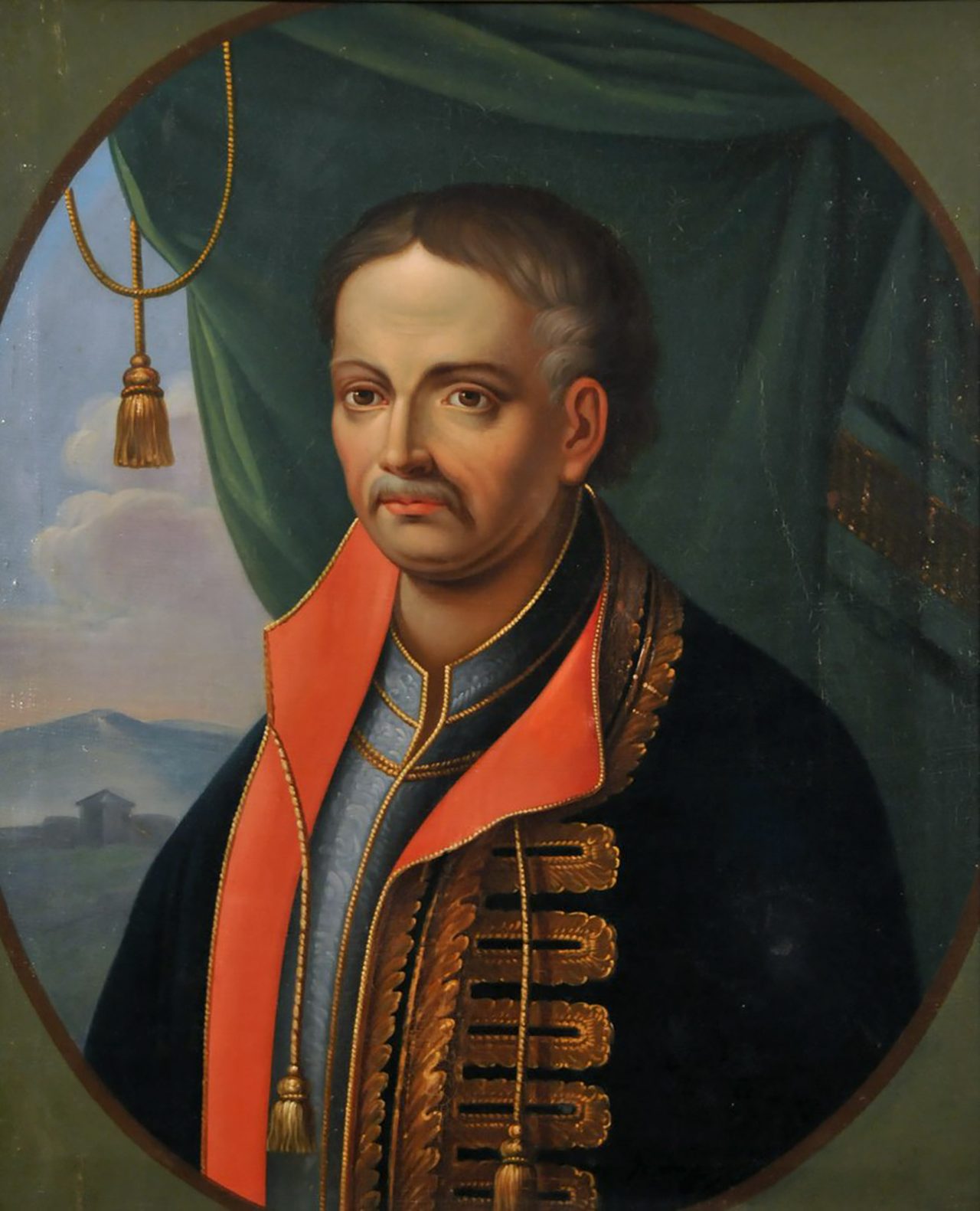 Stepan Zemlyukov. Portrait of Ivan Mazepa, 1840s.
Before the Swedes arrived in Ukraine, Ivan Mazepa, ‘hetman’ of the Zaporozhian Host and a longtime ally of Peter, defected to the side of Charles XII. The Cossacks were divided, though most remained loyal to Russia. Both sides were at Poltava. The rulers did not particularly trust them and their fighting ability was not highly regarded. But, while Charles did not allow Mazepa's men to participate in the battle, Peter allowed his Cossacks to participate in the pursuit of the routed enemy army.
5. Peter hosted a banquet for the captured Swedish commanders
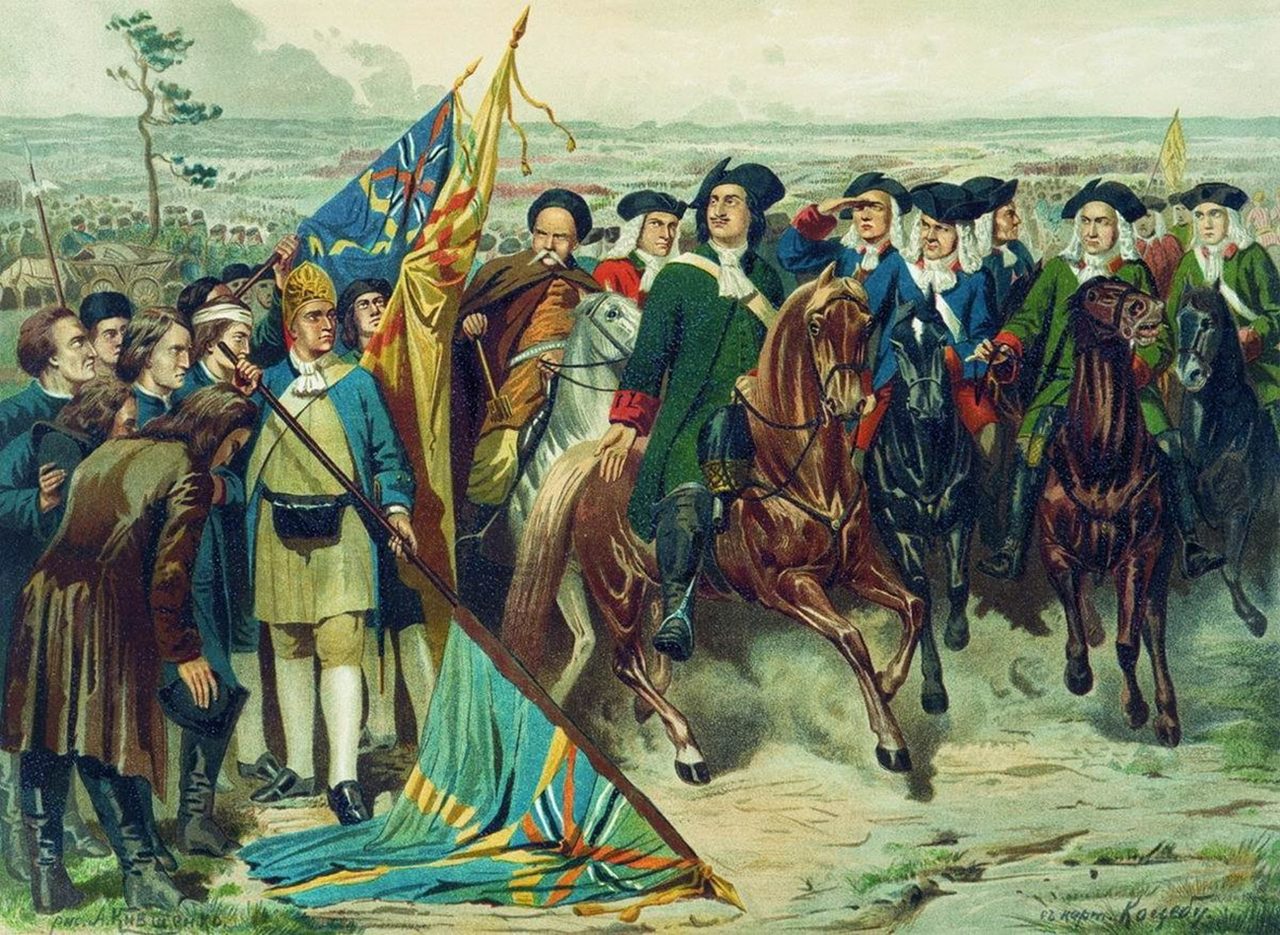 Alexei Kivshenko. 'Capitulation of the Swedish Army,' 1887.
A number of Swedish commanders, including Commander Rehnskiöld, were taken prisoner at Poltava. That evening, the tsar hosted a banquet for them, where he drank to their health and called them his "teachers in the art of war" — it was only by enduring heavy defeats did the Russian army learn how to win.