
7 caps of Russian tsardom that have survived to this day (PHOTOS)

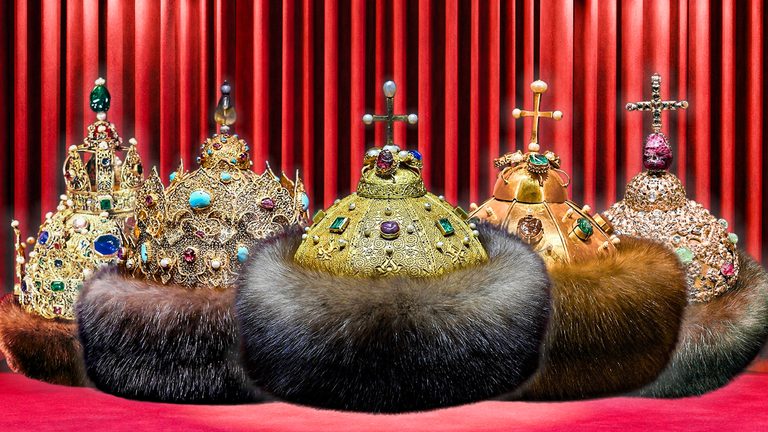
Until the 17th century, it was caps, not crowns, that served as the primary state regalia of Russian tsars. Adorned with precious stones and trimmed with fur, these headpieces are now kept in the Moscow Kremlin Museums.
1. The Monomakh’s Cap
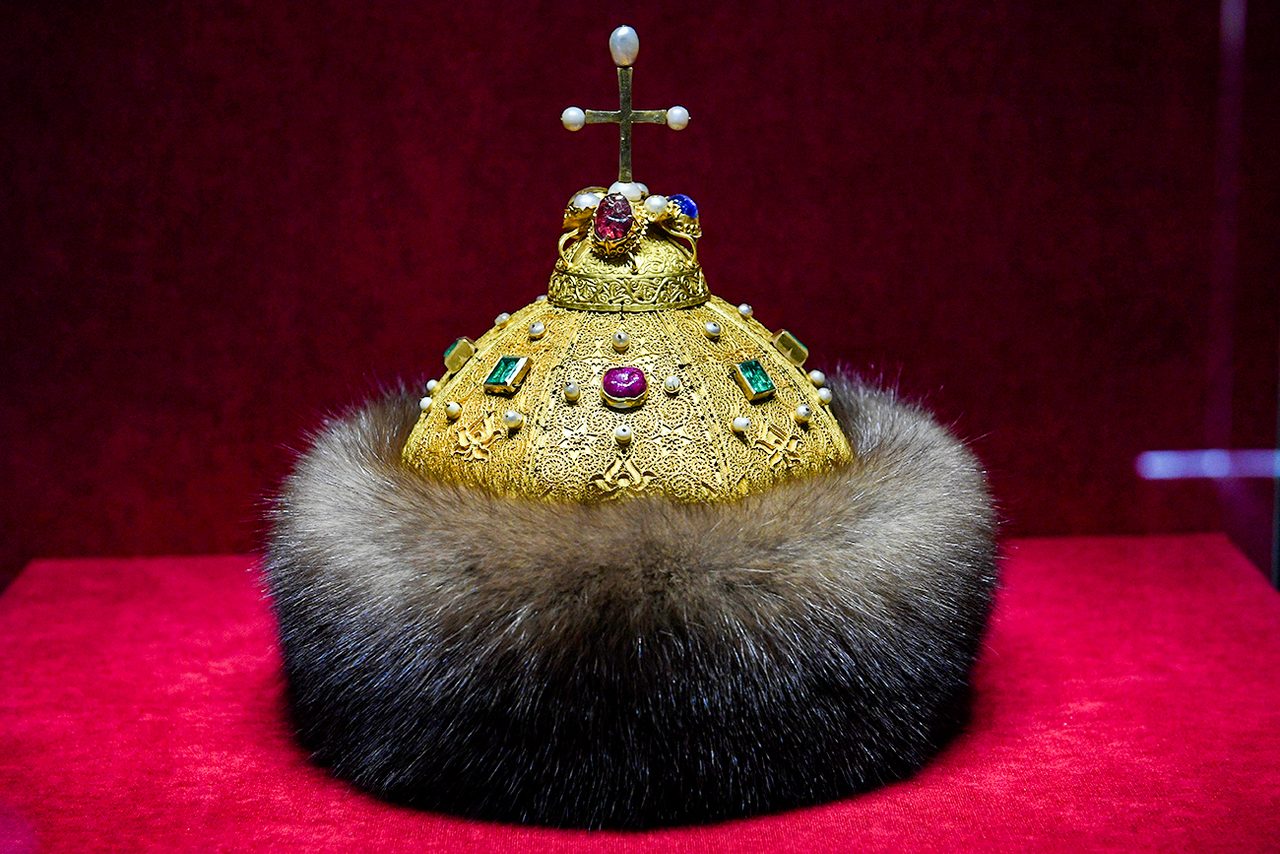
This is the most famous regalia of Russian tsars. Legend has it that Byzantine Emperor Constantine IX Monomachos gave it to his grandson, Prince Vladimir Monomakh. However, historians believe that the cap was most likely made in the late 13th or early 14th century by jewelers of the Golden Horde for Moscow prince Ivan Kalita. It is in his spiritual will (testament) that the "golden cap" was first mentioned.
Ivan the Terrible was the first Russian tsar to be crowned with the Monomakh’s Cap in 1547. It was subsequently used in coronation ceremonies until 1682. The last tsar to wear it was Ivan V, the elder brother of Peter the Great.
2. The Monomakh’s Cap of the second outfit
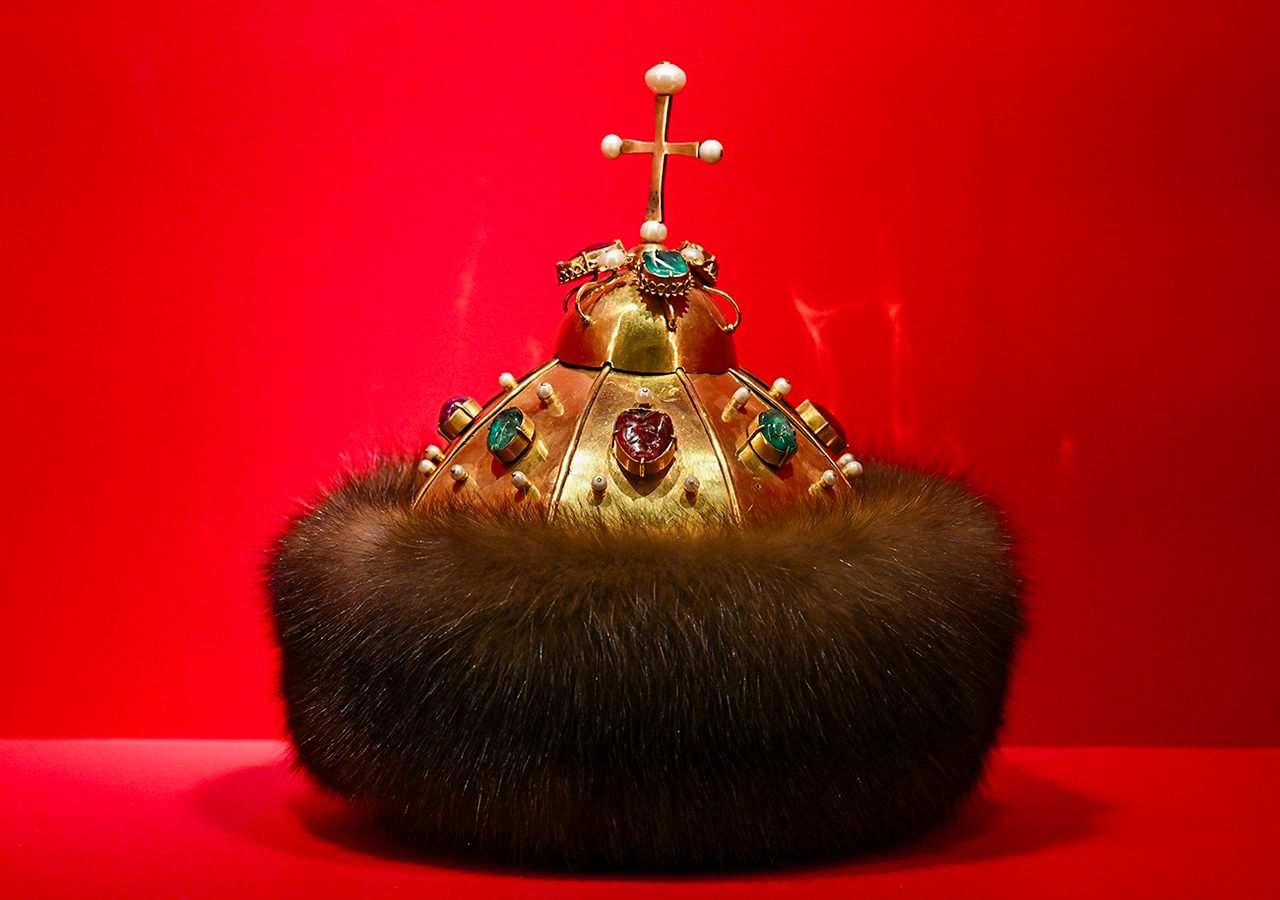
Ivan and Peter were crowned together, so a second set of state regalia had to be made. A Monomakh Cap of the second outfit was crafted for Peter.
In 1721, Peter the Great abolished the tradition of tsarist coronation and introduced the rite of imperial coronation (and he himself crowned his wife, future Empress Catherine I).
Several decades later, his cap acquired a second name – the Taurida Cap. Under Catherine the Great in 1783, Crimea was incorporated into the Russian Empire under its ancient name, Taurida.
3. The Kazan Cap
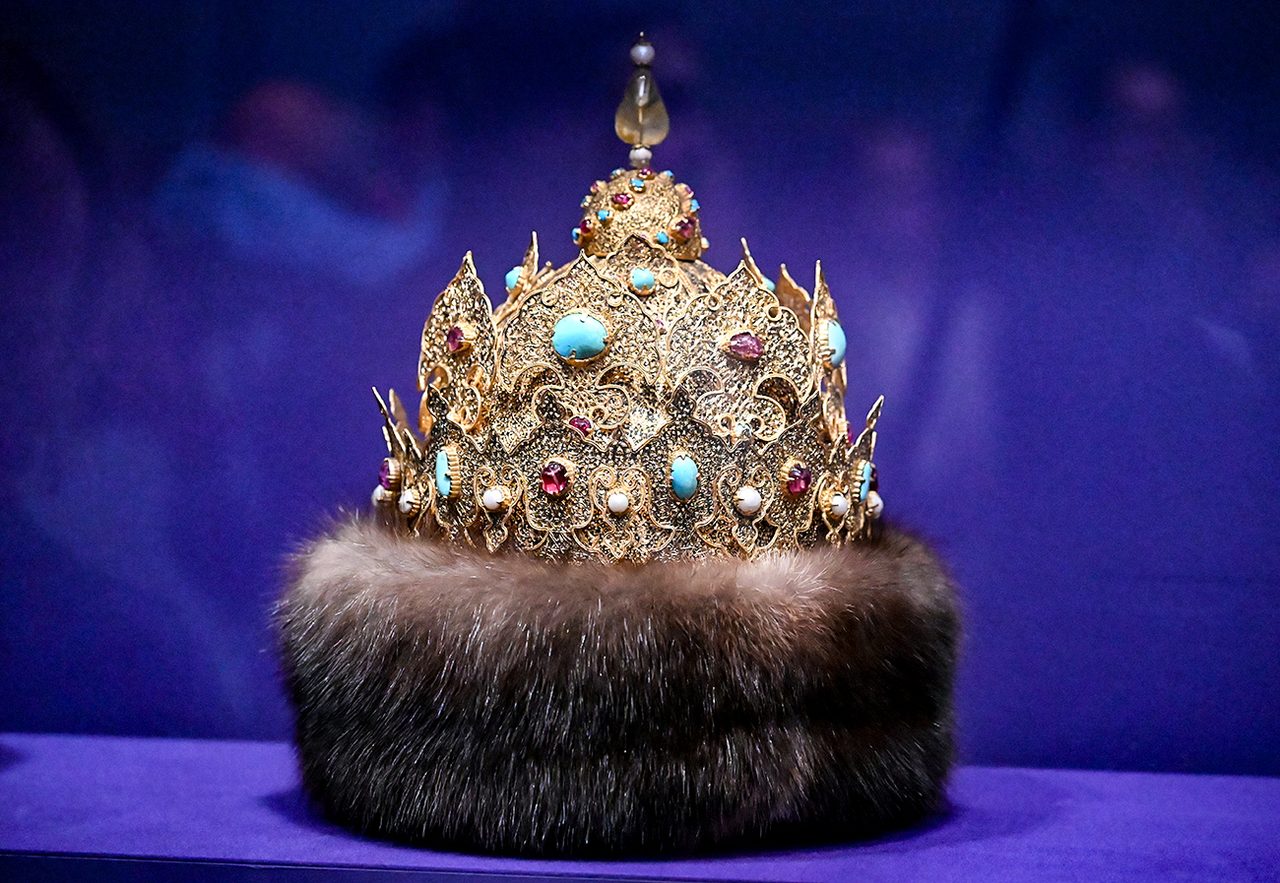
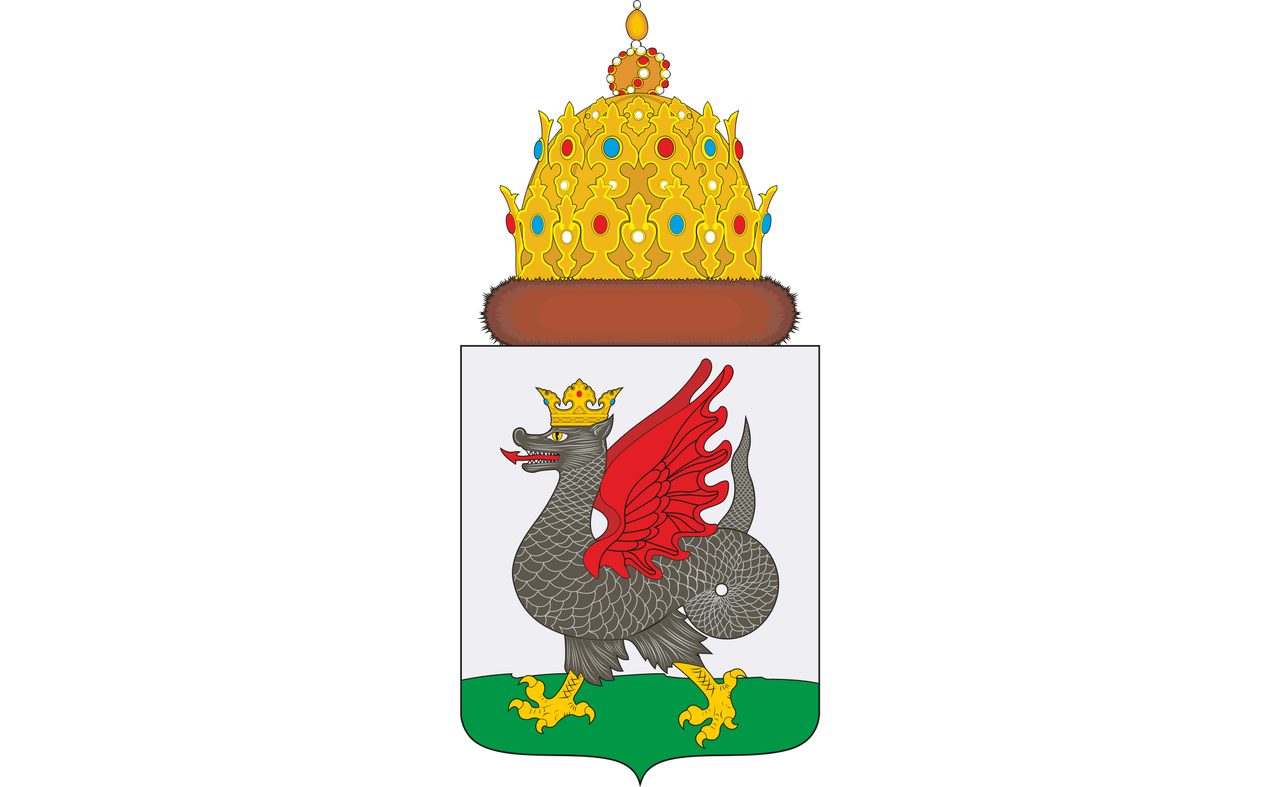
But let us return to Ivan the Terrible. In 1552, he annexed the Kazan Khanate to the Muscovite state and the Kazan Cap was added to the state regalia. According to the most widely accepted version, this multi-tiered golden cap with a yellow sapphire was made by Kazan jewelers.
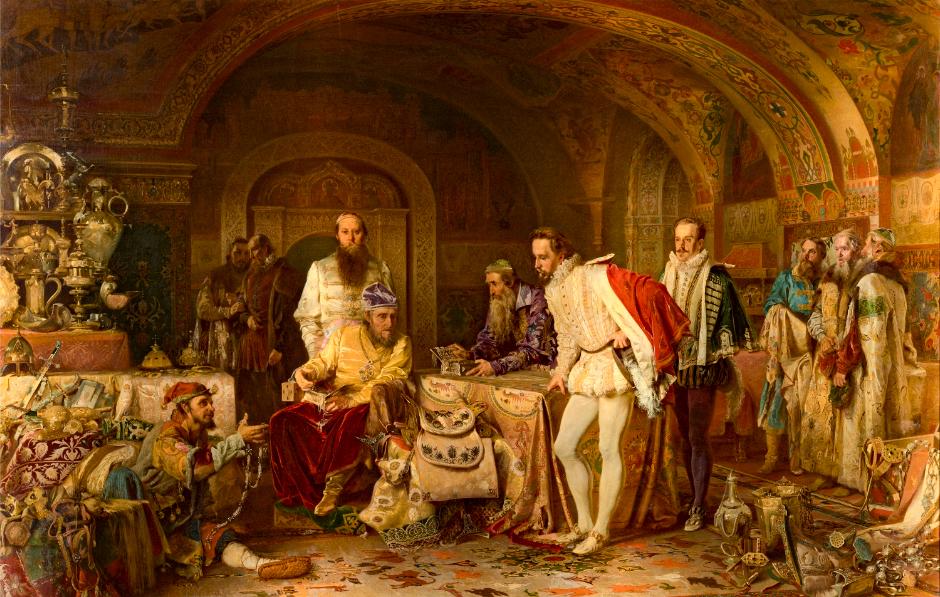 Alexander Litovchenko, "Ivan the Terrible shows treasures to the English ambassador Horsey"
An image of it also appears on the modern coat of arms of Kazan.
4. The Astrakhan Cap
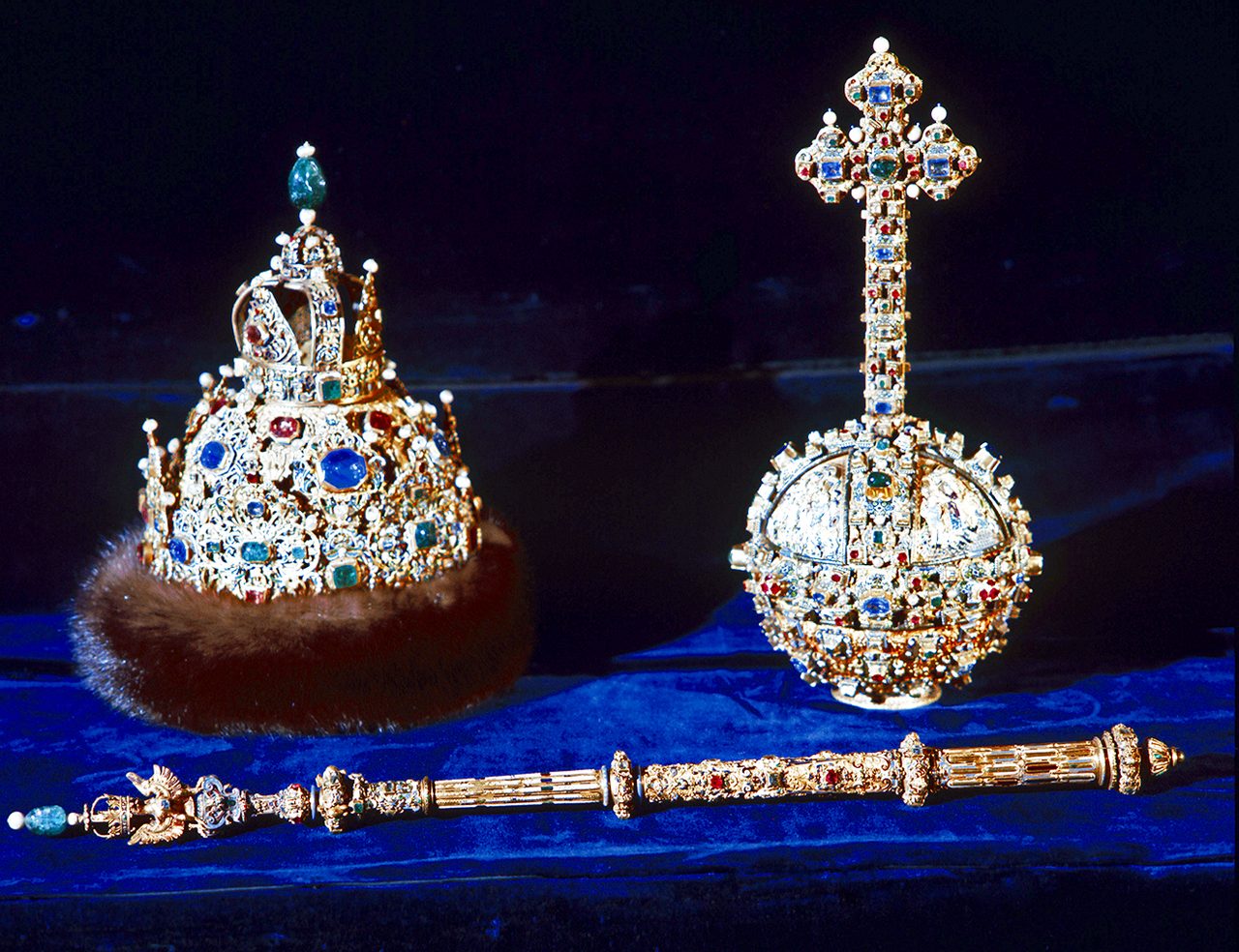
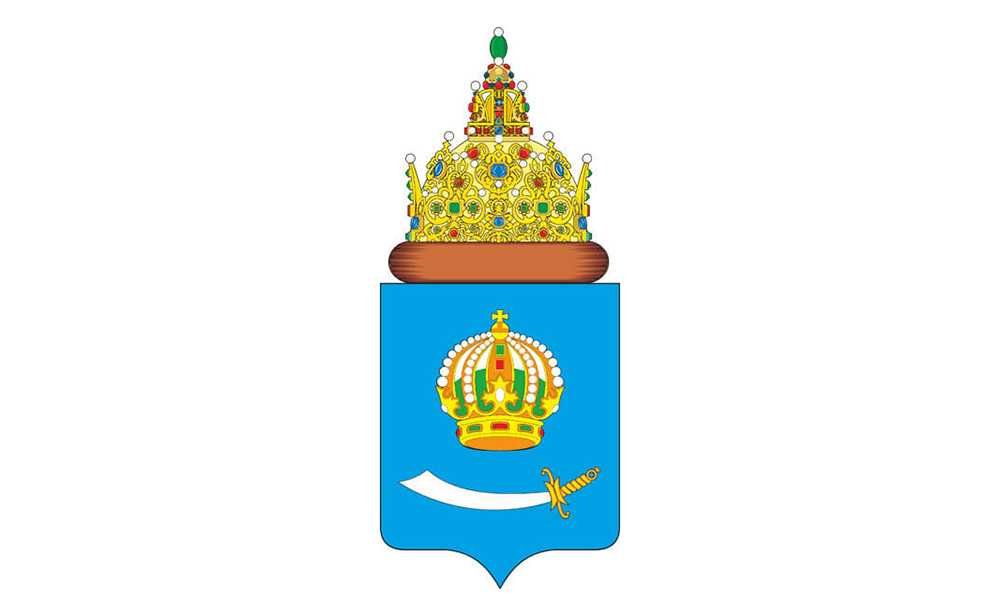
However, the coat of arms of Astrakhan features a different cap. It was made for Tsar Mikhail Fedorovich, the first of the Romanov dynasty, in 1627. The cap only came to be called the ‘Astrakhan Cap’ at the end of the 18th century; prior to that, in inventories, it was listed as the ‘Fryazian Cap’, meaning made in a Western style (in Russia, Italians were known as ‘Fryazins’).
5. The Siberian Cap
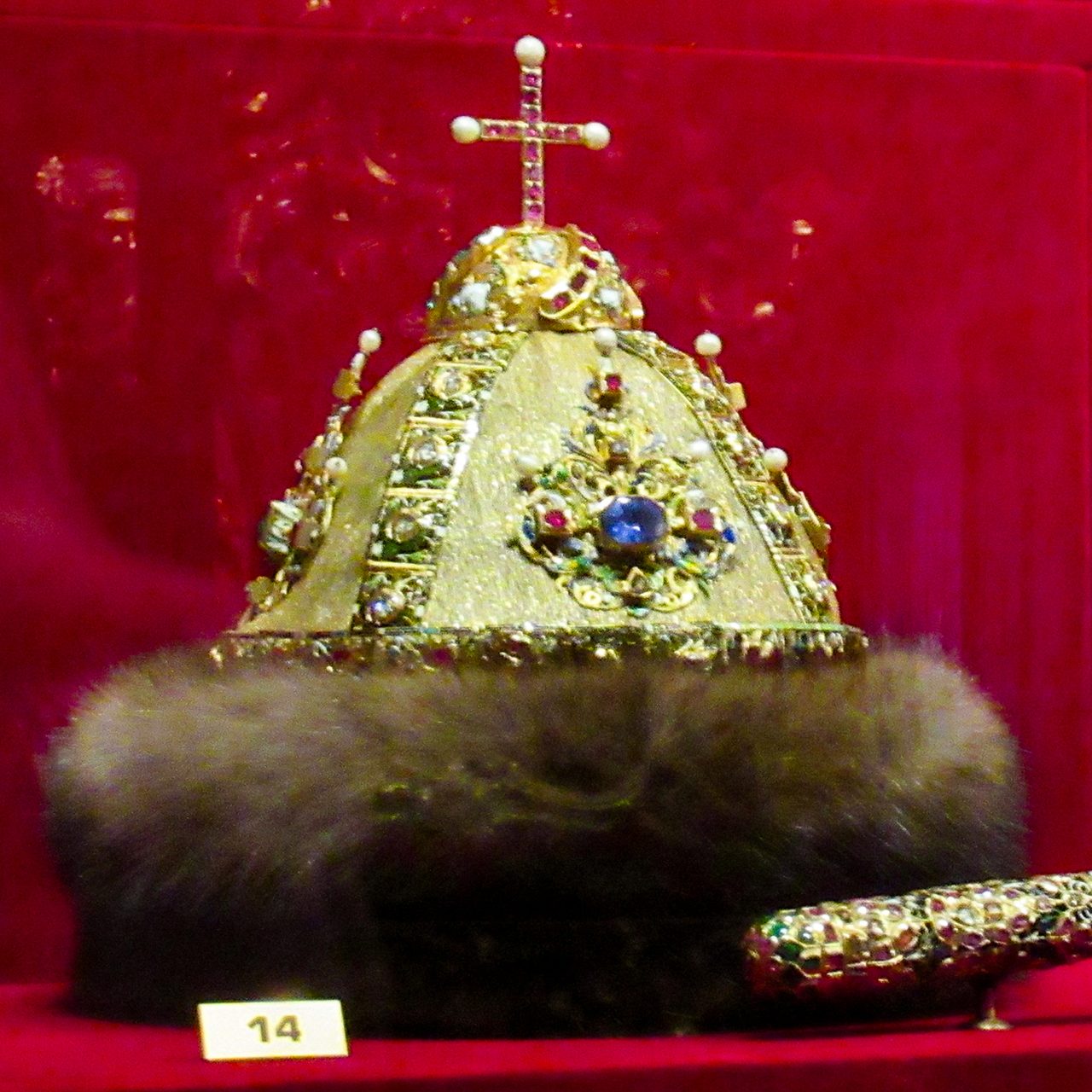
Also known as the ‘Altabas Cap’. Altabas is a dense brocade woven with gold threads, used to make ceremonial garments for tsars. This cap was sewn in 1684 for Ivan V to be used in solemn ceremonies – the "third outfit" (the first outfit being the Monomakh’s Cap and the second being Peter the Great's cap). Among all the caps, only the Altabas Cap is made of fabric, rather than gold.
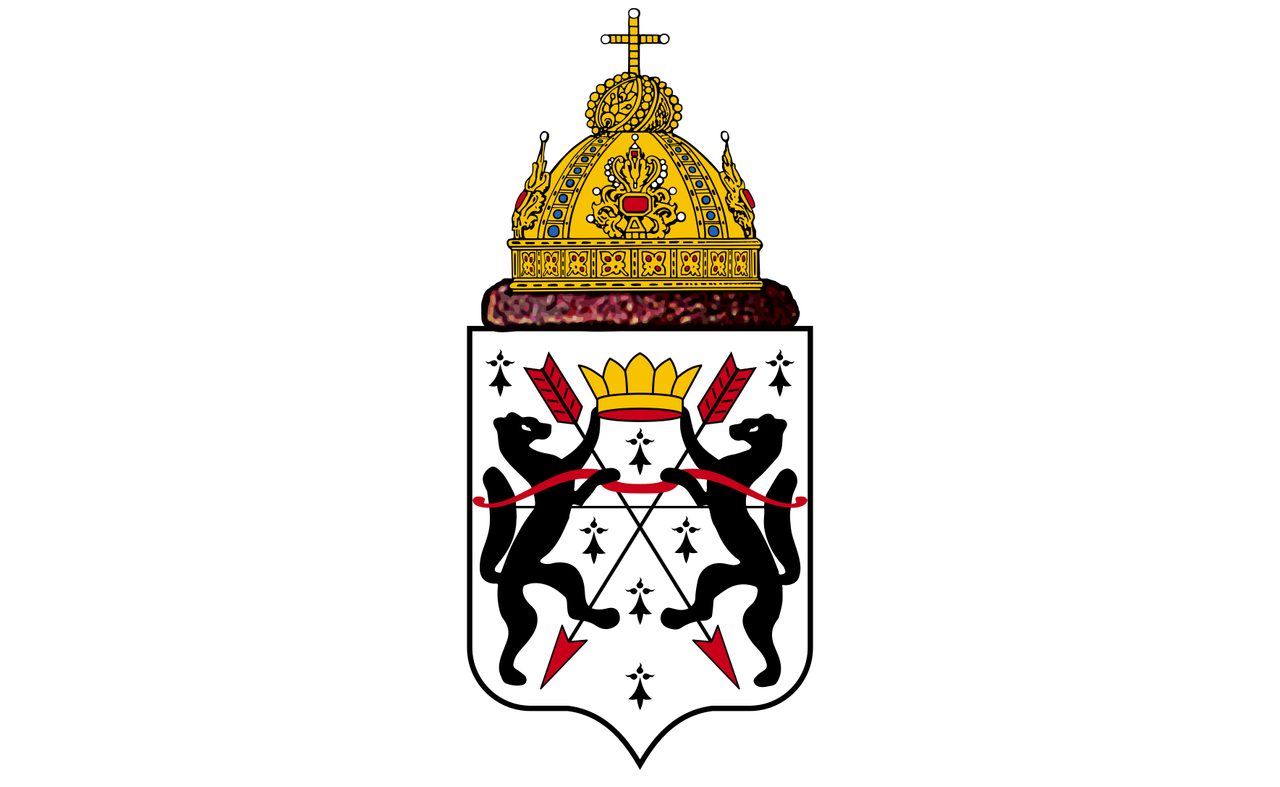 The coat of arms of the Siberian Tsardom.
On the grand state coat of arms of the Russian Empire in the 19th century, the cap topped the shield of the Siberian Tsardom, which earned it the status of "Siberian".
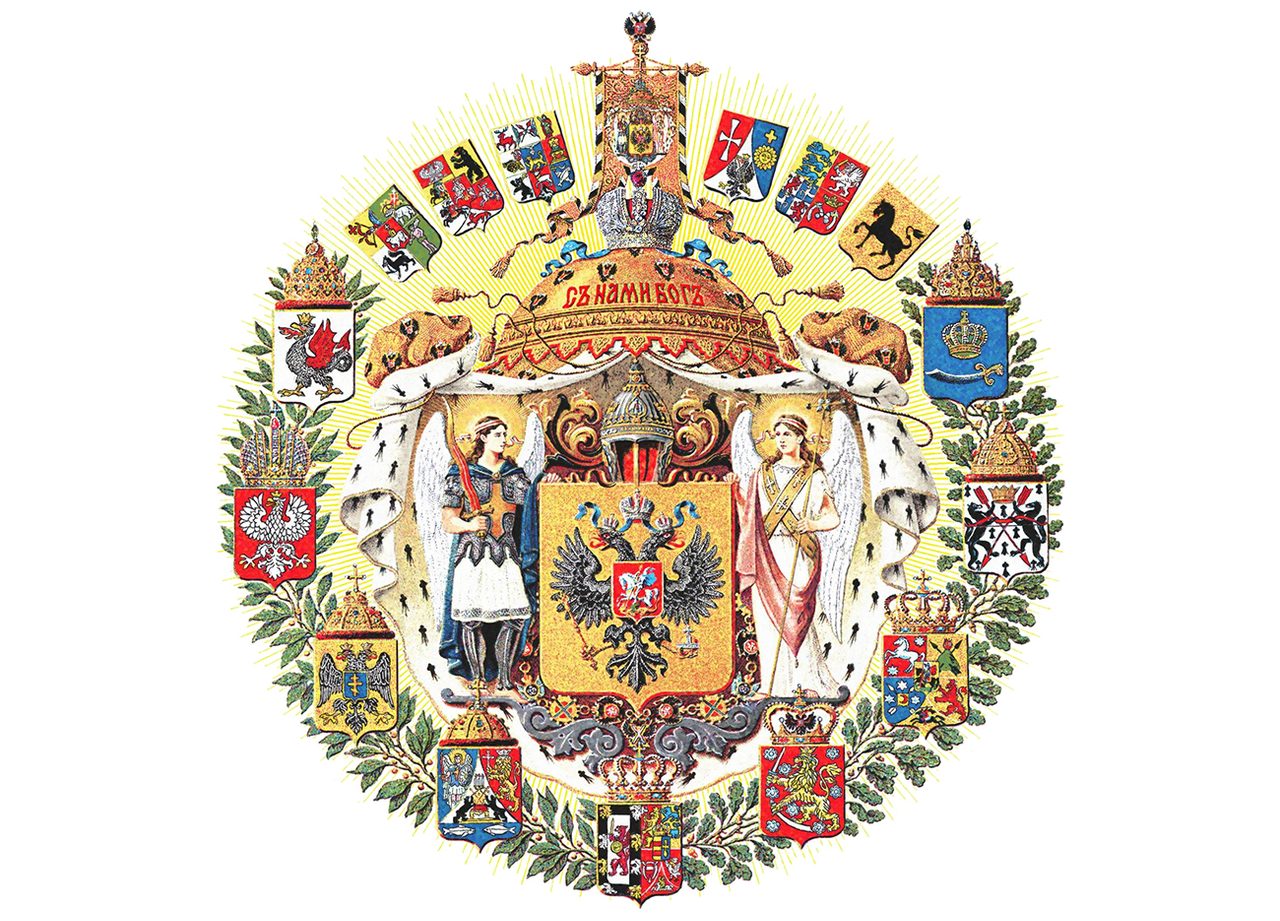 The grand state coat of arms of the Russian Empire
6. The Diamond Cap of Ivan V
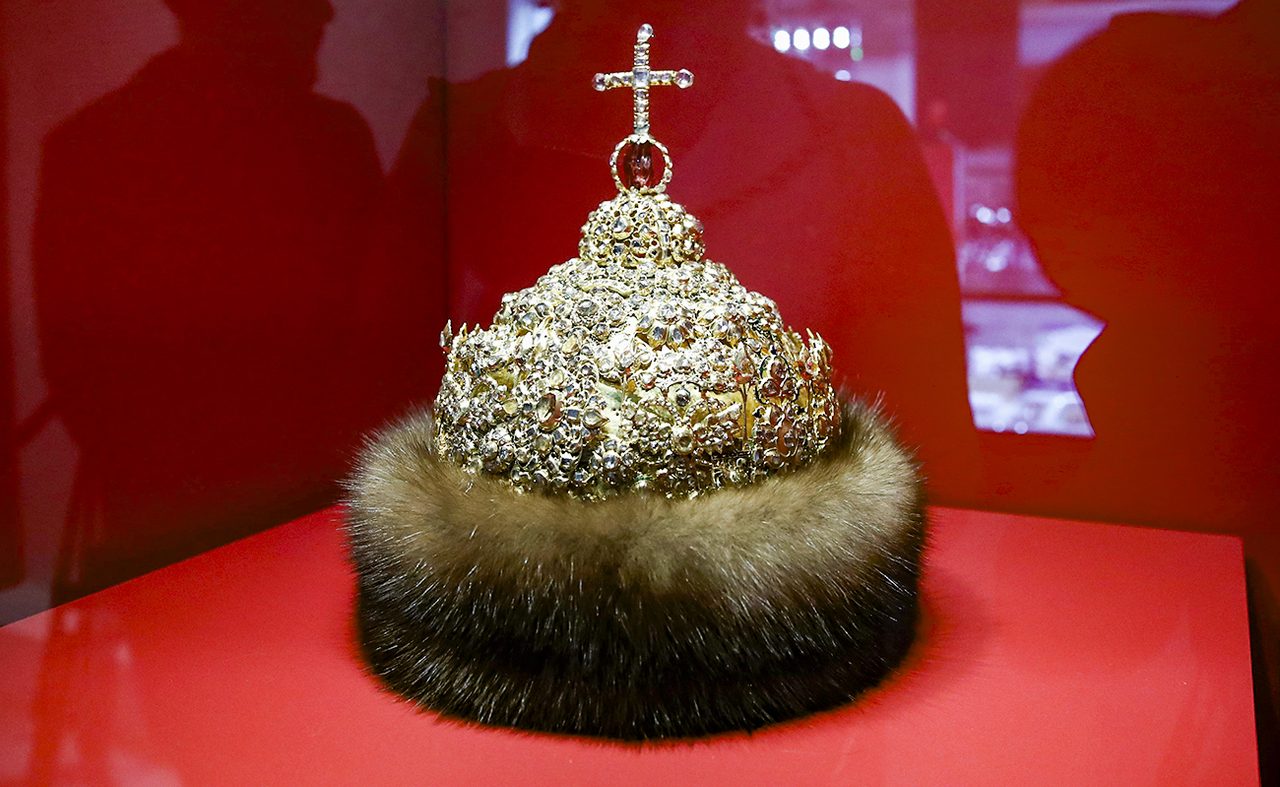
In 1687, jewelers at the Armory Chamber created a pair of diamond crowns for Ivan and Peter. Old pieces of jewelry were dismantled to make these headdresses. Both crowns were modeled after the iconic Monomakh Crown, but in the Baroque style that was in vogue at the time. Ivan V’s crown had a double metal frame and was lavishly adorned with diamonds. A large tourmaline crowns the headpiece.
7. The Diamond Cap of Peter the Great
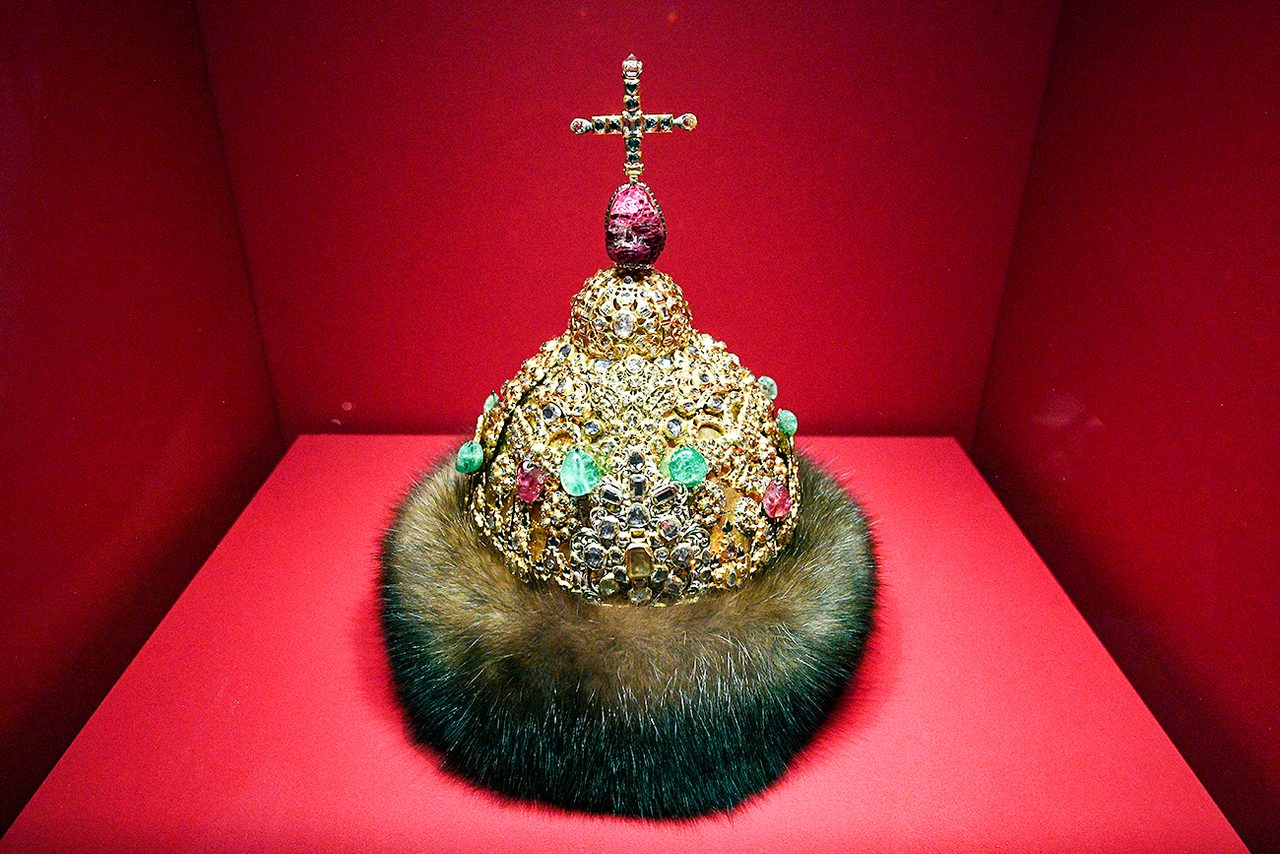
Peter the Great's crown is smaller and lighter than Ivan V's, yet more expensive. In addition to larger diamonds, large precious gemstones were also used in its creation.
However, Peter the Great himself hardly ever wore it.
Unlike the other caps, the diamond crowns were never used in heraldry.