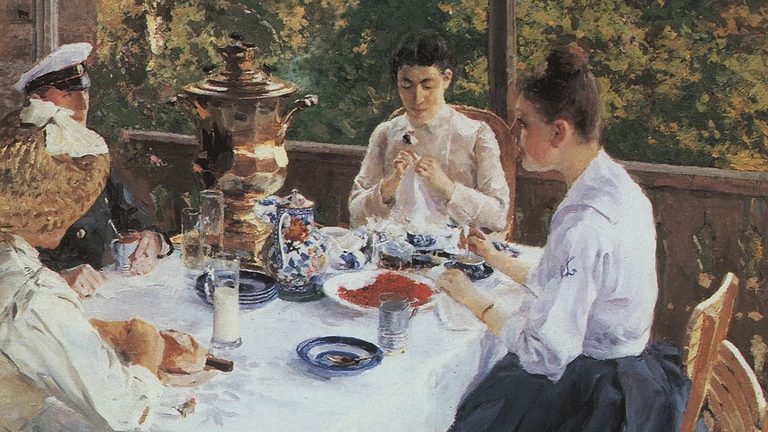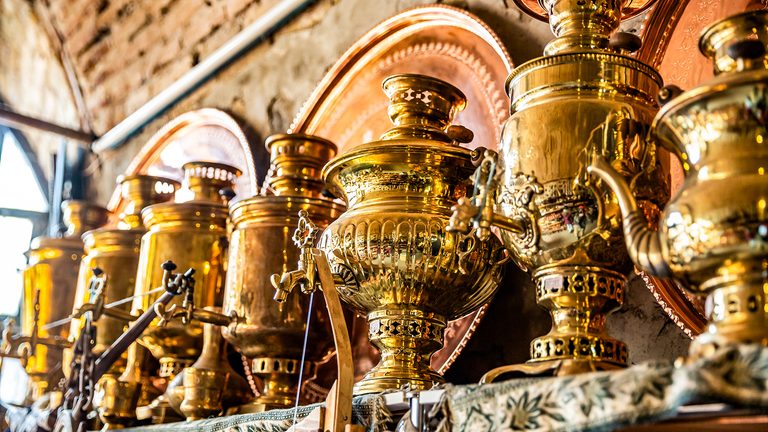

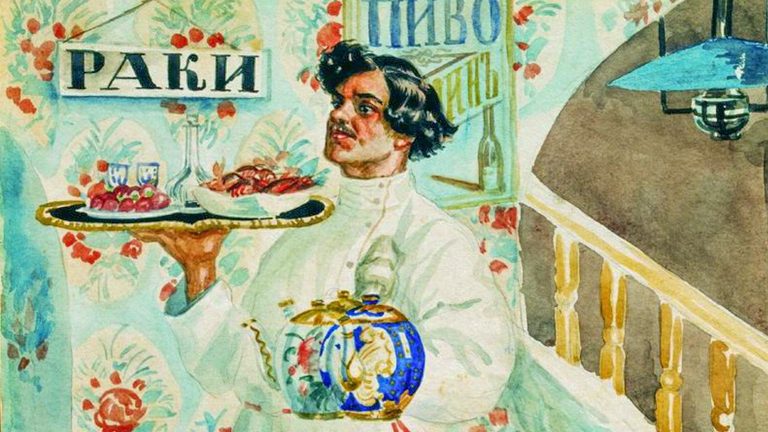
How Russians taught the English (and not only them!) to drink tea with LEMON!


The habit of putting a slice of lemon in tea was born in Russia. And they say bad roads are to blame for it all…
Tea was introduced to Russia from Asia in the 17th century: in 1638, it was presented to Russian Tsar Mikhail Fyodorovich by either a Mongol ruler or a Chinese one – historians still argue about this to this day. Nevertheless, as early as 1679, Russia and China concluded an agreement on tea supplies and the beverage gradually spread throughout the country.
By land or by sea?
 Arrival of Russian tea caravans in Kyakhta.
The English, who became acquainted with tea at roughly the same time, imported it by sea. This took about three months, but the tea in the holds would become damp and spoil from the moisture.
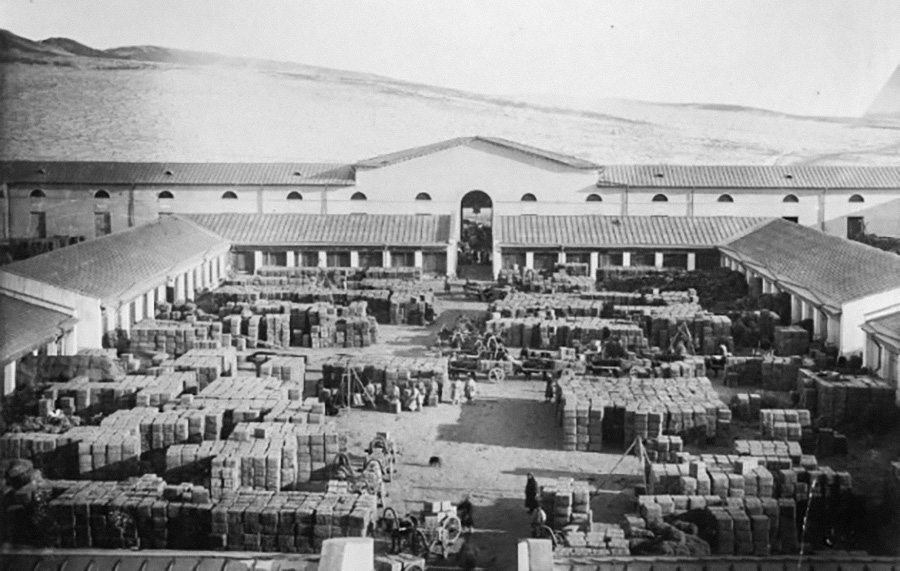 Tea market in Kyakhta.
Tea, however, was imported into Russia by caravans overland. The main trading gateway was the town of Kyakhta in Buryatia. The journey to the European part of the country took more than a year and, sometimes, a couple of years, but it was considered to be of higher quality. Therefore, tea brought from Russia to Europe was valued more highly than English tea.
Russian lemons
 A lemon tree in the Nizhny Novgorod region.
Russians became widely acquainted with lemons later than they did with tea. Although it had been fashionable to grow them in tsarist greenhouses since the time of Peter I, they did not become a popular fruit among the common people until the second half of the 19th century. It was then that a Nizhny Novgorod merchant named Ivan Karachistov brought back saplings of Turkish lemons, which, surprisingly, took root in ordinary Russian homes. Lemons ceased to be something exotic.
A popular beverage
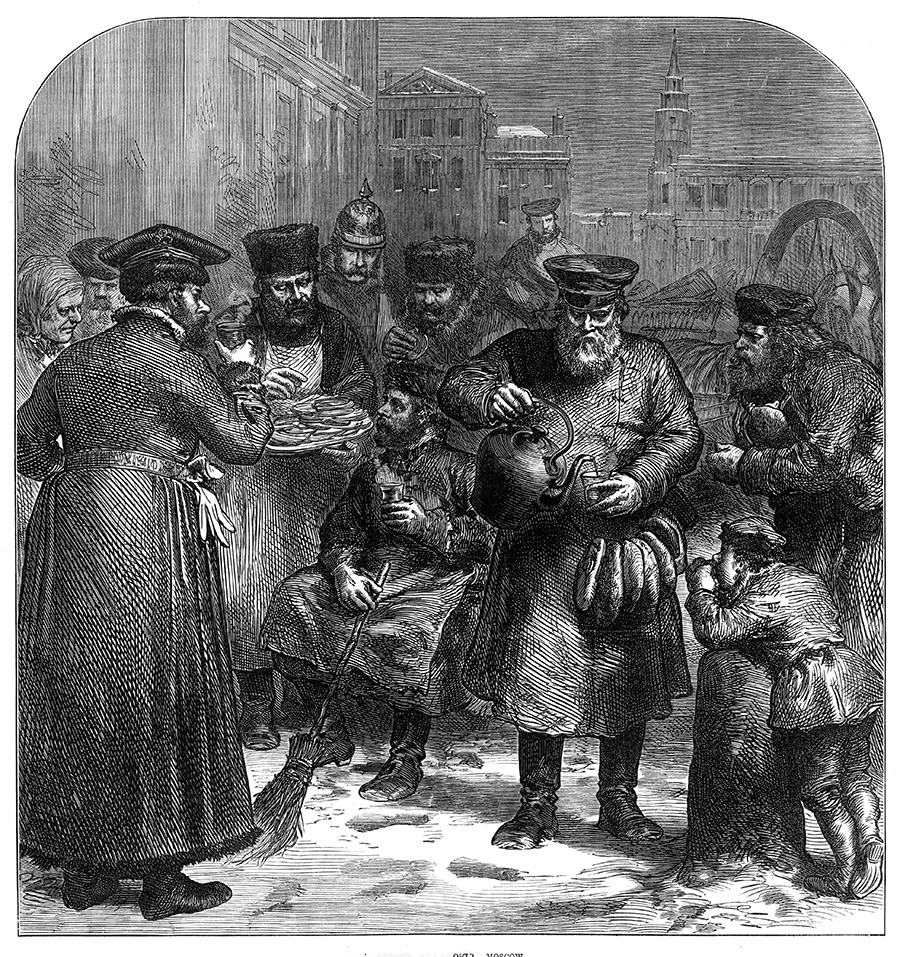 A street tea-seller, Moscow, 1874.
By the early 19th century, tea exports had grown and prices had fallen, allowing ordinary people to appreciate it, as well. True, it was often not pure Chinese tea, but a blend with Ivan-chai (fireweed tea) (as mentioned here), which was much cheaper than the original.
Tea began to be served in roadside taverns. At that time, travel was a long and not very comfortable affair. On dirt roads, carriages were constantly jolting and one had to travel not for a day or two, but for weeks and months.
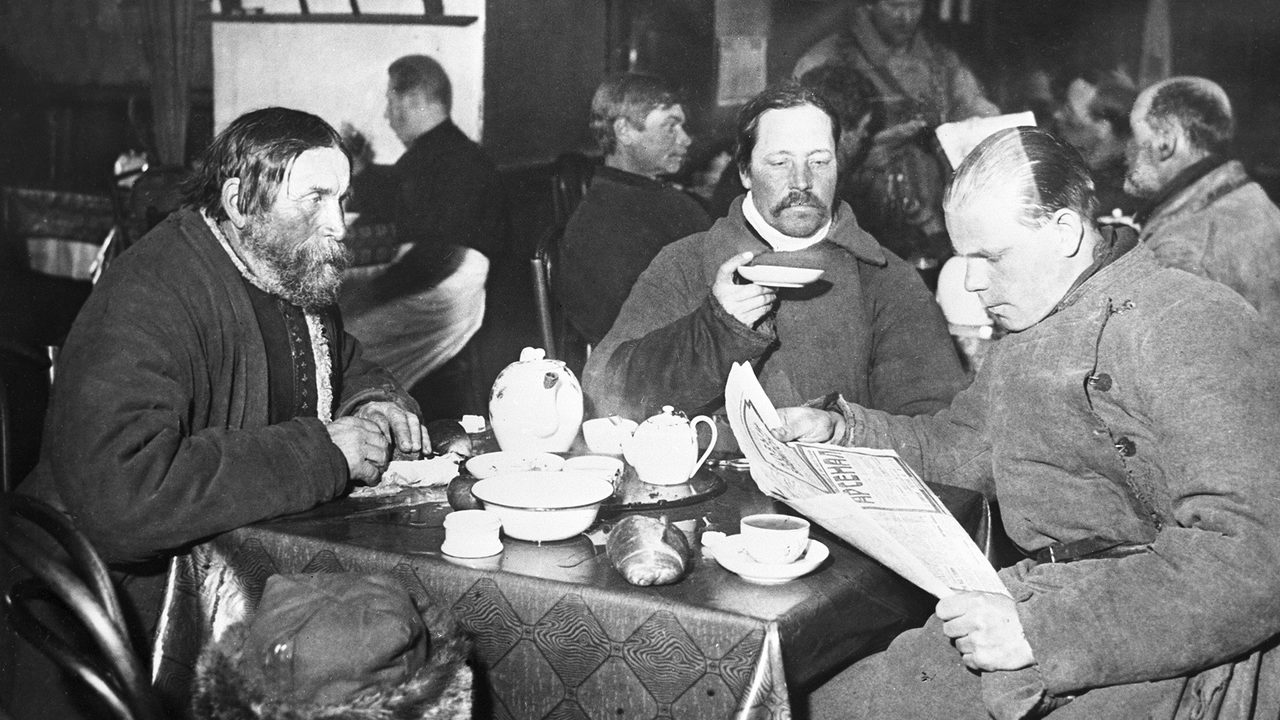 A teahouse in Moscow, 1920
They say this is exactly how the tradition of putting lemon in tea arose. After all, something sour helps to relieve nausea on long journeys. The idea originally came from the caretakers of post stations where travelers stopped, but, later, it was adopted by tavernkeepers, as well. Tea with lemon quickly gained popularity. As a rule, something sweet was served with it – sugar, honey or jam. At the same time, the type of tea could be absolutely any.
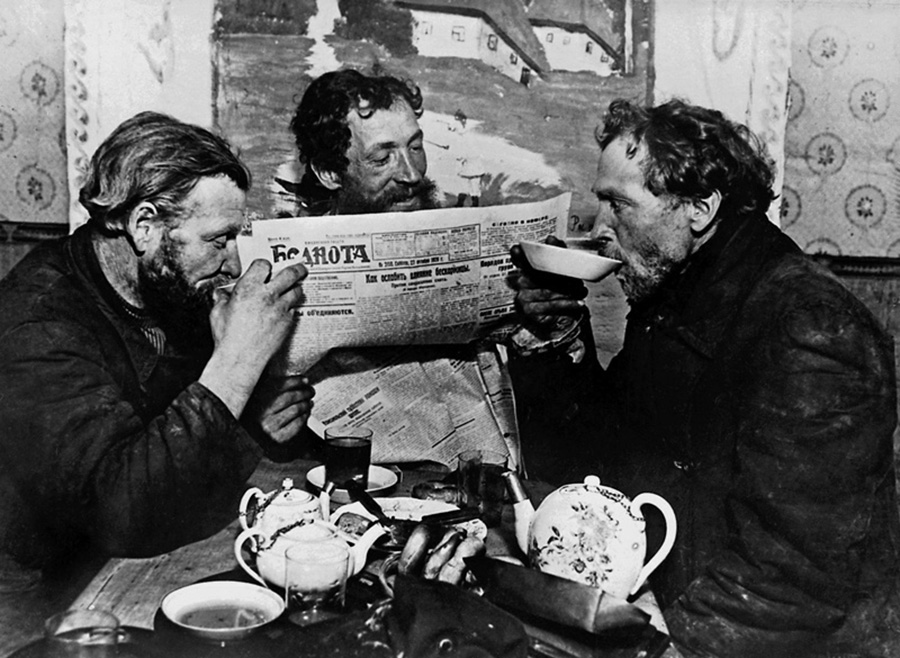 Drinking tea outside Moscow, 1928
Foreigners visiting Russia were very surprised by this tradition. First, lemons were very expensive in Europe; second, the combination itself was unusual. To this day, in England, tea with lemon is called Russian. At the same time, the British themselves may also add lemon to tea, but only to certain varieties.