

How Russia learned to weld metal underwater

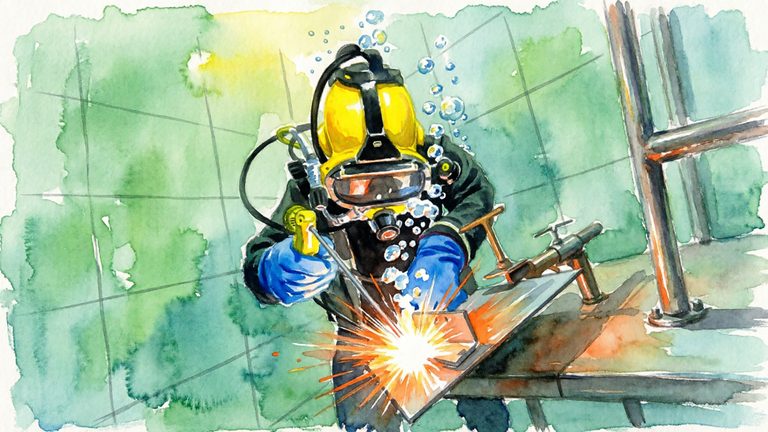
It seems pretty obvious that electricity and water are incompatible! However, a Russian scientist proved that an electric arc can burn perfectly well underwater. His invention paved the way for underwater welding.
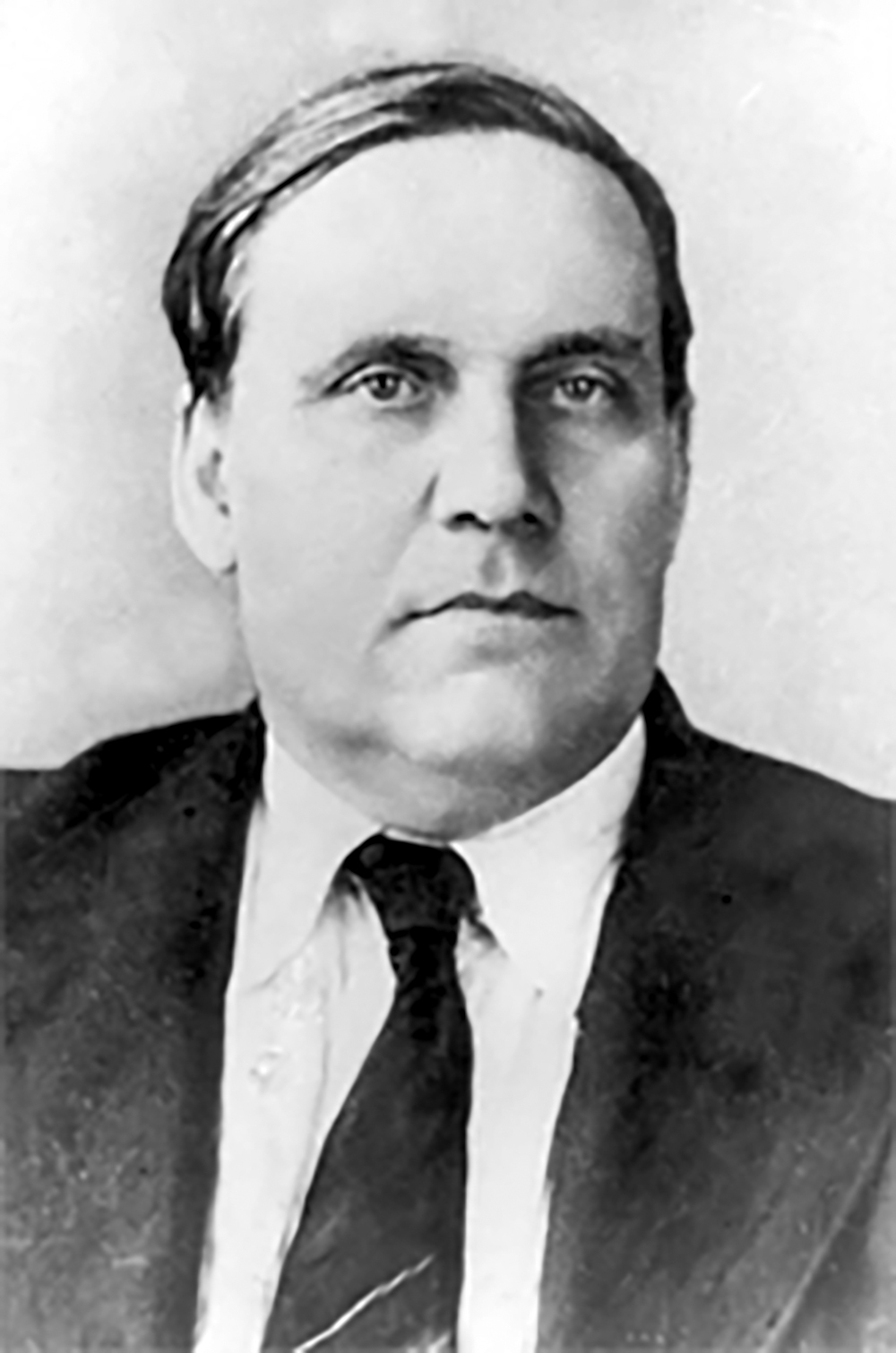
Imagine a diver entering the sea with a welding machine in hand. They descend into the water and begin to weld. Is this even possible? It turns out that it is! The founder of hyperbaric welding was Soviet metallurgical engineer Konstantin Khrenov.
How a Russian scientist invented underwater welding
In the 20th century, with the development of naval forces and maritime infrastructure, many countries began to think about how to repair structures underwater. Scientists had attempted to make an electric arc burn in liquid before, but practical application was still far off.
Then, a revolutionary method of hyperbaric welding was proposed in 1932 by Konstantin Khrenov. During his experiment, he managed to weld metal parts in a tank of water using electrodes treated with a water-repellent lubricant.
Thus, he demonstrated that the electric arc burns inside a gas bubble that forms around the electrode.
In 1936, his technology was successfully applied in the Black Sea: in Sevastopol, cadets from a diving technical school welded attachments to the sides of an old sunken ship to raise it. The welding technique was then tested in other regions.
In 1942, during the Great Patriotic War, a laboratory dedicated to underwater welding was established in Moscow. There, electrode coatings were created that allowed the arc to burn stably underwater and to repair ships on site.
Starting in the 1950s, the technology also moved into the civilian sphere. Today, underwater welding is used not only on ships, but also on pipelines, bridge supports, drilling platforms and other structures. Scientists are also working on robotic welding complexes.
Dry & wet welding
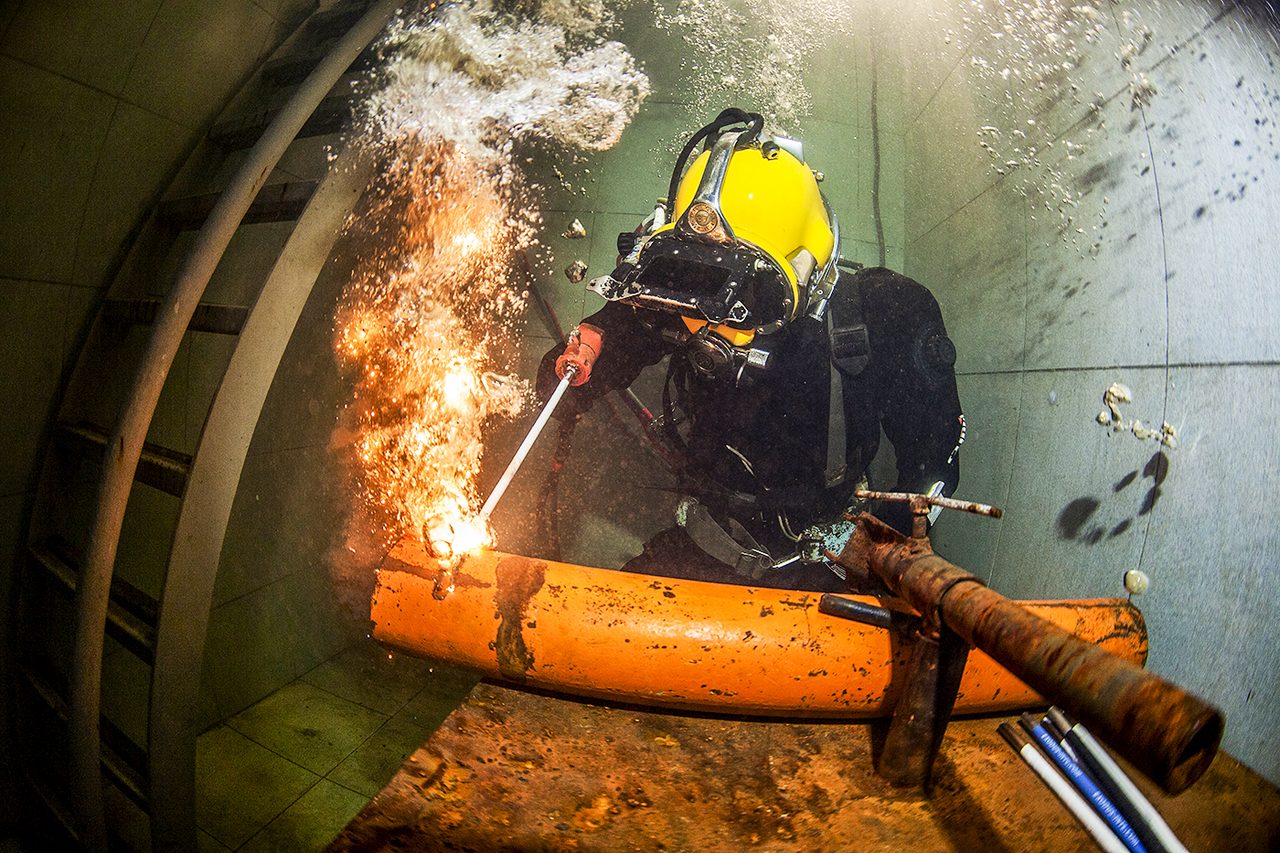
Hyperbaric welding today comes in two types: in a sealed chamber and directly in water. In the first case, a special chamber is placed in the water to enclose the damaged structure. Water is pumped out of the chamber and oxygen is supplied, meaning the welders work in a dry environment. Chamber welding is usually used where tightness and weld quality are critical, as well as at depths of up to 300 meters.
But, “wet” welding takes place directly in the water, at depths of up to 30 meters. The welder-diver uses a waterproof electrode for the work. So that they don’t get electrocuted, they position themselves so as not to be in the current’s path. In addition, they work at a low voltage of 30–35 volts. This is enough to ignite the electrode without causing an electric shock.