

Moscow has its own Chinatown, BUT it has nothing to do with China!
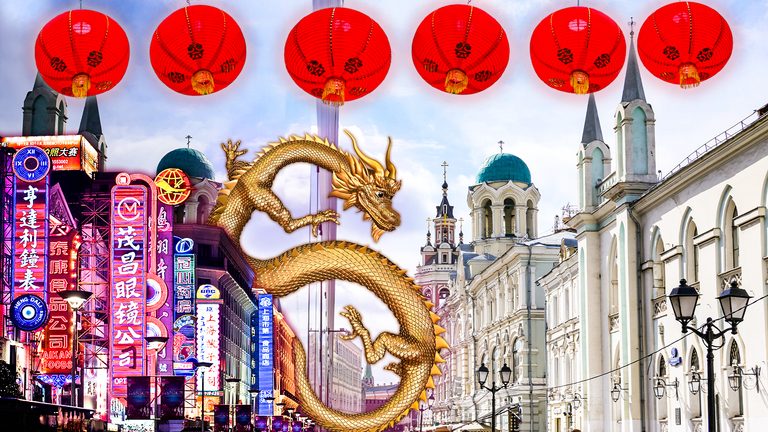
Right next to the Red Square, there is a district called ‘Китай-город’ (‘Kitay-gorod’ – literally ‘China Town’), but you won't see any red lanterns or Chinese hieroglyphs there.
‘Китай-город’ (Kitay-gorod) is one of the oldest districts of Moscow, located right in the city center. There’s also a subway station with the same name.
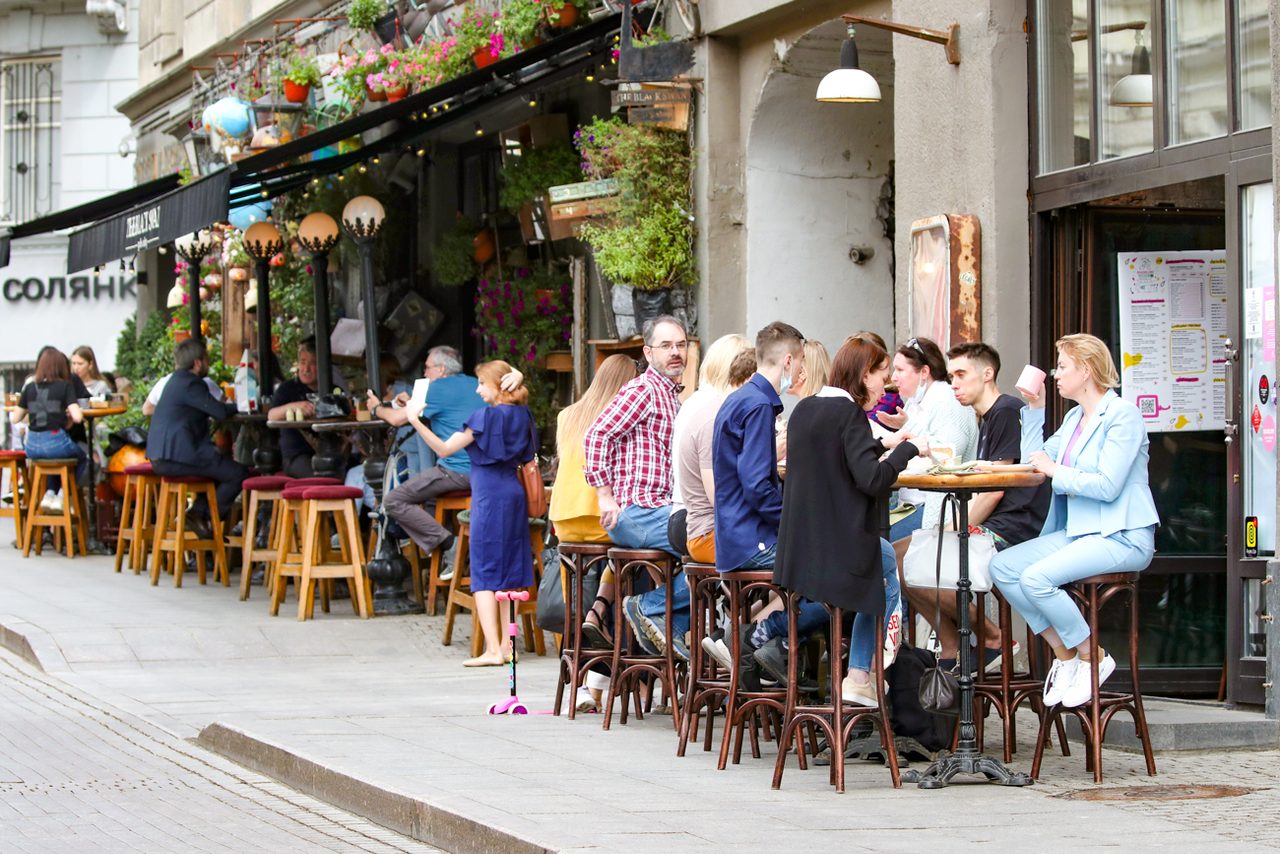 Bars near Kitay-Gorod metro station
In the 16th century, a fortified wall – the ‘Kitay-Gorod Wall’ – was built around this area as an additional line of defense in front of the Moscow Kremlin itself (today, only fragments of that old wall remain).
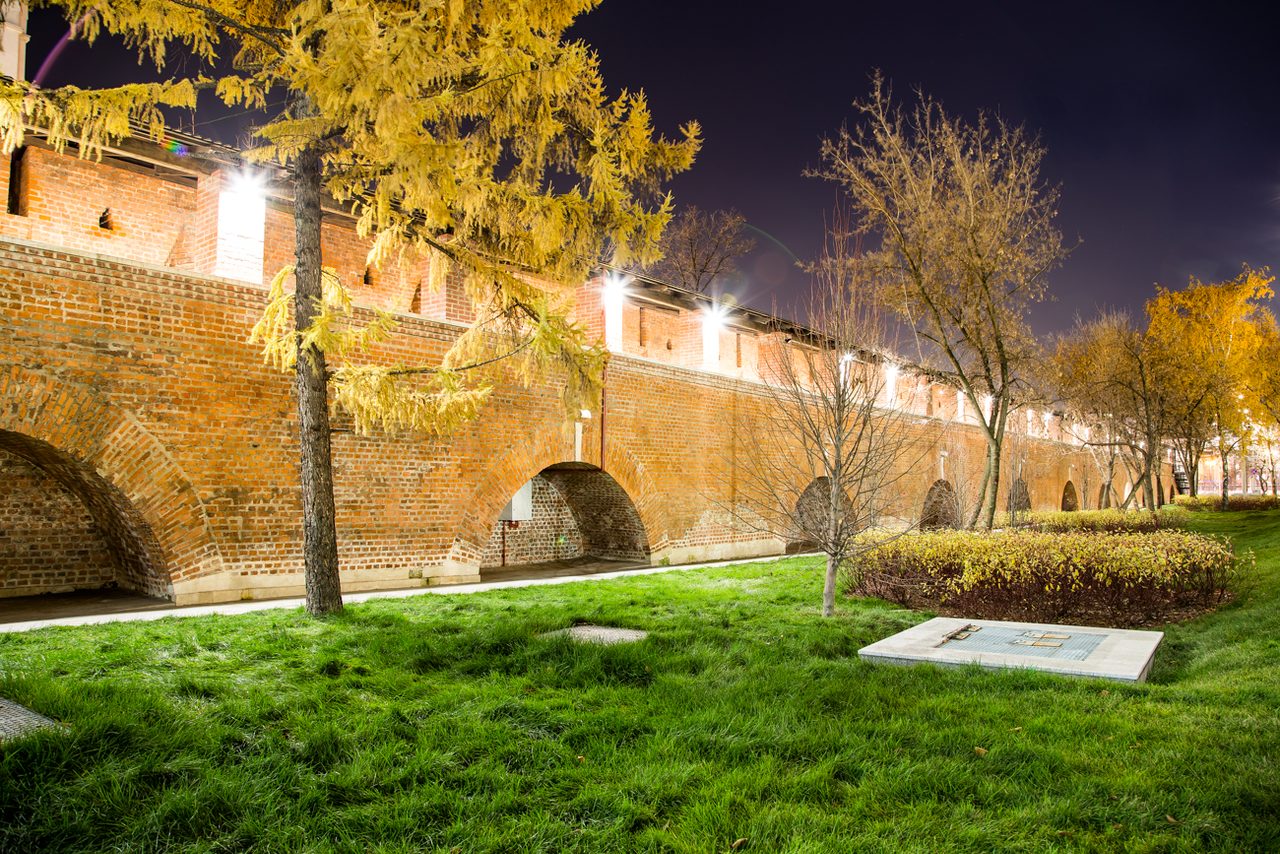 A remained fragment of the Kitay-Gorod Wall
But, how did it happen that there have never been any Chinese people in Moscow’s ‘China Town’?
In fact, the name ‘Китай-город’ has a totally different origin. And there are several theories behind it:
- From the Old Russian word ‘кита’ (kita), which referred to a bundle of poles or twigs used in the construction of the wall.
- By similarity in sound to the Italian word ‘cittadella’, meaning ‘citadel’ or ‘fortress’. After all, the Kitay-Gorod wall was built by Italian architect Petrok Maloy.
- There is also a theory of Turkic origin, from the word ‘катай’ (katai), which also means ‘city’ or ‘fortress’.
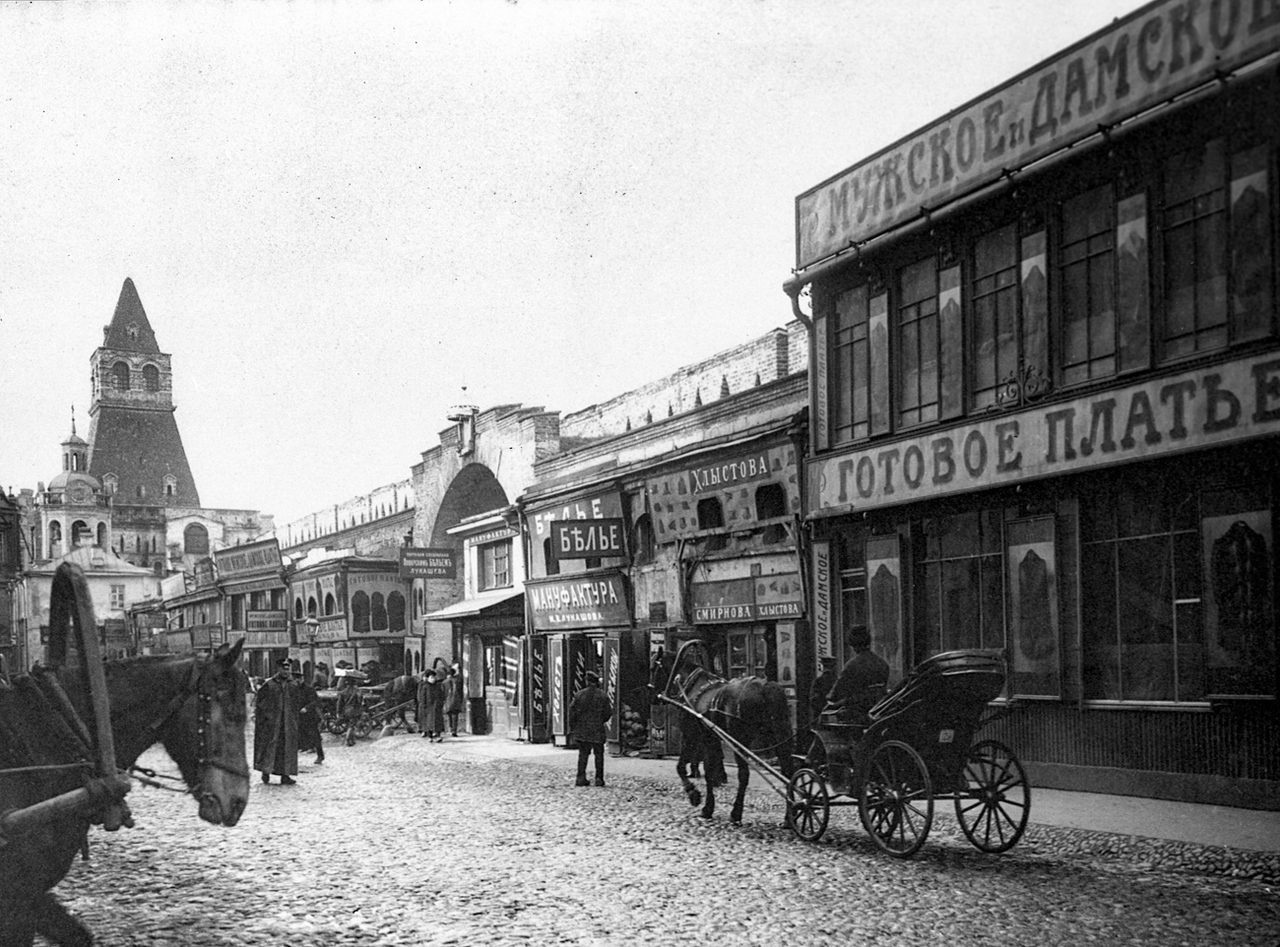 Moscow, 1913. On the left, background, we see Vladimirskie Gates
In tsarist times, ‘Китай-город’ was a kind of business hub, an important commercial and administrative district. This was where the Guest Court, the Printing Court and the Ambassadorial Court were located, as well as the chambers of the most famous and wealthy nobles and boyars (including the Romanovs before they became royal), as well as numerous churches and monasteries built with merchants' money.
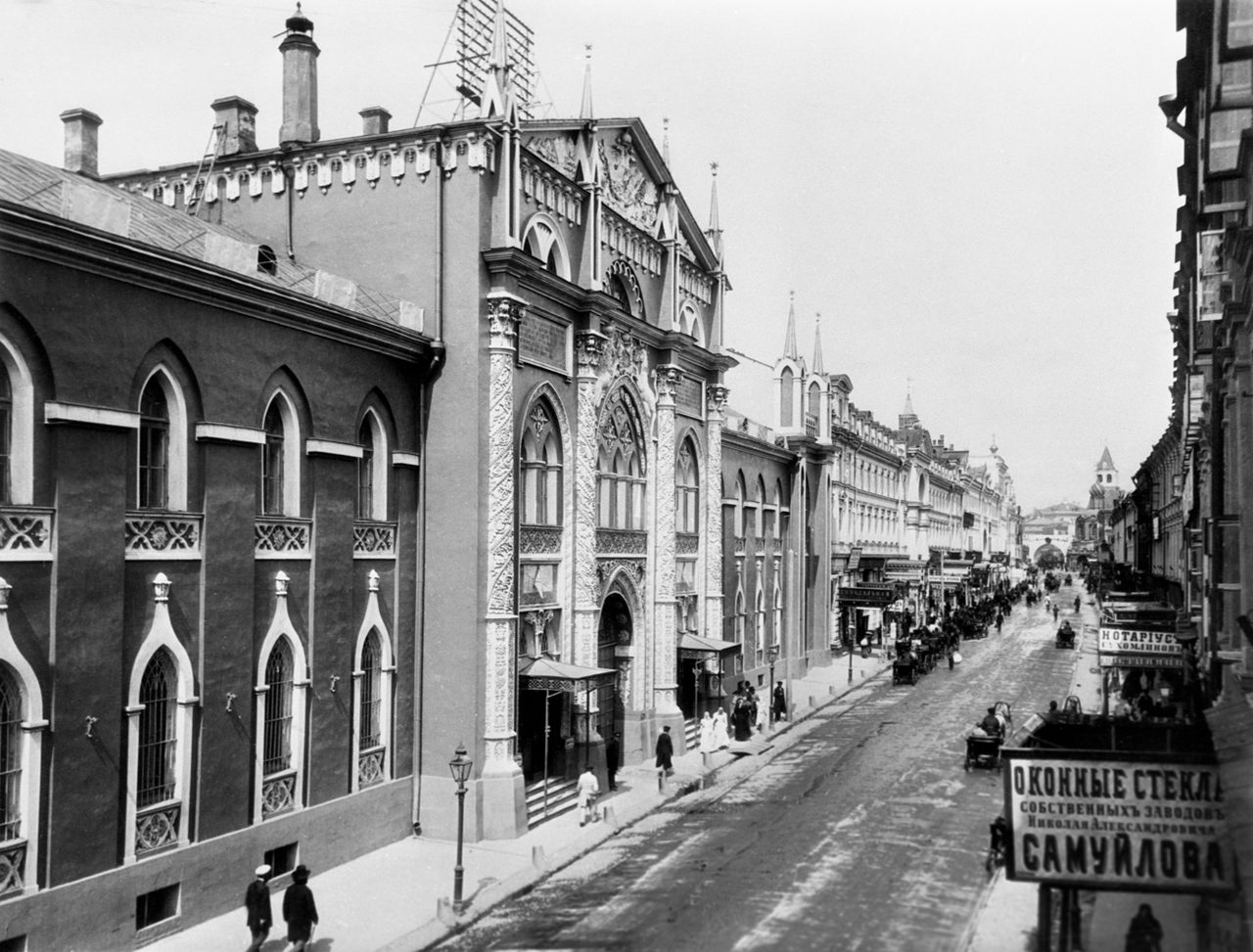 The Printing Court at Nikolskaya Street
‘Китай-город’ is still considered a prestigious district today, with many government buildings and business centers located there.
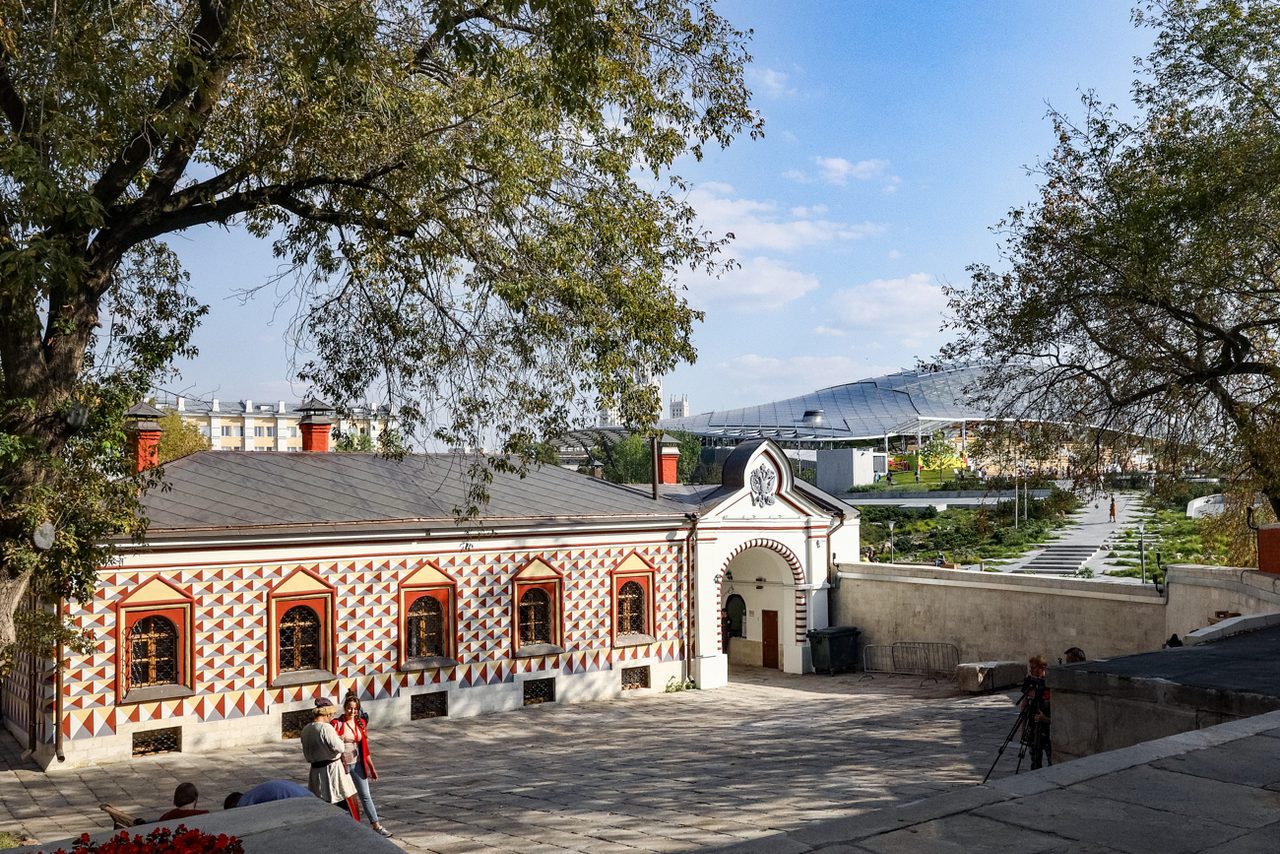 The Romanov boyars chamber at Varvarka Street