

How to raise a mathematically gifted child in Russia
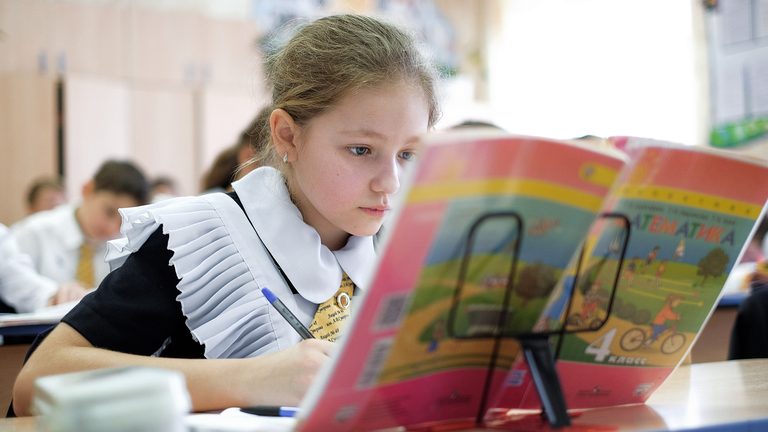
Russia is famous not only for its ballet and avant-garde, but also for its strong mathematics education.
Israel Gelfand, one of the greatest mathematicians of all time, received almost no formal education. When he was finishing ninth grade in the provinces, his math teacher told him: "I have nothing more to teach you. Go to Moscow, find Moscow State University there and then the Faculty of Mechanics and Mathematics at Moscow State University. Keep studying and you'll become a great mathematician." So, that’s exactly what he did: He went to Moscow, stayed with distant relatives and found work as a cloakroom attendant at the Lenin Library – so he could be closer to the books. And he began quietly reading books about mathematics.
There, he was accidentally noticed by Moscow State University professor Andrei Kolmogorov. They struck up a conversation. The professor gave the strange young man a number theory problem he couldn't solve himself. He asked him to show him the results a few days later. Gelfand solved it. After this, as an exception, despite lacking formal secondary or higher education, he became Kolmogorov's graduate student and, in 1935, he began teaching at the university. Contemporaries recall Kolmogorov saying that there were only two mathematicians with whom he "felt the presence of a higher intelligence" in conversation and one of them was Gelfand.
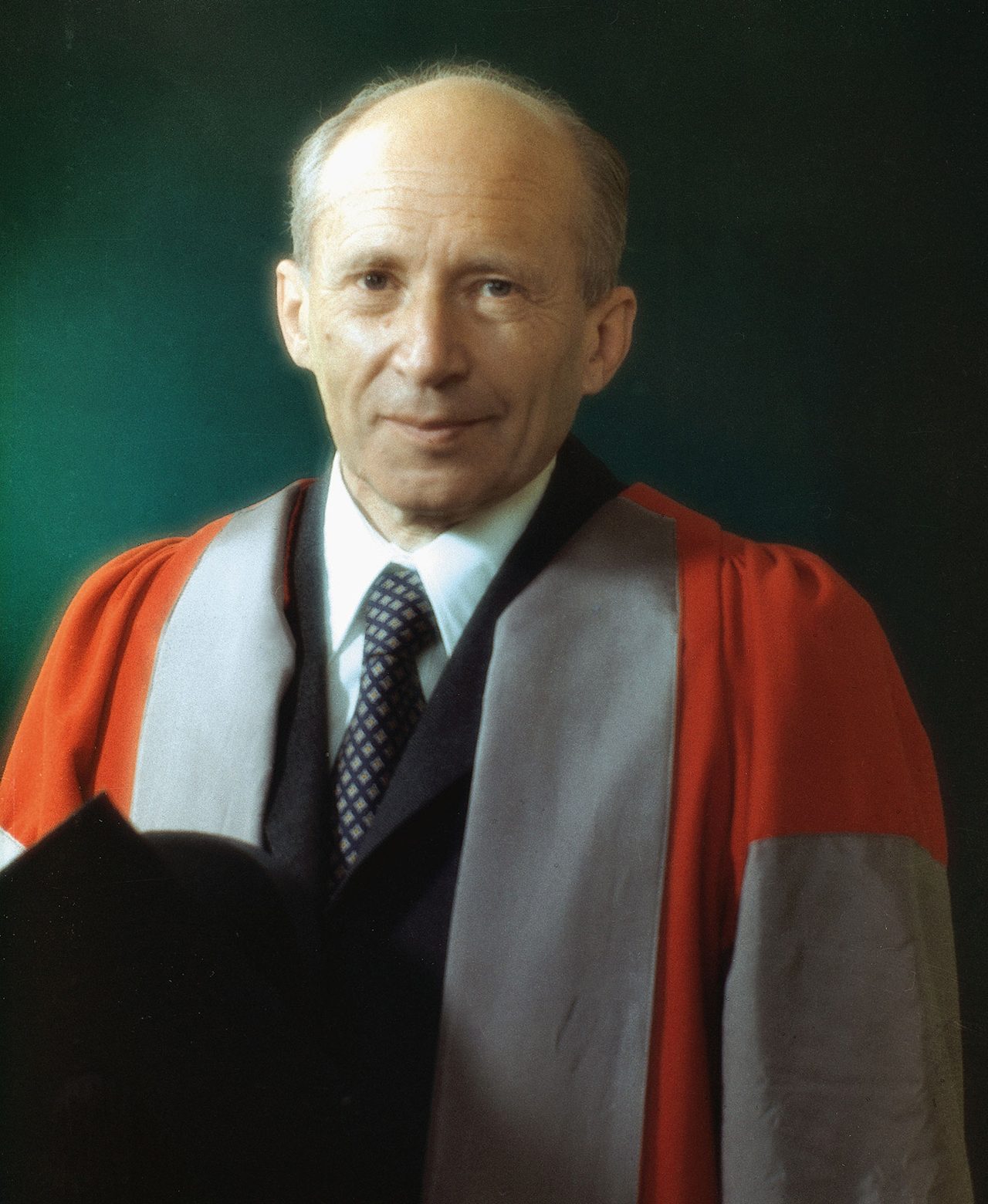 I.M. Gelfand in the robe of a doctor of Oxford University
Perhaps this is why Gelfand later founded the legendary All-Union Correspondence School of Mathematics (VZMSh), which, since the 1960s, has opened the door to science for tens of thousands of schoolchildren from rural areas. Because he, like few others, understood: mathematically gifted children need the presence of others like them. A competitive environment breeds strong mathematicians.
Mathematics as a part of culture
In Russia, for many children, mathematics isn't a dreaded school subject, but rather one of those educational games that fill their free time: reading a book, playing soccer, playing chess or racking their brains over fun problems that don't follow a set formula. It's only later that children learn the words ‘combinatorics’ and ‘algorithmics’. For now, it’s just fun for them to guess what the next rotational figure will be or to connect a pile of construction set pieces with lines to a model they can build. Such problems can be solved anywhere: on the subway, at a bus stop or in the waiting line at the clinic.
"Mathematics in kindergarten, preschool and elementary school should be playful," says Ivan Yashchenko, scientific director of the Center for Pedagogical Excellence and deputy chairman of the organizing committee for the Moscow stages of the All-Russian School Olympiad. "We hold olympiads in elementary schools, but they're not designed to identify the best – that's harmful for children." We hold olympiads with engaging problems to show children how beautiful mathematics is. And the child competes not with their deskmate, but with the problems themselves. If you solve a certain number of problems, you're already a prize winner or a champion."
Russia has an extensive network of free or low-cost math clubs. Among them are:
- The Moscow Center for Continuous Mathematical Education (MCCME) — in-person clubs in Moscow for students in grades 1–11. Registration is via the website in August–September; an entrance exam is required.
- The Center for Pedagogical Excellence (CPE) is a breeding ground for olympiad talent, offering in-person classes in Moscow for students in grades 5–11. The selection process is rigorous, with a written exam on non-standard problems. Registration takes place in late summer.
- Small Faculty of Mechanics and Mathematics (SMAM) — Sunday classes at Moscow State University (Moscow), for students in grades 1–11. Enrollment begins in September; for upper-level groups, admission is based on interviews or olympiads and academic competitions.
- Sirius Online School — distance learning courses for grades 7–11, registration is available several times a year on the website, and selection is based on test results.
- Innopolis Olympiad Preparation School — in-person and online classes in Kazan for grades 5–11; registration is available through the website; a motivation letter and/or testing are required.
- RAZ-DVA-TRI! (‘ONE-TWO-THREE!’) – an in-person club in St. Petersburg and Moscow for children aged approximately 5 and younger; registration begins in early fall, often by prior request and a short interview.
- ‘Myshmatika’ (‘Mousemathics’) – playgroups for children aged 4–7, classes are held in Moscow and online; registration is available through the website, with no strict selection process, but space is limited. You can also simply purchase their materials and study at home on your own.
- ‘Fractal’ – clubs for children ages 5 and up, held in person in St. Petersburg, Moscow, as well as online; registration opens in August-September and some groups require an interview.
Generally, registration usually opens in August-September and almost all have an admission process – either solving non-standard problems or passing an interview. It's best to check the club's official websites for registration dates, as spots fill up quickly. These clubs are often taught by active scientists or senior students.
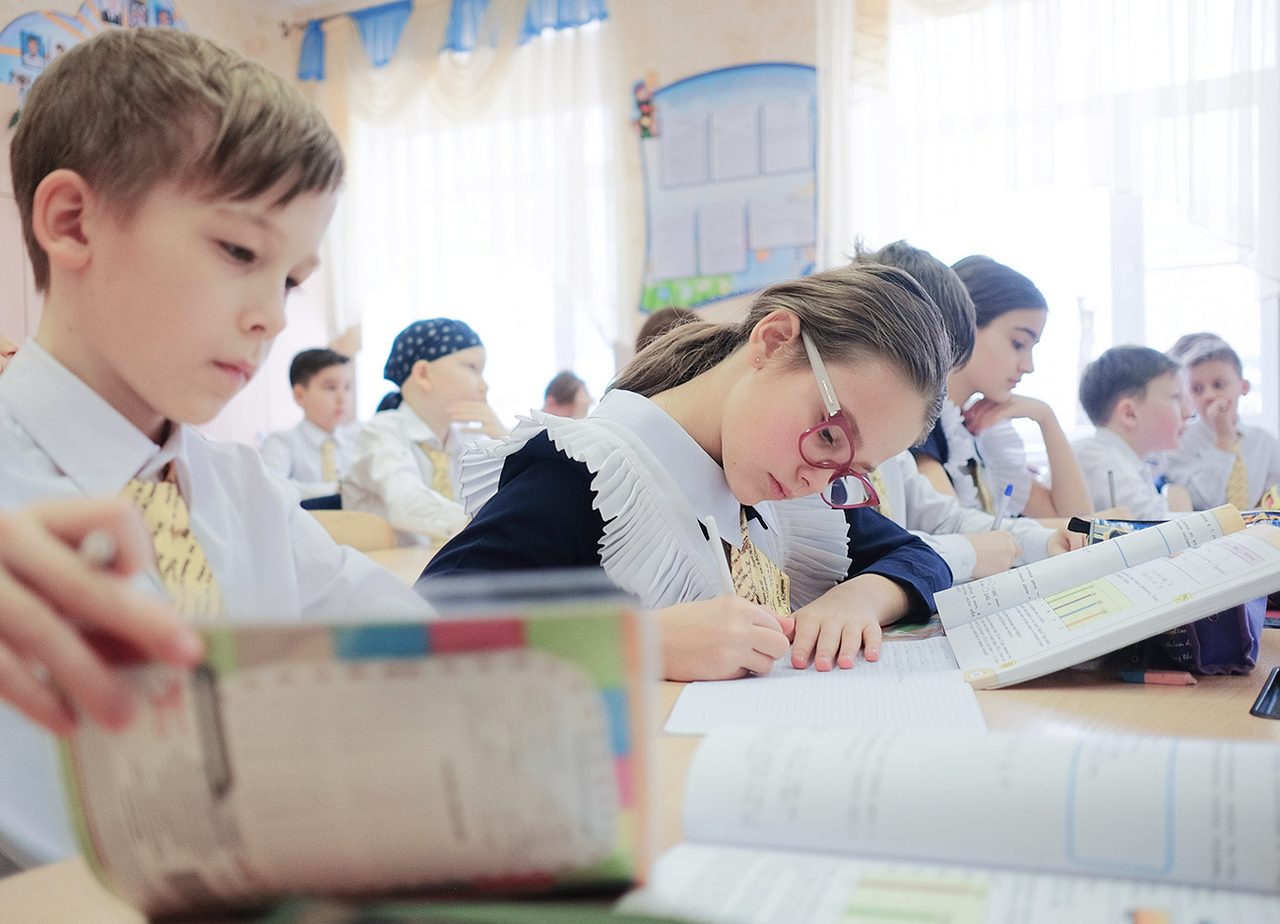
In such clubs, children don't just "go through a program"; they grapple with beautiful and challenging problems. This is precisely how mathematical thinking is cultivated and nurtured – through the joy of sudden insight. If they really can’t figure it out, teachers organize ‘doreshki’ (‘remedies’), breaking it down into smaller steps and explaining the solution process.
The clubs often organize summer math camps, which combine outdoor recreation with active mathematical education. Camps are typically designed for students in grades 2–11, last 2–3 weeks and applications are accepted in the spring.
Olympiad ladder as a way of life
The Russian Olympiad system is not just a competition, but an entire social environment. From the school stage of the olympiad to the All-Russian School Olympiad and international training camps, a ladder has been built that children climb over the years. It's a celebration, a thrill and hard work.
Olympiads don't teach mathematics – they train athletes ready for competition. Lost? Sit down and analyze why. Won? Don't stop – the next stage will be even tougher. The journey usually begins with the school-level stage of the All-Russian Olympiad (participants can start in grades 4–5), followed by the municipal, regional and final stages.
There are also many other math competitions. Some of them are practice events, such as the Moscow State University Mathematical Festival (for grades 6-7). Others are major competitions: the ‘Tournament of Cities’, the ‘Phystech Mathematics Olympiad’, the ‘Moscow Mathematical Olympiad’, the ‘St. Petersburg Olympiad’ and olympiads at the country's largest universities. Students can typically begin participating in these olympiads starting in 6th or 7th grade; registration for each round opens on the competitions’ websites in the fall or early winter. Winning a listed olympiad gives high school seniors an advantage when applying to college. Certificates from these olympiads grant 100 points toward the subject-specific Unified State Exam (USE) or admission without exams, provided the student’s USE score is at least 75 points. For this reason, students take these olympiads very seriously, especially as they approach graduation.
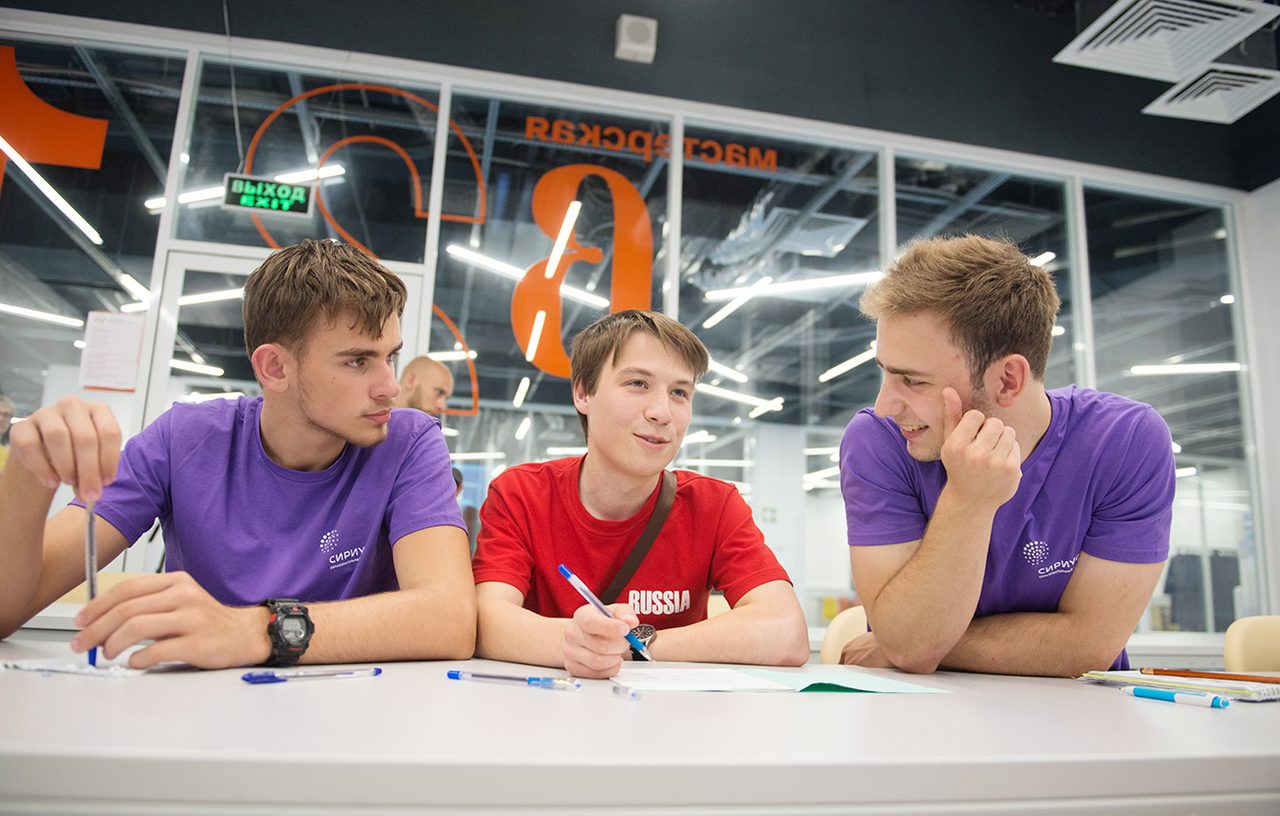 During a meeting with the national mathematics team at the Sirius Educational Center ahead of the International Mathematical Olympiad in Rio de Janeiro
Specialized schools & specialized classes
A specialized class with an advanced math curriculum is the ideal environment for a gifted child. In a regular school, such children struggle – the pace is too slow, and there are too many repetitive assignments and rote solutions. Specialized schools, however, offer a different curriculum and a different atmosphere. While a regular school is designed to provide everyone with a basic education, a specialized school nurtures gifted children. And this type of education has its own unique features. On the plus side: a rigorous curriculum, motivated teachers, and interesting classmates – your child won’t get bored. On the downside: intense competition, which not every child is ready to handle.
Ilya Chistyakov, director of the St. Petersburg Laboratory for Continuous Mathematical Education, explains how students are selected for specialized classes: “We don’t assess a student’s factual knowledge, but rather their motivation to learn. That’s why we have quite a few specialized assignments. Sometimes, we even took the risk of accepting children with poor preparation because we saw how that child behaved in a dynamic setting: how they worked, what they wanted, how they approached their studies, how they reacted to setbacks and how their eyes lit up. And those children went on to become wonderful scientists and prolific mathematicians.”
Specialized educational institutions stand out in the rankings of the strongest schools. Open days for them are usually held in February-March and registration for entrance exams must be done in advance through their official websites.
- Specialized Scientific Center at Moscow State University (Moscow) is a boarding school for out-of-town students. The main intake occurs after the 9th and 10th grades.
- Phystech Lyceum named after P.L. Kapitsa (Dolgoprudny, Moscow Region) — enrollment in grades 1, 2, 5, 8, 10 and 11. Enrollment is conducted in several stages in the spring, with registration open in late winter.
- School No. 179 (Moscow) – math grades 7-9. Entrance written tests are held in the spring (April–May).
- Lyceum ‘Second School’ (Moscow) – main enrollment for grades 6 and 7. Exams are held in March-April. Additional enrollment for grades 8-10 is possible based on interview results or academic achievements.
- School No. 57 (Moscow) – one of the oldest schools, enrolling students in math grades 5 and 8. Exams are held in April-May.
- Physics and Mathematics Lyceum No. 31 (Chelyabinsk) – admission to grades 5, 6, 7, 8 and 10. Entrance examinations are held in April–May. Preparatory courses are available.
- Physics and Mathematics School (Tyumen) – admission to grades 5 through 11. Exams are held in April-May; dormitory accommodation is available for out-of-town students.
- Physics and Mathematics Lyceum No. 239 (St. Petersburg) – admission to grades 5, 8, 9 and 10. Admission is open from April to May.
- NSU Specialized Educational and Scientific Center (Novosibirsk, Akademgorodok) – boarding school for out-of-town students, admission to grades 8, 9, 10 and 11 (the main intake is for grades 9 and 10). Selection takes place through the Summer Physics and Mathematics School in August (applications are submitted in the spring) or through spring entrance exams.
As a general rule, registration opens in March or April; specific dates are posted on the schools’ websites. Spots at these institutions fill up very quickly, so students begin preparing for the exams a year or more in advance.
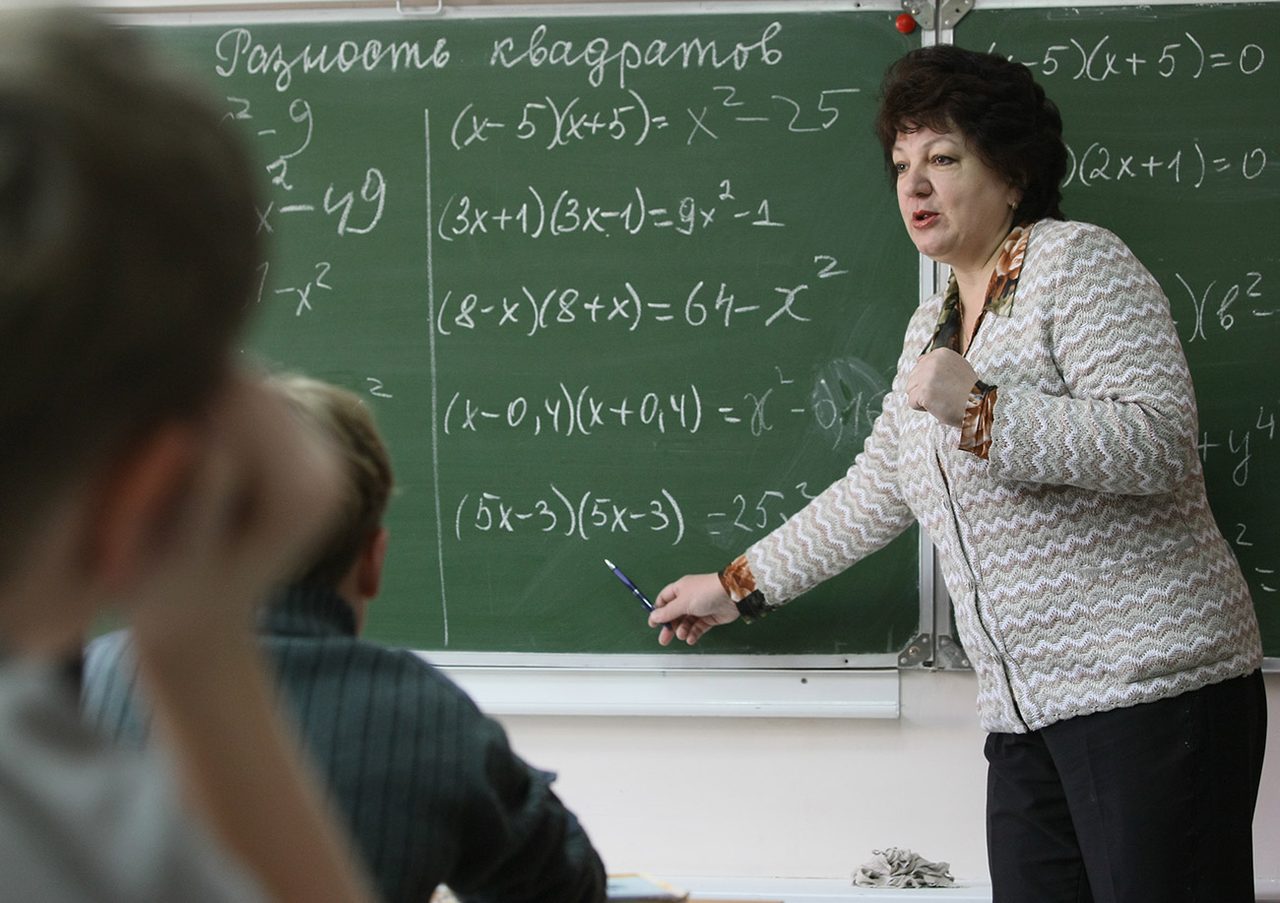
These schools are open to talented children, regardless of citizenship. SUNCs offer boarding with room and board (fees apply); other schools generally do not provide this, so children will need a guardian or the option to live with their parents. A mandatory requirement is proficiency in Russian sufficient to follow the curriculum. The workload will be heavy. The Russian educational tradition has a characteristic that foreigners sometimes perceive as harsh. In Russia, they teach that a difficult task is a good thing and a mistake is not a tragedy, but a stepping stone. A teacher might write "think!" in the margins. This isn't rudeness, but an invitation to reflect.
Afterword
In mathematics, just like in sports, it's not just the coach who matters, but the team, as well. Look for forums, clubs, summer schools, specialized classes, olympiads and math battles. It's helpful to subscribe to event aggregators like Olimpiada.ru or regional groups of math clubs – they publish registration announcements and deadlines.
But it's important not to swing to the other extreme and turn your love of math into a race for diplomas and degrees. Perhaps, that's why the best math teachers are so happy when their students not only win olympiads, but also enjoy music, drawing, dance and gymnastics, and are just as interested in a culinary recipe as they are in the trident lemma!