
Why didn't Vladimir Makovsky exhibit this painting? (PICS)
Primarily because he kept it in his studio and only showed it to close friends and family.
Vladimir Makovsky was a recognized master of genre painting, but, from the 1870s onward, his work began to reflect ongoing social changes around him. And the events of one winter morning in 1905 compelled him to create a reportage painting.
Witness to Drama
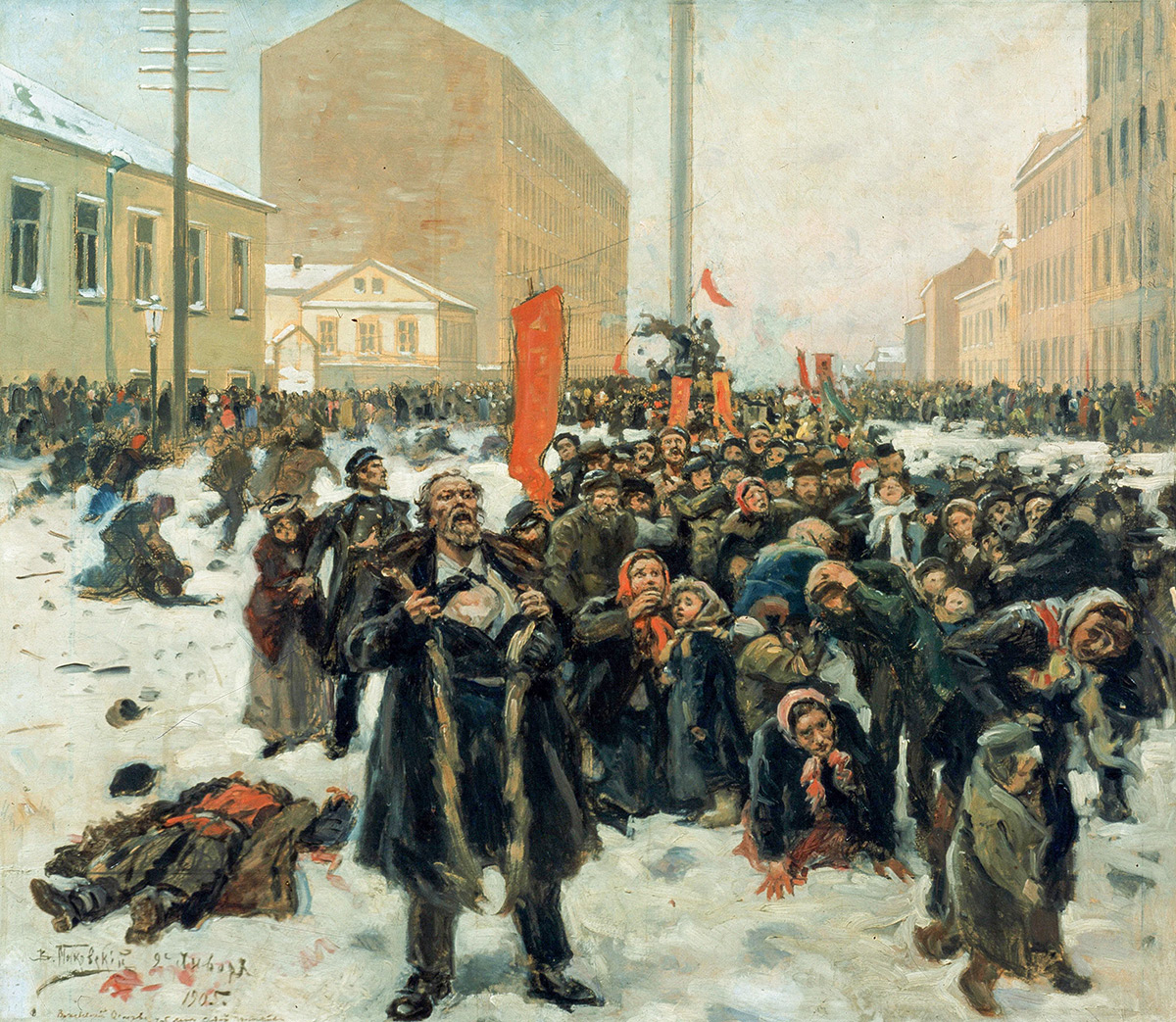
On Sunday, January 9, 1905, a march from the working-class districts of St. Petersburg set out for the Winter Palace, intending to deliver a petition from the city's workers and residents to the emperor. In it, they demanded improved working conditions, higher pay for women and general laborers and an eight-hour workday. They also included political demands. The document concluded with an appeal to the tsar: "If you do not answer our prayer, we will die here, on this square, before your palace. We have nowhere else to go and nothing to do! We have only two paths – either to freedom and happiness or to the grave."
Near the Academy of Arts, the protesters were met by the infantry, the cavalry and a detachment of Cossacks. Unarmed people, including women, children, as well as the elderly, who held only icons, banners and portraits of the emperor, were shot, hacked to death and trampled by horses' hooves. At least 130 people died in the city that terrible morning.
And the students and faculty of the Academy, including its rector, Vladimir Makovsky, were witnesses to the tragedy.
Report from the Scene
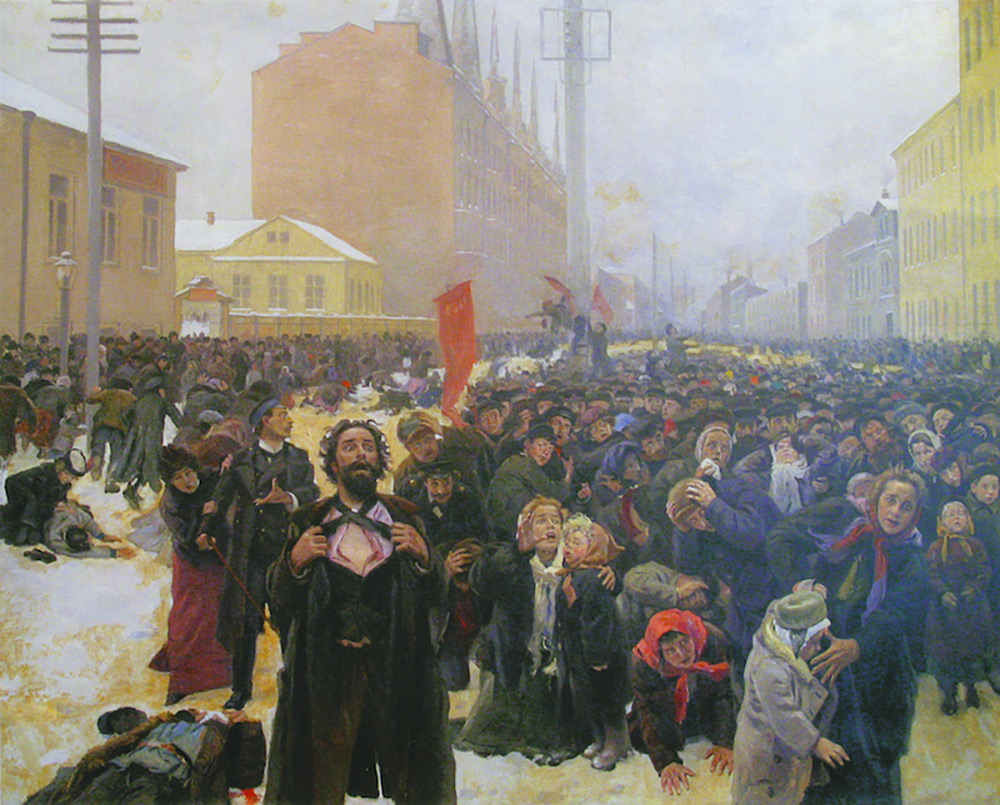
Makovsky immediately decided he had to document the terrible events and began working on a painting. In it, he captured everything: the horror, the despair, the shock; a mother protecting her child; lifeless bodies; and the hanging canvases of banners.
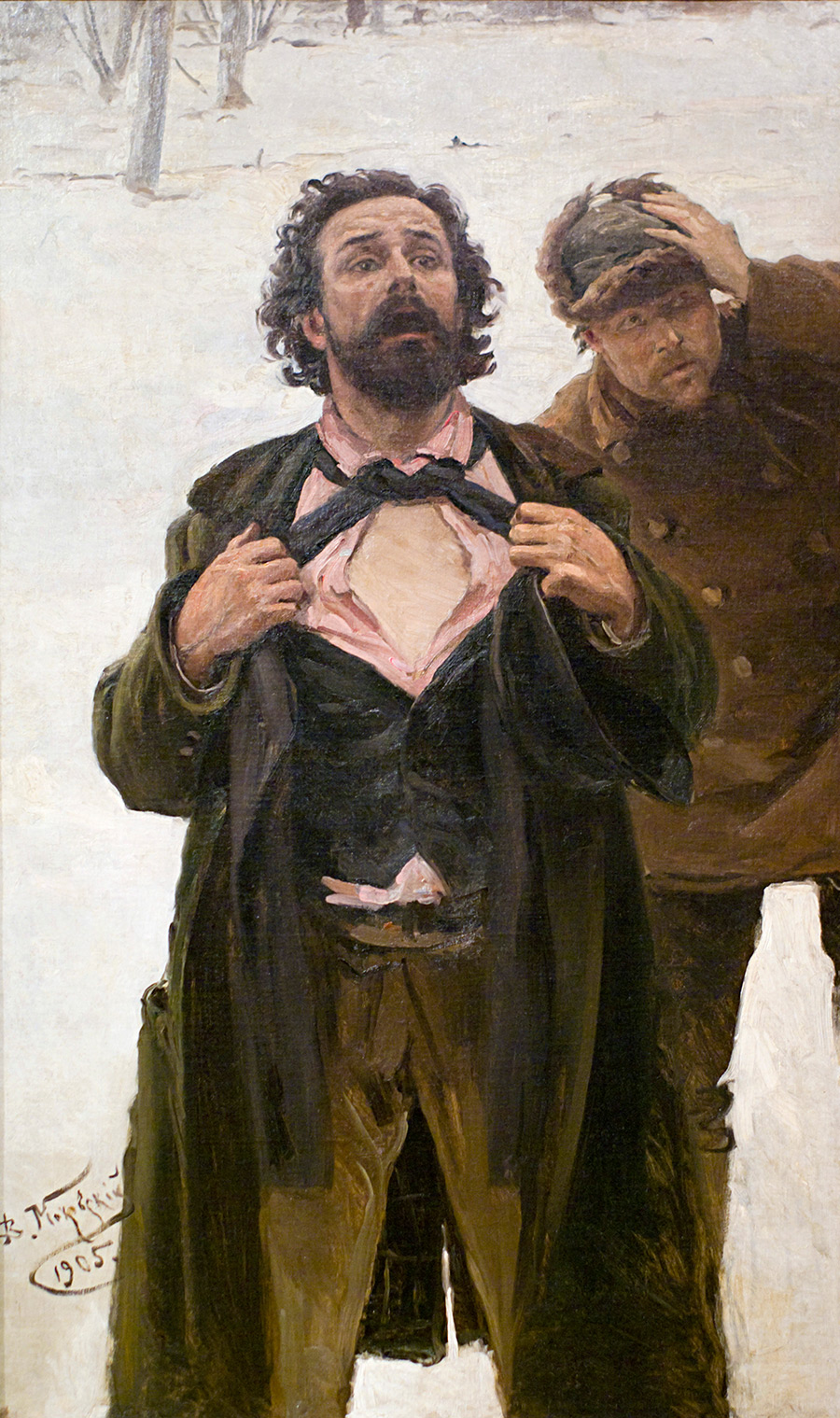
He based the characters on his acquaintances and colleagues. For the student, artist Nikolai Kiselev posed for him, while the woman standing next to him was modeled after a model who worked at the Academy with him. He also worked long and hard on the central figure. In the original version, it’s a young man, clearly belonging to the working class, ripping his shirt and exposing his chest to bullets. In the second version, he is an older man in a fur-trimmed coat.
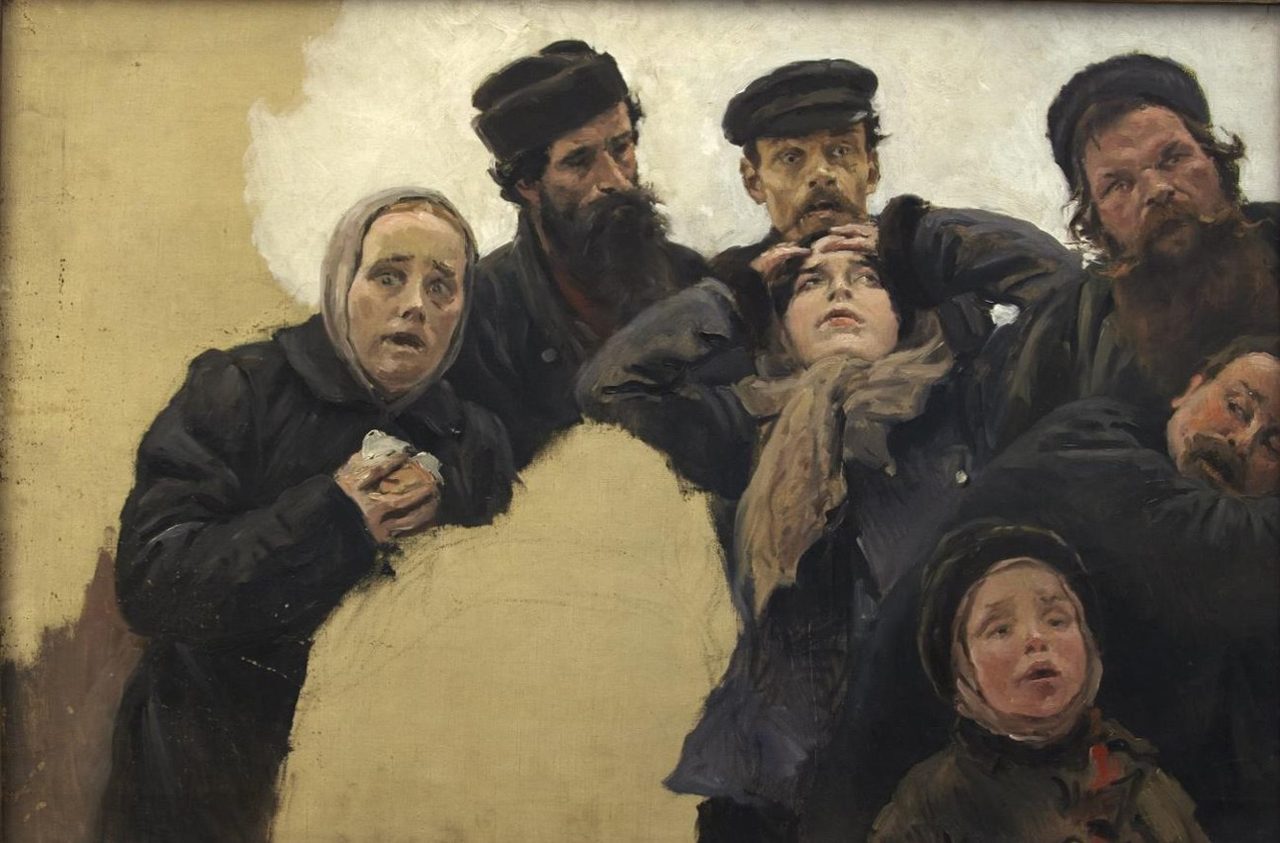
The artist completed the work two years later, but few knew about it. His position required it: as an actual state councilor, professor and rector of the Academy, he could not confront the authorities. Therefore, he only showed the painting to close friends and family – in the words of artist Yakov Minchenkov: “For fear that word of it spreading prematurely.”
As fate would have it, the painting was only discovered after Vladimir Makovsky’s death. And the public only got to see ‘January 9, 1905 on Vasilievsky Island’ in 1922 at the exhibition of the Peredvizhniki.