
5 facts about the death of Alexander Pushkin

The poet died on February 10, 1837. Two days earlier, he was fatally wounded in a duel by Georges d'Anthès, a French officer serving in the Russian army.
In 1834-1835, Georges d'Anthès began openly courting Natalya Nikolaevna, the poet's wife, which sparked immediate gossip. As a result, a duel took place between the rivals, during which Pushkin was wounded in the stomach and died two days later.
Pushkin was a brawler
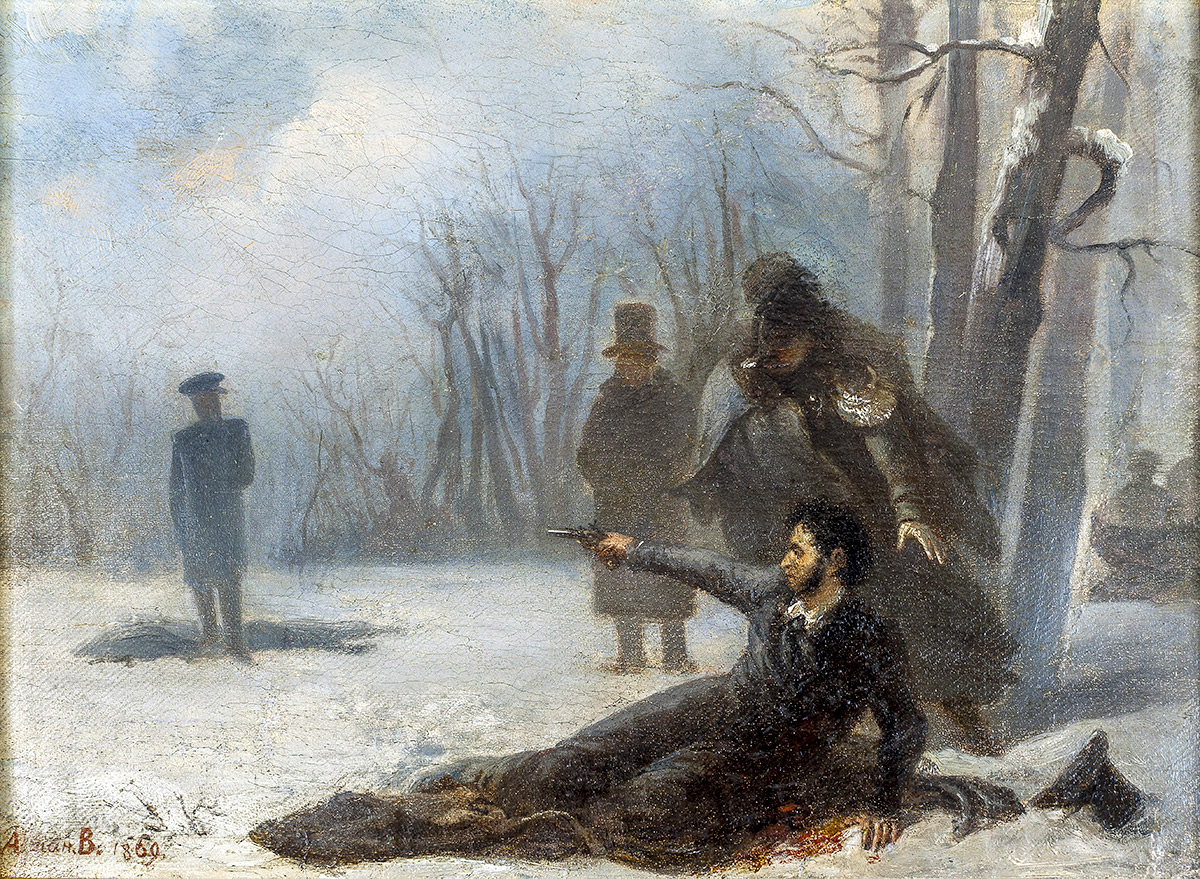 Duel between Alexander Pushkin and Georges d'Anthès. Found in the Collection of A. Pushkin Memorial Museum, St. Petersburg
A brawler is a person who seeks pretexts for duels, displays ostentatious prowess and often risks their life over trivial matters. Perhaps calling the poet a brawler would be an exaggeration, but his fiery and quarrelsome nature often led to conflicts that he proposed to settle with pistols. Pushkin scholars have counted over 20 duels in which their hero was a key participant. He was even willing to duel close friends over harsh jokes (for instance, with his classmate Wilhelm Küchelbecker) and his uncle Pavel Gannibal over a dance partner. Fortunately, thanks to the efforts of seconds and friends, most duels ended in reconciliation and in those that did take place, Pushkin either fired into the air or refused to fire. Before his fateful duel with d'Anthès, he had neither killed nor seriously wounded anyone.
He was killed by a relative
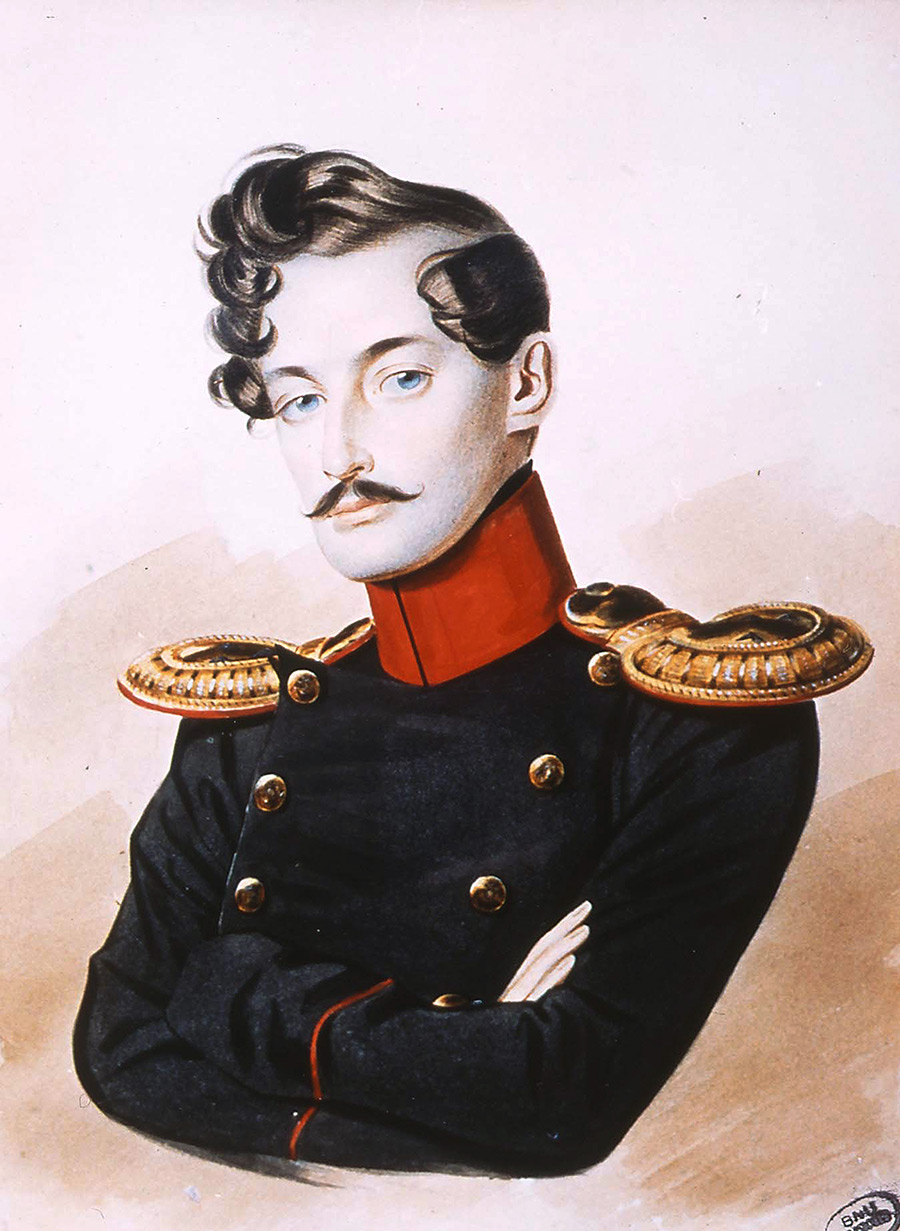 Portrait of Georges-Charles de Heeckeren d'Anthès (1812-1895), 1830s. From a private collection
At the time of the duel, Pushkin and d'Anthès were brothers-in-law: Georges had married Ekaterina Nikolaevna Goncharova, the elder sister of Pushkin's wife. The adopted son of a Dutch diplomat named Louis Heeckeren (rumor had it that they were lovers), d'Anthès came to Russia in the 1830s and served in the Cavalry Regiment. The handsome young man was very popular with women and was not shy about recounting his amorous successes and conquests. In Fall 1836, Pushkin received an anonymous, insulting letter hinting at his wife's affair with d'Anthès and immediately challenged him to a duel. However, d'Anthès then officially proposed to Ekaterina Goncharova, Natalya Nikolaevna's sister. So, Pushkin was forced to rescind the challenge. However, after their wedding, which took place two months later, d'Anthès continued to pursue Natalya Nikolaevna in society. This led to a duel, in which Pushkin was mortally wounded. Following the duel, d'Anthès was stripped of his rank and exiled from Russia. He and Ekaterina went on to have three daughters and a son.
Pushkin's death was confirmed by the lexicographer Dal
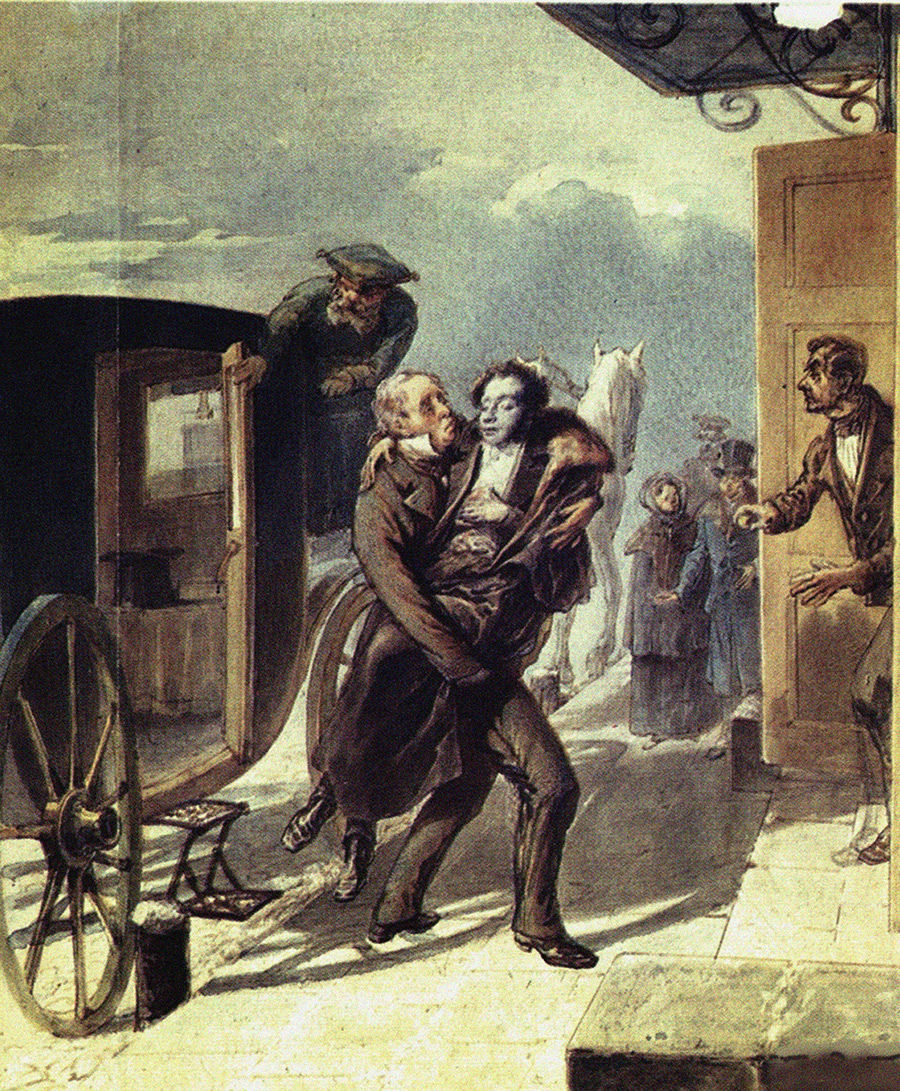 Pushkin after the duel, 1855. Found in the collection of the State Museum of A.S. Pushkin, Moscow
Vladimir Dal, known to everyone as the author of the ‘Explanatory Dictionary of the Living Great Russian Language’, was a military surgeon by training. By the time of Pushkin's duel, he was serving as an official and was a close friend of the poet. He became one of the chief physicians at the poet's bedside, keeping watch day and night. Dal left detailed notes on his final hours. At the request of the poet's wife, he removed the death mask and dressed Pushkin in a tailcoat for his farewell.
Pushkin left instructions to his wife on how to behave after his death
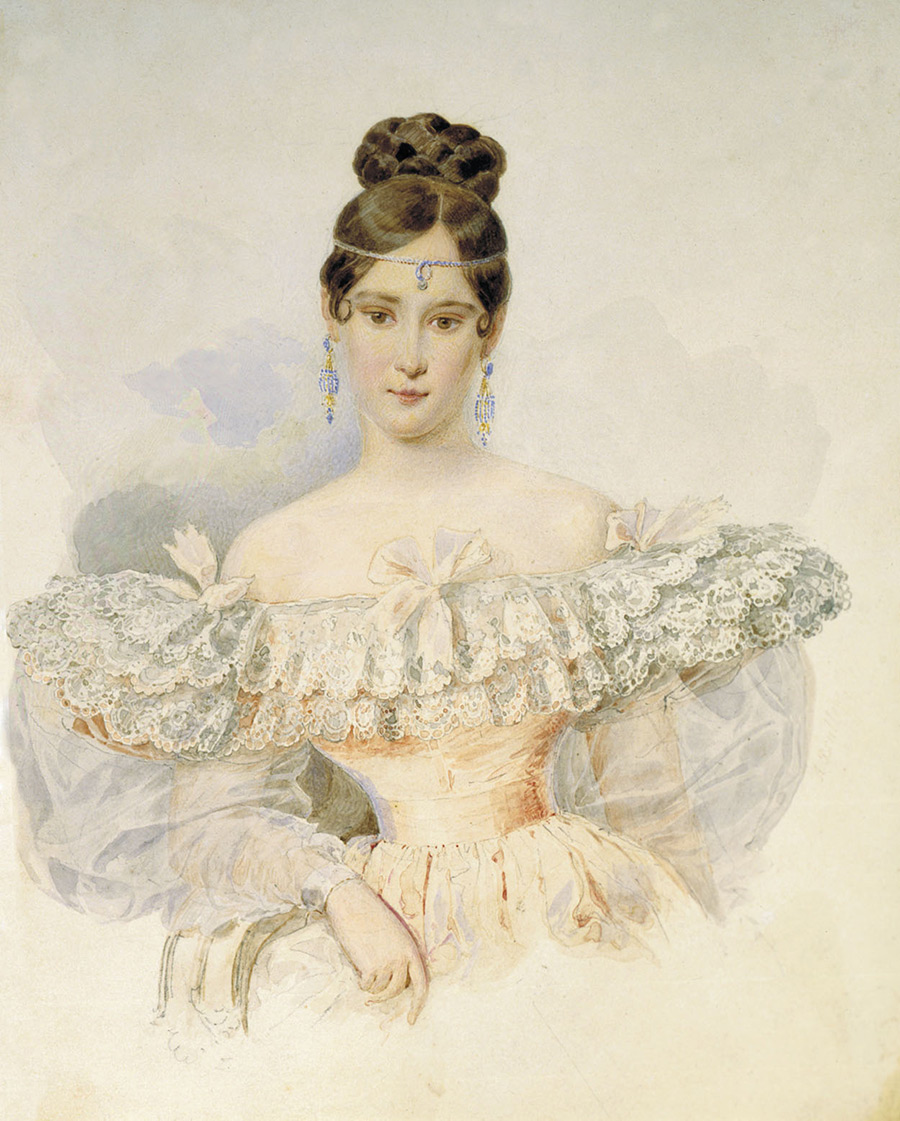 Alexander Bryullov. Portrait of Natalia Nikolaevna Pushkina-Lanskaya (née Goncharova), wife of the Russian poet Alexander Pushkin
It’s believed that the dying poet told his wife to go to the countryside, mourn for him for two or three years and then remarry. He also asked that her future husband be a "decent man". His widow did just that. Immediately after the funeral, she and her children retreated to her family's Polotnyany Zavod Estate in Kaluga. Her mourning and seclusion lasted for about seven years. In 1844, she married General Pyotr Lanskoy, who, according to contemporaries, was precisely the kind and decent man described by the poet.
The emperor paid Pushkin's debts
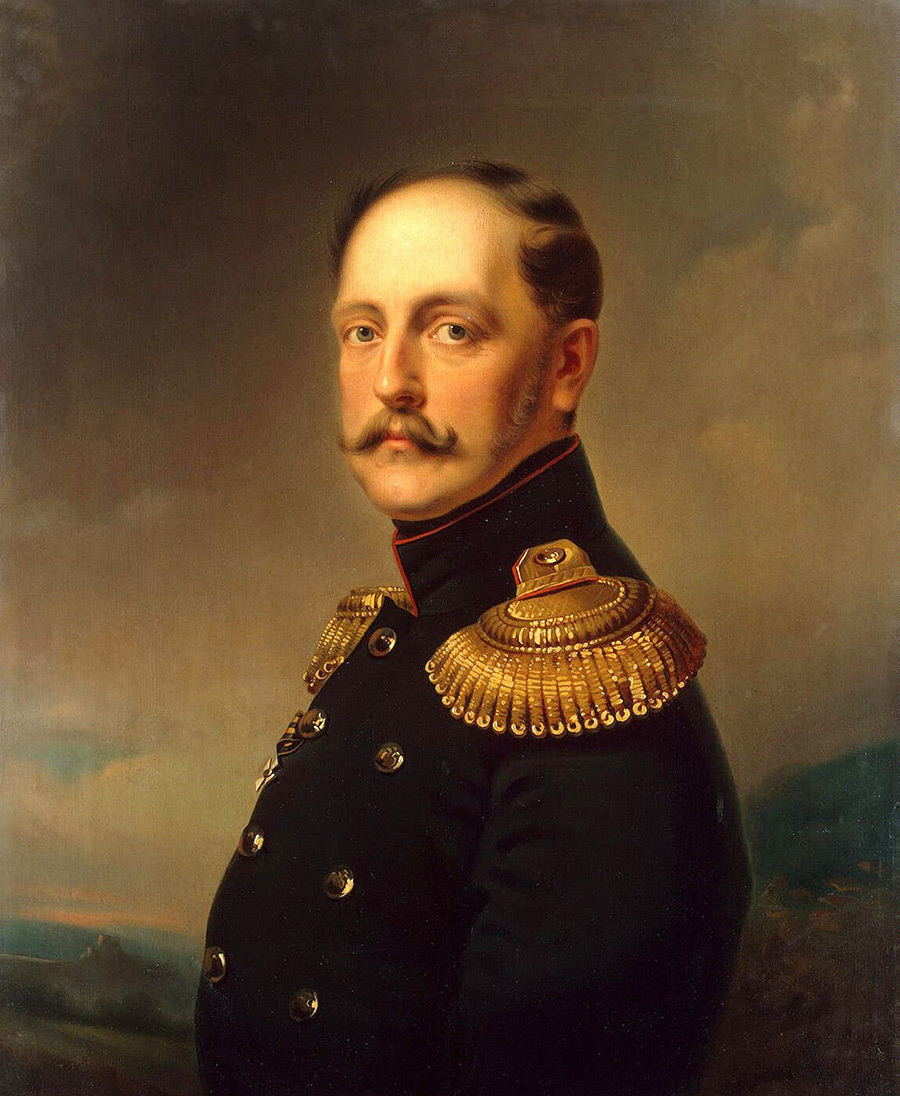 Georg von Bothmann. Portrait of Emperor Nicholas I
At the request of Pushkin's friends (primarily poet Vasily Zhukovsky), Emperor Nicholas I personally ordered financial support for the deceased's family. The emperor's note of February 12, 1837, listed the following steps: pay the poet's debts (approximately 140,000 rubles), clear the mortgaged estate of his father, pay his widow a pension (5,000 rubles annually until she remarries) and support the daughters until their own marriages (1,500 rubles annually), appoint the sons as pages and allocate funds for their upbringing, publish his works at public expense for the benefit of the widow and children and make a lump sum payment of 10,000 rubles. This assistance saved the family from financial disaster.